The short answer
Buying citizenship means acquiring it through a citizenship by investment programme set out in law, in return for a donation to a state fund or an investment, for example in property. In 2026 entry amounts start at 90,000 USD for a single applicant in São Tomé and Príncipe; in the Caribbean they range from 200,000 to 250,000 USD, plus government due diligence and processing fees. Since 27 June 2024 you no longer lose your German passport when you do this.
"Buying citizenship" sounds like a back-room deal. In reality it is a tightly regulated procedure with a statutory basis. The technical term is citizenship by investment, CBI for short, and everywhere it follows the same pattern: law, application, vetting, payment, naturalisation, passport.
What buying citizenship really means
You are not buying a passport. You are acquiring a citizenship, and the passport follows from it. That is more than hair-splitting, because this is exactly where the value lies: a passport is a document, citizenship is a right. A state can refuse, decline to extend or revoke a visa or a residence permit. As a citizen you have the right to enter, to stay and to return without asking anyone's permission.
Every programme rests on a law of its own in the state that naturalises you. In St Kitts and Nevis it is the Citizenship Act together with the Citizenship by Substantial Investment Regulations, in Dominica the constitution together with the Citizenship by Investment Regulations, and in Antigua and Barbuda the Citizenship by Investment Act of 2013. In each case a government body is in charge, usually a dedicated Citizenship by Investment Unit. It reviews your application, it decides, and it arranges your certificate of naturalisation.
Is buying a passport legal?
Yes, as long as you go through the state's official programme. The competent authority then grants citizenship under its own law, and the regular passport office issues the passport afterwards, just as it does for every other citizen. So you get the same passport as any other citizen of that country.
Stay well away, on the other hand, from anything that promises you a passport without an application, without vetting and without an authority. A legitimate route always includes due diligence, meaning a background check, and always ends with a decision by the state. What that check covers and how to pass it calmly is explained in Due diligence in your passport application.
Donation or investment: the two basic forms
Almost every programme offers two basic routes. On the first you pay a fixed contribution into a state fund, such as the National Transformation Fund in Grenada or the Economic Diversification Fund in Dominica. The money is gone, but this route is the fastest and simplest. On the second you invest, usually in approved real estate, and hold that investment for a number of years. After that you can sell it. Larger programmes also accept business investments, and Türkiye accepts bank deposits and government bonds as well.
Why people buy a second citizenship
Anyone who buys a second citizenship is above all buying one thing: options. At heart the reasons are always the same; all eight are set out in detail under Why a second passport.
- A second way out. If a state changes the rules or closes its borders, or if your only passport is lost, stolen or held up abroad, you are stuck. A second passport gives you a second door. Why even the German passport cannot be taken for granted is shown in Passport withdrawal.
- A right instead of a permission. A golden visa is a permit for a limited time. Citizenship is your own right; why that makes the difference is explained in Second passport or golden visa.
- Protection for your family. In almost every programme your spouse and children can join the application, and in many your parents and grandparents too. One application often protects three generations at once.
- Freedom of movement for entrepreneurs. If you do business in several countries, you benefit from a passport that opens different doors there than the German one. Which passport travels where is shown in the passport ranking.
- Peace of mind. A second passport is an insurance policy you hope never to need. That is exactly how it works.
What matters is the whole picture. A second passport only shows its full strength when it works together with your residence, your accounts and your company. That idea is described by flag theory, and the complete introduction to the subject is the second passport guide.
Which citizenship can you buy? The 2026 list
Only a handful of states in the world officially grant citizenship in return for an investment. The programmes accepting applications in 2026 are spread across Africa, the Caribbean, the Pacific, the Middle East with Türkiye, Asia and Latin America.
| Country | Region | Entry from | Details |
|---|---|---|---|
| Sierra Leone | Africa | 95,000 USD (Solo Entrepreneur) | Programme |
| São Tomé and Príncipe | Africa | 90,000 USD (donation) | Programme |
| Vanuatu | Pacific | 130,000 USD (DSP) | Programme |
| Dominica | Caribbean | 200,000 USD (fund or real estate) | Programme |
| Antigua and Barbuda | Caribbean | 230,000 USD (fund) | Programme |
| Grenada | Caribbean | 235,000 USD (fund) | Programme |
| Saint Lucia | Caribbean | 240,000 USD (fund) | Programme |
| St Kitts and Nevis | Caribbean | 250,000 USD (contribution) | Programme |
| Türkiye | Europe and Middle East | 400,000 USD (real estate) | Programme |
| Jordan | Europe and Middle East | 350,000 JOD (existing business) | Programme |
| Cambodia | Asia | 4 billion KHR (investment) | Programme |
| Nauru | Pacific | 90,000 USD (contribution until 31 Dec 2026) | Programme |
| Egypt | Africa | 250,000 USD (direct payment) | Programme |
| El Salvador | Latin America | 1 million USD in Bitcoin or USDt, family included | Programme |
| Dominican Republic | Caribbean | 200,000 USD (investor residence, then naturalisation) | Programme |
| Pakistan | Asia | PKR 5 million (foreign currency transfer, Commonwealth citizens only) | Programme |
All amounts apply to the main applicant and are subject to government fees on top. You can check the programmes side by side in the comparison of all programmes, and if you would rather choose by region first, the differences between the Caribbean, the Pacific, Africa and the Middle East are set out in Which CBI region suits you.
The programmes one by one
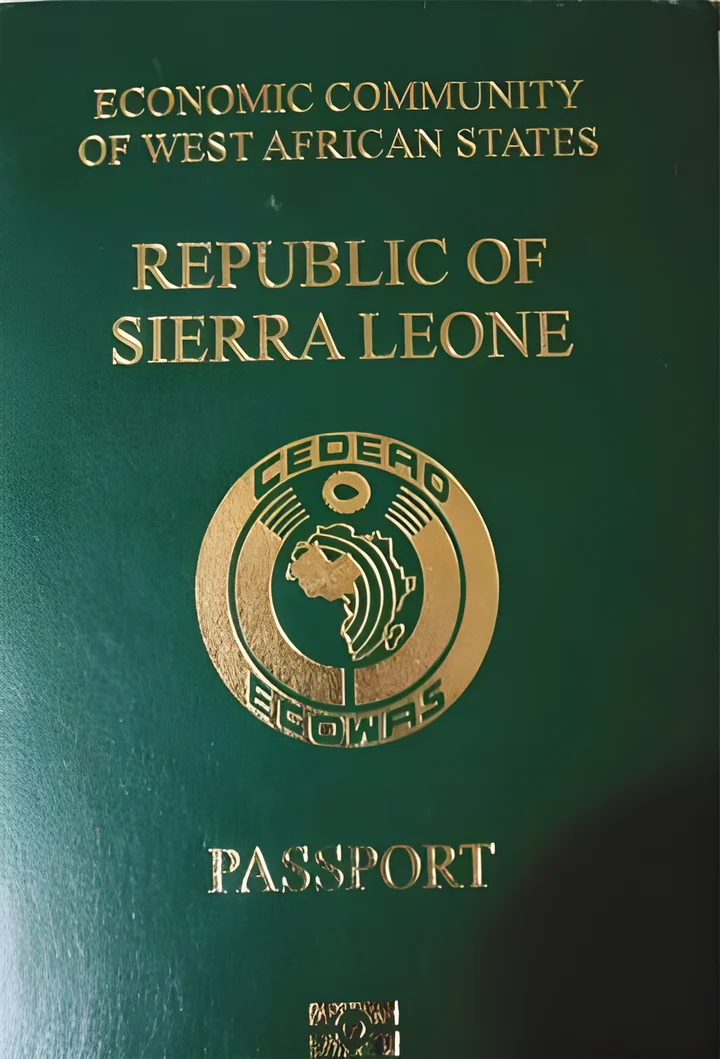
Sierra Leone offers four routes for different situations in life. Solo Entrepreneur costs 95,000 USD for single applicants without dependants, Enterprise Citizenship 80,000 USD per person for exactly two applicants, Heritage Citizenship 120,000 USD for applicants of African descent, and Fast Track 140,000 USD for a main applicant who wants to bring family along. The whole procedure runs remotely, with no travel. Everything about it is in Sierra Leone: citizenship at a fixed price and in the news item on Solo Entrepreneur and Enterprise Citizenship.
São Tomé and Príncipe asks for a donation to the National Transformation Fund of 90,000 USD for a single applicant or 95,000 USD for a family of two to four, due only after approval in principle. More in São Tomé and Príncipe.
Vanuatu is the Pacific classic: 130,000 USD for a single person in the Development Support Program, 150,000 USD for a married couple. You take the oath of citizenship before a court in Vanuatu. Costs, timelines and visa-free travel are covered in The Vanuatu passport.
Dominica starts at 200,000 USD into the Economic Diversification Fund for a single applicant, or 200,000 USD in an approved real estate project. No residence is required either before or after naturalisation; more in The Dominica passport.
Antigua and Barbuda takes 230,000 USD into the National Development Fund per application, whether for one person or the whole family. Details on the residence requirement and on family are in Antigua and Barbuda.
Grenada asks for 235,000 USD into the National Transformation Fund for the main applicant with up to three dependants. If you are an entrepreneur with plans in the United States, the E-2 visa is worth a look: see The Grenada passport and the E-2 visa and the news item on the residence requirement in Grenada.
Saint Lucia starts at 240,000 USD into the National Economic Fund for the applicant with up to three dependants; alongside that there are real estate projects, government bonds and enterprise projects, see Saint Lucia: donation, real estate or government bonds.
St Kitts and Nevis requires 250,000 USD as a Sustainable Island State Contribution for the main applicant or a family of up to four. What applies to biometrics and the interview is set out in St Kitts and Nevis.
Türkiye grants citizenship for, among other things, real estate from 400,000 USD held for three years, or bank deposits, government bonds and funds from 500,000 USD. Read Turkish citizenship through property and The Turkish passport: visa-free countries.
Jordan relies on business investment tied to jobs for Jordanians: from 350,000 JOD in an existing business outside the capital region, from 500,000 JOD in a new productive project there, plus stakes, strategic sectors and Amra City, or on shares on the Amman Stock Exchange from 1,500,000 JOD, see Jordan. Cambodia requires an investment of 4 billion KHR in a sector it promotes or a donation of 12 billion KHR to the state budget, see Cambodia.
Nauru asks a 90,000 USD contribution instead of the regular 115,000 USD for applications the Program Office accepts by 31 December 2026, with no duty to live there; see The Nauru passport. Egypt offers four statutory routes from 250,000 USD, El Salvador accepts 1 million USD in Bitcoin or USDt for the whole family, and Pakistan registers Commonwealth citizens in return for a foreign currency transfer of PKR 5 million. The Dominican Republic leads through investor residence from 200,000 USD to naturalisation, after just six months if you own land there.
Announced programmes and routes by merit
Announced, but not yet accepting applications, are Argentina, St Vincent and the Grenadines and Tonga; Botswana has passed its law, which is not yet in force. Without a fixed amount, for merit or in the state's particular interest, North Macedonia, Italy, Albania, the UAE and Austria grant their citizenship, and Peru has passed such routes with Law 32421, in force once its regulation is published; see Peru. There are articles of their own on Argentina, North Macedonia and the UAE. Who is launching and who is tightening up is tracked in New passport programmes 2026.
What does citizenship by investment cost?
The entry amount is only part of the bill. Every citizenship by investment comes with three blocks of cost: the contribution or investment itself, the government fees, and the surcharges for family members. Each state sets its fees in its regulations, and they differ more than many people expect.
| Programme | Contribution, single person | Main government fees |
|---|---|---|
| São Tomé and Príncipe | 90,000 USD | 5,000 USD submission per application, 750 USD documents per person |
| Nauru | 90,000 USD until 31 Dec 2026 | 5,000 USD application, 6,000 USD due diligence, 500 USD passport, 1,200 USD bank checks |
| Sierra Leone (Solo Entrepreneur) | 95,000 USD | 3,750 USD submission, 5,000 USD processing incl. background check |
| Vanuatu | 130,000 USD | 5,000 USD due diligence fee per applicant |
| Dominica (fund) | 200,000 USD | 1,000 USD processing, 7,500 USD due diligence, 1,000 USD interview, 500 USD certificate |
| Antigua and Barbuda | 230,000 USD | 10,000 USD processing, 8,500 USD due diligence, 300 USD passport |
| Saint Lucia | 240,000 USD | 2,000 USD processing, 8,000 USD due diligence |
| St Kitts and Nevis | 250,000 USD | 250 USD application, 10,000 USD due diligence |
An example makes the arithmetic tangible. On Sierra Leone's Solo Entrepreneur route, the calculator shows 103,750 USD in total: a 3,750 USD submission fee to start, the 95,000 USD programme fee into the escrow account, and a 5,000 USD processing fee including the background check. If naturalisation does not go ahead, the programme fee flows back from the escrow account, except for the submission and processing costs.
In Dominica, the fund route comes to a 200,000 USD contribution plus a 1,000 USD processing fee, a 7,500 USD due diligence fee, 1,000 USD for the interview and 500 USD for the certificate of naturalisation. On the real estate route there, you pay a government fee of 75,000 USD for the main applicant on top of the 200,000 USD investment.
The full breakdown for every programme with every fee is on the Costs page. If price is your main concern, you will find the most affordable routes in Cheapest citizenship by investment.
What your family costs
In many programmes the base amount already covers a small family. In St Kitts and Nevis the 250,000 USD contribution applies to a family of up to four, and in Grenada and Saint Lucia to the applicant with up to three dependants. In Antigua and Barbuda the fund contribution is per application, whatever the size of the family. For each additional family member the programmes charge fixed surcharges, for example 5,000 USD per additional dependant in São Tomé and Príncipe and 10,000 USD in Vanuatu.
Donation, property, business: which investment suits you?
The type of investment decides whether your money is gone or comes back one day, and how long you are tied in.
| Type of investment | Typical in | Holding period | Money back? |
|---|---|---|---|
| Donation to a state fund | Caribbean, São Tomé, Vanuatu | none | no |
| Approved real estate | St Kitts, Dominica, Antigua, Grenada, Saint Lucia | 3 to 7 years | sale possible afterwards |
| Real estate, deposit, bond, fund | Türkiye | 3 years | yes, afterwards |
| Businesses and projects | Antigua, Saint Lucia, Jordan, Cambodia | depends on the programme | depends on the project |
The donation is the clear, fast route. You pay once, the authority vets you, and after naturalisation you are free. Real estate pays off if you want to invest anyway or would like to use a holiday home there. In St Kitts and Nevis the holding period is seven years, in Antigua and Barbuda and Grenada five years, and in Dominica three years from naturalisation, or five years if the buyer uses the property to apply for citizenship themselves. Türkiye is a special case: what counts here is an investment you can unwind after three years, and during that time the property carries a ban on sale in the land register.
How the investment types add up and what pitfalls the real estate route holds is explained in Donation, real estate, government bonds.
How does the application work? From decision to passport
The procedure is similar in every programme; the order of payments and the timelines differ.
1. Choose a programme
It starts with the question of what the passport should do for you: visa-free travel, family, cost, speed or a particular region. That usually narrows the choice to two or three programmes.
2. Gather your documents
Typically you need your passport, birth certificate, marriage certificate, proof of address, passport photos and evidence of where your money comes from. Foreign documents need a certified translation. The programmes differ considerably here: Sierra Leone, for example, asks for neither a police certificate nor a medical examination.
3. Due diligence and interview
The state checks your identity, the source of your funds, sanctions lists and criminal records. In St Kitts and Nevis and in Dominica an interview is compulsory for every applicant aged 16 and over, and in Grenada it takes place online as part of the vetting. St Kitts and Nevis excludes nationals and residents of Russia, Belarus, North Korea, Afghanistan, Iraq and Iran. What the reviewers look for is explained in Due diligence in your passport application. Why thorough vetting is in your own interest too is shown by the revoked citizenships in Cyprus.
4. Approval, payment, oath
In most programmes you pay the contribution or make the investment only after approval in principle; in São Tomé and Príncipe, for example, the donation falls due at exactly that point. Then come the oath and the certificate of naturalisation, and with that certificate you apply for the passport.
How long it takes
| Programme | Timeline according to the source |
|---|---|
| Grenada | approval within 60 working days of submission |
| São Tomé and Príncipe | about two months to approval, then three to four months to the passport |
| Sierra Leone | usually 90 to 120 days from complete application to passport |
| St Kitts and Nevis | decision 120 to 180 days after acknowledgement of receipt |
| Dominica | first response within three months of submission |
| Cambodia | review takes at most 45 working days |
The steps in detail are on the How it works page, and every processing time side by side in How soon will you hold your second passport.
Family: who can be included in the application
The biggest lever of citizenship by investment is the family. With one application you often protect three generations.
| Programme | Children | Parents and grandparents | What stands out |
|---|---|---|---|
| St Kitts and Nevis | under 18, from 18 to under 30 if unmarried and maintained by you or your spouse | parents aged 55 and over | family of up to four in the base contribution |
| Dominica | under 18, up to 30 in education | over 65 if supported | interview from age 16 |
| Antigua and Barbuda | up to 30 | 55 and over if fully supported | unmarried siblings possible |
| Grenada | under 30 if supported | yes | siblings aged 18 and over, unmarried and without children |
| Sierra Leone (Fast Track) | under 18 and 18 and over | yes | siblings and Plus One |
| São Tomé and Príncipe | up to 30 | yes | unmarried partners too |
Sierra Leone goes furthest on the Fast Track route: besides spouses, children, parents and grandparents, siblings, their spouses and children can come along, and through the Plus One even an unrelated person, such as a partner you are not married to. The Solo Entrepreneur and Enterprise Citizenship routes, by contrast, take no dependants.
All the family rules are on the Family page, and the programmes that include parents and grandparents in the application are in Bringing parents and grandparents.
Do you have to live in the new country?
This is the most common misconception. In most programmes you need to live there neither before nor after naturalisation. Dominica requires no residence before or after, Grenada no visit before, during or after the application, and São Tomé and Príncipe no stay and no move. Sierra Leone runs 100 % remotely, and you swear the oath of allegiance by Zoom before a notary.
Some programmes do still ask for a link to the country:
- Antigua and Barbuda: at least five days' stay in the first five calendar years after naturalisation.
- Vanuatu: the oath before a court in Vanuatu, which means travelling there if you live abroad.
- Saint Lucia: residence and a genuine link have been mandatory since 1 January 2026, with the details set by regulation.
- Cambodia: presence in person when you apply.
- Türkiye: an investor residence permit before you apply.
So nothing changes in your everyday life. You go on living wherever you like and have the second passport for the day you need it. If, on the other hand, you want to combine the passport with a real move, you will find the residence routes under Residence permits and golden visas (in German).
Do you keep your German passport?
Yes. That is the most important news for any German thinking about a second citizenship. Since 27 June 2024, with the Act to Modernise Nationality Law (Gesetz zur Modernisierung des Staatsangehörigkeitsrechts), acquiring a foreign citizenship by application no longer costs you your German citizenship. You no longer need the permission to retain it that used to be required.
So you hold both passports side by side and travel on whichever opens more doors at your destination. How that works in everyday life, which cases from before the cut-off date play out differently and what applies to children is explained in Your CBI passport and your German passport and in the guide to dual citizenship in Germany. How to travel with two passports is covered in Travelling with more than one passport.
And taxes?
On its own, a second citizenship changes nothing about your German tax liability. Under section 1 of the Income Tax Act (Einkommensteuergesetz, EStG), you are subject to unlimited income tax liability if you have a residence or your habitual abode in Germany. What counts is where you live, not which passport you hold. For tax purposes, a second passport only plays to its strengths in combination with a change of residence. More on this on the Taxes page and in Taxes and citizenship.
EU and US passports: what money cannot buy
Two wishes come up particularly often, and neither can be fulfilled through an investor programme.
Buying EU citizenship
On 29 April 2025, in case C-181/23, the Court of Justice of the European Union ruled that Malta had breached EU law with its investor programme of 2020. Naturalisation in return for set payments or investments, the court held, turns nationality, and with it Union citizenship, into a commodity. That takes buying an EU passport directly off the table.
Today the way into the EU runs through descent, naturalisation after residence, or marriage. Which routes remain is shown in Buying EU citizenship, the routes through your ancestors in the guide to citizenship by descent, and the situation in Malta after the ruling in the article on Malta's Citizenship by Merit (in German).
Buying US citizenship
The United States has no programme that grants citizenship for money. An investment can lead you to a green card, meaning permanent residence. You then get the US passport through naturalisation, usually after five years as a permanent resident at the earliest, with at least 30 months of physical presence in the US during those five years. The requirements and the application are described in US citizenship: requirements and Form N-400.
For entrepreneurs who want to work in the United States without becoming citizens straight away, the E-2 investor visa is worth a look. What role a second passport plays in it is set out in The Grenada passport and the E-2 visa.
Visa-free travel: what your new passport can do
A passport you buy is worth as much as the doors it opens. Every programme passport has its own profile, and the differences between the Caribbean, the Pacific, Africa and Türkiye are large.
Visa-free travel is not set in stone, however. The EU has lifted visa-free travel for Vanuatu. What such a step can mean for Caribbean passports, and how to protect yourself with more than one passport, is explained in the article on the EU's visa suspension. The best answer to this risk is the same as with the German passport: never put everything on one document.
Which programme passports travel visa-free where is compared in the passport ranking, and how to combine passports with one another is covered in Which CBI region suits you.
Buy or naturalise? Ideally both
Citizenship by investment and classic naturalisation are not opposites. Naturalisation after years of genuine residence costs no investment amount and is often the stronger route in the end, especially when it brings you an EU passport or a passport with wide visa-free access. But it takes time, residence and patience.
That time is exactly what CBI buys you. Within a few months you secure a second passport, and in parallel you build the path to naturalisation in the country where you really want to live. How the two fit together is described in CBI and naturalisation, and the countries with the best naturalisation routes are in Naturalisation abroad.
For your children there is a third route: being born on foreign soil is a passport you give your child at birth. Which countries make that possible is shown in the guide to birth tourism.
Every guide to citizenship by investment
| Topic | Article |
|---|---|
| Caribbean | St Kitts and Nevis, Dominica, Antigua and Barbuda, Grenada and E-2, Saint Lucia |
| Africa | Sierra Leone, São Tomé and Príncipe |
| Pacific and Asia | Vanuatu, Nauru, Cambodia |
| Middle East, Europe, Latin America | Türkiye real estate, Turkish passport visa-free, Jordan, North Macedonia, UAE, Argentina |
| Costs and investment | Affordable programmes, Donation or real estate, Regions compared |
| Procedure and family | Processing times, Due diligence, Parents and grandparents |
| Law and developments | Your CBI passport and your German passport, Buying EU citizenship, EU visa suspension, New programmes 2026 |
The other major guides cover the routes beside buying: the second passport guide, Naturalisation abroad, Citizenship by descent, Birth tourism, Dual citizenship in Germany, the passport ranking and flag theory. Common individual questions are answered in the questions and answers, and many programmes are explained in conversation in the videos.
Frequently asked questions
Is it legal to buy citizenship?
Yes. Each of these programmes rests on a law or regulation of the state that naturalises you, and an authority of that state grants the naturalisation. You are not buying a document: you receive citizenship by a decision of the state, and the passport office then issues the passport. Offers that promise you a passport without an application, without vetting and without an authority have nothing to do with this.
Which citizenship is the cheapest to buy?
In 2026 the lowest entry points are São Tomé and Príncipe at 90,000 USD for a single applicant, Nauru at a 90,000 USD contribution for applications accepted by 31 December 2026, and Sierra Leone at 95,000 USD on the Solo Entrepreneur route, all plus government fees. Pakistan asks only for a foreign currency transfer of PKR 5 million, but opens that route to Commonwealth citizens alone. As a pair, for example as business partners, Sierra Leone's Enterprise Citizenship route costs 80,000 USD per person. Vanuatu starts at 130,000 USD, and in the Caribbean Dominica starts at 200,000 USD. The full ranking is in Cheapest citizenship by investment.
Can I buy EU citizenship?
No, not any more. On 29 April 2025 the Court of Justice of the European Union ruled that Malta's investor programme breaches EU law because it turns Union citizenship into a commodity. For an EU passport, what remains is descent, naturalisation after residence, or marriage; more in Buying EU citizenship.
Will I lose my German passport if I buy a second citizenship?
No. Since 27 June 2024, acquiring a foreign citizenship by application no longer costs you your German citizenship, and you no longer need permission to retain it. You hold both passports side by side, as described in Your CBI passport and your German passport.
How long does it take to get the passport?
That depends on the programme. Grenada quotes approval within 60 working days, Sierra Leone usually 90 to 120 days to the passport, São Tomé and Príncipe about two months to approval and then three to four months to the passport, and St Kitts and Nevis a decision after 120 to 180 days. How soon will you hold your second passport compares the timelines of every programme.
Do I have to live in the country whose passport I buy?
In most programmes, no. Dominica, Grenada and São Tomé and Príncipe require no residence before or after, and Sierra Leone runs entirely remotely. Antigua and Barbuda requires five days' stay in the first five calendar years, Vanuatu an oath before a court in the country, and Cambodia your presence in person when you apply.
Can I buy US citizenship?
No. The United States has no programme that grants citizenship in return for an investment. An investment can get you a green card; naturalisation then usually follows after five years as a permanent resident at the earliest, with at least 30 months of physical presence in the US.
Does a second passport change anything about my taxes?
For German income tax, what counts is your residence or habitual abode, not your passport. A second citizenship on its own therefore changes nothing about your tax liability in Germany. How passport and residence work together is explained in Taxes and citizenship.
Which programme suits you and your family?
We go through your goals, your budget and your family with you and show you which programme gets you to a second passport fastest and most securely. One conversation clears up more than a hundred comparison tables.
Book a consultationSources
- sierraleonepassport.com: Sierra Leone programmes, calculator and processing times
- Citizenship by Investment Unit St Kitts and Nevis: Sustainable Island State Contribution
- Saint Christopher and Nevis: Citizenship by Substantial Investment (Amendment) Regulations, S.R.O. No. 1 of 2026
- Citizenship by Investment Unit Dominica: Real Estate
- Citizenship by Investment Unit Antigua and Barbuda: Citizenship
- Investment Migration Agency Grenada: FAQs
- Citizenship by Investment Unit Saint Lucia: Citizenship by Investment
- Citizenship by Investment Unit São Tomé and Príncipe: Investment Structure
- Vanuatu Citizenship Office and Commission: Fees and Charges
- Federal Foreign Office (Auswärtiges Amt): German nationality law since 27 June 2024
- Gesetze im Internet: section 1 of the Income Tax Act (Einkommensteuergesetz)
- Court of Justice of the European Union: press release No 52/25 on C-181/23 Commission v Malta
- USCIS: Naturalization for Lawful Permanent Residents of 5 Years