Steueratlas · in German
Taxes in Austria
Citizenship on its own says nothing about your taxes. Steueratlas sets out every Austrian rate, from income tax and corporate tax to VAT, in one place.
Visit SteueratlasProgrammes · Europe and the Middle East
Naturalisation by merit
Under Section 10(6) of its Citizenship Act, Austria grants citizenship when extraordinary achievements place it in the Republic's special interest. The ten-year residence period, proof of German and giving up your current passport all fall away.
At the Federal Government's discretion
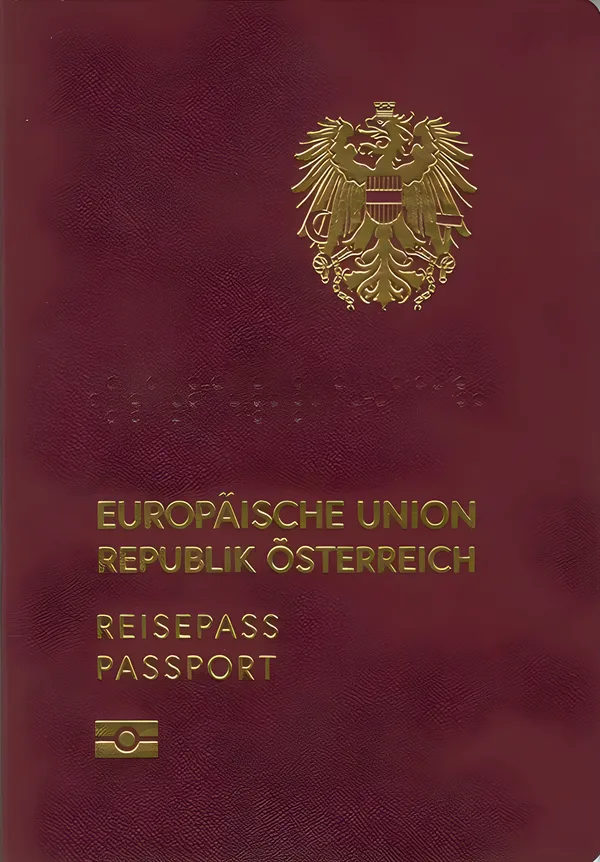
Austria has written the merit route into its constitution. Section 10(6) of the Citizenship Act is a constitutional provision: citizenship is granted when the Federal Government confirms that your extraordinary achievements, both those already made and those still to be expected, place the grant in the special interest of the Republic. The decision lies with the government as a whole, prepared by the Ministry of the Interior and by the ministries responsible for your field, each of which gives a reasoned opinion on your case.
The route is in active use. The Federal Government decides on the cases prepared for it at regular intervals, at least once every half calendar year. Most recently, on 8 July 2026, the Council of Ministers approved applications under Section 10(6).
Legal basis: Staatsbürgerschaftsgesetz 1985 (Citizenship Act, BGBl. Nr. 311/1985, last amended by BGBl. I Nr. 39/2026), § 10(6) (a constitutional provision); Verordnung der Bundesregierung über das Verfahren zur Erlangung einer Bestätigung gemäß § 10 Abs. 6 StbG (Federal Government regulation on the procedure for obtaining this confirmation), BGBl. II Nr. 39/2014
Competent authority: Federal Government, on the recommendation of the Federal Ministry of the Interior; decision issued by the provincial government
| Principle | the Federal Government confirms that granting citizenship is in the Republic's special interest because of the extraordinary achievements already made and still to be expected (§ 10(6) StbG, a constitutional provision) Source |
|---|---|
| What is waived | the ten-year residence period (§ 10(1), point 1), proof of a secure livelihood (point 7) and the duty to give up your current citizenship (§ 10(3)) Source |
| German and citizenship test | proof of German and the citizenship test are waived for a grant under § 10(6) (§ 10a(2), point 1) Source |
| What still applies | no prison sentence for intentional or fiscal offences, no pending criminal proceedings, no significant harm to Austria's international relations, a positive attitude towards the Republic, no threat to public peace, order and security, no harmful ties to foreign states and no bar to a grant under § 10(2); only once this has been established does the file go to the Ministry of the Interior (BGBl. II No. 39/2014, § 1(2)) Source |
| Who is eligible | natural persons whose achievements are currently far above the average in their field and can be expected to continue; catalogue of criteria adopted by the Council of Ministers on 25 February 2014 for science, business, sport and the arts, with other fields counting if they carry comparable weight; no honorary grants, and decorations alone are not enough Source |
| Business criteria | owner or senior role with decisive influence, high economic output of the company, a relevant number of jobs in Austria, substantial investments or projects in Austria (above all ones already made), an international outlook and the promotion of Austria's economic ties; mere flows of money are not enough Source |
| Minimum amount | neither the law, the regulation nor the catalogue of criteria names one Source |
| Residence | no minimum stay in Austria; the procedural regulation expressly provides for applicants without a principal residence in Austria (BGBl. II No. 39/2014, § 2(3)) Source |
| Competent provincial government | the government of the province where you have your principal residence; without a principal residence in Austria and if you were born abroad, the Vienna provincial government (§ 39 read with § 49(2) StbG) Source |
| Procedure | application to the provincial government, referral to the Ministry of the Interior, reasoned opinions from the competent federal ministries, recommendation by the Ministry of the Interior, decision by the Federal Government at regular intervals and at least once every half calendar year (BGBl. II No. 39/2014, §§ 1 to 5); the law sets no fixed overall duration Source |
| Spouse | the grant is extended to a spouse living in the same household; minimum stay, settlement, five years of marriage and giving up the current citizenship are waived (§ 16(2) StbG) Source |
| Children | unmarried minor children are included, with settlement and renunciation waived (§ 17(4) StbG); for children with a significant disability there is no age limit (§ 17(3)) Source |
| Federal fees | 163 EUR for the application (89 EUR for minors), 1,448 EUR for the grant under § 10 StbG, 322 EUR to extend it to children (§ 17), 1,126 EUR to extend it to a spouse (§ 16); plus provincial administrative charges, which differ from province to province (Gebührengesetz 1957, § 14) Source |
| Current citizenship | may be kept, by your spouse and children too; an Austrian who later acquires another citizenship by application loses the Austrian one unless permission to retain it was granted beforehand (§§ 27, 28 StbG) Source |
| Most recent use | the Council of Ministers decided on applications under § 10(6) StbG on 8 July 2026 and approved them Source |
Ordinary naturalisation requires ten years of residence, proof of a secure livelihood, German, the citizenship test and giving up your current citizenship. Under Section 10(6), none of that applies. You do not need a principal residence in Austria: the procedural regulation expressly provides for applicants who have none. If they were born abroad, the Vienna provincial government handles their case.
What remains is the check on you as a person. You must not have been sentenced to prison for an intentional or fiscal offence, there must be no criminal proceedings pending against you, and you must pose no threat to public peace, order and security. Only once the provincial government has established this does your file go to the Ministry of the Interior.
The route is open to natural persons whose achievements are currently far above the average in their field. The catalogue of criteria adopted by the Council of Ministers on 25 February 2014 names four fields: science, business, sport and the arts. Other fields count if they carry comparable weight, and not every criterion has to be met at once.
In business, what counts is a senior role with decisive influence, the performance of your company, a relevant number of jobs in Austria, substantial investments or projects in Austria (above all ones already made) and an international outlook. Mere flows of money are not enough, and no rule sets a minimum amount. That makes this a route built for entrepreneurs whose importance to Austria shows in real projects. In science, an international reputation and work in or for Austria count; in the arts, a major contribution to Austrian cultural life and international renown; in sport, outstanding results and being ready to compete for the national team straight away.
The grant extends to your spouse, if you share a household, and to your unmarried minor children. For your spouse, the minimum stay, settlement and five years of marriage are waived. For children with a significant disability, there is no age limit.
You keep your current passport, and so do your spouse and children: under Section 10(6), the duty to renounce is waived for the whole family. One rule applies afterwards: once you are Austrian, if you apply for another citizenship, you need permission to retain your Austrian one first.
The federal fees are set out in the Fees Act: 163 EUR for the application and 1,448 EUR for the grant. Extending it costs 322 EUR for children and 1,126 EUR for your spouse. On top come provincial administrative charges, which differ from province to province.
The second way to an Austrian passport without moving: the Section 58c declaration for descendants of those persecuted.
What has applied since 2024 if you are German and take on a second citizenship.
What a second citizenship does for your travel, your partners and your company.
The national interest route, decided by the Serbian government.
Steueratlas · in German
Citizenship on its own says nothing about your taxes. Steueratlas sets out every Austrian rate, from income tax and corporate tax to VAT, in one place.
Visit SteueratlasWohnsitz Ausland · in German
If you become Austrian without living in Austria, you renew your passport through a mission abroad. Wohnsitz Ausland covers who is responsible, the documents, the fees and the waiting times.
Visit Wohnsitz AuslandFreedomBanking Plus · in German
What Austrian banks ask for when you open an account, and what the registers and reporting systems record. FreedomBanking Plus explains it.
Visit FreedomBanking PlusNot for a fixed sum. In business, what counts are substantial investments and projects in Austria, above all ones already made, the jobs you have created and your senior role in the company. Under the catalogue of criteria, mere flows of money are not enough, and neither the law nor the regulation names a minimum amount.
No. The ten-year residence period does not apply, and the procedural regulation expressly provides for applicants without a principal residence in Austria. If you have no principal residence there and were born abroad, the Vienna provincial government handles your case.
Yes. For a grant under Section 10(6), the duty to give up your current citizenship is waived for you, your spouse and your children. Whether your home country allows a second citizenship depends on its own law.
Not as the main applicant. For a grant under Section 10(6), proof of German and the citizenship test are both waived (§ 10a(2), point 1 StbG).
The law sets no fixed time limit. The Federal Government decides on the cases prepared for it at regular intervals, at least once every half calendar year. Most recently, the Council of Ministers approved applications under Section 10(6) on 8 July 2026.
The federal fees are 163 EUR for the application and 1,448 EUR for the grant. Extending it costs 322 EUR for children and 1,126 EUR for a spouse. On top come provincial administrative charges, which differ from province to province.
You have worked hard to build a life full of possibilities. Now it is about expanding them, for you and for your family. Talk to Daniel Taborek about your budget, your family and the route to your second citizenship. Find out which passport should enrich your future.
Thank you for your message.