The short answer
Citizenship by descent (ius sanguinis) means you inherit the nationality of your parents, grandparents or earlier ancestors. Since its 2025 reform, Italy recognises it for people born abroad who hold another nationality only if a parent or grandparent is or was exclusively Italian, or if a parent lived in Italy for two years after acquiring Italian citizenship. Ireland takes in grandchildren of someone born on the island through the Foreign Births Register; Poland confirms citizenship through the voivode, and you file the application through the consulate in Germany for €100. Germans have kept their own passport throughout since 27 June 2024.
A passport through your ancestors is the oldest route to a second citizenship, and for many people the cheapest. It asks for no investment and no move abroad, only patience with archives, registry offices and consulates. If you can muster that patience, what you get at the end is not a visa or a residence permit but a right that nobody can take away from you.
What citizenship by descent means
Lawyers call it ius sanguinis, the right of blood. Nationality follows the family: if you descend from a citizen, you are a citizen yourself, wherever you were born. The opposite model is ius soli, the right of the soil, where the place of birth is what counts. How you can use that second principle for your children is explained in the article on birth tourism.
Germany itself follows the descent principle. Under section 4(1) of the Nationality Act (Staatsangehörigkeitsgesetz), a child acquires German citizenship at birth if one parent holds it. Italy puts it in almost the same words in Art. 1 of its citizenship law: a citizen by birth is the child of a father or mother who holds Italian citizenship. This is exactly where your opportunity lies. If your parents or grandparents were citizens of another country, the chain can reach all the way down to you, even if you have never lived there.
Three ways countries take in descendants
Not every country treats descendants the same way. Broadly, there are three routes:
| Route | What happens legally | Examples |
|---|---|---|
| Recognition | You have been a citizen since birth; the state only confirms it | Italy, Poland, Greece |
| Registration | You become a citizen when you are entered in a register | Ireland (Foreign Births Register) |
| Preferential naturalisation | You are naturalised on application or declaration, on easier terms | Hungary, Romania, Austria section 58c |
The difference is more than a formality. With recognition, you have to prove that the chain never broke: no ancestor may have lost the nationality before passing it on. With registration, the date of the entry is what counts. With preferential naturalisation, the state checks extra conditions, such as language skills and an oath in Hungary.
All three routes have one thing in common: what you end up with is not a residence permit but citizenship. A visa can be refused or revoked, and a residence permit expires. A passport is a right, not a permission. How descent fits in with the other routes to a second passport is set out in the big second passport overview.
Which countries grant a passport through your ancestors
In the 19th and 20th centuries, many European states lost millions of people to emigration, war and expulsion. Some still keep the door open for their descendants today. The main routes for readers from Germany and Austria at a glance:
| Country | Who qualifies | Route | More |
|---|---|---|---|
| Italy | Descendants with a parent or grandparent who is exclusively Italian | Recognition | Italy |
| Poland | Descendants of Polish parents or grandparents | Confirmation by the voivode | Poland |
| Ireland | Children and grandchildren of people born on the island | Automatic, or the Foreign Births Register | Ireland |
| Hungary | Descendants of Hungarian citizens who speak Hungarian | Simplified naturalisation | Hungary |
| Romania | Former citizens and their descendants | Reacquisition | Romania |
| Greece | Children of Greek parents | Entry in the municipal register | Greece |
| Lithuania, Latvia, Estonia | Descendants of former citizens | Restoration | Baltic states |
| Austria | People persecuted by the Nazi regime and their direct descendants | Declaration under section 58c | Austria |
| Spain | Descendants of exiles and Sephardic Jews | Special routes with deadlines | Spain |
| Ghana | People of African descent | Right of Abode | Ghana |
On top of these come countries with their own descent rules, which other sites in our network cover in depth, such as the British rules on citizenship by descent (in German). Whatever the country, the same task comes before any application: finding your ancestors' certificates. How to do that is shown in Genealogy for your passport.
Italian citizenship by descent after the reform
For many Germans, Italy is the first descent country that comes to mind: families of guest workers, emigrants, mixed marriages. Under Art. 1 of Law 91/1992, the child of an Italian father or an Italian mother is a citizen by birth, and for a long time what mattered most was that the chain never broke. With Decree-Law 36 of 28 March 2025, converted by Law 74/2025, Italy has made that door considerably narrower.
What Art. 3-bis requires today
At the heart of the reform is the new Art. 3-bis of Law 91/1992, in force in its current wording since 24 May 2025. Under it, anyone born abroad who holds another nationality is treated as never having become Italian, unless one of these cases applies:
- The application for recognition reached the competent consulate or mayor by 11:59 p.m. Rome time on 27 March 2025.
- By that time the office had given you an appointment to apply, and you filed the application at that appointment.
- A court action for a declaration of citizenship had been filed by that time.
- A parent or grandparent holds Italian citizenship only, or held only Italian citizenship at the time of their death.
- A parent or adoptive parent lived in Italy without interruption for at least two years after acquiring Italian citizenship and before your birth or adoption.
What this means for you as a German
For most readers, the fourth case is the one that decides it. The key word is "only". If your grandfather lived in Germany as an Italian guest worker and never took German citizenship, the route stays open. If he was naturalised and so became a dual national, his line no longer qualifies on the wording of the law. If your mother is Italian and has only ever held an Italian passport, you can apply for recognition too.
The fifth case helps families in which a parent spent a few years living in Italy. Two consecutive years after acquiring citizenship and before you were born are enough.
So if you want to apply for Italian citizenship today, you start with a preliminary check: first you establish which nationalities your parents and grandparents held, then you gather the certificates. Your German citizenship is unaffected. The full route, documents included, is described in Italian citizenship by descent.
Polish citizenship by descent: confirmation, not naturalisation
For Germans, Poland is one of the most obvious descent countries. Many families have roots in Silesia, Pomerania, East Prussia or Galicia, and many have no idea that a Polish grandfather can pass an EU passport down to them today.
The route is not naturalisation but confirmation: the voivode (the provincial governor) establishes that you hold Polish citizenship or that you have lost it. If you live abroad, you do not need to travel to Poland for this. You file the application to the voivode through the consul responsible for where you live, and the consulate forwards it. At the Polish missions in Germany, the application fee is €100, payable in cash or by debit card.
The documents the consulate asks for
- Certificates proving the Polish origin of your parents or grandparents: birth, marriage or baptism certificates, plus copies of your ancestors' Polish documents
- Your current ID, with the original shown for inspection
- Your full birth certificate showing your parents' names, if you were born outside Poland
- A civil status certificate showing your marital status
You fill in the application in Polish. Certificates in other languages need a sworn translation or a translation by the consul.
The real work lies in the question of whether citizenship was passed on in your family without a break. How to establish that, and the pitfalls for those who emigrated before and after the war, is covered in Polish citizenship by descent.
Irish citizenship through a parent or grandparent
The Irish passport is one of the most sought after descent passports of all: EU citizenship plus close ties to the United Kingdom. Ireland draws a clear line between two generations.
If one of your parents was born on the island of Ireland and was an Irish citizen when you were born, you are automatically Irish. There is nothing to apply for, and you can apply for a passport straight away. If one of your grandparents was born on the island of Ireland but your parent was born outside it, or if your parent was Irish when you were born without having been born on the island, the route runs through the Foreign Births Register. As soon as you are entered in it, you are an Irish citizen and can apply for the passport.
What to watch out for with the Foreign Births Register
- Citizenship applies from the date of registration, not from your birth.
- If you want to pass the line on to the next generation, you have to be registered before your child is born. If a parent-to-be is not yet registered at the time of the birth, the child has no claim.
- Among other things, you need the original birth certificate of the grandparent born in Ireland, plus proof of identity and address.
The second point is crucial for families planning children: hold off, and you cut the line for your own children. The descent rules in detail are described in An Irish passport through your grandparents. How to check whether your family already gives you a claim is shown in Irish citizenship by descent. If you have no Irish ancestors, residence gets you there instead; see Ireland: naturalisation.
Hungary, Romania, Greece and the Baltic states
East and south of the big emigration countries lie states whose borders shifted several times in the 20th century. Their rules for descendants are just as varied.
Hungary: simplified naturalisation, with the language
Hungary naturalises descendants in a simplified procedure. You qualify if an ancestor was a Hungarian citizen or if you are likely to be of Hungarian origin. You can file the application at a Hungarian mission abroad, and the procedure itself is free of charge. The only costs are for certifications and translations. You become Hungarian on the day you take the oath or pledge.
The hurdle is the language. The Hungarian missions stress explicitly that you must be able to communicate in Hungarian without anyone's help and answer the official's questions yourself in short sentences. The law allows only one narrow exception: the authority may waive proof of Hungarian for a person who lacks legal capacity. So if you never learned your family's language, budget for a language course. More in Hungarian citizenship.
Romania: reacquisition for descendants
Romania opens the way back to former citizens who lost their nationality through no action of their own, and to their descendants. Legally this is not a new acquisition but a reacquisition on application. You prove it with the civil status certificates of every generation between you and the ancestor who was Romanian. Which generations the law covers and exactly which documents you need is set out in Romanian citizenship by descent.
Greece: the municipal register is what counts
In Greece, citizenship arises at birth to a Greek parent. For the state to recognise it, you must be entered in the Dimotologio, the citizens' register of a Greek municipality. So the key lies with the register: if your Greek parent is entered there, you apply for your own entry with your civil status certificates. More in Greek citizenship by descent.
Lithuania, Latvia, Estonia
The Baltic states build on their statehood before the Soviet occupation and open the way back to descendants of former citizens. Which generations count, and when you may hold Baltic citizenship alongside your German one, is handled differently by each of the three countries; see Lithuania, Latvia, Estonia.
Austria and Spain: citizenship for descendants of the persecuted and of exiles
Some descent routes are not an invitation to emigrants but an answer to injustice. They are aimed at families whose ancestors were persecuted, expelled or forced into exile.
Austria: the declaration under section 58c
Austria gives citizenship back to people persecuted by the National Socialist regime and to their direct descendants. Since 1 May 2022, the extended version of section 58c of the Citizenship Act (Staatsbürgerschaftsgesetz) has applied. Descendants in the direct line are entitled to make the declaration, meaning children, grandchildren, great-grandchildren and so on; children adopted as minors count too. You do not have to give up your existing nationality.
There is no application in the usual sense, but a declaration. You file it with the Austrian mission abroad, which forwards it to the competent authority; for people who were not born in Austria and do not live there, that is the Vienna provincial government (MA 35). The procedure itself costs nothing. Alongside your own documents, you submit records of your ancestor's persecution and certificates proving the relationship in the direct line. If your main residence is in Germany, you do not need a criminal record certificate.
One point calls for planning: if the declaration is approved, you are Austrian retroactively from the day it reached the authority. From that day on, Austria's rules on losing citizenship when you acquire another one apply to you. So if you are also planning a third passport, settle the order of steps beforehand. More in Austrian citizenship for descendants of the persecuted.
Spain: routes with a deadline
Spain has opened the way to citizenship for descendants of exiles and of Sephardic Jews through dedicated laws, each with a fixed deadline. For the option under the eighth additional provision (Disposición adicional octava) of the Democratic Memory Act (Ley 20/2022), the deadline ended on 22 October 2025. Which Spanish routes for descendants still work today is set out in Spain: citizenship for descendants. Without such roots, the regular route through residence remains; see Spain: naturalisation.
African descent: Ghana and Sierra Leone
In Africa, too, there are states that actively bring their diaspora home. For readers with African roots or with family in West Africa, two routes are worth a look.
Ghana offers the Right of Abode. It is open to Ghanaians by birth who lost their citizenship by acquiring a foreign one, and to people of African descent in the diaspora. The Right of Abode is granted by the minister with the President's approval. It gives you the right to live in Ghana permanently, to enter without a visa and to work without a work permit. It is not a passport but a residence status. How to take things further from there is described in Ghana: citizenship and the Right of Abode.
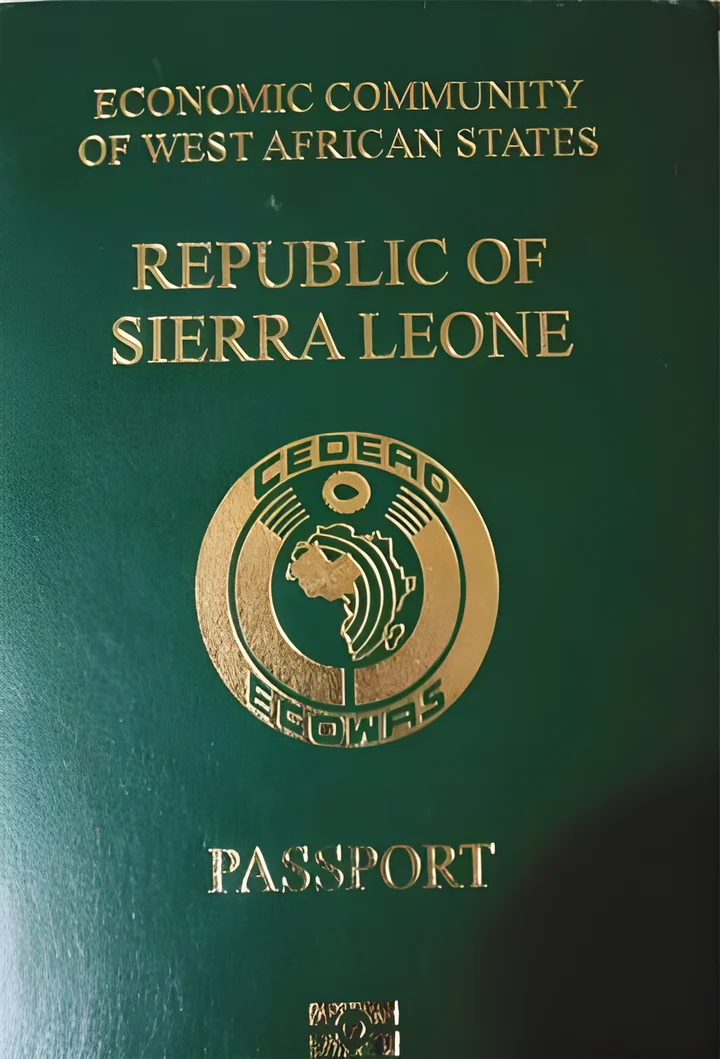
Sierra Leone goes a step further and combines descent with an investment programme. Heritage Citizenship is aimed at main applicants of African descent, and you provide the proof with a DNA test. The programme amount is 120,000 USD, plus dependants and due diligence. You can include your spouse, children, parents and grandparents, and a Plus One on top. The whole process runs remotely, with no trip to Sierra Leone, and Sierra Leone accepts multiple citizenships without restriction. All routes and fees are on the Sierra Leone page.
The certificates you need as proof
In the end, every descent route comes down to documentary proof. You have to show, with no gaps, that you descend from the ancestor through whom you derive citizenship and, depending on the country, that this ancestor held it and was able to pass it on.
The basic set
- Birth certificates for every generation between you and the ancestor
- Marriage certificates, because names change and some countries require the parents' marriage
- Proof of the ancestor's nationality: old passports, military service books, employment record books, school reports, entries in municipal or parish registers
- Where needed, death certificates and naturalisation or denaturalisation records
Hungary, for example, explicitly lists church and archive certificates with an exact reference, along with the ancestor's military service book, employment record book or school report. Foreign civil status certificates need a certified Hungarian translation there and, unless an agreement provides otherwise, an apostille. Poland requires sworn translations.
Where to look
It all starts with the family: drawers, family record books, old letters. After that come the registry offices at the place of birth, parish registers, state archives and emigrant lists. If you want to trace ancestors who left for overseas through ports such as Bremen or Hamburg, you will find leads in the passenger lists of your ancestors (in German). A step by step guide to finding the right certificates is in Genealogy for your passport.
A tip that has served many families well: start with the youngest generation and work your way back. Every certificate gives names, dates and places that lead you to the next one.
Keeping your current passport: the rules for Germans and Austrians
The best ancestry is of little use if it costs you the passport you already have. For Germans, that worry is off the table. Since the Act to Modernise Nationality Law came into force on 27 June 2024, Germans no longer lose their citizenship when they acquire a foreign one on application. You no longer need a retention permit (Beibehaltungsgenehmigung). Everything else on multiple citizenship is in Dual citizenship for Germans.
Stricter rules apply to Austrians, and the order of the steps is what decides it. Before you file an application in Italy, Poland or Hungary, establish whether your route counts as acquisition on application and what that means for your Austrian citizenship. Everything you need on this is in Second citizenship for Austrians.
Passing your descent on to your children
Descent works in both directions. Just as you inherit from your grandparents, your children inherit from you, and here too there are limits. German law has a generational cut-off in section 4(4) of the Nationality Act: a child born abroad does not acquire German citizenship if the German parent was themselves born abroad after 31 December 1999 and is habitually resident there. This does not apply if the child would otherwise be stateless, and it can be avoided if the parents apply for registration of the birth under section 36 of the Civil Status Act (Personenstandsgesetz) within one year of the birth.
So if you live abroad, plan this deadline as carefully as the Irish registration before a birth. How to pass both passports safely on to the next generation is shown in Passing on citizenship, German citizenship for children born abroad and A second passport for children. The overview for families is on the Family page.
No claim through your ancestors: naturalisation and investment
Not every family history leads to a passport. Perhaps all your ancestors have been German for generations, perhaps the chain broke somewhere, perhaps Italy cut off your line with the 2025 reform. Then two routes remain, and they are not mutually exclusive.
The first is naturalisation through residence. It costs little money, is in the end the most lasting route and genuinely ties you to a country. In return, it demands years of real residence, often language tests, and patience. Which countries naturalise fastest is shown in Naturalisation abroad.
The second is citizenship by investment. It requires capital but no move abroad, and it is decided in months rather than years. The programmes, amounts and deadlines are in Buying citizenship, in the comparison and in the overview of programmes.
Often the smartest answer is both: an investment passport secures your freedom of movement today, while in parallel you build up the years for naturalisation or piece together your ancestors' certificates. How to combine the two routes is described in CBI and naturalisation.
How a descent passport fits into your Plan B
A second passport is rarely an end in itself. In flag theory it is the first flag, alongside residence, company and assets in different countries. An EU passport from Italy, Poland or Ireland is more than a travel document: it makes you an EU citizen, even if one day you no longer held German citizenship. How your future passport stands up worldwide is shown in the passport ranking. And if you are planning children, think about the passport you can give them through their place of birth: it complements descent without depending on 19th century certificates.
Frequently asked questions
Can I apply for Italian citizenship as a German?
Yes, if your ancestry meets the conditions of Art. 3-bis of Law 91/1992. As someone born abroad who holds German citizenship, you need a parent or grandparent who holds Italian citizenship only, or held it only until their death, or a parent who lived in Italy without interruption for at least two years after acquiring it. You keep your German passport. The details are in Italian citizenship by descent.
How do I get Polish citizenship by descent?
You have it confirmed. You file the application to the voivode through the Polish consulate responsible for where you live; in Germany the fee is €100. You prove the Polish origin of your parents or grandparents with birth, marriage or baptism certificates and Polish documents. More in Polish citizenship by descent.
Is there such a thing as British citizenship by descent?
Yes, British law recognises it, with its own rules on how far it reaches down the generations. Whether it applies to you depends on the status of your British parent. The details are in the German-language article on applying for British citizenship.
How many generations back does descent count?
Each country decides for itself. Ireland takes in grandchildren of someone born on the island through the Foreign Births Register; the line only reaches further if every generation was registered before the next one was born. Since its 2025 reform, Italy requires people born abroad who hold another nationality to have a parent or grandparent who is exclusively Italian. Austria's section 58c expressly names children, grandchildren, great-grandchildren and so on, so there is no fixed limit.
Will I lose my German passport if I take up citizenship by descent?
No. Since 27 June 2024, Germans no longer lose their citizenship when they acquire another one on application. Austrians should check section 27 of the Citizenship Act (Staatsbürgerschaftsgesetz) first; more in Second citizenship for Austrians.
What does citizenship by descent cost?
Usually little compared with any other route. Simplified naturalisation in Hungary is free of charge, as is the procedure under section 58c in Austria; Poland charges €100 through its consulates in Germany. The real effort lies in tracking down certificates and getting them translated and certified.
Can you get Ghanaian citizenship through descent?
For people of African descent in the diaspora, what Ghana mainly offers is the Right of Abode. It gives you the right to live in Ghana permanently, to enter without a visa and to work without a work permit, but it is a residence status, not a passport. More in Ghana: citizenship and the Right of Abode.
Find out which second passport is already in your family.
In a consultation we go through your family history generation by generation and check which descent route is open to you. Where none fits, we show you whether naturalisation or an investment programme will get you there faster.
Book a consultationSources
- Normattiva: Legge 5 febbraio 1992, n. 91, art. 3-bis (vigente dal 24.5.2025)
- Polska w Niemczech (gov.pl): Potwierdzenie posiadania lub utraty obywatelstwa polskiego
- Department of Foreign Affairs Ireland: Born Abroad and the Foreign Births Register
- Embassy of Hungary, The Hague: Simplified Naturalization
- Nemzeti Jogszabálytár: 1993. évi LV. törvény a magyar állampolgárságról (Hungarian Citizenship Act), § 4(8)
- Ambasada României în Germania: Redobândirea cetățeniei române (Art. 11 Legea 21/1991)
- Embassy of Greece in the USA: Greek Citizenship
- Seimas of the Republic of Lithuania: Law on Citizenship
- oesterreich.gv.at: Citizenship for victims of National Socialist persecution and their direct descendants (section 58c StbG)
- Ministerio de Asuntos Exteriores, Embajada en Budapest: Fin del plazo Ley de Memoria Democrática, 22 de octubre de 2025
- Ghana Immigration Service: Right of Abode
- German Nationality Act (Staatsangehörigkeitsgesetz, StAG): section 4 acquisition by descent, section 25 repealed, section 40a as worded before 27 June 2024
- City of Vienna, MA 35: Citizenship for people persecuted by the Nazi regime and their descendants