The short answer
Antigua and Barbuda grants citizenship to investors under the Citizenship by Investment Act of 2013. The least expensive route is a contribution of 230,000 USD to the National Development Fund, for one person or the whole family, plus government processing, due diligence and passport fees. Spouses, children up to 30, parents and grandparents aged 55 and over, and unmarried siblings can be included. After naturalisation, the law only asks that you spend at least five days in the country during the first five calendar years.
Among the Caribbean programmes, Antigua and Barbuda is the one built for large families. The base contribution to the National Development Fund covers the whole application, whether you come alone or with three generations, and the circle of dependants stretches from children up to 30 through parents all the way to siblings. For the big picture of every programme and the logic behind them, read Buying citizenship. Antigua rewards a closer look: at the four investment routes, the exact fees, the rules for children, parents and siblings, and the one obligation that remains after naturalisation.
Antigua and Barbuda citizenship: the law and the authority
The legal basis is the Antigua and Barbuda Citizenship by Investment Act, No. 2 of 2013. It allows the Minister to register investors and their families as citizens under the Citizenship Act once they have invested in line with the Act's regulations. The decision rests with the Minister and requires Cabinet approval. The procedure for it is clearly set out and published.
The Act has been amended several times. The Amendment Act 2016 cut the residence requirement from 35 days to five and rewrote the implementing regulations. The amounts and fees in force today are set out in the Amendment Regulations 2024, S.I. 2024 No. 50, signed on 25 July 2024. Since 1 August 2024, the authority no longer accepts applications under temporary special terms, the so-called Limited Time Offers.
The responsible body is the Citizenship by Investment Unit. It reviews every application and tells the agent whether it has been approved or refused.
Four routes to an Antigua passport
The programme offers four investment routes. Every amount in the table is a minimum; government fees come on top for every route, with one twist for the UWI Fund.
| Route | Minimum | For whom | Condition |
|---|---|---|---|
| National Development Fund | 230,000 USD | Individual or family | Contribution, non-refundable |
| UWI Fund | 260,000 USD | Families of six or more | Processing fee for six people included |
| Real estate | 300,000 USD | Individual or family | Approved project, held for five years |
| Business | 1,500,000 USD | Single investor | Jointly at least 5,000,000 USD, at least 400,000 USD per person |
National Development Fund
The contribution to the National Development Fund is the simplest route. The 2024 Regulations set it at 230,000 USD, for a single applicant and a family alike. The money goes into the country's development and is not paid back. In return there is no holding period, no administration after naturalisation and no investment risk.
UWI Fund
The second donation route goes into the fund of the Five Islands Campus of the University of the West Indies. It is designed for large families: an application needs at least six people, and the 260,000 USD contribution already includes the processing fees for six. Each additional person adds 10,000 USD in processing fees, and you pay the due diligence fees in full when you file. On top of that, one family member receives a scholarship covering one year of tuition at the University of the West Indies.
Real estate
If you would rather hold something of tangible value, you buy property in an approved development project. The purchase price must be at least 300,000 USD, and before you apply you sign a binding purchase agreement with the developer. You may only resell the property five years after buying it, unless you buy another approved property in the country at the same time. Under the 2024 Regulations, a property that has already been used for the programme may be resold to one further applicant only once, and no earlier than five years after its first use in the programme. How buying property on the islands works in practice, with licence, purchase costs and land registry, is covered in Buying property in Antigua and Barbuda (in German).
Business
The fourth route is for entrepreneurs. A single investor puts at least 1,500,000 USD into an approved business. Alternatively, several people invest at least 5,000,000 USD together, each of them at least 400,000 USD. Which type of investment suits whom is compared in Donation, real estate or government bonds.
What does an Antigua passport cost in 2026?
On top of the investment come three government fees: the processing fee, the due diligence fee and the passport fee. All three are listed in the fee schedule of the 2024 Regulations.
| Fee | Amount |
|---|---|
| Processing, individual | 10,000 USD |
| Processing, family of up to four | 20,000 USD |
| Processing, each additional person | 10,000 USD |
| Due diligence, main applicant | 8,500 USD |
| Due diligence, spouse | 5,000 USD |
| Due diligence, child up to 11 | free |
| Due diligence, child aged 12 to 17 | 2,000 USD |
| Due diligence, dependants aged 18 and over | 4,000 USD |
| Passport | 300 USD per person |
That makes for clear sums. Through the National Development Fund, a single applicant pays a 230,000 USD contribution, 10,000 USD for processing, 8,500 USD for due diligence and 300 USD for the passport: 248,800 USD to the government in total.
A couple with two children aged 8 and 14 pays a 230,000 USD contribution, 20,000 USD for processing, 15,500 USD for due diligence (8,500 USD, 5,000 USD, free and 2,000 USD) and 1,200 USD for four passports: 266,700 USD in total. The contribution stays the same whether you come alone or as a family of four.
From six people upwards, the UWI Fund is worth comparing. A worked example for a couple with four children aged 8, 14, 19 and 22:
| Item | National Development Fund | UWI Fund |
|---|---|---|
| Contribution | 230,000 USD | 260,000 USD |
| Processing | 40,000 USD | included in the contribution |
| Due diligence | 23,500 USD | 23,500 USD |
| Passports | 1,800 USD | 1,800 USD |
| Total | 295,300 USD | 285,300 USD |
For this family the university fund is 10,000 USD cheaper, and one family member gets a year of study on top. How Antigua compares with the other programmes is shown under Costs, and the direct head-to-head is under Compare programmes. Every amount and rule for the programme is gathered under Antigua and Barbuda.
Residence requirement: five days in five years
With Antigua, most people ask about residence first. You do not need to have lived in the country before you apply, and you do not need to move there. The law asks for one thing only: during the first five calendar years after your registration as a citizen, you spend at least five days in total in Antigua and Barbuda. The days do not have to be consecutive.
The obligation sits in section 4 of the Citizenship by Investment Act as amended by the Amendment Act 2016. If you fail to meet it, the Minister can revoke your citizenship by order, and in that case neither the contribution nor the purchase price is refunded. The original 2013 version required 35 days.
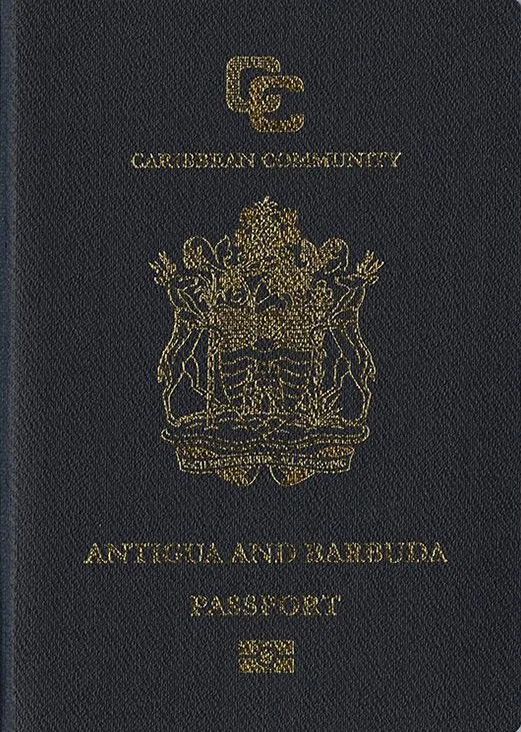
In practice, the obligation is tied to your passport. The Antigua and Barbuda passport is valid for five years, and the authority only considers a renewal if you have spent five days in total in the country during that time. So plan your visit early rather than in the last few weeks before expiry. A week's holiday between sailing coves and white beaches is no burden: it is a good reason to get to know the country whose passport you carry.
If you would like to stay longer than five days, and perhaps move to the islands for good, you should know what everyday life there looks like. What living in Antigua means, with costs, climate and infrastructure, is set out in The downsides of moving to Antigua and Barbuda (in German).
Family: who can be included in the application
The 2024 Regulations redefined who counts as a dependant. The following can be included:
- Spouse of the main applicant.
- Children of the applicant or their spouse up to and including age 30, biological or adopted. The authority requires that they depend on you financially.
- Children of any age with a physical or mental disability whom you fully support.
- Parents and grandparents, yours or your spouse's, if they are 55 or older and you fully support them; with a disability, there is no age limit.
- Unmarried siblings, yours or your spouse's, either adults or minors with the consent of their parents or guardian.
That means a single application can cover three generations. Which other programmes still take parents and grandparents is shown in Parents and grandparents in a CBI application, and for a closer look at children, read A second passport for your children.
Adding dependants after approval
Families keep growing, and Antigua allows for that. If a child included in the application marries after approval, they can add their spouse, provided they are no older than 35 when the request is filed. The same applies to children born to or adopted by an included child after approval. Your own future spouse can join later too.
The fee schedule sets fixed processing fees for later additions:
| Person added later | Processing fee |
|---|---|
| Child up to 5 | 10,000 USD |
| Child aged 6 to 17 | 25,000 USD |
| Dependant aged 18 and over | 50,000 USD |
A second main applicant for emergencies
The 2024 Regulations also plan for the worst. When you apply, you can name a family member aged 18 or over who is on the application as alternate main applicant. They take over the main applicant's duties only if you die or become physically or mentally incapacitated. If your application was approved as a single applicant, you can make the nomination later, together with adding a dependant. The family rules of every programme side by side are under Family.
Application, due diligence and oath: how the process works
You do not file the application with the authority yourself. An agent licensed in Antigua and Barbuda submits the documents in person, together with the payments due. Ten percent of the processing fee and the full due diligence fees fall due on filing. The application consists of forms AB1 to AB5: the application itself, the photo and signature certificate, the medical certificate, the investment confirmation and the agent's form.
Due diligence and interview
The Unit vets every applicant and every dependant aged twelve and over, which is why the due diligence fees are tiered. Anyone who makes false statements in the application or is under criminal investigation is excluded. An interview may be required, in Antigua or at one of the country's embassies or high commissions. What due diligence covers in passport programmes in general is explained in Due diligence in a passport application.
Approval, oath and passport
After approval, the Regulations give you 30 days to pay the rest of the processing fee and make the contribution, complete the property purchase or carry out the business investment. Every successful applicant takes the oath of allegiance, in Antigua or at an embassy, high commission or consulate. You then receive the document confirming your registration as a citizen, the Certificate of Registration, and can apply for the passport. One rule worth knowing: the passport does not automatically give you the right to vote, which is governed by the country's electoral law.
The authority states no processing time on its website. How long the programmes take compared with one another is set out in How fast will you hold your second passport?, and the individual steps of an application are explained under Process.
Travelling on an Antigua and Barbuda passport
For Europe, the passport is convenient. The visa list of the German Federal Foreign Office shows Antigua and Barbuda as visa-exempt: you may stay in Germany for up to 90 days in any 180-day period, as long as you do not work there.
For the United States, citizens of Antigua and Barbuda need a visa. In January 2026 the government stated that existing US visas remain valid unchanged and that the US visa bond affects only a narrow group of new visa applicants. Visa-free access is always the destination country's decision, and that is exactly why a second passport is a safeguard, not a bet on a single list. How the EU deals with the Caribbean programmes, and how you protect yourself with more than one passport, is covered in The EU visa suspension.
Antigua passport and German passport: you keep both
Since 27 June 2024, you no longer lose your German citizenship when you acquire a foreign one by application. You no longer need a retention permit (Beibehaltungsgenehmigung) for this. The Antigua passport sits alongside your German passport; it does not replace it. The details are in CBI passport and German passport.
Nor does the passport on its own change your tax position in Germany. How Antigua and Barbuda's tax system is built is shown in Taxes in Antigua and Barbuda (in German), and how a second passport is treated for tax if you are German is covered under Tax.
The value of the Antigua passport lies in the right it gives you. A visa can be refused or revoked; citizenship belongs to you. It gives you and your family a place where you may live at any time, and a second travel document in case the first is lost, stolen or withheld abroad. And it buys you time: if your long-term goal is naturalisation after years of genuine residence, for example in a country where you plan to live, you can combine the two. How that fits together is explained in CBI and naturalisation. Why a second passport makes sense at all is summed up in eight reasons under Why a second passport.
Frequently asked questions
How much does Antigua and Barbuda citizenship cost?
The least expensive route is a contribution of 230,000 USD to the National Development Fund, for one person or a whole family. On top come the processing fee of 10,000 USD for a single applicant or 20,000 USD for a family of up to four, the due diligence fees and 300 USD per passport. A single applicant therefore pays 248,800 USD to the government in total. For every programme side by side on cost, see Costs.
Do I have to live in Antigua to get the passport?
No. The law asks for no residence before you apply. After naturalisation, you need to spend at least five days in total in Antigua and Barbuda during the first five calendar years. A single holiday is enough.
Up to what age can children be included?
Children of the main applicant or their spouse can be included up to and including age 30, as long as they depend on you financially. Children with a physical or mental disability whom you fully support are included at any age. Children who join the family later can be added for a fixed processing fee. For the family rules of every programme, see Family.
Can my parents be included in the application?
Yes. Your parents and grandparents, or your spouse's, count as dependants if they are 55 or older and you fully support them. With a disability, there is no age limit. Which programmes still take parents and grandparents is compared in Parents and grandparents in a CBI application.
How long is an Antigua and Barbuda passport valid?
The passport is valid for five years. The authority only decides on renewal once you have spent five days in total in Antigua and Barbuda during that period. The fee schedule sets the renewal application at 1,000 USD from age 18 and 500 USD for anyone younger.
Will I lose my German passport if I become a citizen of Antigua?
No. Since 27 June 2024, acquiring a foreign nationality by application no longer costs you your German citizenship. You keep both passports. What to watch out for is explained in CBI passport and German passport.
Do I need a visa for Europe with an Antigua passport?
Not for short stays. According to the visa list of the German Federal Foreign Office (Auswärtiges Amt), nationals of Antigua and Barbuda may stay in Germany without a visa for up to 90 days in any 180-day period, as long as they do not work there.
One application for the whole family
In a consultation we hold your family up against Antigua and Barbuda's rules: who can come along, which route pays off and how the five days fit into your plans. Afterwards you'll know whether Antigua is your programme or whether another one suits you better.
Book a consultationSources
- Citizenship by Investment Unit Antigua and Barbuda: Citizenship (investment routes, residence requirement, legal basis)
- Antigua and Barbuda: Citizenship by Investment (Amendment) Regulations 2024, S.I. 2024 No. 50
- Antigua and Barbuda: Citizenship by Investment (Amendment) Act 2016, No. 2 of 2016, with the Regulations 2016
- Antigua and Barbuda: Citizenship by Investment Act 2013, No. 2 of 2013
- Citizenship by Investment Unit Antigua and Barbuda: Dependants
- Citizenship by Investment Unit Antigua and Barbuda: UWI Fund
- Citizenship by Investment Unit Antigua and Barbuda: Real Estate
- Citizenship by Investment Unit Antigua and Barbuda: Antigua and Barbuda Passport
- Citizenship by Investment Unit Antigua and Barbuda: How to Apply
- Citizenship by Investment Unit Antigua and Barbuda: Statement on U.S. Visa Bonds and Travel to the United States, 7 January 2026
- German Federal Foreign Office (Auswärtiges Amt): visa requirements by country
- Federal Law Gazette (Bundesgesetzblatt) 2024 I No. 104: Act to Modernise Nationality Law (repeal of section 25 StAG)