
The short answer
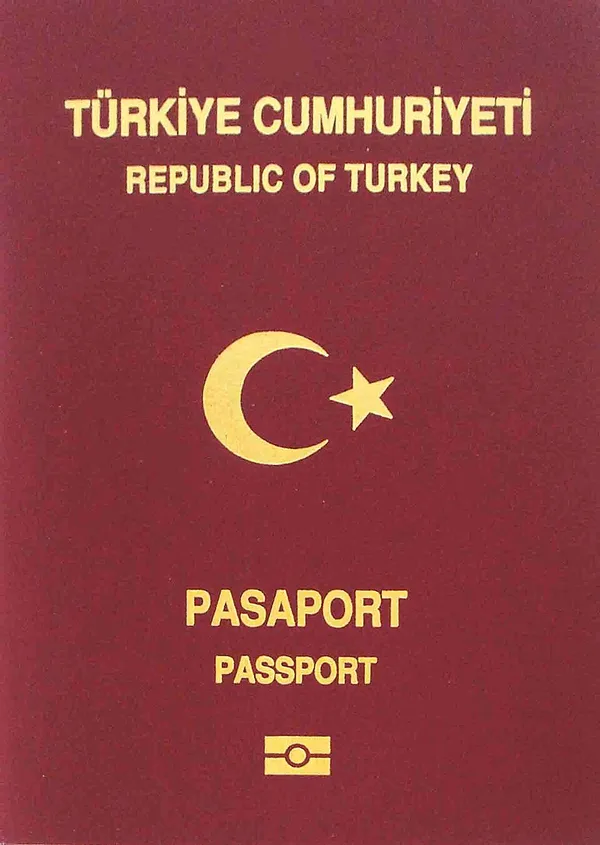
According to the Turkish Ministry of Foreign Affairs, the ordinary Turkish passport takes you to around 70 states and territories without a visa, including Japan, South Korea, Singapore, Brazil, Argentina, Georgia and Ukraine. For the Schengen Area, the US, the UK, Canada, Australia, China and Russia, a Turkish passport needs a visa. Its strength for entrepreneurs: Türkiye has been an E-2 treaty country of the United States since 18 May 1990. The passport is available through investment, from 400,000 USD in real estate with a three-year sale restriction, or from 500,000 USD as a bank deposit, in government bonds, funds, a private pension or a fixed capital investment.
The Turkish passport is not a passport for Europe. It is a passport for the world between Europe and Asia, for Latin America and for entrepreneurs who want to build something in the United States. Türkiye grants it by law to investors, and as a German you keep your German passport. Every programme of this kind is covered in Buying citizenship, and how passports perform worldwide is shown in the passport ranking. With Türkiye, one question comes first: where can I go with this passport, and what does it give me on top of my German one?
Turkish passport: the countries you can visit without a visa
The Turkish Ministry of Foreign Affairs sets out, country by country, which visa rules apply to Turkish citizens, broken down by type of passport. The one that matters for you is the ordinary passport, in Turkish the Umuma Mahsus Pasaport. With it you enter around 70 states and territories without a visa. A dozen or so more are open to you with a visa issued at the border or online, for example the Maldives, South Africa, Kuwait or Saudi Arabia.
| Region | Visa-free with the Turkish passport (selection) | Stay according to the list |
|---|---|---|
| Asia | Japan, South Korea, Singapore, Hong Kong, Indonesia, Thailand, the Philippines | mostly 30-90 days |
| Caucasus and Central Asia | Georgia, Azerbaijan, Uzbekistan, Kyrgyzstan | 30-90 days, Georgia up to one year |
| Eastern Europe and the Balkans | Ukraine, Moldova, Belarus, Serbia, Bosnia and Herzegovina, Albania, North Macedonia, Kosovo | mostly 90 days, Belarus 30 days per entry |
| Latin America | Brazil, Argentina, Chile, Colombia, Peru, Uruguay, Paraguay, Panama | mostly 90 days |
| Middle East and the Gulf | Qatar, Oman, Jordan, Iran, Lebanon | 30-90 days |
| Caribbean and Pacific | St Kitts and Nevis, Antigua and Barbuda, St Lucia, Dominica, Vanuatu | 21 days to 90 days |
Malaysia stamps a free 90-day tourist visa into the passports of Turkish citizens on arrival, which in practice amounts to visa-free travel. The list applies expressly to tourist trips with a single entry. If you want to study, work or stay longer, check the entry rules with the destination country's embassy or consulate.
With the ID card to Georgia, Northern Cyprus, Azerbaijan and Ukraine
One special feature: with the new Turkish identity card, Turkish citizens can travel to four destinations in the region without a passport at all. The list names Georgia, the Turkish Republic of Northern Cyprus, Ukraine when entering directly from Türkiye, and Azerbaijan for tourist trips directly from Türkiye. Since 1 January 2026, Georgia has also required travel and accident insurance with cover of at least 30,000 lari.
Where the Turkish passport needs a visa
For Europe, North America, Australia and some of Asia's big countries, the ordinary Turkish passport needs a visa:
| Destination | Ordinary Turkish passport |
|---|---|
| Schengen Area, including Germany and Austria | visa required |
| USA | visa required |
| United Kingdom | visa required, usually also a transit visa when changing planes |
| Canada, Australia, New Zealand | visa required |
| China, India, Russia | visa required, an e-visa for Russia |
| United Arab Emirates | visa required |
The Schengen states make an exception only for diplomatic, service and special passports. For the ordinary passport the visa stays, as the German Federal Foreign Office's list of countries also confirms for entry into Germany. The EU's roadmap towards visa liberalisation covers 72 criteria and is tied to the readmission agreement, which has been in force since 1 October 2014. For the ordinary passport, the visa requirement still applies today.
For you as a German, that is no drawback. You keep travelling to Europe, North America and the UK on your German passport. How far it takes you and where it hits its limits is covered in German passport: visa-free countries, and which second passports get into the US, the UK, Canada and China without a visa in USA, UK, Canada, China: which second passport travels visa-free where. The Turkish passport complements your German one where a second passport genuinely adds something.
German and Turkish passports together: what dual citizenship gives you
Since 27 June 2024, acquiring a foreign citizenship by application no longer costs you your German one. On the investor route, Türkiye does not ask you to give up your existing citizenship either. Its Citizenship Law No. 5901 even defines multiple citizenship expressly and provides in Article 44 that it is recorded in the civil registry. You then hold two passports, each with its own rights.
What the second passport actually gives you
A right instead of a permit in Türkiye. As a foreigner you live there on a residence permit that has to be renewed and can be refused. As a citizen you no longer need any residence permit. If you want to move your home to Türkiye, the facts on residence, tax and daily life are in the German-language country profile Moving to Türkiye.
A second travel document. If your German passport is lost, stolen or held abroad, you carry on travelling lawfully with your Turkish passport. With two passports you also have two states whose consulates you can turn to.
E-2 access for your family and your company. This is where the value lies that many people overlook.
ESTA and taxes
When you travel to the US under ESTA on your German passport, the form asks about every citizenship you hold. Declare your Turkish one truthfully. What that means for your application is explained in ESTA with a second citizenship.
For tax purposes, a second passport changes nothing on its own. Under section 1 of the Income Tax Act (Einkommensteuergesetz, EStG), you are fully liable to tax in Germany if you have a home or your habitual abode there, not because you hold a particular passport. How residence and citizenship interact for tax is shown on the Taxes page.
E-2 visa with a Turkish passport: your access to the USA
The E-2 visa is the visa for investors who build or buy a business in the US and run it themselves. It is open only to nationals of countries with which the US has a suitable treaty of commerce or investment. According to the US State Department's list, Türkiye has been a treaty country for E-2 since 18 May 1990, and for the E-1 treaty trader visa since as far back as 15 February 1933.
Türkiye shares this status with other countries in the comparison, among them:
| Programme | E-1 | E-2 since |
|---|---|---|
| Türkiye | yes, since 15 Feb 1933 | 18 May 1990 |
| Jordan | yes, since 17 Dec 2001 | 17 Dec 2001 |
| Grenada | no | 3 Mar 1989 |
The Grenada route is described in detail in The Grenada passport and the E-2 visa. The full list of every treaty country is in the overview E-2 visa: list of treaty countries.
Why this matters for Germans too
Germany itself has been an E-2 treaty country since 14 July 1956, Austria since 1931 and Switzerland since 1855. As a German, you already have E-2 access. The Turkish passport extends it to family members who hold no such passport, and gives you room to manoeuvre when you structure your US company:
- Spouses and children from non-treaty countries. Brazil, India, Russia, South Africa, the United Arab Emirates and Saudi Arabia are not on the list. As family members of an E-2 investor, spouses and children do accompany you whatever their nationality. With the Turkish passport from the joint investor application, though, they can qualify in their own right as an E-2 investor or E-2 employee, with a company of their own or in yours.
- Employees of the same nationality. E-2 employees must share the company's nationality, which is determined by its owners: at least 50 percent must be nationals of the treaty country. A company that counts as Turkish for E-2 purposes can bring qualified specialists and managers from Türkiye to the US.
- Free choice as a dual citizen. The US State Department requires dual citizens to choose a single nationality for a given company and to identify as nationals of that country for every E visa of that company. With two treaty country passports, you decide which nationality your US company carries.
Treaty status alone is not enough. You need a substantial investment in a real, operating business that earns more than a modest living for you and your family, and you must develop and direct it. How much you should invest, which documents the consulate wants to see and how the interview works are explained in the guide US E-2 visa: requirements and process.
How to get a Turkish passport: investment from 400,000 USD
The legal basis is Article 12(1)(b) of Turkish Citizenship Law No. 5901, read together with Article 20(2) of its implementing regulation. Citizenship is granted by decision of the President, provided there are no grounds of national security or public order against it. These routes are available:
| Investment | Minimum amount | Holding period |
|---|---|---|
| Real estate | 400,000 USD | three years, sale restriction in the land registry |
| Bank deposit | 500,000 USD | three years |
| Government bonds | 500,000 USD | three years |
| Real estate or venture capital fund | 500,000 USD | at least three years |
| Private pension | 500,000 USD | three years |
| Fixed capital investment | 500,000 USD | no requirement |
| Jobs | at least 50 employees | no requirement |
Amounts are converted at the Central Bank of the Republic of Türkiye's foreign exchange selling rate on the day of assessment. Before you apply, you need a residence permit under Law 6458, Article 31(1)(j), which exists specifically for these investors. The conditions must remain met throughout the holding period, otherwise the naturalisation is revoked. What to watch for on the real estate route is described in Turkish passport through property purchase, and the total costs of every programme on the Costs page.
Your family in the same application
Your foreign spouse and the minor or dependent children of the investor and the spouse can be included in the application. That way your whole family receives the same passport with the same travel rights and the same E-2 eligibility. How other programmes treat families is shown on the Family page.
Military service in Türkiye: what sons should know
Türkiye has conscription, and Law No. 7179 sets out expressly what applies to new citizens. Under Article 43, naturalised citizens serve according to their age and level of education in the year of naturalisation, just like the conscripts of that age group. Two groups count as having served:
- anyone who is 22 or older in the year of naturalisation
- anyone who can show that they did military service in their previous country or are deemed to have served there
Younger sons can, on request, receive a two-year deferral from the date of naturalisation. In the event of mobilisation, naturalised citizens can also be called up as needed. For dual citizens living abroad, the law provides two concessions: deferral of all military service matters until the end of the year in which they turn 35 (Article 38), and, after at least three years of actual residence abroad, discharge of the service obligation by payment in foreign currency, known as dövizle askerlik (Article 39(2)).
For families with sons under 22, it therefore pays to choose the timing of the application with care. What the German side of conscription looks like is covered in Military service, and what applies to dual citizens in an emergency in Dual citizenship in wartime.
Who the Turkish passport is worth it for
The Turkish passport does not replace your German passport, and it is not meant to. It is an addition with a clear profile.
Entrepreneurs with their eye on the US. If you are building a US company with partners or employees from non-treaty countries, the Turkish passport gives you freedom to structure the E-2 visa for yourself, your family and your team.
Anyone who wants to live in Türkiye. A residence permit is a permission that an authority has to renew. Citizenship is a right that depends on no renewal.
Families with a binational background. A spouse from Brazil, India or Russia gains, with the Turkish passport, their own E-2 eligibility and the right to live in Türkiye without giving up their existing citizenship, provided their home country allows it.
A Plan B alongside your German passport. Two passports mean two states that recognise you as a citizen. You will find eight reasons for a second passport under Why a second passport.
Investment is not the only way into Turkish citizenship, but it is the fastest. If you live there anyway, you can keep ordinary naturalisation in view at the same time; under Article 11 of the Citizenship Law it requires five years of uninterrupted residence in Türkiye. Why you should pursue both routes is explained in CBI and naturalisation: the investment buys you the time that naturalisation through residence would otherwise cost. All figures, legal bases and authorities for the programme are on the Türkiye page, and the application process step by step under How it works.
Frequently asked questions
How many visa-free countries does the Turkish passport have?
For the ordinary passport, the Turkish Ministry of Foreign Affairs lists around 70 states and territories without a visa, plus a dozen or so more where you get your visa at the border or online. The figures apply to tourist trips with a single entry. How other investment passports compare is shown in Visa-free travel with CBI passports compared.
Do Turkish citizens need a visa for Germany and the Schengen Area?
Yes. According to the German Federal Foreign Office's list of countries, Turkish nationals need a visa for Germany, and the Turkish list states the same requirement for every Schengen state. Only diplomatic, service and special passports are exempt. As a German with a second passport, you simply travel within Europe on your German passport.
Can I get a US E-2 visa with a Turkish passport?
Yes. Türkiye is on the US State Department's list of treaty countries, for E-2 since 18 May 1990 and for E-1 since 15 February 1933. You still have to meet the other requirements, above all a substantial investment in a real business that you develop and direct yourself. The details of the process are explained in the guide US E-2 visa.
Can I hold German and Turkish citizenship at the same time?
Yes. Since 27 June 2024 you no longer lose German citizenship when you acquire a foreign one by application. Turkish citizenship law expressly recognises multiple citizenship and records it in the civil registry. More in CBI passport and German passport.
Do sons have to do military service in Türkiye after naturalisation?
That depends on their age. Anyone who is 22 or older in the year of naturalisation, or who can show that they served in their previous country, counts as having served under Article 43 of Law 7179. Younger sons are treated like their age group and can apply for a two-year deferral. Dual citizens living abroad can defer military service until the end of the year in which they turn 35 and, after at least three years abroad, discharge it with a payment in foreign currency.
What is the fastest way to get a Turkish passport?
The investor programme under Article 12 of the Turkish Citizenship Law: real estate from 400,000 USD with a three-year sale restriction in the land registry, or 500,000 USD as a bank deposit, in government bonds, fund units, a private pension or as a fixed capital investment. Before that you need a residence permit under Law 6458, Article 31(1)(j). All the figures are on the programme page Türkiye.
The Turkish passport as your door to the East and the USA
Together with you, we check whether the Turkish passport fits your travel plans, your US ambitions and your family, and which type of investment makes sense for you. Afterwards you know whether Türkiye is your route or whether another programme gets you there faster.
Book a consultationSources
- Ministry of Foreign Affairs of the Republic of Türkiye: Türk Vatandaşlarının Tabi Olduğu Vize Uygulamaları (visa rules for Turkish citizens)
- Ministry of Foreign Affairs of the Republic of Türkiye: questions and answers on visa liberalisation, the readmission agreement and the migration action plan
- U.S. Department of State: 9 FAM 402.9, Treaty Traders and Treaty Investors (E-1, E-2), with the list of treaty countries
- Republic of Türkiye: implementing regulation of the Turkish Citizenship Law, Article 20 (mevzuat.gov.tr)
- Republic of Türkiye: Turkish Citizenship Law No. 5901, Articles 3, 12, 20, 44 (mevzuat.gov.tr)
- Nüfus ve Vatandaşlık İşleri Genel Müdürlüğü: procedure for the naturalisation of foreign investors
- Republic of Türkiye: Military Service Law No. 7179 (Askeralma Kanunu), Articles 38, 39, 43 (mevzuat.gov.tr)
- German Federal Foreign Office (Auswärtiges Amt): visa requirements for entry into Germany by country
- German Federal Foreign Office (Auswärtiges Amt): loss of German citizenship, questions and answers
- Gesetze im Internet: Income Tax Act (EStG), section 1