The short answer
A second passport is the passport of a second citizenship that you hold in addition to your existing one. There are four routes to it: investment, naturalisation through residence, descent and birth. Since 27 June 2024 Germans no longer lose their citizenship when they acquire a foreign one, the Swiss have been free to hold dual citizenship without restriction since 1992, and Austrians need a retention permit beforehand. Investment is the fastest route to the passport: in Sierra Leone usually 90 to 120 days, from 95,000 USD for a single applicant (from 80,000 USD per person as a pair), and in São Tomé and Príncipe from 90,000 USD, with around two months to approval and then three to four months to the passport.
What is a second passport, and how is it different from a visa?
A second passport is not a special document and not a second-class ID. It is the perfectly ordinary passport of a second state whose citizenship you hold in addition to your existing one. The passport is only the visible sign. What really counts is the citizenship behind it: it makes you a citizen, with every right that state gives its citizens.
This is exactly what sets it apart from everything many people treat as equivalent. A visa, a golden visa, a residence permit or permanent residence are permissions. A state grants them, and the same state can refuse them, decline to renew them or revoke them. Citizenship, by contrast, is a right. You do not have to renew it, prove that you are still welcome, or hope that the conditions stay the same.
| Status | What you get | Who decides about the future |
|---|---|---|
| Visa | Entry and stay for a limited time | the authority, anew at every renewal |
| Residence permit, golden visa | The right to live there, under conditions | the authority, as long as the conditions apply |
| Citizenship with a passport | The right to enter, stay, work and return | you |
Why this difference decides your freedom is explored in A right, not a permission. And if you are torn between a residence programme and genuine citizenship, the trade-off is weighed up in Second passport or golden visa.
A word on terms: second passport, second citizenship and dual citizenship mean the same thing in everyday use. In legal language Germany speaks of Staatsangehörigkeit, Austria of Staatsbürgerschaft and Switzerland of Bürgerrecht. Each of them means a person's legal membership of a state.
Why a second citizenship? The benefits at a glance
Most people who look into a second passport do not want to leave. They want choice. They have seen how quickly rules can change, and they do not want their freedom of movement to depend on a single authority. The eight most important reasons are set out in detail under Why a second passport. The benefits that count most in real life:
- A second foundation. Two citizenships mean two independent bases for a travel document. If one fails, the other holds.
- A country that has to take you in. As a citizen you have the right to enter and stay. What that means in a crisis is shown in Plan B when it matters.
- A second state on your side. With two citizenships you can turn to two sets of diplomatic missions abroad. How that works on the consular side is explained in Two embassies instead of one.
- Travel on when your passport is gone. Stolen, lost, held abroad: with a second passport you do not depend on an emergency travel document. The details of this case are in Passport lost abroad.
- More room for entrepreneurs. New markets, business visas, banking relationships: a second passport opens doors the first one does not. More in A second passport for entrepreneurs.
- A legacy for your children. In many states citizenship can be passed on to children. You are not buying for yourself alone, but for generations.
Whether it also adds up financially is a sober calculation that The second passport as insurance works through step by step. And because few topics attract as many half-truths, Ten myths about the second passport clears away the most stubborn ones.
Can Germans, Austrians and Swiss hold two passports?
This is the first question you need to settle, even before you choose a country. What happens to your existing citizenship is decided by your home country's law alone. And the three German-speaking countries take very different paths.
Germany: multiple citizenship is allowed
The modernised nationality law has applied since 27 June 2024. The Federal Foreign Office sums it up clearly: anyone who acquires a foreign citizenship by application no longer loses German citizenship as a result. You no longer need the former retention permit. For Germans, the road to a second passport is therefore more open than ever. The details are in Dual citizenship for Germans, and Second citizenship as a German brings together every route to a second passport from a German point of view.
One point remains important: whether you may keep the new citizenship alongside your German one is also up to the other state. Sierra Leone, for example, accepts multiple citizenship without restriction.
Austria: first the permit, then the passport
Austria is much stricter. Anyone who voluntarily acquires a foreign citizenship loses Austrian citizenship automatically, by operation of law, without any authority having to decide anything. The loss is avoided only if you applied for retention before the acquisition and it was granted. Grounds for it can be services in the interest of the Republic, the welfare of a child, or a reason in your private and family life that particularly deserves consideration.
That is why the order is everything. First the permit, then the application in the other country. How to set this up properly and what alternatives exist is described in Second citizenship for Austrians.
Switzerland: dual citizenship without restriction
Switzerland has allowed multiple citizenship without restriction since 1 January 1992. Whether you may acquire a foreign citizenship depends solely on the law of the other state. For the Swiss, a second passport is therefore mainly a question of finding the right country. What applies to dual citizens in everyday life is summed up in Swiss with a second passport.
| Home country | Second passport allowed? | What you must do first |
|---|---|---|
| Germany | yes, since 27 June 2024 | nothing, no permit required |
| Austria | only with retention | obtain the permit before acquiring |
| Switzerland | yes, since 1 January 1992 | nothing, check the other state's law |
How do you get a second citizenship? The four routes
There are exactly four routes to a second citizenship. Each has its own logic, its own price and its own pace. No route is better than the others in principle. What matters is which one fits your situation, and often the smartest answer is a combination.
| Route | What you bring | Typical pace | In depth |
|---|---|---|---|
| Investment | Capital with a documented source | months | Buying citizenship |
| Naturalisation through residence | Time, genuine residence, often language skills | years | Naturalisation abroad |
| Descent | Your ancestors' documents | depends on the records | Citizenship by descent |
| Birth | Being born in the right country | from birth | Birth tourism |
Investment: the fastest route
With citizenship by investment, CBI for short, a state grants its citizenship in return for a contribution or an investment fixed by law. The basis is always a law or a regulation, and a dedicated authority decides on the application, often a Citizenship by Investment Unit. As a rule you do not have to move, learn a language or wait for years. That makes this the fastest and most predictable route.
Naturalisation through residence: the route that takes time
The classic route runs through residence: you live in a country for a number of years, meet its requirements and are naturalised. It costs little money but a lot of time and genuine presence on the ground. You build a life in the other country for it: a home, a residence permit, often language skills and proof that you really live there. If you plan to emigrate anyway, the passport is in a sense the reward for a step you are taking regardless. If you are looking towards South America, the overview of naturalisation in Latin America compares 21 countries.
Investment and naturalisation do not rule each other out. In the end naturalisation is the route with no price tag and often the stronger one, but it takes years. Investment buys you exactly that time. Why you should pursue both is explained in CBI and naturalisation.
Descent: the passport that may already be waiting for you
Many people have a claim to a second citizenship without knowing it. The best example is Ireland: anyone born outside Ireland who has a grandparent born on the island of Ireland can become an Irish citizen through the Foreign Births Register. Once you are entered in the register you are Irish and can apply for an Irish passport, in other words a passport of the European Union. For a complete application the Irish Department of Foreign Affairs quotes a processing time of around twelve months. What this means for dual citizens is described on the page on dual citizenship with Ireland. Other states also pass their citizenship down the generations, so a close look at your family tree pays off.
Birth: the passport you give your child
Some states grant citizenship to anyone born on their soil. Canada, for example, makes a citizen of anyone born there after 14 February 1977, with the main exception of children of foreign diplomats. For families this is the most direct way to give a child a second passport from day one.
Which of these routes means the least effort for you is shown in Which citizenship is easiest to get?.
Buying a second citizenship: countries and amounts
A search for "buy second citizenship" quickly leads to lists full of countries, prices and promises. The only reliable figures are those of the programmes themselves, taken from the law, the regulation or the official programme website. This is the lowest entry point per country, plus fees in each case:
| Country | Entry from | Time according to the source | What you need to know |
|---|---|---|---|
| Sierra Leone | 95,000 USD alone (Solo Entrepreneur), 80,000 USD per person as a pair (Enterprise) | usually 90-120 days | 100% remote, no travel needed |
| São Tomé and Príncipe | 90,000 USD donation | around 2 months to approval, then 3-4 months to the passport | no residence or move needed |
| Vanuatu | 130,000 USD | certificate within 90 days of approval | oath before a court in Vanuatu |
| Dominica | 200,000 USD | first response within three months | no residence before or after naturalisation |
| Antigua and Barbuda | 230,000 USD | no fixed timeline published | five days' stay in the first five years |
| Grenada | 235,000 USD | approval within 60 working days | no visit needed |
| St Lucia | 240,000 USD | no fixed timeline published | interview, residence and genuine ties required |
| St Kitts and Nevis | 250,000 USD | decision in 120-180 days | interview for everyone aged 16 and over |
| Türkiye | 400,000 USD in property | no fixed timeline published | three-year holding period, residence permit first |
| Jordan | 350,000 JOD existing business | no fixed timeline published | jobs for Jordanians; new projects from 500,000 JOD with a three-year provisional passport |
| Cambodia | 4,000,000,000 KHR investment | review within 45 working days at most | attendance in person when applying |
What comes on top of the entry amount
The entry amount is never the whole bill. Every state charges its own fees for the application, the checks and the certificate, and they belong in your planning from the start. A few examples from the regulations and official websites:
- São Tomé and Príncipe: 5,000 USD filing fee per application, 750 USD per person for the citizenship documents. You pay the donation itself only after approval in principle.
- Dominica: 7,500 USD due diligence fee for the main applicant, 1,000 USD processing fee per application, 1,000 USD per interview and 500 USD per certificate of naturalisation.
- St Kitts and Nevis: 10,000 USD due diligence fee for the main applicant, 7,500 USD per spouse or dependant aged 16 and over, plus a 250 USD application fee per person.
- Sierra Leone: as a Solo Entrepreneur you come to 103,750 USD in total: 95,000 USD programme fee, 3,750 USD reduced filing fee and 5,000 USD processing fee including the background check.
These amounts are written in the regulations and on the programmes' websites, not in the small print. That is exactly what separates a statutory programme from any offer that promises you a passport for a flat price, with no authority involved.
Sierra Leone: the route without a single day of travel
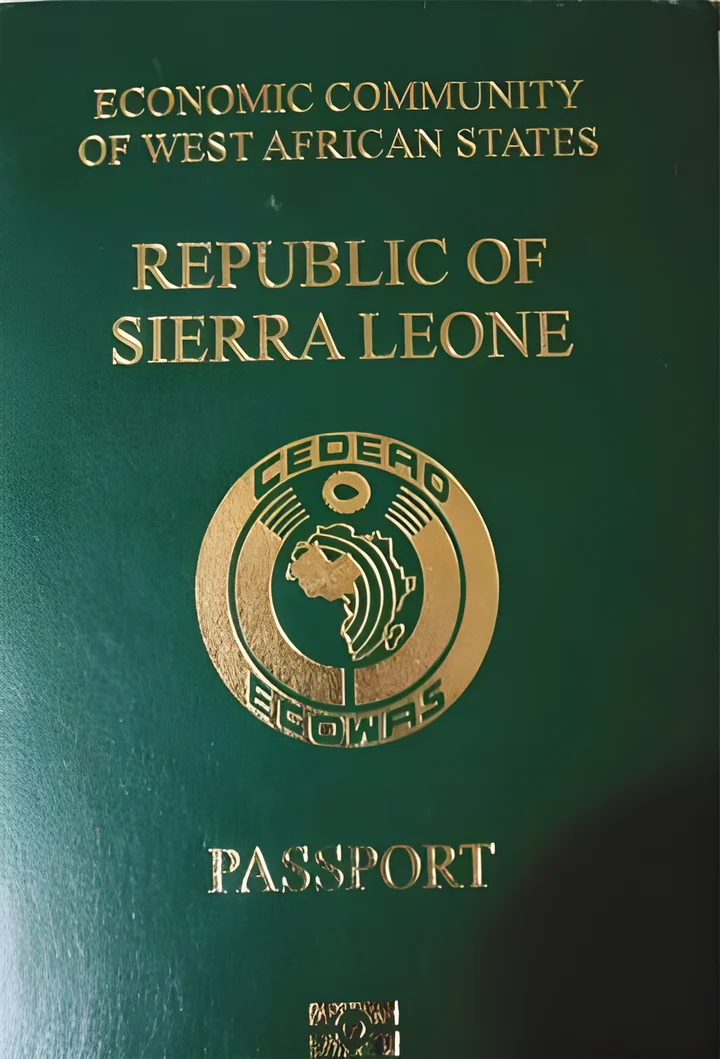
Sierra Leone comes first because it handles the application entirely from a distance. You do not travel to Freetown and need no embassy appointment; the oath of allegiance and the declarations are notarised via Zoom. The programme does not ask for a police certificate, a medical examination or reference letters; the independent due diligence covers the background check of every applicant aged 18 and over. The programme fee is held in an escrow account until naturalisation. If you are in a hurry, you choose the optional Priority Processing for 10,000 USD per application: the passport is then issued and dispatched no later than 120 days after all documents and the programme fee have been received in full.
What sets the regions apart
Each region has its own model. The Caribbean relies on contributions to state funds or on property that has to be held for a number of years. Africa offers the lowest entry amounts and very short timelines: Sierra Leone completes the application entirely remotely and, with the Fast Track from 140,000 USD, also has a route for the whole family. Türkiye, Jordan and Cambodia focus mainly on investment in their economies.
You will find every programme with its routes, fees and family rules under Programmes, side by side under Comparison and with every additional cost under Costs. How citizenship by investment works in principle is explained in Buying citizenship, and which programmes stand on a sound legal footing is shown in Buying a passport, legally.
A second passport for the whole family
A second passport only shows its full value when the people who matter most to you have the same protection. Almost every programme therefore takes family members into the same application, and with many a family costs hardly more than a single person.
- Dominica: 200,000 USD for one person, 250,000 USD for a main applicant with up to three dependants.
- São Tomé and Príncipe: 90,000 USD for one person, 95,000 USD for a family of two to four.
- St Kitts and Nevis: 250,000 USD for the main applicant or a family of up to four.
- Sierra Leone: on the Fast Track, spouses, children, parents, grandparents and siblings can join the application.
Who counts as a dependant is precisely defined in each country. Children up to 30 in education, parents above a certain age, in some cases siblings too: the differences are large and help decide which programme is the right one for you. All the rules side by side are under Family.
With children there is a second thought. Securing a second passport for your child today gives them a choice they will only make themselves many years from now. How this works through birth and when an investment programme is the better choice is compared in Birth tourism or CBI.
Can your German passport be taken away?
Many Germans consider their passport untouchable. The Passport Act takes a more sober view. Under section 7(1) no. 4 of the Passport Act (Passgesetz, PassG), a passport is refused if certain facts justify the assumption that someone intends to evade their tax obligations. Section 8 PassG allows a passport already issued to be withdrawn on the same grounds. How quickly that can happen and what other grounds the law knows is shown in Passport withdrawal.
Conscription law also touches on your freedom to travel. Section 3(2) of the Conscription Act (Wehrpflichtgesetz) requires German men from the age of 17 to obtain permission from the Bundeswehr careers centre if they want to leave Germany for more than three months. Since 17 April 2026 this requirement has been suspended for everyone by a general order of the Ministry of Defence, but the ministry can bring it back at any time with a single order, without a new law. What this means for families with sons is described in Conscription.
One clarification belongs here, because it concerns your safety: a second passport is not a tool for getting around an exit ban, a court order or a passport withdrawal. Its strength lies elsewhere. It is the lawful way forward when your first passport has been lost, stolen or held abroad, and it gives you a second citizenship that does not depend on the decisions of any single authority.
Travelling with two passports: which one when?
When you travel with two passports, one simple rule applies: with a state whose citizen you are, you use that state's passport. At the German border you identify yourself as a German, and your second home country expects its own passport. To every other country you travel on the passport that gives you the better terms there. How this works at check-in and at the border is explained in Travelling with two passports.
For Germans, Austrians and Swiss the European passport usually remains the stronger travel document. The second passport has a different job: it secures rights, not stamps. How strong a passport is by international comparison and what such rankings really measure is explained in Passport ranking.
There are two points you should know. First, the visa-free access of a second passport can change: the EU, for example, has withdrawn visa-free travel to the Schengen area for holders of Vanuatu passports. For you as a European this rarely matters, because you enter the Schengen area on your European passport anyway. Second, the US ESTA travel authorisation explicitly asks about any other citizenships, and you answer that question truthfully. What this means for dual citizens is described in ESTA with a second citizenship.
Second passport and taxes: what changes and what does not
This is where the most stubborn misunderstandings live. The basic rule in Germany is simple: under section 1(1) of the Income Tax Act (Einkommensteuergesetz, EStG), anyone who has a residence or their habitual abode in Germany has unlimited income tax liability. Citizenship plays no role. A second passport therefore changes nothing about your German tax liability as long as you live in Germany.
The United States is different: it taxes its citizens on their worldwide income, wherever they live. That is why the choice of country is also a tax decision.
If you really want to lower your tax burden, you need a suitable residence as well as the passport. Which countries are an option is shown in the list of low-tax countries (in German). How passport and taxes interact is explored in Passport and taxes, and the tax points of each programme are under Taxes.
One passport rarely stays alone
Once you have felt how much peace of mind a second passport brings, you often think further. An investment passport for quick protection, naturalisation through residence for the long term, a citizenship by descent that turns up in the family tree one day: this is how collections of three or four passports come about. Why that is not a luxury but a logical development is told in Two, three, four passports.
Behind it lies an idea older than any programme: flag theory. Passport, residence, company and assets in different countries, so that no single state determines your whole life. The second passport is the first and most important flag in it, because it gives you a right, not a permission that an authority renews or refuses at will.
Five steps to your second passport
The road to a second passport is clearer than most people expect. With the right order you avoid the typical mistakes.
1. Set your goal
Do you want protection, travel, room to grow your business or a choice for your children? The goal determines the route. If you want security quickly, look at investment programmes; if you plan to emigrate anyway, look at naturalisation. Write down who should be on the application, how much capital you want to commit and by when you want to hold the passport in your hands. With these three answers, the list of suitable countries usually shrinks to two or three.
2. Check your home country's law
As a German or Swiss citizen you can start straight away. As an Austrian you first obtain the retention permit, before you file an application anywhere.
3. Choose your route and country
First check whether you have a claim through descent. Then compare amounts, timelines, family rules and obligations such as an interview, an oath or a minimum stay. The comparison of all programmes helps here.
4. Documents and checks
Every reputable programme vets you thoroughly: identity, source of funds, sanctions lists. That is a good thing, because thorough vetting protects the value of your passport. What to expect is described in Due diligence in the passport application, and why a properly passed check protects you in the long run is shown in Citizenship revoked.
5. Approval, oath and passport
Depending on the country, you pay the contribution before or after approval or complete the investment, take an oath of allegiance and receive your certificate and passport. The process step by step is under Process.
Every topic around the second passport
| Topic | What it covers |
|---|---|
| Second citizenship as a German | every route from a German point of view |
| The easiest citizenship | the simplest routes to a second passport |
| A right, not a permission | why a passport is worth more than a visa |
| Second passport or golden visa | citizenship versus a residence permit |
| Two, three, four passports | why it rarely stops at one |
| The second passport as insurance | when it pays off for you |
| A second passport for entrepreneurs | travel, markets, freedom to act |
| Plan B when it matters | what a second passport does when things get serious |
| Passport lost abroad | stolen, confiscated, held |
| Two embassies instead of one | consular protection with two citizenships |
| Buying a passport, legally | how to recognise programmes anchored in law |
| Ten myths about the second passport | what is really true |
The seven major topic areas around the second passport: Citizenship by investment, Naturalisation abroad, Citizenship by descent, Birth tourism, Dual citizenship for Germans, Passport ranking and Flag theory.
Frequently asked questions
Can I have a second citizenship as a German?
Yes. Since 27 June 2024 you no longer lose German citizenship when you acquire a foreign one by application, and you no longer need a retention permit for it. Whether the other state accepts dual nationals is governed by its own law. Every route at a glance is in Second citizenship as a German.
How much does a second citizenship cost?
Through descent you usually pay only official fees; through naturalisation you pay mainly with time. For citizenship by investment, amounts start in Sierra Leone at 80,000 USD per person for two joint applicants and 95,000 USD for a single applicant, in São Tomé and Príncipe at 90,000 USD and in the Caribbean at 200,000 USD in Dominica, plus fees in each case. Every item per country is listed on the Costs page.
Which citizenship is the easiest to get?
The easiest is the one you already have a claim to, for example through a grandparent. Without such roots, investment programmes are the simplest route, because they require no move and decide in months rather than years. The simplest routes are compared in Which citizenship is easiest to get?.
Is it legal to buy a passport?
Yes, if the state sets out naturalisation by investment in a law or regulation and a government authority examines and decides on your application. Your passport is then a regular passport with all the rights of a citizen. How to recognise such programmes is shown in Buying a passport, legally.
Do I have to emigrate to get a second passport?
No. Most investment programmes require no residence: Dominica and São Tomé and Príncipe, for example, neither before nor after naturalisation, and Sierra Leone runs entirely remotely. Only with naturalisation through residence do you actually have to live in the other country.
Will I lose my citizenship as an Austrian if I take a second passport?
Yes, if you acquire the foreign citizenship voluntarily and retention was not approved beforehand. The loss occurs by operation of law, without any decision being issued. The permit must therefore be in place before you acquire the new citizenship; details in Second citizenship for Austrians.
Does a second passport change my tax liability in Germany?
No. In Germany you have unlimited tax liability if you have a residence or habitual abode there; citizenship plays no role. How to combine passport and residence sensibly is covered in Passport and taxes.
Which second passport suits you and your family?
In a consultation we work out what your home country's law allows, which of the four routes is open to you and which programme fits your goal, your budget and your family.
Book a consultationSources
- Federal Foreign Office (Auswärtiges Amt): nationality law, key changes
- oesterreich.gv.at: loss, deprivation and renunciation of Austrian citizenship
- Swiss Federal Department of Foreign Affairs: dual citizenship
- Passport Act (Passgesetz), section 7 refusal of a passport (with section 8 withdrawal)
- Conscription Act (Wehrpflichtgesetz), section 3(2)
- Income Tax Act (Einkommensteuergesetz), section 1 tax liability
- Internal Revenue Service: U.S. citizens and resident aliens abroad
- Department of Foreign Affairs Ireland: Registering a foreign birth
- Justice Laws Canada: Citizenship Act, section 3
- U.S. Customs and Border Protection: Enhancements to ESTA, FAQ
- Citizenship by Investment Unit São Tomé and Príncipe: Investment structure
- Government of Vanuatu, Citizenship Office and Commission: Press release of 2 December 2024
- Federal Ministry of Defence: general exemption from the permit requirement under section 3(2) WPflG (BAnz AT 16.04.2026 B3)