The short answer
The main news in 2026 is two additional routes in Sierra Leone from USD 80,000 per person since 25 September 2026, and Argentina, which plans to accept applications for USD 350,000 from the fourth quarter of 2026. The young programmes include São Tomé and Príncipe from USD 90,000 and Nauru, whose contribution stays at USD 90,000 until the end of 2026. The Caribbean countries have tightened up: Saint Lucia has required residence and a genuine link since 1 January 2026, and St Kitts and Nevis records the biometrics of everyone naturalised through the programme.
A passport is a right, not a permission. A visa can be refused or taken away from you; a nationality cannot. That is exactly why it pays to watch closely everything that moves in citizenship by investment: every new programme is an extra door, and every new rule changes the path through an existing one.
In 2026 two things are happening at once. On one side, countries that have never granted passports for investment are joining in, and young programmes are adding cheaper routes. On the other, the established Caribbean programmes are raising their requirements, with residence, biometrics and regional oversight. Put the two together and you have the current list.
Which countries sell citizenship in 2026?
A programme makes the list when it has a legal basis, a competent authority and published amounts. Argentina is the only announced programme on it, because the government has already named the amounts and the start date. This is the list of countries where you can obtain a passport through investment in 2026:
| Country | Entry point | What applies in 2026 |
|---|---|---|
| Sierra Leone | USD 80,000 per person (two applicants) | Solo Entrepreneur and Enterprise Citizenship since 25 Sep 2026 |
| São Tomé and Príncipe | USD 90,000 | programme based on Decree-Law No. 07/2025 |
| Nauru | USD 90,000 | contribution at this level for applications accepted by 31 Dec 2026, regularly USD 115,000 |
| Vanuatu | USD 130,000 | statutory minimum price, Schengen only with a visa |
| Dominica | USD 200,000 | no residence required, interview from age 16 |
| Dominican Republic | USD 200,000 (investor residence) | naturalisation after six months with property, decision at the government's discretion |
| Antigua and Barbuda | USD 230,000 | five days' stay in the first five years |
| Grenada | USD 235,000 | residence requirement waits for the regional regulator |
| Saint Lucia | USD 240,000 | residence and genuine link since 1 Jan 2026, annual cap |
| St Kitts and Nevis | USD 250,000 | biometrics for everyone naturalised through the programme |
| Egypt | USD 250,000 (direct payment) | four statutory routes, USD 10,000 application fee |
| Argentina | USD 350,000 | announced, applications from the fourth quarter of 2026, no amount in the Boletín Oficial yet |
| Türkiye | USD 400,000 (property) | rules since the decision of 12 Dec 2023 |
| Jordan | JOD 350,000 (existing business outside the capital region) | investment in projects or shares |
| Cambodia | KHR 4 billion (project investment) | law amended on 5 Sep 2025 |
| El Salvador | USD 1 million in Bitcoin or USDt | for the whole family, programme designed for 1,000 participants |
| Pakistan | PKR 5 million foreign currency transfer | for Commonwealth citizens only |
Also announced, but not yet accepting applications, are St Vincent and the Grenadines and Tonga, and Botswana has passed its law, which is not yet in force.
The amounts are the government's minimum contributions or minimum investments. On top come application, due diligence and issuance fees in every country, and they vary with the size of the family. You will find the full calculation for each programme on the Costs page and every programme side by side in the comparison. If you want a broader overview of every route to a second citizenship, naturalisation, descent and investment together, it is in the guide to routes to a second citizenship (in German).
Young programmes 2026: Sierra Leone, São Tomé and Nauru
The most exciting movement is not coming from the Caribbean but from Africa and the Pacific. Programmes have appeared there in recent years that sit well below Caribbean entry prices and work without a trip to the country.
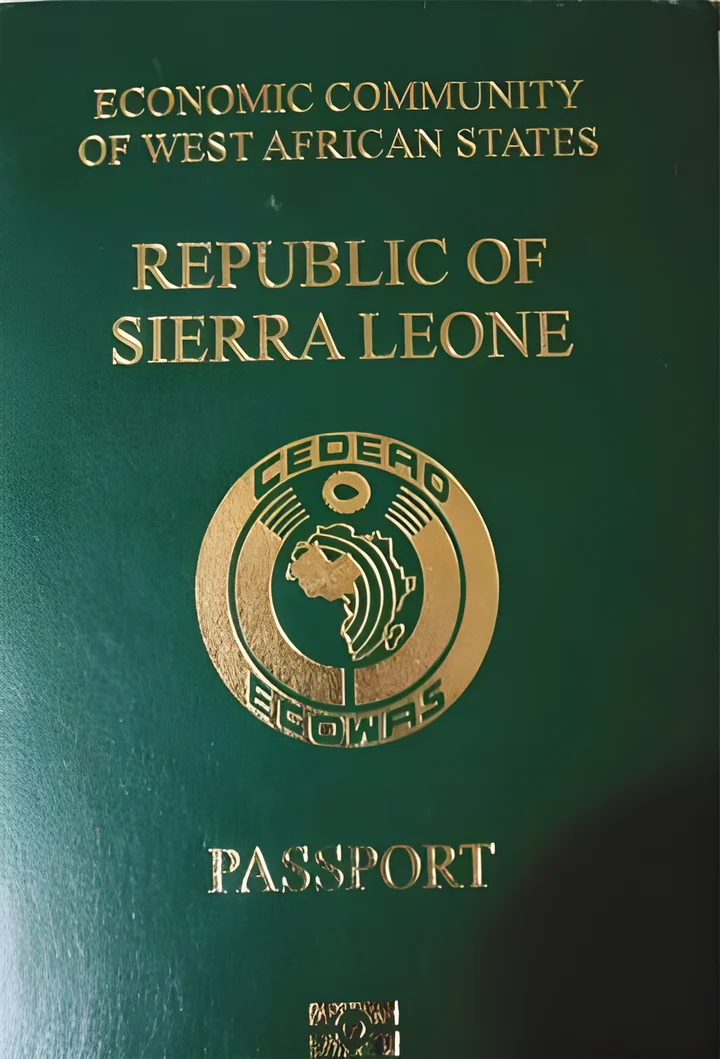
Sierra Leone: four routes to the passport
Sierra Leone grants citizenship through the GO-FOR-GOLD programme, based on section 27(a) of the Sierra Leone Citizenship Act 1973. Since 25 September 2026 there have been four routes instead of two:
- Enterprise Citizenship: USD 80,000 per person, for exactly two applicants, for example business partners, without dependants and with a joint due diligence check.
- Solo Entrepreneur: USD 95,000, for single applicants without dependants only.
- Heritage Citizenship: USD 120,000 for main applicants of African descent, proven by a DNA test, with dependants.
- Fast Track Citizenship: USD 140,000, with spouse, children, parents, grandparents and siblings.
For the two new routes the filing fee is reduced to USD 3,750 instead of USD 4,750. The application runs 100% remotely, with no trip to Sierra Leone and no embassy appointment, and the oath of allegiance is notarised over Zoom. From a complete application to the passport usually takes 90-120 days. Sierra Leone accepts multiple citizenship without restriction. All the figures are on the Sierra Leone programme page, and the two new routes are covered in detail in the news item on Solo Entrepreneur and Enterprise Citizenship.
São Tomé and Príncipe: the island nation with its own authority
The island nation in the Gulf of Guinea has based its programme on Nationality Law No. 07/2022 and Decree-Law No. 07/2025 and runs it through its own Citizenship by Investment Unit. The donation to the National Transformation Fund is USD 90,000 for single applicants and USD 95,000 for families of two to four people, with each additional dependant costing USD 5,000. On top come a filing fee of USD 5,000 per application and USD 750 per person for the citizenship documents.
The order of payment is worth noting: the donation only falls due after approval in principle. The unit speaks of approvals in as little as two months. Your application can include a spouse or partner, children up to 30, and parents and grandparents, and you do not have to move there, neither during nor after the application. More on this in the article on the São Tomé and Príncipe passport.
Nauru: the Pacific passport with a climate fund
Nauru runs its programme under the name Naoero Economic and Climate Resilience Citizenship Program. The name says what the money is for: economic development and the island nation's resilience against climate change. To mark the programme's first anniversary, a USD 25,000 discount has applied since 3 February 2026: the contribution for the main applicant is USD 90,000 instead of USD 115,000 for applications the Program Office accepts by 31 December 2026.
The government publishes its fees openly: a USD 5,000 application fee for the main applicant, USD 6,000 for due diligence and USD 500 per passport. Each additional dependant aged 16 or over adds a USD 2,000 contribution, siblings of the applicant or spouse USD 15,000. Spouses and dependants, parents and siblings included, can join the application, there is neither a minimum stay nor a duty to visit, and according to the government processing typically takes three to four months. What the passport does for you in everyday life is covered in the article on the Nauru passport, and every figure is on Nauru.
Argentina and Cambodia: new routes beyond the islands
For a long time, citizenship by investment was seen as the business of small island nations. 2026 shows that this is changing.
Argentina: a G20 country joins in
On 2 October 2026, Economy Minister Luis Caputo and Chief of Cabinet Diego Santilli presented the Programa de Ciudadanía por Inversión at Argentina Week in Paris. The key figures according to the Argentine government:
| Applicant | Amount |
|---|---|
| Main applicant, contribution to the Tesoro Nacional | USD 350,000, non-refundable |
| Main applicant, government bond | USD 800,000 |
| Unmarried children aged 18 to 25 without children of their own | USD 100,000 each |
| Children under 18 | USD 25,000 each |
| Family of main applicant, spouse and two minor children | USD 500,000 in total |
The spouse applies under the conditions of their own category. Vetting is carried out by the Agencia de Programas de Ciudadanía por Inversión, with the intelligence service SIDE, the financial intelligence unit UIF and the Ministries of Security and the Interior involved. The Dirección Nacional de Migraciones takes the decision. Applications are due to open from the fourth quarter of 2026; until then the programme is announced, not open, and no amount has been published in the Boletín Oficial. The Corte Suprema has also yet to rule on Decree 366/2025, on which the route rests.
For you, one thing counts above all: an Argentine passport is the passport of a large country with an economy and weight of its own and, if you want to live there, a real everyday life. How the programme is anchored in law and which questions are still open is covered in the article on the Argentine programme. How it compares with the route through residence is shown in the article on Argentine citizenship by investment.
Cambodia: a passport by law and sub-decree
Cambodia amended its nationality law on 5 September 2025 and regulated naturalisation through investment in Sub-Decree No. 225. Two routes are open: an investment of KHR 4,000,000,000 in a project in a promoted sector, or a donation of KHR 12,000,000,000 to the national budget. A spouse and minor children can come along as a family. You attend in person in Cambodia when you apply, the review takes no more than 45 working days, and citizenship is conferred by royal decree. The details are on the Cambodia programme page.
Further open routes: Egypt, El Salvador, Pakistan and the Dominican Republic
Egypt has granted its citizenship through four statutory routes since 2019, from USD 250,000 paid directly to the treasury, plus a USD 10,000 application fee. El Salvador has accepted USD 1 million in Bitcoin or USDt since the reform of its migration law in January 2024, for the main applicant, spouse and children under 18 together. Pakistan registers Commonwealth citizens as its own when they transfer foreign currency worth PKR 5 million into the country through regular banking channels. The Dominican Republic leads to the passport in two steps: an investment of USD 200,000 or more, property included, brings permanent residence, and with land of your own in the country naturalisation is possible after six months.
Tightening up: Saint Lucia, St Kitts and Nevis and Grenada
The Caribbean programmes are the best known. 2026 is the year in which they are tightening their rules most clearly. For you, that does not mean the door is closing. It means the way through the door is described more clearly than ever before.
Saint Lucia: residence, genuine link, annual cap
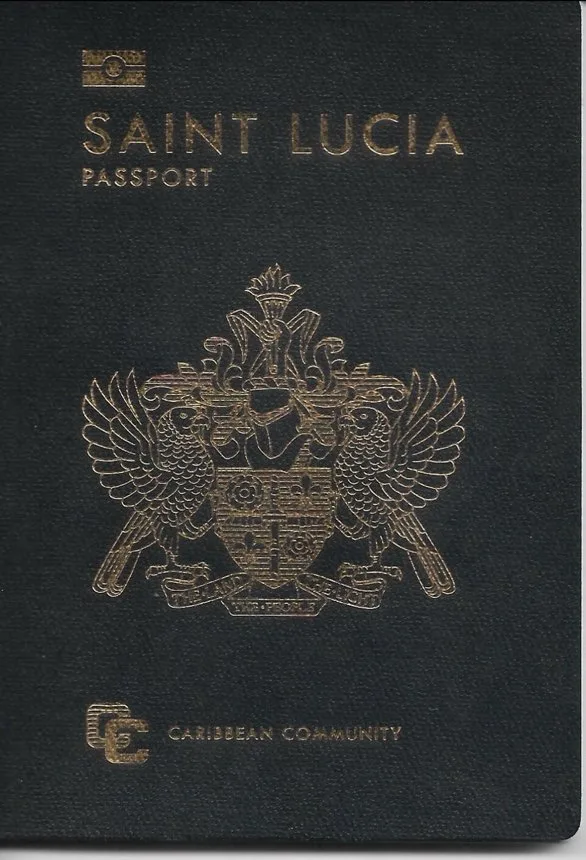
Saint Lucia overhauled its law with the Citizenship by Investment (Amendment) Act No. 22 of 2025, passed by the House of Assembly and the Senate in October 2025. On 23 March 2026 came the regulations S.I. No. 57 of 2026, with the annual cap, proof of funds and biometrics. The key points:
- Residence and genuine link: since 1 January 2026, the applicant and every dependant must meet the prescribed residence and genuine link requirements. The details are set by regulation.
- Annual cap: the board approves no more than 1,500 applications a year.
- Proof of funds: every application needs a sworn declaration of assets of at least USD 350,000.
- Change of name: in the first five years after naturalisation, a change of name is only possible on the grounds listed in the law, such as marriage, divorce or adoption.
- Biometrics: successful applicants provide biometric data.
Entry through the National Economic Fund stays at USD 240,000 for the applicant with up to three dependants. For a completed apartment or villa the minimum investment is USD 500,000, for an approved real estate project USD 300,000. Every route is set out on the Saint Lucia programme page.
St Kitts and Nevis: biometrics for everyone
Since 14 April 2026, St Kitts and Nevis has been recording the biometric data of everyone naturalised through the programme. Since 1 September 2026, capture has been part of the passport application: fingerprints and photo go straight into the application. Those who are already citizens have until 31 July 2027. Entry is USD 250,000 through the Sustainable Island State Contribution; more in the news item on biometrics in the passport application.
Grenada: residence requirement waits for the regional regulator
A joint regulator is being set up for the programmes of the Eastern Caribbean, the Eastern Caribbean Citizenship by Investment Regulatory Authority. Grenada had intended to apply its new residence requirement from 31 August 2026. With Circular No. 2 of 2026 of 21 August 2026, the Investment Migration Agency Grenada postponed the start: the requirement only takes effect once the regional regulator is operating and all participating countries have formally agreed and announced a joint start date. The Citizenship Unit of St Kitts and Nevis confirmed the same line on 28 September 2026. The details are in the news item on the residence requirement in Grenada.
For your application in Grenada, this is what applies today: no visit is needed before, during or after the process. The interview takes place online as part of the review, and the agency cites approval within 60 working days of submission. The contribution to the National Transformation Fund is USD 235,000 for the main applicant with up to three dependants; every route is on the Grenada programme page.
Why the Caribbean is tightening up: the new EU rule
Brussels is part of the reason for the stricter rules. With Regulation (EU) 2025/2441, the EU overhauled its mechanism for suspending visa-free travel. A new ground for suspension in Article 8a(1)(e) covers countries that grant passports in return for set payments or investments without the applicant having a genuine link to the country. A suspension initially applies for twelve months and can be extended by a further 24 months.
Vanuatu shows that the EU means business. Even before the new rule, the EU moved the country onto the list of visa-required countries with Regulation (EU) 2025/11 of 19 December 2024, and since then citizens of Vanuatu once again need a visa for the Schengen Area. Vanuatu's programme continues, with a statutory minimum price of USD 130,000 for single applicants, and remains one of the more affordable routes to a second passport, one you combine with another travel document for Europe.
This is exactly where Saint Lucia, St Kitts and Nevis and Grenada come in: residence, genuine link, biometrics and regional oversight take up the EU's criterion. If you apply for a Caribbean passport today, you get a passport from a programme that has prepared itself for scrutiny from Brussels. What the rule means for your travel and how to protect yourself is covered in the article on the EU visa suspension.
New programme or proven classic: how to decide
The young programmes are cheaper; the Caribbean programmes have the longest track record and the highest profile. Which side matters for you comes down to a few questions.
Who is coming with you?
Family rules differ widely. Solo Entrepreneur and Enterprise Citizenship in Sierra Leone take no dependants, whereas Fast Track and Heritage take spouses, children, parents, grandparents and siblings. São Tomé and Príncipe includes children up to 30, parents and grandparents; Nauru includes siblings as well. You will find an overview by programme on the Family page.
Do you have to go there?
Sierra Leone, Nauru, São Tomé and Príncipe and Grenada currently require no visit. Saint Lucia has written residence and a genuine link into its law, and Cambodia requires you to attend in person when you apply. If you cannot or do not want to travel at all, that gives you a clear shortlist.
What do you need the passport for?
If what you want is a second travel document nobody can take away from you, the consular protection of a second country or a passport for the whole family, then the security of the process and the family rules matter more than the number of visa-free countries. If your main concern is travel to the Schengen Area, the rules from Brussels are what count. Often the answer is not one passport but two: a fast, affordable one for right now and a second one for freedom of travel.
And in the long run?
Citizenship by investment and naturalisation do not rule each other out. Naturalisation through residence is the free route and often, in the end, the strongest one, but it takes years and requires genuine residence. A passport by investment protects you during exactly that time. How the two fit together is covered in the article on CBI and naturalisation.
What the 2026 shifts mean for your timeline
The direction is clear: more scrutiny, more evidence, a stronger link to the country. Young programmes attract applicants with low entry prices and promotional rates that are expressly time-limited, like the Nauru contribution until 31 December 2026. Established programmes are writing requirements into law whose details are still to be set by regulations and joint start dates.
For you, that means: if you apply today, you know the rules you will be vetted under. If you wait, you apply under rules nobody knows yet. A nationality you hold stays yours, even if the programme becomes more expensive or stricter afterwards. That is the real value of a second passport: a right you secure once and that then carries you through every political climate.
Frequently asked questions
Which countries sell citizenship in 2026?
Programmes running in 2026 with published amounts include Sierra Leone, São Tomé and Príncipe, Nauru, Vanuatu, Dominica, Antigua and Barbuda, Grenada, Saint Lucia, St Kitts and Nevis, Türkiye, Jordan, Cambodia, Egypt and El Salvador, plus Pakistan for Commonwealth citizens and the Dominican Republic through investor residence and naturalisation. Argentina has announced its programme and plans to accept applications from the fourth quarter of 2026; St Vincent and the Grenadines and Tonga have announced programmes too, and Botswana has passed its law. Every programme with its amounts and fees is in the comparison.
What is the newest programme for a second passport?
The newest programme is Argentina's: the government presented it in Paris on 2 October 2026, with a contribution of USD 350,000 to the Tesoro Nacional or a government bond of USD 800,000. Among the programmes already running, Sierra Leone opened two more routes on 25 September 2026, Solo Entrepreneur and Enterprise Citizenship.
What is the cheapest programme in 2026?
For two applicants without dependants it is Enterprise Citizenship in Sierra Leone at USD 80,000 per person. Single applicants start in São Tomé and Príncipe with a donation of USD 90,000 and in Nauru with a contribution of USD 90,000, a level that applies to applications accepted by 31 December 2026. Pakistan asks only for a foreign currency transfer of PKR 5 million, but registers only Commonwealth citizens that way. Every programme adds fees on top, broken down on the Costs page.
Can you buy Argentine citizenship?
Argentina has announced a programme: USD 350,000 as a non-refundable contribution to the Tesoro Nacional or USD 800,000 in a purpose-built government bond. Unmarried children aged 18 to 25 without children of their own pay USD 100,000, children under 18 USD 25,000 each, and a family with two minor children comes to USD 500,000 in total. Applications are due to open from the fourth quarter of 2026, and no amount has been published in the Boletín Oficial yet. The current status is on Argentina, and the details are in the article on the Argentine programme.
Do I have to travel to the country for a new second passport?
In most of the new programmes, no. Sierra Leone runs entirely remotely, Nauru requires neither a minimum stay nor a visit, and São Tomé and Príncipe does not require you to move there. Saint Lucia is different: since 1 January 2026 its law has contained residence and genuine link requirements. So is Cambodia, where you attend in person when you apply.
What does the new EU rule mean for Caribbean passports?
Since Regulation (EU) 2025/2441, the EU can suspend visa-free travel for a country that grants passports for payment without a genuine link to the country, initially for twelve months. The Caribbean countries are building residence, biometrics and regional oversight into their programmes and so preparing for that scrutiny. What this means for your travel plans is explained in the article on the EU visa suspension.
Is a new programme riskier than an established one?
What matters is not age but the foundation: a law, a competent authority and a published schedule of fees. São Tomé and Príncipe rests on Law No. 07/2022 and Decree-Law No. 07/2025, Cambodia on an amended nationality law with a sub-decree. Above all, check when you pay: in São Tomé and Príncipe, only after approval in principle.
Which programme fits you in 2026?
We go through the new and the proven programmes with you, taking in your family, your timeline and the places you want to travel to. Afterwards you know which passport is the right one today.
Book a consultationSources
- sierraleonepassport.com: programmes, fees and timeline
- Citizenship by Investment Unit São Tomé and Príncipe: Investment Structure
- Citizenship by Investment Unit São Tomé and Príncipe: FAQ
- Government of the Republic of Naoero: Economic and Climate Resilience Citizenship Program, Contribution
- Government of the Republic of Naoero: Economic and Climate Resilience Citizenship Program
- Ministerio de Economía Argentina: Luis Caputo anunció la puesta en marcha del Programa de Ciudadanía por Inversión, 2 October 2026
- Royal Government of Cambodia: Sub-Decree No. 225 on nationality
- Saint Lucia: Citizenship by Investment (Amendment) Act No. 22 of 2025
- Saint Lucia: Citizenship by Investment (Amendment) Regulations, S.I. No. 57 of 2026
- Citizenship Unit St Kitts and Nevis: Executive Chairman outlines next phase of citizenship programme, 28 September 2026
- Investment Migration Agency Grenada: Circular No. 2 of 2026, 21 August 2026
- Investment Migration Agency Grenada: Frequently Asked Questions
- European Union: Regulation (EU) 2025/2441 amending Regulation (EU) 2018/1806, suspension mechanism
- European Union: Regulation (EU) 2025/11 of 19 December 2024 amending Regulation (EU) 2018/1806 as regards Vanuatu