The short answer
You can include your parents in Sierra Leone (Fast Track and Heritage), Grenada, São Tomé and Príncipe, Antigua and Barbuda, Dominica, St Kitts and Nevis, St Lucia, Vanuatu, Jordan and Nauru. Grandparents can come along in Sierra Leone, Grenada, São Tomé and Príncipe, Antigua and Barbuda, Dominica and Nauru. Most programmes set a minimum age between 50 and 65 and require that you support your parents. For a family of six with two parents, São Tomé and Príncipe asks a 105,000 USD donation, and Nauru 96,000 USD in contributions for applications accepted by 31 December 2026. Türkiye and Cambodia do not take parents.
Most writing on citizenship by investment thinks in terms of the nuclear family: you, your partner, the children. Once you want to protect your parents too, you quickly find that the programmes differ widely. Some take three generations, others stop at your parents' front door. The full picture of every programme is in the overview on buying citizenship, and the family rules of all programmes at a glance are under Family.
Why your parents and grandparents belong in your application
A passport is a right, not a permission. A visa can be refused or revoked; a citizenship belongs to you. That holds for your parents just as much as for you. And it matters most for them, because they are the first who can no longer react flexibly when things turn serious.
Three situations families have in mind when they plan their parents in:
- You are moving abroad and want your parents to be able to follow. Without a citizenship of their own, their travel and their stay depend on visas, deadlines and official discretion. With the same passport as you, the same borders are open to them as to you, and in the passport country itself they never need a visa.
- You want the whole family to share one way out. A Plan B that covers only part of the family is no plan when it counts.
- You want to keep your parents' care in your own hands. As they grow older, you decide together where the family lives, not an immigration office.
A second citizenship for your parents is therefore no luxury but the logical continuation of your own Plan B. Many programmes make it easy: the surcharge for one parent is often 5,000 to 25,000 USD, a small share of the base investment.
Which programmes naturalise parents and grandparents
Most programmes in the comparison take parents, and several take grandparents too. The differences lie in the minimum age and in how closely your parents must depend on you financially. In the five Caribbean programmes, your spouse's parents count as well.
| Programme | Parents | Grandparents | Condition |
|---|---|---|---|
| Sierra Leone | yes | yes | Fast Track and Heritage only |
| Grenada | yes | yes | fully supported |
| São Tomé and Príncipe | yes | yes | no support condition stated |
| Antigua and Barbuda | yes | yes | minimum age, financially dependent |
| Dominica | over 65 | over 65 | substantially supported |
| St Kitts and Nevis | from 55 | no | in your household, fully supported |
| St Lucia | over 55 | no | fully supported |
| Vanuatu | over 50 | no | in your household, dependent |
| Jordan | yes | no | supported |
| Nauru | yes | yes | your spouse's too, 2,000 USD contribution each |
| Türkiye | no | no | spouse and children only |
| Cambodia | no | no | spouse and minor children only |
Every open programme with amounts, fees and processing times side by side is in the comparison.
The most generous programmes for three generations
Several programmes take you, your children, your parents and your grandparents in a single application. Each has its own emphasis.
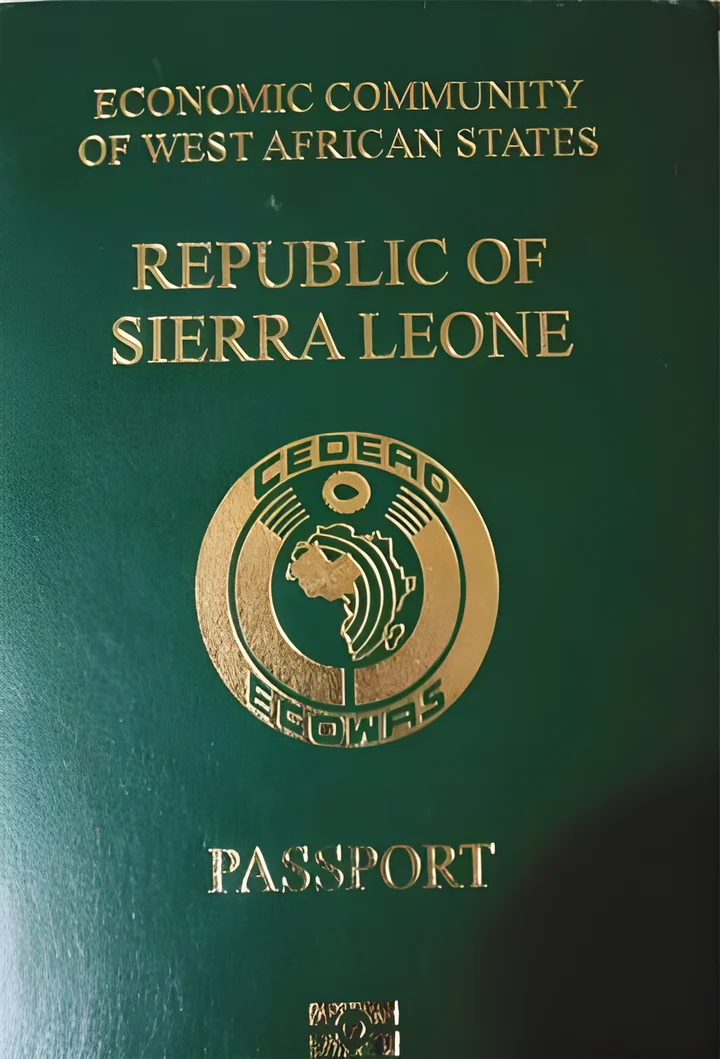
Sierra Leone: the whole family at 10,000 USD each
The Fast Track of Sierra Leone costs 140,000 USD for the main applicant and takes the whole family: spouse, children, parents, grandparents and siblings. Spouses, children under 18, parents and grandparents cost 10,000 USD each, children aged 18 or over and siblings 20,000 USD each. The same family rule applies to Heritage Citizenship for applicants of African descent. The Solo Entrepreneur and Enterprise Citizenship routes, on the other hand, take no dependants.
For parents, the process is what counts most here: 100 % remote, no trip to Sierra Leone, no embassy appointment. The oath of allegiance and the declarations are notarised over Zoom. The programme asks for no police certificate and no medical examination; independent due diligence handles the background check of every applicant aged 18 or over. For parents who no longer enjoy travelling, this is the most comfortable route.
Grenada: parents of any age, with a price step at 55
Grenada takes spouses, children, parents, grandparents and siblings. For parents and grandparents the law distinguishes by age. Over 55 and fully supported by you or your spouse, they count as ordinary dependants. Aged 55 or under, they may also join if you fully support them, but then each costs a separate contribution of 50,000 USD to the National Transformation Fund.
The base contribution of 235,000 USD covers you and up to three dependants, and each additional one costs 25,000 USD. Parents and grandparents aged 55 or under do not count towards those three; the 50,000 USD step always applies to them. No visit to Grenada is needed before, during or after the application, and the interview is held online.
São Tomé and Príncipe: a small surcharge per head
São Tomé and Príncipe counts a spouse or partner, children up to 30, and parents and grandparents as dependants. The donation to the National Transformation Fund is 90,000 USD for a single person and 95,000 USD for a family of two to four, and each further dependant costs 5,000 USD. Citizenship documents cost 750 USD per person, and the filing fee is 5,000 USD per application. Among the established programmes, no entry point is lower for a family with parents in the application; only Nauru asks a lower contribution, for applications accepted by 31 December 2026, and its higher fees cancel that out.
Nauru: three generations at the lowest contribution
Nauru takes your spouse, children with no age limit, the parents and grandparents of both of you, and siblings. For applications the Program Office accepts by 31 December 2026, the contribution is 90,000 USD instead of 115,000 USD. Each dependant aged 16 or over adds 2,000 USD, children under 16 nothing, siblings 15,000 USD. The programme asks for no residence in Nauru.
Antigua and Barbuda: one contribution for the whole application
Antigua and Barbuda does not charge per head. The 230,000 USD contribution to the National Development Fund applies per application, for a single person as for a family. Parents and grandparents of you or your spouse count as dependants once they reach the minimum age and depend on you financially. Unmarried siblings can come along too. For families of six or more there is also the UWI Fund at 260,000 USD including processing fees.
Dominica: parents and grandparents over 65
Dominica takes the parents and grandparents of you or your spouse if they are over 65 and substantially supported by you. In the Economic Diversification Fund, the 250,000 USD contribution covers you and up to three dependants, and each additional one aged 18 or over costs 40,000 USD. No residence in Dominica is required before or after naturalisation.
Programmes that take parents but not grandparents
Four more programmes take parents but name no grandparents in their rules.
St Kitts and Nevis. The regulations S.R.O. 20 of 2024 originally set 65 for parents; the amendment S.R.O. 43 of 2024 lowered the threshold to 55. You can include the parents of you or your spouse from 55 if they live with you and are fully supported by you. The Sustainable Island State Contribution of 250,000 USD covers up to four people, and each further dependant aged 18 or over costs 50,000 USD.
St Lucia. The amending Act No. 22 of 2025 names parents of you or your spouse over 55 whom you fully support. In the National Economic Fund, the base amount of 240,000 USD covers you and up to three dependants, and each further one over 18 costs 20,000 USD.
Vanuatu. The Development Support Program takes parents over 50 if they live with the main applicant and depend on them. Each further dependant costs 10,000 USD. You take the oath before a court in Vanuatu, so if you live abroad, you travel there for it.
Jordan. Together with the investor, the spouse, dependent daughters, unmarried sons under 24 and dependent parents receive citizenship. With an investment above 2,000,000 JOD, sons up to 30 come along too, with their wives and children. The thresholds start at 350,000 JOD in an existing business outside the capital region, and at 500,000 JOD of paid-in capital in a new project. That makes Jordan the route for entrepreneurs who are investing anyway and want to secure their parents at the same time.
Where parents stay out: Türkiye and Cambodia
Under Article 12 of the Turkish Citizenship Law No. 5901, Türkiye naturalises the foreign spouse and the minor or dependent children of the investor and the spouse along with the investor. The provision does not mention parents. Cambodia takes a spouse and minor children as the family; minor children not included can follow later.
For your parents this means: if you choose one of these routes, they need an application of their own in another programme. If you want to secure three generations, start with Sierra Leone, Grenada, São Tomé and Príncipe, Antigua and Barbuda, Dominica or Nauru.
What parents and grandparents add to the cost
The surcharges for parents are lower than many people think. A worked example makes it concrete: a couple with two children under 18 and both parents of one partner, so six people. The table shows only the fund contribution or donation, without due diligence, application and document fees.
| Programme | Base amount | Per parent | Six people |
|---|---|---|---|
| Nauru, applications by 31 December 2026 | 90,000 USD | 2,000 USD | 96,000 USD (children under 16) |
| São Tomé and Príncipe | 95,000 USD (2-4 people) | 5,000 USD | 105,000 USD |
| Sierra Leone, Fast Track | 140,000 USD | 10,000 USD | 190,000 USD |
| Vanuatu | 180,000 USD (couple, 2 children) | 10,000 USD | 200,000 USD |
| Antigua and Barbuda | 230,000 USD per application | 0 USD | 230,000 USD |
| St Lucia | 240,000 USD (up to 4 people) | 20,000 USD | 280,000 USD |
| Grenada, parents over 55 | 235,000 USD (up to 4 people) | 25,000 USD | 285,000 USD |
| Dominica, parents over 65 | 250,000 USD (up to 4 people) | 40,000 USD | 330,000 USD |
| St Kitts and Nevis | 250,000 USD (up to 4 people) | 50,000 USD | 350,000 USD |
In Grenada the amount rises if the parents are 55 or younger: each parent then costs 50,000 USD, so the family pays 335,000 USD.
Fees come on top
On top of the contribution, every person pays fees, and due diligence on adult dependants is the largest item. St Kitts and Nevis charges a due diligence fee of 7,500 USD per dependant aged 16 or over, St Lucia 5,000 USD per dependant over 16 and Dominica 4,000 USD per dependant aged 16 or over. In Grenada, each person aged 17 or over pays 6,000 USD for due diligence, 1,500 USD application fee, 1,500 USD processing and 1,000 USD for the interview.
Sierra Leone charges its fees per application: 4,750 USD filing for up to five people and 800 USD per additional person, and 5,000 USD processing including the background check for up to five people and 900 USD per additional person. For the family of six on the Fast Track, that comes to 190,000 USD programme fee plus 5,550 USD filing plus 5,900 USD processing, 201,450 USD in total. Every programme by total price is compared on Costs, and the most affordable routes for families are in buying citizenship cheaply.
Support, age, living together: what the authorities check
The programmes set three kinds of conditions for parents. Know them and you can plan the application properly.
Age. Vanuatu takes parents over 50, St Kitts and Nevis from 55, St Lucia over 55 and Dominica only over 65. Grenada takes parents of any age but charges a higher contribution for parents aged 55 or under. Sierra Leone sets no age limit for parents and grandparents in its family rules.
Support. In the Caribbean it is the rule. In St Kitts and Nevis, St Lucia and Grenada you support your parents fully, in Dominica substantially, and in Antigua and Barbuda they must depend on you financially. If your parents draw their own pension, Sierra Leone and São Tomé and Príncipe are the obvious choice, since their family rules state no support condition.
Living together. St Kitts and Nevis and Vanuatu require your parents to live with you. The other programmes state no such condition.
Then there is the background check. Every adult dependant is vetted just like you, and in Dominica the authority also interviews every applicant aged 16 or over, usually virtually. For your parents this means: passport, birth certificate and the documents proving the family relationship should be ready early.
Include them now or add them later?
Many families think of themselves first and plan to add the parents later. That is not possible everywhere and almost always costs more.
In Sierra Leone, adding someone to an application already filed or completed is generally not provided for. São Tomé and Príncipe takes dependants after approval, for 5,000 USD per person on top of the other fees. Antigua and Barbuda charges 50,000 USD for dependants aged 18 or over who are added only after naturalisation, whereas parents in the first application cost no separate fund contribution there.
The clear advice: if you want your parents with you, put them in the first application. Including the parents who still wave it off today. The same logic applies to children, and the age limits that apply to them are covered in second passport for children.
What a second passport means for your parents in Germany
Germany's modernised nationality law has applied since 27 June 2024. Since then, acquiring another citizenship by application no longer means losing German citizenship, whatever the country. Your parents therefore keep their German passport and gain the second one on top.
For tax, the second citizenship changes nothing. Under section 1(1) of the Income Tax Act (Einkommensteuergesetz, EStG), anyone with a residence or habitual abode in Germany has unlimited tax liability there, whatever their passport. If you want to move your residence together with your parents, plan that separately; the basics are on the Tax page.
And the second passport need not be the final step. Citizenship by investment and naturalisation do not exclude each other: the passport by investment protects the family immediately, while naturalisation through residence is the free and ultimately stronger route, but takes years. How the two fit together is covered in CBI and naturalisation. Which passports open which routes is set out in the second passport overview at Perspektive Ausland (in German), and a country list with a tax angle is in the best countries for a second passport (in German).
Which programme fits your family
You want to secure three generations at the lowest price. São Tomé and Príncipe combines a low donation with a small surcharge per parent, and children count there up to 30. Nauru's contribution is lower until 31 December 2026, but its fees are higher.
You want a fast, fully remote process with a large family circle. Sierra Leone's Fast Track takes parents, grandparents and siblings, with no trip and no embassy appointment.
Your parents are under 55 and you want a Caribbean citizenship. Grenada is the only Caribbean programme that takes them at that age, with the contribution of 50,000 USD per parent. In St Kitts and Nevis, parents count from 55 if they live with you.
Your family is large. Antigua and Barbuda charges one contribution per application, however many dependants it lists, and also takes unmarried siblings.
Your parents are over 65 and you support them. Dominica takes them, and your grandparents too, with no residence requirement before or after naturalisation.
Frequently asked questions
Can I include my parents in a citizenship by investment application?
Yes, in most programmes in the comparison: Sierra Leone, Grenada, São Tomé and Príncipe, Antigua and Barbuda, Dominica, St Kitts and Nevis, St Lucia, Vanuatu, Jordan and Nauru. Most of them set a minimum age and require that you support your parents. Türkiye and Cambodia only take spouses and children.
Which programmes also take grandparents?
Grandparents can join the application in Sierra Leone (Fast Track and Heritage), Grenada, São Tomé and Príncipe, Antigua and Barbuda, Dominica and Nauru, and in the three Caribbean programmes your spouse's grandparents can too. In Dominica they must be over 65 and substantially supported by you. St Kitts and Nevis, St Lucia and Vanuatu only name parents in their rules.
Which citizenship by investment is cheapest for the whole family?
For a couple with two children and two parents, São Tomé and Príncipe asks 95,000 USD for up to four people plus 5,000 USD for each parent, 105,000 USD before fees, and with its low fees it stays the cheapest in total. Nauru asks a lower contribution for applications accepted by 31 December 2026, 96,000 USD for such a family with children under 16, but its fees take the total higher. Next come Sierra Leone's Fast Track at 190,000 USD and Vanuatu at 200,000 USD. Every programme sorted by price is on Costs.
Do my parents have to be financially dependent on me?
In all five Caribbean programmes, yes. St Kitts and Nevis, St Lucia and Grenada require that you fully support your parents, Dominica requires substantial support and Antigua and Barbuda financial dependence. St Kitts and Nevis and Vanuatu also want your parents to live with you. Sierra Leone and São Tomé and Príncipe state no such condition in their family rules.
Can I add my parents after I have been naturalised?
In Sierra Leone, adding someone to an application already filed or completed is generally not provided for. São Tomé and Príncipe takes dependants after approval for 5,000 USD per person, while Antigua and Barbuda charges 50,000 USD for dependants aged 18 or over who are added only after naturalisation. If you want your parents with you, plan them into the first application from the start.
Will my parents lose their German citizenship?
No. Since 27 June 2024, acquiring another citizenship by application no longer costs you German citizenship, and a retention permit (Beibehaltungsgenehmigung) is no longer needed. Your parents keep their German passport and hold the second one as well.
Do my parents have to travel for the application?
In Sierra Leone everything runs remotely, and even the oath of allegiance and the declarations are notarised over Zoom. Grenada requires no visit before, during or after the application, and Dominica usually holds its interviews virtually. In Vanuatu, by contrast, the oath is taken before a court in the country, so anyone living abroad travels there for it.
Three generations, one application: which programme suits your family?
We work out with you which programmes take your parents and grandparents and what your whole family will pay in the end. That way you decide with clear figures before the first fee is due.
Book a consultationSources
- sierraleonepassport.com: programmes, family and calculator
- sierraleonepassport.com: FAQ
- Grenada: Citizenship by Investment (Amendment) Act No. 3 of 2019
- Grenada: Citizenship by Investment (Amendment) (No. 2) Regulations 2024, S.R.O. 15 of 2024
- Investment Migration Agency Grenada: FAQs
- Citizenship by Investment Unit São Tomé and Príncipe: Investment Structure
- Citizenship by Investment Unit São Tomé and Príncipe: Eligibility Criteria
- Citizenship by Investment Unit Antigua and Barbuda: Dependants
- Citizenship by Investment Unit Dominica: FAQs
- St Kitts and Nevis: Citizenship by Substantial Investment Regulations 2024, S.R.O. 20 of 2024
- St Kitts and Nevis: Citizenship by Substantial Investment (Amendment) Regulations 2024, S.R.O. 43 of 2024
- Saint Lucia: Citizenship by Investment (Amendment) Act No. 22 of 2025
- Federal Office of Administration (Bundesverwaltungsamt): modernisation of German nationality law 2024
- Gesetze im Internet: section 1 of the German Income Tax Act (Einkommensteuergesetz)
- Mevzuat: Turkish Citizenship Law No. 5901 (Türk Vatandaşlığı Kanunu), Article 12