🌍 New events 2026: trips, seminars & workshops on Plan B, emigration & tax. Book now! 🚀

Programmes · Asia

Citizenship for Commonwealth citizens

Pakistan: citizenship for Commonwealth citizens by bank transfer

Pakistan registers Commonwealth citizens as its own citizens when they transfer foreign currency worth 5 million rupees into the country through regular banking channels. The legal basis is section 20 of the Citizenship Act 1951, and you apply through a Pakistani embassy or consulate.

Open, at the federal government's discretion

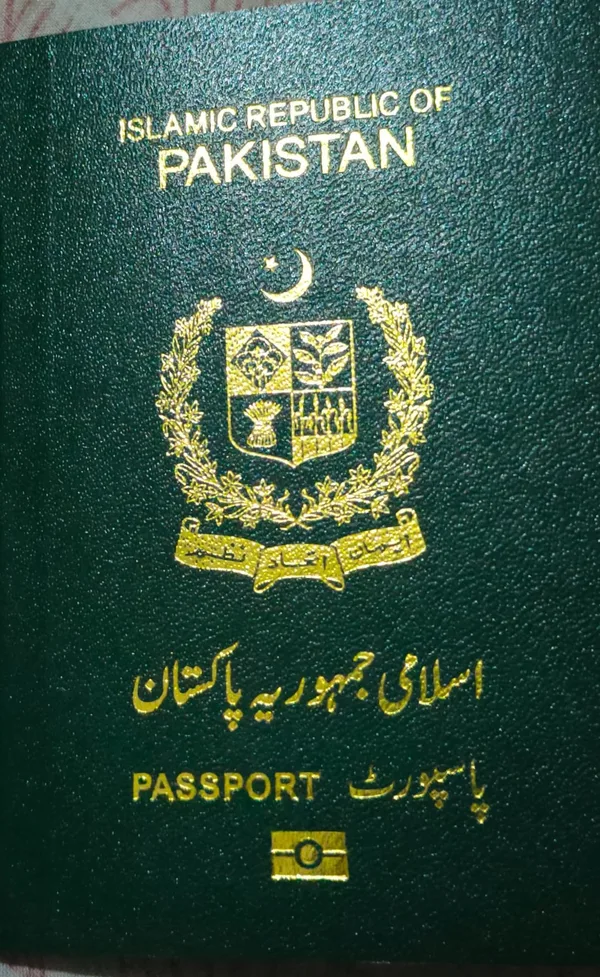
Passport of Pakistan
Foreign currency transfer
PKR 5 million
Who
Commonwealth citizens
Government fee
PKR 200
After security clearance
under two months

How Pakistan takes in Commonwealth citizens

Pakistan has a route to citizenship of its own that is open only to Commonwealth citizens. Section 20 of the Pakistan Citizenship Act 1951 allows the federal government to register Commonwealth citizens and British protected persons on conditions it sets by order. The condition in force today is spelled out by the immigration authority, the DGIP: a transfer of foreign currency worth 5 million rupees into Pakistan, through regular banking channels.

The DGIP lists this category on its citizenship page as a current route. The federal government decides each application at its discretion. Once it approves and security clearance is through, Pakistan issues the certificate after you arrive in the country.

The facts from the official source

Legal basis: Pakistan Citizenship Act 1951, section 20; Pakistan Citizenship Rules 1952, rule 20; conditions set by order of the federal government (footnote to section 20: Gazette of Pakistan 1960)

Competent authority: Directorate General of Immigration & Passports (DGIP), Ministry of Interior, Islamabad

Requirements, documents and procedure under the law and the DGIP, as of November 11, 2026
Legal basisthe federal government may register Commonwealth citizens and British protected persons as citizens of Pakistan on the conditions it sets by order (section 20 Citizenship Act 1951, rule 20 Citizenship Rules 1952) Source
Who can applycitizens of a Commonwealth country and British protected persons, for example from the United Kingdom, Canada, Australia, New Zealand, Malta, Cyprus or the Caribbean island nations; according to the DGIP, anyone who is not a Commonwealth citizen goes down the naturalisation route instead Source
Foreign currency transfera transfer of foreign currency worth PKR 5 million into Pakistan through regular banking channels, proven with the original Bank Proceeds Certificate; the State Bank of Pakistan confirms receipt Source
Government feePKR 200, or PKR 800 for Indian nationals Source
ApplicationForm R, filed through the Pakistani mission in your country of residence or the nearest one; if you already live in Pakistan, you apply to the federal government Source
DocumentsForm R, attested by the mission, in four copies; 10 colour photos, 4 x 4.5 cm, on a light blue background; the original Bank Proceeds Certificate; a copy of your valid passport; the fee Source
Procedureonce the State Bank of Pakistan confirms the inflow of foreign currency, you receive an immigration visa; the citizenship certificate is issued after you enter Pakistan, following security clearance and the completion of all formalities Source
Residenceneither section 20 nor rule 20 nor the DGIP sets a minimum stay; you travel to Pakistan to receive the certificate Source
Processing timedepends on the case; once the security agencies have cleared you, usually under two months; you can ask about progress after three months Source
Checkssecurity clearance by the relevant authorities; the mission or the government may ask about your nationality, languages, special qualifications, and your income and where it comes from (rule 20(4)) Source
Decisionthe federal government decides at its discretion (section 20: “may”; rule 20(5): “as it deems fit”) Source
FamilyForm R lists your wife and children, but there is no rule for co-applicants; once you are a citizen, you can register minor children under 21 under section 11 (Form M, PKR 200) and a foreign wife under section 10(2) (Form F, PKR 200; for this the DGIP asks for a declaration of five years' residence in Pakistan in total) Source
Dual nationalitynot provided for as a rule (section 14(1)); according to the DGIP, citizens of 22 countries with agreements are exempt and keep their nationality, among them, from the Commonwealth, the United Kingdom, Canada, Australia and New Zealand; section 14(1) does not apply to persons under 21 Source

Your Commonwealth passport opens the door

You can apply as a citizen of a Commonwealth country, such as the United Kingdom, Canada, Australia, New Zealand, Malta, Cyprus or one of the Caribbean island nations. For Germans, Austrians and Swiss, this means the route opens with a Commonwealth passport. If you already hold a British, Canadian, Australian or New Zealand passport, you build straight on it and keep it.

The route is strongest for citizens of the United Kingdom, Canada, Australia and New Zealand. These four countries are on the DGIP's list of 22 countries whose citizens do not have to give up their nationality when they become Pakistani. For citizens of other Commonwealth countries, the basic rule of section 14 applies: as a rule, Pakistan does not provide for dual nationality.

How the application works

You apply on Form R at the Pakistani embassy or consulate in your country of residence, or the nearest one. The mission attests the form, and you submit it in four copies together with ten colour photos, the original Bank Proceeds Certificate, a copy of your passport and the fee of PKR 200. The form asks about your education, occupation, income and where it comes from, your languages and your family.

As soon as the State Bank of Pakistan confirms that the foreign currency has arrived, you receive an immigration visa. After you enter the country and pass security clearance, Pakistan issues the citizenship certificate. For this last step the DGIP usually quotes under two months. No official source sets a minimum stay in the country.

Your family once you are a citizen

Your wife and children are listed on Form R, but at first only you become a citizen. Separate routes then take it further: you can register children under 21 under section 11, and your foreign wife under section 10(2). For children under 21, the rule of section 14 on dual nationality does not apply.

More on Pakistan from us

More on Pakistan across the network

Wohnsitz Ausland · in German

Opening a bank account in Pakistan

The route to Pakistani citizenship starts with a transfer through regular banking channels. Wohnsitz Ausland explains which banks in Pakistan open accounts for foreigners and what proof they ask for.

Visit Wohnsitz Ausland

Steueratlas · in German

Taxes in Pakistan

Pakistani citizenship does not by itself make you liable to tax in Pakistan. If you actually live there or earn income there, Steueratlas sets out the country's tax rates.

Visit Steueratlas

Wohnsitz Ausland · in German

Buying property in Pakistan

If you want to buy a flat or a house in Pakistan, Wohnsitz Ausland sets out the rules for foreign buyers and how a purchase works.

Visit Wohnsitz Ausland

Questions about Pakistan

Who can apply for Pakistani citizenship under section 20?

Citizens of a Commonwealth country and British protected persons, for example from the United Kingdom, Canada, Australia, New Zealand, Malta, Cyprus or the Caribbean island nations. A German, Austrian or Swiss passport on its own does not open this route; what counts is a Commonwealth passport.

How much money do I have to transfer?

Foreign currency worth PKR 5 million, sent to Pakistan through regular banking channels. You prove receipt with the original Bank Proceeds Certificate, and the State Bank of Pakistan confirms it. On top comes the government fee of PKR 200.

Do I have to live in Pakistan?

Neither the Act nor the Rules nor the DGIP set a minimum stay. Once receipt of the funds is confirmed, you receive an immigration visa, and the citizenship certificate is issued after you enter Pakistan.

Can I keep my current nationality?

Citizens of the United Kingdom, Canada, Australia and New Zealand can: these countries are on the DGIP's list of 22 countries whose citizens do not have to give up their nationality. For citizens of other Commonwealth countries, such as Malta, Cyprus or the Caribbean island nations, the basic rule of section 14 applies: if you hold another nationality alongside Pakistani citizenship, you declare that you renounce it, otherwise your Pakistani citizenship ends.

Do my spouse and children become citizens with me?

Not in the same application. Once you are a citizen, you can register children under 21 under section 11 and your foreign wife under section 10(2). A husband from the Commonwealth files his own application under section 20.

How long does the procedure take?

According to the DGIP, it depends on the case. Once the security agencies have cleared you, it usually takes under two months, and after three months you can ask about progress.

Your second passport begins with a decision.

You have worked hard to build a life full of possibilities. Now it is about expanding them, for you and for your family. Talk to Daniel Taborek about your budget, your family and the route to your second citizenship. Find out which passport should enrich your future.