The short answer
The Caribbean offers five programmes from 200,000 USD: Dominica, Antigua and Barbuda, Grenada, St Lucia and St Kitts and Nevis. Passports from Dominica, Antigua and Barbuda, Grenada and St Lucia travel to Germany without a visa. Africa is the cheapest way in: São Tomé and Príncipe from 90,000 USD with no residence or relocation, Sierra Leone from 95,000 USD for single applicants, entirely remote. Vanuatu in the Pacific starts at 130,000 USD but requires the oath in person. Türkiye and Jordan rely on capital invested in the country, from 400,000 USD and 350,000 JOD respectively.
A passport is a right, not a permission. A visa can be refused or withdrawn; citizenship cannot. That holds for every passport, whatever region it comes from. What varies from region to region is the price, travel freedom, who in your family can come along, and whether you ever have to set foot in the country. For the basics of how it all works, start with citizenship by investment explained.
Which countries sell citizenship?
This is not a purchase over the counter but a procedure set out in law: you contribute to a state fund or invest in real estate, a business or securities, pass a background check and are naturalised. The best-known programmes are spread across the regions like this:
| Region | Programmes | Entry from | Schengen without a visa |
|---|---|---|---|
| Caribbean | Dominica, Antigua and Barbuda, Grenada, St Lucia, St Kitts and Nevis | 200,000 USD | yes for Dominica, Antigua and Barbuda, Grenada, St Lucia |
| Pacific | Vanuatu | 130,000 USD | no |
| Africa | Sierra Leone, São Tomé and Príncipe | 90,000 USD | no |
| Middle East | Türkiye, Jordan | 400,000 USD | no |
| Asia | Cambodia | 4 billion KHR | no |
The entry amounts are for the main applicant's cheapest route, plus government fees. In Africa, Enterprise Citizenship in Sierra Leone even comes to 80,000 USD per person, but only for exactly two applicants with no dependants. According to the German Federal Foreign Office's list, citizens of Dominica, Antigua and Barbuda, Grenada and St Lucia travel to Germany without a visa.
Further programmes are open too: Nauru in the Pacific with a 90,000 USD contribution for applications accepted by 31 December 2026, Egypt in Africa from 250,000 USD, El Salvador with 1 million USD in Bitcoin or USDt for the whole family, the Dominican Republic with investor residence from 200,000 USD as the way to naturalisation, and Pakistan for Commonwealth citizens.
So the basic pattern is clear. The Caribbean sells travel freedom to Europe. Africa sells the fastest and cheapest second passport with no travel at all. The Pacific runs from Nauru, level with Africa at entry, to Vanuatu, between Africa and the Caribbean. The Middle East and Asia suit investors who want to deploy capital in the region anyway. Every programme with its fees, family rules and process side by side is in the comparison.
Caribbean citizenship: five islands to choose from
Anyone looking for citizenship on an island almost always ends up in the Eastern Caribbean. Five small states run their programmes there, each with its own unit, fixed amounts set by regulation and a background check (due diligence) on every applicant.
| Island | Fund from | Presence and interview | United Kingdom |
|---|---|---|---|
| Dominica | 200,000 USD | no residence, interview from age 16 | visa |
| Antigua and Barbuda | 230,000 USD per application | 5 days in 5 years | visa-free |
| Grenada | 235,000 USD | no visit, interview online | visa-free |
| St Lucia | 240,000 USD | interview, residence as set by regulation | visa |
| St Kitts and Nevis | 250,000 USD | interview for everyone aged 16 and over | see the destination country's entry rules |
What all five have in common
All five grant citizenship under a regulation, through a dedicated unit and only after a thorough check. On top of that, the passports of Dominica, Antigua and Barbuda, Grenada and St Lucia open Germany and the Schengen Area to you without a visa. The German Federal Foreign Office lists these four states as visa-exempt: stays of up to 90 days in any 180-day period are allowed, gainful employment during that time is not. For many people, this is exactly why they buy in the Caribbean: in an emergency the second passport should lead into Europe, not just away from it.
Where they differ
Price and family. Dominica starts at 200,000 USD for a single applicant, Antigua and Barbuda takes 230,000 USD per application, whether you apply alone or with family. Grenada asks 235,000 USD for the main applicant with up to three dependants and accepts parents, grandparents and siblings as well as spouses and children. St Lucia starts at 240,000 USD, St Kitts and Nevis at 250,000 USD for the main applicant or a family of up to four.
The United Kingdom. This is where the field splits. Antigua and Barbuda and Grenada are not on the British list of visa-required nationalities; Dominica and St Lucia are. If you regularly need to be in London, look at those two first.
Presence. Dominica states explicitly that you do not have to live there before or after naturalisation. Grenada requires no visit before, during or after the application, and the interview takes place online. Antigua and Barbuda expects at least five days in the country within the first five calendar years. Dominica interviews every applicant aged 16 and over, usually virtually; St Lucia has interviewed the main applicant since 4 September 2023. In addition, since 1 January 2026 St Lucia has required every applicant to have residence and a genuine link to the island, with the details laid down by regulation.
If you are after a new life on the island and not just a passport, you can compare quality of life, taxes and costs across the islands in moving to the Caribbean: the 19 best islands. How the EU views the region's programmes, and how to secure your Plan B regardless, is covered in the EU visa suspension.
The Pacific: Vanuatu and Nauru
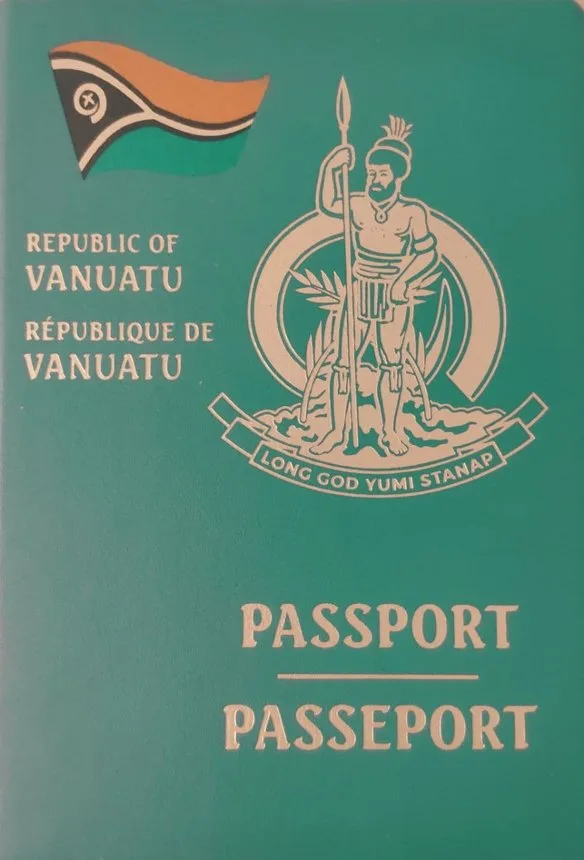
The Pacific is the second big island market, and its best-known programme is Vanuatu. Under the Development Support Program you pay 130,000 USD as an individual and 150,000 USD as a couple, 165,000 USD with one child and 180,000 USD with two. That puts Vanuatu well below the Caribbean.
Travel freedom explains most of the price gap. The EU has suspended visa-free entry to the Schengen Area for citizens of Vanuatu; in its press release of 2 December 2024, the Citizenship Commission in Port Vila called the decision disappointing and unexpected. The German Federal Foreign Office now lists Vanuatu as visa-required, and so does the United Kingdom. The programme itself carries on.
The second difference is the trip. You take the oath before a court in Vanuatu, so if you live abroad, you travel there for it. After approval you have three months to take the oath and pay the fee. For many this is no drawback at all but the reason for a journey to one of the most remote island worlds on earth. Still, plan it early.
Since 2024, Nauru has also been courting new citizens in the Pacific. The Naoero Economic and Climate Resilience Citizenship Program rests on its own 2024 law and funds climate protection, infrastructure, renewable energy and new industries. For applications the Program Office accepts by 31 December 2026, the contribution is 90,000 USD instead of the regular 115,000 USD, and you do not have to live there. Costs and process are in the Nauru passport and on the page for Nauru. Everything else on Vanuatu is on the page for the Vanuatu programme.
Africa: the cheapest way in, without relocating
Africa has become the region for anyone who wants a second passport quickly and on a manageable budget. South of the Sahara there are two programmes to choose from.
Sierra Leone offers four routes for different situations in life:
- Solo Entrepreneur: 95,000 USD, for single applicants with no dependants only.
- Enterprise Citizenship: 80,000 USD per person for exactly two applicants, business partners for example, with one joint due diligence.
- Heritage Citizenship: 120,000 USD for main applicants of African descent, proven by DNA test.
- Fast Track: 140,000 USD for a main applicant who wants to bring family, from spouse and children to parents and grandparents and on to siblings.
The whole procedure runs remotely: no trip to Sierra Leone, no embassy appointment, and the oath of allegiance and declarations are notarised over Zoom. From a complete application to the passport usually takes 90-120 days. With the passport you travel to at least 65 countries visa-free or with a visa on arrival, plus ECOWAS rights in eleven more West African countries. Sierra Leone accepts multiple citizenship without restriction. More on the page for the Sierra Leone programme and directly at sierraleonepassport.com.
For São Tomé and Príncipe you pay 90,000 USD as a single applicant or 95,000 USD as a family of two to four into the National Transformation Fund, and only once the application has been approved in principle. The unit quotes around two months to approval and then around three to four months to the passport. The programme requires neither residence nor relocation, during or after the application. Spouses or partners, children up to 30, parents and grandparents can come along. Details on the page for São Tomé and Príncipe.
In the north of the continent, Egypt grants its citizenship through four statutory routes, from 250,000 USD paid directly to the treasury up to a 500,000 USD deposit with the central bank, plus a 10,000 USD application fee.
You need a visa for Europe with any of these passports. If you know that and see the African passport as a fast, affordable second right, this is where you get the best balance of price and speed.
Middle East and Asia: capital in the country
In Türkiye and Jordan you do not donate, you invest, and considerably larger sums. In return the capital stays yours as long as you respect the holding period. Cambodia offers both, investment or donation.
Türkiye
Türkiye grants citizenship for real estate from 400,000 USD held for three years, with a no-sale annotation in the land register. Bank deposits, government bonds, fund units, a private pension plan or a fixed capital investment qualify from 500,000 USD, as does creating jobs for at least 50 employees. Before applying you need an investor residence permit; spouses and minor or dependent children can come along. The finer points are on the page for Türkiye.
Jordan
Jordan backs real businesses. The lowest amount applies to an existing business outside the capital region: average fixed assets of 350,000 JOD over the last three audited years and an average of ten Jordanian employees lead straight to citizenship; in the capital region it is 700,000 JOD and twenty employees. A new productive project needs 500,000 JOD of paid-up capital outside the capital region with at least ten jobs for Jordanians, or 700,000 JOD in the capital region with at least twenty. These new-project routes first lead to a provisional Jordanian passport for three years, then to citizenship. Alternatively, new stakes in productive projects from 1,000,000 JOD, again via the provisional passport, shares on the Amman Stock Exchange from 1,500,000 JOD held for five years, Amra City from 1,500,000 JOD or strategic sectors such as food logistics from 3,000,000 JOD per partner lead to the passport. This suits entrepreneurs who are genuinely building something in the country. More on the page for Jordan.
Cambodia
Among the programmes compared here, Cambodia is the only one in Southeast Asia. For the passport you invest 4 billion KHR in a promoted sector or donate 12 billion KHR to the state budget. You attend in person when you apply, the review takes no more than 45 working days, and citizenship is conferred by royal decree. The page for Cambodia has the details.
You need a visa for Europe with all three passports. Their value lies elsewhere: in access to markets where you invest anyway, and in a second citizenship that is not tied to the Caribbean. In South Asia, Pakistan registers Commonwealth citizens as its own when they transfer foreign currency worth PKR 5 million into the country through regular banking channels.
Which CBI region fits you? Five questions
The right region comes from your answers, not from a league table. Five questions get you there quickly.
- Do you need Europe without a visa? Then there is no way around the Caribbean. If you also travel to the UK often, the choice narrows to Antigua and Barbuda and Grenada.
- How big is your budget? Africa and Vanuatu sit below 150,000 USD. From 200,000 USD the Caribbean opens up, from 400,000 USD the Middle East.
- Who should be in the application? Parents and grandparents are accepted by Grenada, Antigua and Barbuda, São Tomé and Príncipe and Sierra Leone's Fast Track; siblings by Grenada, Antigua and Barbuda (unmarried) and Sierra Leone. If you apply alone, Solo Entrepreneur in Sierra Leone is especially affordable. All the family rules are on the family page.
- Do you want to travel or not? You can get through the Grenada and Sierra Leone programmes without any trip at all. Dominica and São Tomé and Príncipe require no residence. For Vanuatu you plan the trip for the oath, for Cambodia the one to apply.
- Donation or capital? A fund contribution is money spent, but it does not tie up capital for years. Real estate or a business in Türkiye or Jordan ties up more money, but that money stays yours. What the costs consist of in detail is under costs.
If you want to sort by price, the ranking is in the cheapest citizenship by investment. Where each programme passport travels without a visa is compared in travel freedom of CBI passports.
Combining regions: two passports instead of one
The Vanuatu example shows why a good Plan B does not hunt for the one perfect region. Holders kept their citizenship; they lost visa-free travel to Europe. Visa-free travel is always the destination country's decision. A passport, by contrast, is your right. If you hold two passports from two regions, you do not depend on the decision of any single destination country.
Typical combinations are:
- Caribbean plus Africa: one passport with Schengen access, a second one, faster and cheaper, with its own profile in West Africa.
- Africa now, Caribbean later: secure a second right within a few months first, then follow up with the larger programme.
- Investor passport plus naturalisation: a passport by investment for right now, and alongside it a residence that leads you to naturalisation after a few years.
The last point matters most. Naturalisation through residence is the free route and often the better one in the end, but it takes years of genuine residence. Citizenship by investment buys you exactly that time. Why you should pursue both routes in parallel is explained in CBI and naturalisation. All three routes to a second citizenship, descent, naturalisation and investment, are summed up in acquiring a second citizenship (in German).
And your German passport? It stays. Since 27 June 2024 Germany's modernised nationality law (Staatsangehörigkeitsgesetz, StAG) has applied, and you no longer lose German citizenship when you acquire another. So you collect rights instead of trading one for the other.
Frequently asked questions
Which citizenships can you buy?
The programmes accepting applications include Dominica, Antigua and Barbuda, Grenada, St Lucia and St Kitts and Nevis in the Caribbean, Vanuatu and Nauru in the Pacific, Sierra Leone, São Tomé and Príncipe and Egypt in Africa, Türkiye and Jordan in the Middle East, Cambodia and, for Commonwealth citizens, Pakistan in Asia, and El Salvador and, through investor residence followed by naturalisation, the Dominican Republic in Latin America and the Caribbean. Every amount and fee side by side is in the comparison.
Which region is the cheapest for a second passport?
Africa. São Tomé and Príncipe asks 90,000 USD for a single applicant, Sierra Leone 95,000 USD under Solo Entrepreneur, or 80,000 USD per person when two applicants apply together under Enterprise Citizenship. In the Caribbean the entry point is 200,000 USD in Dominica. The full ranking is in the cheapest citizenship by investment.
Which purchased passport lets me travel to Europe without a visa?
From the Caribbean, the passports of Antigua and Barbuda, Dominica, Grenada and St Lucia. The German Federal Foreign Office (Auswärtiges Amt) lists these four states as visa-exempt, for stays of up to 90 days in any 180 days without gainful employment. Vanuatu, Sierra Leone, São Tomé and Príncipe, Türkiye, Jordan and Cambodia are on the list as visa-required.
Do I have to live on the island whose passport I buy?
In most programmes, no. Dominica requires no residence before or after naturalisation, Grenada no visit, São Tomé and Príncipe no relocation, and Sierra Leone runs entirely remotely. Antigua and Barbuda requires at least five days in the country within the first five calendar years, Vanuatu the oath before a court in the country. Since 1 January 2026, St Lucia requires residence and a genuine link, with the details set by regulation.
Which region lets me include parents and siblings?
The Caribbean and Africa go furthest. Grenada accepts spouses, children, parents, grandparents and siblings, Antigua and Barbuda unmarried siblings, and Sierra Leone's Fast Track even siblings, nephews and nieces. Türkiye limits it to spouses and children. All the rules are under family.
Do I lose my German passport if I buy a second citizenship?
No. Germany's new nationality law has applied since 27 June 2024, and you keep German citizenship when you acquire another. How this works in detail is explained in your CBI passport and your German passport.
Which region fits your plan?
We go through your destinations, your family and your budget with you and show you which programme, and which combination of regions, really carries your Plan B.
Book a consultationSources
- German Federal Foreign Office (Auswärtiges Amt): list of countries and visa requirements
- GOV.UK: Immigration Rules, Appendix Visitor: Visa national list
- Citizenship by Investment Unit Dominica: FAQs
- Citizenship by Investment Unit Antigua and Barbuda: Citizenship
- Investment Migration Agency Grenada: Frequently Asked Questions
- Ministry of Investment Jordan (invest.jo): Jordanian Citizenship Through Investment
- Citizenship by Investment Unit Saint Lucia: Citizenship by Investment
- Saint Lucia: Citizenship by Investment (Amendment) Act No. 22 of 2025, Section 30A
- Vanuatu Citizenship Office and Commission: press release of 2 December 2024
- Vanuatu Citizenship Office and Commission: Application Process
- Naoero Economic and Climate Resilience Citizenship Program: About
- Citizenship by Investment Unit São Tomé and Príncipe: FAQ
- Sierra Leone: sierraleonepassport.com, programmes, family and FAQ
- German Federal Government: modernisation of nationality law
- Gesetze im Internet: Nationality Act (StAG), section 17, grounds for loss