
The short answer
Flag theory spreads nationality, residence, company, bank account and wealth across different countries, so that no single state decides on everything at once. The most stable flag is a second passport: since 27 June 2024, Germans no longer lose their citizenship when they acquire another one on application. For tax, though, what counts is not the passport but residence, with the US as the big exception.
Most people in Germany, Austria and Switzerland live with exactly one flag. One state issues the passport, the same state taxes the income, the company is registered there, the account is held there and the property stands there. That's comfortable as long as everything goes well. It turns dangerous the moment the rules change, and rules change faster than most life plans.
What is flag theory?
Flag theory isn't a law and it isn't a tax formula. It's an organising principle: every role a state plays in your life gets a country of its own. Each of those countries is a "flag".
Classically, five roles are distinguished. The state that gives you your passport. The state where you are tax resident. The state where your company is based. The state where your money sits. And the place where you actually spend your time. Depending on who you read, that makes three, five or more flags. The exact number is secondary. What matters is the thinking behind it: no single state should have a say over everything at once.
A look at a typical German life shows why this matters so much. Anyone who has a home or their habitual abode in Germany has unlimited income tax liability under § 1(1) of the Income Tax Act (Einkommensteuergesetz, EStG). Add the GmbH registered at the local court, the account at your usual bank, the brokerage account, the flat you own. If Berlin takes a decision you don't like, it hits every one of these building blocks at the same time. That's precisely where flag theory comes in: it turns one single big risk into several small ones that don't depend on each other.
What happens when the theory meets reality, and why flagging out with passport and residence forms the core today, is shown in the field report on flag theory at Wohnsitz Ausland (in German), with the focus on residence and tax. But the flag without which no other holds is the passport.
The flags at a glance
Before you plant a flag, it pays to take a sober look at what each one does and what it depends on. If you separate account and wealth, you end up with six roles that appear in almost every flag plan.
| Flag | What it governs | What it depends on | Read more |
|---|---|---|---|
| Passport | Entry, right of return, consular protection | Nationality | Second passport guide |
| Residence | Tax liability, registration | Home and habitual abode | Emigrating with a second passport |
| Company | Profits, liability, contracts | Registered office and place of management | Second passport for entrepreneurs |
| Bank account | Access to your money | The bank and your self-certification | Tax and citizenship |
| Wealth | Protection from seizure | Structure and where it is held | Second passport and asset protection |
| Place of life | Where you actually spend your time | Visas and residence rights | Travelling with several passports |
Notice what the flags depend on. Almost every one depends on something a state has to permit you. A residence permit is granted and can be refused. An account is opened and can be closed. A company needs registration and a bank. Only one flag rests on a right that belongs to you: the passport.
Passport and place of life
Your passport decides where you can travel without a visa, which country you can return to at any time and which embassy helps you in an emergency. Your place of life is where you feel at home, where your children go to school or where you spend the winter months. The two can be the same country, but they don't have to be. How strong a single passport is depends on its visa-free destinations; the passport ranking sorts the world's passports accordingly.
Residence
Residence is the flag with the biggest tax impact. It decides which state taxes your worldwide income. It's also the flag that demands the most real life: a home, time on the ground, a clear place where your life is centred.
Company, account and wealth
These three flags follow your residence. A company in a low-tax country achieves little if you run it from a flat in Germany. An account abroad is no secret, because under the automatic exchange of information the bank reports it to your country of residence. And asset protection only works if the structure matches the life you actually lead.
Why the passport is the first flag
A visa can be refused. A residence permit can be revoked or simply not renewed. A golden visa depends on the rules a government considers right today, and the next government can change them. A passport is something else. A passport is a right, not a permission. As a citizen you have a country of your own, a door of your own that nobody closes on a whim.
That's why the passport comes first in every well-thought-out flag plan. It carries all the other flags: a residence permit requires a valid passport, banks identify you by your passport, and you show it every time you set up a company. If you hold only one passport, your entire international life rests on a single foundation.
Germans may hold two passports since 2024
For a long time, this was exactly the catch for Germans. Anyone who acquired a foreign nationality on application lost their German one automatically in many cases. That's over. Under the Act to Modernise Nationality Law, since 27 June 2024 acquiring another nationality on application no longer leads to the loss of German citizenship, whatever the country. The retention permit has gone, because it's no longer needed.
For flag theory, that's a turning point. You no longer have to choose between your German passport and a second one. You can hold both and use each where it serves you best. What this means for military service, travel and children is explained in the guide to dual citizenship for Germans.
When the state may refuse or withdraw a German passport
The second reason the passport comes first is in the Passport Act (Passgesetz, PassG). Under § 7(1) no. 4 PassG, a passport must be refused if facts justify the assumption that the applicant intends to evade their tax obligations. § 8 PassG applies this to passports you already hold: if such facts come to light, your passport can be withdrawn.
Sebastian Sauerborn personally knows at least four people whose German passport was retained or declared invalid over tax matters.
The Passport Act lists further grounds, from criminal prosecution to military law. What they are and how the authorities proceed is explained in the article on passport withdrawal in Germany. Important for your plan: a second passport is not a way around an official measure or a court order. It's a precaution. It makes sure your freedom of movement doesn't hang on a single document if your first passport is lost, stolen or held abroad. The eight main reasons for a second passport are set out under why a second passport.
The passport stays when everything else changes
Residences change. Companies get sold. Accounts get closed because a bank changes its customer policy. The passport stays. It goes with you through every stage of life, and as a rule you can pass it on to your children. That's why it isn't just one flag among many, but the foundation you build all the others on.
Do you pay tax where your passport comes from?
A common misunderstanding about flag theory: if you hold a passport from a country with no income tax, you automatically pay no tax. That isn't true, and the reverse isn't true either. The Federal Central Tax Office (Bundeszentralamt für Steuern) puts it clearly: citizenship alone does not also determine tax residence. What counts are the national rules on tax liability and the double tax treaties, so typically your home and your habitual abode.
For your flag plan, that's good news. A second passport as a rule triggers no tax liability in the country that issues it. So you can choose your passport flag for security, freedom to travel and family, and plan your tax flag separately. That very separation is the heart of flag theory.
The US exception
The Federal Central Tax Office names the exception itself: the US. The American tax authority, the IRS, states that US citizens and resident aliens are taxed on their worldwide income from all sources, even when living abroad. A US passport is therefore a strong travel document but a difficult flag: it takes its tax liability with it wherever you go. For a flag plan, passports from countries that tax by residence are far better suited. Which consequences other passports carry alongside the US one is shown in the comparison USA, United Kingdom, Canada and China.
The German passport casts a tax shadow
The German passport has a tax effect even after you move away. § 2 of the Foreign Tax Act (Außensteuergesetz, AStG) governs extended limited tax liability. It applies to individuals who, in the ten years before their unlimited tax liability ended, were subject to unlimited tax liability as Germans for at least five years in total. If they move to a low-tax territory or are not resident in any foreign territory, and they still have substantial economic interests in Germany, an extended part of their income remains taxable in Germany until ten years after the year they moved away.
Here the law expressly links to German nationality. For your plan, that doesn't mean you should give up your German passport. It means your residence flag and your economic interests have to be planned properly before you leave. How nationality and tax interact is covered in depth in the article on tax and citizenship; the basics for investor passports are under tax.
Flag theory and "stateless": what's behind the term
Hardly any term is searched for as often in connection with flag theory as "stateless" (staatenlos in German). In the scene, it almost never means genuine statelessness, a life without any nationality at all. It means a life without tax residence: you travel from country to country, never stay anywhere long enough to become taxable there, and you've given up your home in Germany. The model is known as the perpetual traveler.
What the law says
For Germans, the model is riskier for tax than it sounds. § 2 AStG expressly names the case of someone who is not resident in any foreign territory. So a German who moves away without a new residence and still has substantial economic interests in Germany doesn't slip through the net at all; they fall straight into extended limited tax liability.
Then there's banking practice. Under the rules of the Common Reporting Standard, banks and insurers ask for a self-certification when you open an account, in which you state your country of tax residence. If no self-certification is on file 90 days after a new account is opened, the bank reports this to the Federal Central Tax Office, and as long as there's no plausible self-certification, no money can leave the account. If you're resident nowhere, that's exactly where you hit a practical problem. What a company can and can't do for people with no fixed residence is set out in the article US LLC with no fixed residence for perpetual travellers.
Genuine statelessness is not a goal
Genuine statelessness is the opposite of freedom. Without a nationality, you have no passport, no right of return and no state to protect you abroad. Why nobody should take this route voluntarily, and which exceptional cases exist, is described in the article on becoming stateless. Flag theory wants the opposite: not less nationality, but more. A second passport doesn't make you stateless; it makes you more independent of any single state.
The residence flag: where you are at home for tax
The residence flag is where most plans fail, and not abroad, but in Germany. The reason lies in two short provisions of the Fiscal Code (Abgabenordnung, AO).
Home and habitual abode
Under § 8 AO, a person has a residence where they have a home in circumstances suggesting they will keep and use it. So it doesn't matter how often you're actually there. If you keep your old flat "just in case", you often keep your German residence and your unlimited tax liability along with it.
Under § 9 AO, a person has their habitual abode where they stay in circumstances showing they are not just there temporarily. A continuous stay in Germany of more than six months always counts as a habitual abode, from the very first day; short interruptions are disregarded. The six-month rule doesn't apply to stays purely for visits, holidays or health cures of up to one year.
For your flag plan, that means you only truly plant your residence flag abroad once you've properly lowered the German one. No flat that remains at your disposal, no everyday life that in fact still revolves around Germany.
Exit tax
If you hold shares in corporations, there's another section you need to know before you leave. § 6 AStG treats giving up your residence or habitual abode as if you had sold your shares within the meaning of § 17 EStG at fair market value. It affects people who were subject to unlimited tax liability for at least seven years in total within the last twelve years before moving away. If you own your own GmbH, you therefore plan the company flag and the residence flag together, not one after the other.
From residence to passport
Your residence flag can later become a passport flag itself. Many countries naturalise people after a number of years of legal residence. That naturalisation is the free route to a second passport, and in the long run often the better one, but it takes years and requires real presence. Which countries make it possible, and how quickly, is shown in the guide to naturalisation abroad. Why the two routes aren't an either-or is explained in CBI and naturalisation: the investor passport buys you the time naturalisation needs. How to think about residence and passport together when you emigrate is described in emigrating with a second passport.
Company, account and wealth: the flags for your money
The three money flags are the ones people talk about most, and the ones where most mistakes happen. The reason is almost always the same: they're planted before passport and residence are in place.
The company flag
A company abroad is a tool, not an end in itself. Whether it delivers the tax result you hope for depends less on the country of incorporation than on where you live and where you run it from. If you go on living in Germany and manage the foreign company from your kitchen table in Munich, you've only planted the company flag on paper. If, on the other hand, you've moved your residence properly, the right company can achieve a great deal. For entrepreneurs who see the passport as part of their company strategy, there's a dedicated article: second passport for entrepreneurs.
The account flag
For many, an account abroad is the first tangible step. What matters is what happens with that account. Under the Common Reporting Standard, banks report every year your name, address, country of residence, tax number, date and place of birth, account number, account balance and interest, dividends and other income. In Germany, the Federal Central Tax Office receives this data, passes it on to the partner states and forwards data from abroad to the local tax offices responsible.
So the account flag isn't a cloak of invisibility. It's protection against the risk of having all your money in a single banking system. Where non-residents can open an account today, and what the banks want to see, is shown in the guide opening a bank account abroad.
The wealth flag
Asset protection means that not every move by a state or a creditor hits everything at once. Property in different countries, precious metals held somewhere other than your bank account, structures that separate earning, building and protecting. How such a three-tier structure is built is described on the page the three-tier structure. Why nationality belongs in this plan, and not just at the end of it, is explained in the article second passport and asset protection.
Which passport fits your flag system?
There are four ways to plant the passport flag. Each has its own rhythm, and many families combine several of them.
| Route | What you need | Residence required? | Read more |
|---|---|---|---|
| Citizenship by investment | Investment or contribution, due diligence | Depends on the programme, often not | Buying citizenship |
| Naturalisation | Years of legal residence | Yes, real residence | Naturalisation abroad |
| Descent | Proof of your ancestors | No | Citizenship by descent |
| Birth abroad | Birth in a country with birthright citizenship (jus soli) | No, for the child | Birth tourism |
First check whether you might already hold the flag without knowing it. A grandfather from Italy, a grandmother from Poland, ancestors driven out of Austria: the route through descent costs no investment, just patience with archives. For your children, there's a thought of its own: birth abroad is the passport you give your child at birth. More on that in the guide to birth tourism.
Programmes with no residence requirement
For flag theory, investor programmes that don't require residence are particularly interesting. They let you plant your passport flag without touching your residence flag, and the two stay neatly apart.
| Programme | Presence | What stands out |
|---|---|---|
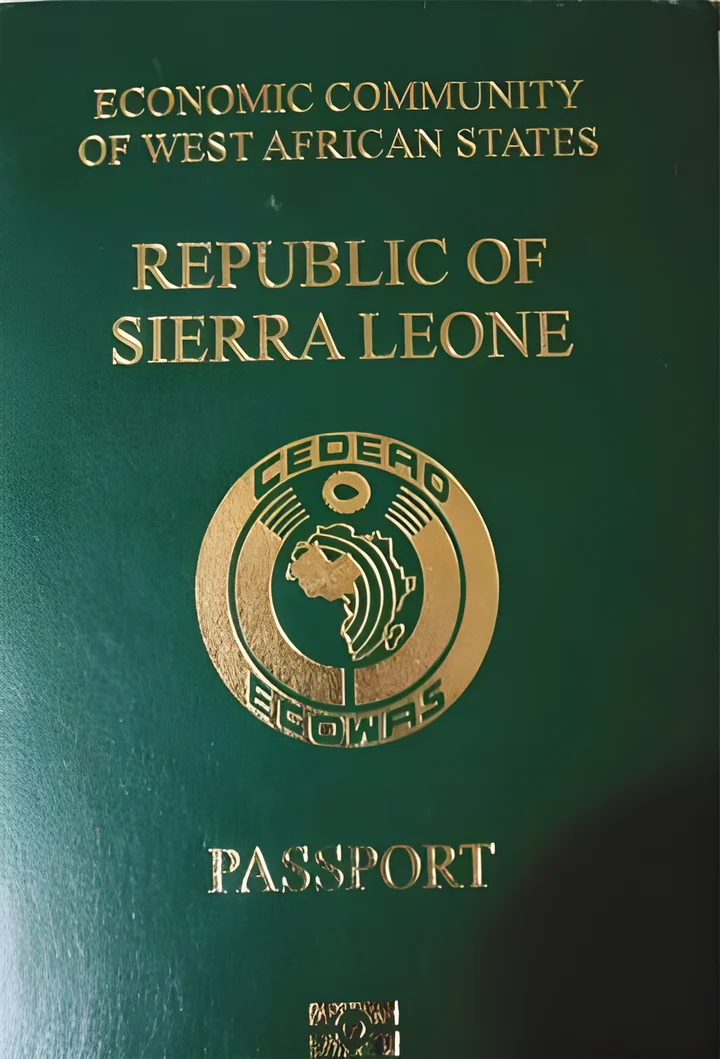
| Sierra Leone | 100% remote, no travel | Usually 90-120 days from complete application to passport |
| Dominica | Neither before nor after naturalisation | Multiple nationality expressly allowed |
| São Tomé and Príncipe | No residence or relocation needed | Neither during nor after the application |
| Antigua and Barbuda | At least five days in the first five calendar years | A short visit is enough |
Sierra Leone accepts multiple nationality without restriction, and the passport is issued without an embassy appointment. Dominica states in its official FAQs that you don't have to live there either before or after naturalisation. According to its own Citizenship by Investment Unit, São Tomé and Príncipe requires neither residence nor relocation. The open programmes, with amounts, fees and family rules, are under programmes, side by side in the comparison and with every cost item under costs.
Three questions count when you choose. First: where do you need to be able to travel? The passport ranking sorts the visa-free destinations of each passport. Second: who's coming with you? Family rules differ widely; the overview is under family. Third: how does the passport sit with the one you already have? For Germans, that question has been answered since 2024; the details are in the guide to dual citizenship for Germans. The overall picture of every route is in the second passport guide.
Your flag plan in five steps
A flag plan doesn't come together over a weekend. But it follows a clear order, and if you stick to it, you avoid costly detours.
1. Make your own concentration risk visible
Write down which state plays which role in your life today. Passport, residence, company, accounts, brokerage account, property, pension, health insurance. For most people, the same country appears on every line. This list is your starting point, because it shows you where a single stroke of the pen would hit everything at once.
2. Plant the passport flag first
The passport is the flag with the longest effect and the least ongoing upkeep. As a rule it needs no tax return in the issuing country, no balance sheet and no home. Depending on the route, it takes a few months or several years. Because naturalisation takes years, it pays to think in parallel: an investor passport protects you right away, and naturalisation in your future home country comes later on top.
3. Move your residence flag properly
Residence is the tax lever. What matters is that you really lower the German flag: no flat that remains at your disposal, no life that in practice still revolves around Germany. Before you move, check the exit tax under § 6 AStG and extended limited tax liability under § 2 AStG.
4. Set up company and account to match your residence
Only once it's clear where you live can you say which company and which bank fit. A company that is properly run from your new country of residence, and an account whose reporting to your new country of residence surprises nobody: those are the flags that hold.
5. Bring in your wealth and family, and review regularly
The last step brings in the people who matter to you and the wealth you've built. Who goes on the passport application with you? How does the passport pass to the next generation? Which structure protects your wealth? And then: a flag plan is never finished. Programmes change their rules, countries their tax laws. Once a year, every flag deserves a review.
Flag theory for family, retirement and inheritance
Flag theory is often described as a playground for young, footloose entrepreneurs. In truth it's even more valuable for families, because a passport flag works across generations.
Children
Many investor programmes include children in the application, some up to young adulthood. Plant the flag while your children can still be included, and you give them an option they could only secure later on their own with far more effort. Up to what age your children can be included in which programme is shown in second passport for children. The family rules of every programme at a glance are under family.
Inheritance
A passport is one of the few things you can pass on without it becoming any less. How a nationality passes to children and grandchildren, and what to watch out for, is explained in passing on citizenship. If you plant a passport flag today, you often plant it for the next generation at the same time.
Retirement
In retirement, priorities shift: healthcare, climate, safety, closeness to family. The passport flag gives you the freedom to choose where you live by those criteria and not by visa rules. What a second passport does for you in later life is described in second passport in retirement.
A diplomatic passport as a complement
Some people also think of a diplomatic passport when it comes to the passport flag. It's no substitute for a nationality, but an office that comes with a document, and it can complement a second passport well. How the two routes fit together is explained in diplomatic passport or second passport.
Flag theory today: fewer flags, the right flags
Many classic books on flag theory describe a world in which banks didn't report account data to tax authorities automatically. That world no longer exists. Accounts are reported automatically, residences are checked, companies with no real place of management stand out. If you still try to play seven countries off against each other today, you build a complicated construct that can tear at any point.
What remains is the core. And it's stronger than ever: two flags you genuinely live. A second passport that gives you a right to another country. And a residence that fits your life and that you establish properly. Company, account and wealth follow that core. What you get isn't a house of cards but a foundation.
The passport is the flag that needs the least upkeep and lasts the longest. In many programmes it requires no residence, as a rule it triggers no tax liability in the issuing country, and it goes with you and your family for a lifetime. Since Germany has allowed multiple nationality, it no longer even costs you your German passport. Start with this flag, and you've planted the most important part of your Plan B before you've even moved.
Travelling with several passports follows its own rules, from the right order at the border to the entry forms. The practical side is covered in travelling with several passports.
Frequently asked questions
What is flag theory, in simple terms?
Flag theory is an organising principle for an international life: every role a state plays for you is assigned to a country of its own. Your passport comes from one country, your tax residence sits in another, and your company, bank account and wealth are wherever they are best placed. That way your life no longer hangs on a single government. As a rule, it all starts with a second passport.
What does "stateless" mean in flag theory?
It rarely means actually losing your nationality. It usually means living without tax residence in any country. For Germans that's a delicate matter: § 2 of the Foreign Tax Act (Außensteuergesetz, AStG) expressly covers Germans who are not resident in any foreign territory and still have substantial economic interests in Germany, and banks ask for a self-certification of your tax residence every time you open an account. Genuine statelessness is something else entirely; more on that under becoming stateless.
Is flag theory legal?
Yes. Several nationalities, a residence abroad, a company in another country and an account with a foreign bank are all perfectly legal in themselves. What matters is that you genuinely live every flag and meet your registration and reporting obligations. Under the automatic exchange of information, banks report your accounts to the state where you are tax resident anyway.
Do I lose my German passport if I take a second citizenship?
No. Since 27 June 2024, acquiring another nationality on application no longer costs you your German citizenship, and that applies whatever the country. The old retention permit (Beibehaltungsgenehmigung) has therefore gone. All the details are in the guide to dual citizenship for Germans.
Do I have to pay tax in the country of my second passport?
As a rule, not because of the passport alone. Nationality by itself doesn't determine tax residence; what counts is your home and your habitual abode. The big exception is the US, which taxes its citizens on their worldwide income wherever they live.
Which flag should I plant first?
The passport. It's the only flag that is a right rather than a permission, and it carries all the others: a residence permit requires a valid passport, and banks identify you by your passport. You then plan residence, company and account to fit together. You can compare the programmes with no residence requirement in programmes compared.
How many flags do I really need?
Fewer than the classic books promise. The core is two flags you genuinely live: a second passport and a residence that fits your life. Company, account and wealth follow that core, not the other way round.
Your flag plan starts with the right passport
Together we work out which second passport fits your residence, your company and your family, and in which order you plant the flags. In the consultation, theory becomes a plan.
Book a consultationSources
- German Passport Act (Passgesetz), § 7 refusal of a passport (gesetze-im-internet.de)
- German Passport Act (Passgesetz), § 8 withdrawal of a passport (gesetze-im-internet.de)
- Federal Office of Administration (Bundesverwaltungsamt): nationality law modernisation in force
- Federal Central Tax Office (Bundeszentralamt für Steuern): Common Reporting Standard, self-certification
- Internal Revenue Service: U.S. citizens and resident aliens abroad
- Foreign Tax Act (Außensteuergesetz), § 2 extended limited tax liability (gesetze-im-internet.de)
- Foreign Tax Act (Außensteuergesetz), § 6 exit tax (gesetze-im-internet.de)
- Income Tax Act (Einkommensteuergesetz), § 1 tax liability (gesetze-im-internet.de)
- Fiscal Code (Abgabenordnung), § 8 residence (gesetze-im-internet.de)
- Fiscal Code (Abgabenordnung), § 9 habitual abode (gesetze-im-internet.de)
- Citizenship by Investment Unit Dominica: FAQs
- Citizenship by Investment Unit São Tomé and Príncipe: FAQ