The short answer
You obtain St Lucia citizenship through the Saint Lucia Citizenship by Investment Program, based on the Citizenship by Investment Act of 2015. The entry point is 240,000 USD to the National Economic Fund for the applicant with up to three dependants; an approved real estate project costs 300,000 USD plus an administration fee, a completed property 500,000 USD. On top come a 2,000 USD processing fee and an 8,000 USD due diligence fee for the main applicant, and since 1 January 2026 the law sets requirements for residence and a genuine link to the island.
St Lucia is one of the Caribbean states that have granted citizenship in return for an investment for years, and it gives you several routes to get there. How citizenship by investment works in general, and which programmes exist worldwide, is explained in Buying citizenship. The figures for every open programme side by side are in the comparison. With St Lucia, three questions deserve a close look: which investment route suits you, whom you can bring along, and what link to the island the law has required since 2026.
St Lucia citizenship: the programme at a glance
The programme's official name is the Saint Lucia Citizenship by Investment Program. Its legal basis is the Citizenship by Investment Act No. 14 of 2015 (Cap. 1.20), supplemented by regulations that set the amounts. The key changes of recent years are regulation S.I. No. 106 of 2024, which set today's amounts for the fund, the real estate project and the enterprise project from 1 July 2024, the Citizenship by Investment (Amendment) Act No. 22 of 2025 of November 2025, and regulation S.I. No. 57 of 2026 of 23 March 2026, which governs the route through completed properties.
The responsible body is the Citizenship by Investment Unit Saint Lucia. It receives the applications, carries out the checks and prepares the decision. The decision itself lies with the Board, a body that under the Act can approve, refuse or defer applications. Since 4 September 2023 every main applicant goes through an interview with identity verification.
Two cornerstones shape the programme today:
- Cap: The Board approves no more than 1,500 applications a year.
- Genuine link: Since 1 January 2026 applicants and dependants must meet the prescribed requirements for residence and a genuine link to St Lucia. This is laid down in section 30A of the Act, and a regulation sets out the details.
Both speak for the programme's stability. A state that caps its approvals and asks for a link to the island protects the value of the passport you end up holding.
St Lucia citizenship by investment: the routes at a glance
Fund, real estate, government bonds or enterprise: the amounts are set out in the regulations and in the authority's overview:
| Route | Minimum amount | Family | Key point |
|---|---|---|---|
| National Economic Fund | 240,000 USD | applicant and up to three dependants | contribution, not returned |
| Approved real estate project | 300,000 USD | any number of dependants | plus administration fee |
| Completed property | 500,000 USD | with dependants | plus 30,000 USD, hold for five years |
| Enterprise project, single | 3,500,000 USD | at least three permanent jobs | |
| Enterprise project, joint | 6,000,000 USD | at least 1,000,000 USD per applicant |
Donation to the National Economic Fund
The simplest route: you pay a fixed contribution to the Saint Lucia National Economic Fund, and that settles the investment. Since 1 July 2024 it has been 240,000 USD for you and up to three dependants. Each additional dependant adds 10,000 USD if under 18 and 20,000 USD if older. The money does not come back, but in return you have nothing to manage, nothing to rent out and nothing to sell later.
Real estate: approved project or completed property
On the real estate route you invest at least 300,000 USD in a real estate project approved by the Board. The amount is the same however many dependants you bring. On top comes an administration fee of 30,000 USD if you apply alone and 45,000 USD with a spouse, plus a smaller surcharge for each further dependant. The authority names high-end branded hotels and resorts and high-end boutique properties as approved categories, and the title deed is in your own name. Its list of approved projects currently includes A'ILA Resorts Villas & Residences in Rodney Bay and the Canelles Resort.
If you would rather own a finished property, the second option is for you: a completed apartment or villa worth at least 500,000 USD, plus an administration fee of 30,000 USD. You hold this property for at least five years from naturalisation. After that, you decide freely whether to keep it, rent it out or sell it.
Government bonds: the National Action Bonds
The third route runs through government bonds. Regulation 12 of the Citizenship by Investment Regulations and Schedule 2 govern it, and the Citizenship by Investment Unit calls it National Action Bonds. You subscribe to non-interest-bearing government bonds that stay registered in your name for five years from the first issue. As with the real estate project, the minimum amount covers you and any number of dependants. The appeal is obvious: instead of a contribution that is gone, you hold a state-issued security.
Enterprise project
Entrepreneurs can take the route of an approved enterprise project. On your own you invest at least 3,500,000 USD and create at least three permanent jobs. As a group you invest at least 6,000,000 USD together, each applicant at least 1,000,000 USD, and create at least six permanent jobs. Since 2025 the law requires funds for approved real estate and enterprise projects to pass through an escrow account, with reporting duties for every payment in and out.
What does the St Lucia passport cost in 2026?
On top of the investment come the fees you pay with the application, which are not refunded:
| Fee | Main applicant | Per dependant |
|---|---|---|
| Processing fee | 2,000 USD | 1,000 USD |
| Due diligence fee | 8,000 USD | 5,000 USD, only over 16 |
| Administration fee, real estate project | 30,000 USD alone, 45,000 USD with spouse | surcharge per further dependant |
| Administration fee, completed property | 30,000 USD |
With that, the investment and application fees for the most common cases add up neatly:
- You alone, fund: 240,000 USD contribution, 2,000 USD processing, 8,000 USD due diligence, 250,000 USD in all.
- You alone, approved real estate project: 300,000 USD investment, 30,000 USD administration fee, 2,000 USD processing, 8,000 USD due diligence, 340,000 USD in all, of which 300,000 USD stays with you as property.
- Married couple with two children aged 10 and 17, fund: the 240,000 USD contribution covers all four. Processing is 2,000 USD plus three times 1,000 USD, so 5,000 USD. Due diligence is 8,000 USD for you and 5,000 USD each for your partner and the 17-year-old, so 18,000 USD. The ten-year-old is exempt from the due diligence fee. 263,000 USD in all.
With the fund the money is spent; with real estate you keep an asset that you can sell again after five years. Which route pays off for you depends on how much capital you want to tie up and whether owning a place on the island means something to you. For all programmes compared by price, see Costs.
Donation or real estate: which route suits you
The question is less what is cheaper and more what fits your life. Three cases come up again and again:
You want the passport, not the house. Then the National Economic Fund is your route. You pay once, with no management and no holding period, and for a family of up to four the base amount stays the same. For many people, this is the clearest solution.
You want to park capital rather than spend it. Then weigh up real estate. 300,000 USD in an approved resort project or 500,000 USD in a villa of your own is wealth that stays. In return you pay the administration fee and tie the money up for at least five years. For large families the real estate route has an extra advantage, because the minimum amount covers any number of dependants and only the administration fee rises slightly with each further dependant.
You want a state-issued security. Then the National Action Bonds are your route: instead of spending money, you subscribe to non-interest-bearing government bonds and hold them in your name for five years, here too for any number of dependants.
How the investment types work across all programmes, and what to watch for on the real estate route, is explained in Donation, real estate, government bonds: the CBI investment types explained. If you are also considering St Lucia as a place to live, living conditions are compared in Emigrating to Barbados or St Lucia (in German).
Who you can include in the application
Since the amending Act of 2025, the Citizenship by Investment Act defines exactly who comes along as a dependant:
- your spouse
- your children and your spouse's children up to 21
- children up to 30 if you fully support them
- your parents or your spouse's parents over 55 if you fully support them
- unmarried siblings under 18 with the consent of their parents or guardian
- dependants of any age with a physical or mental impairment whom you fully support
That means St Lucia takes three generations in one application: you, your children up to 30 and your parents. In the fund, the base amount covers you and three dependants; beyond that you pay 10,000 USD per child under 18 and 20,000 USD per dependant over 18. Children born after the application can also receive citizenship once it has been approved.
How St Lucia compares with other programmes when it comes to parents is shown in Bringing your parents and grandparents. The family rules of all programmes at a glance are under Family.
Residence, interview and checks: what St Lucia requires
St Lucia checks thoroughly, and that works in your favour: the stricter a state's checks, the more its passport is worth in the world. This is part of the application:
- Documents: With the application you submit a medical certificate for each applicant, a police clearance certificate from your country of residence, a bank reference and proof of the planned investment.
- Proof of wealth: A sworn declaration of a net worth of at least 350,000 USD, with evidence of your assets and the source of funds.
- Interview: Since 4 September 2023, with identity verification for the main applicant.
- Biometric data: Required from successful applicants.
- Residence and genuine link: Required by law since 1 January 2026, with the details set out in a regulation.
The Act also states plainly when the Board must refuse: for false information, a conviction for an offence other than a minor traffic offence, ongoing criminal investigations, a security risk, or if you were refused a visa for a country that St Lucia citizens can visit visa-free and have not obtained one since. If your record is clear on these points, you have nothing to fear. One rule worth knowing: after naturalisation you may not change your name for five years, except through marriage, divorce or adoption, for example.
What the whole journey looks like, from the first conversation to the passport, is set out under Process.
Saint Lucian citizenship and your German passport
The most important question for Germans has a quick answer: you keep your German passport. Since 27 June 2024 acquiring a foreign citizenship by application no longer means losing the German one. The former section 25 of the Nationality Act (Staatsangehörigkeitsgesetz, StAG), which provided exactly that, has been repealed, and you no longer need a retention permit.
This makes the St Lucia passport what it is meant to be: a second citizenship alongside your German one. That is where the decisive difference lies. A visa or a residence permit is a permission that a state can refuse or withdraw. Citizenship is a right you can rely on for a lifetime.
On tax, a sober line from German law helps: anyone who has a residence or habitual abode in Germany is subject to unlimited income tax liability there, under section 1 of the Income Tax Act (Einkommensteuergesetz, EStG). The passport alone changes nothing about that, but it is a building block if you move your residence one day. What that means for you is explained under Taxes. The tax situation on the island itself is summarised in Taxes in St Lucia (in German).
Travelling with a St Lucia passport
The passport is strong with a view to Europe, too. According to the German Federal Foreign Office's list of visa requirements, citizens of St Lucia need no visa for Germany and may as a rule stay up to 90 days in any 180-day period without taking up work. The Citizenship by Investment Unit's list of visa-free destinations also includes every EU member state, Hong Kong and Singapore.
For most Germans, the second passport is not a replacement for the first but a reserve: a second travel document, a second embassy, a second country that recognises you as its citizen. That is exactly why the debate in Brussels about visa-free travel for the Caribbean states deserves your attention. How the EU is proceeding, and why it is wise to spread your options, is explained in EU visa suspension: what it means for Caribbean passports.
If you would like a bank account on the island as well as the passport, the options for non-residents are set out in Opening a bank account in St Lucia.
The process: from application to oath
The path to Saint Lucian citizenship follows fixed steps:
1. Submission through an Authorised Agent
You do not submit an application to the authority yourself. Under the programme's rules it goes through a licensed Authorised Agent, who files the documents. You pay the processing and due diligence fees on submission.
2. Checks and interview
The Citizenship by Investment Unit checks you and every dependant over 16, and you complete the interview with identity verification. The Board then decides.
3. The investment
With the fund, the approved real estate project, the government bonds and the enterprise project, you pay only once your application has been approved. With a completed property the order is reversed: the purchase contract and proof of payment are already part of the application.
4. Oath and certificate
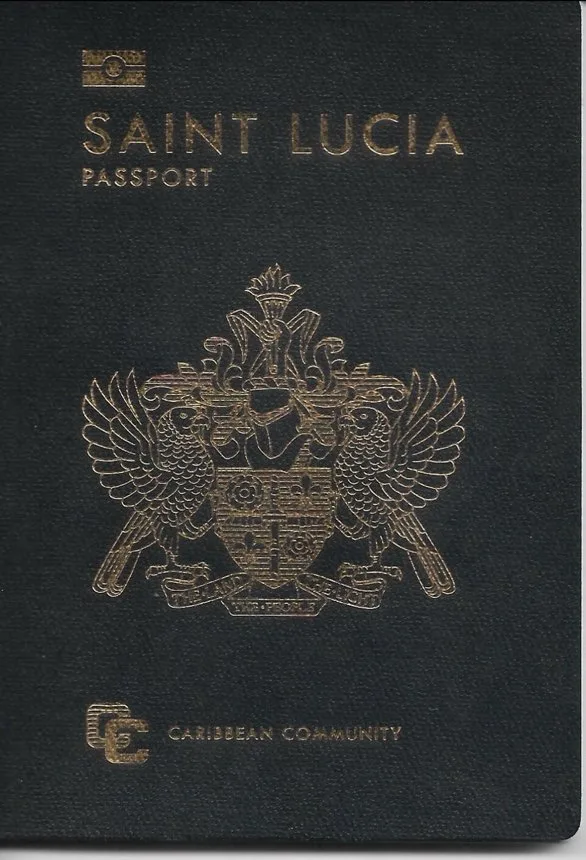
You take the oath of allegiance to St Lucia, according to the authority before a lawyer, a consular officer, an honorary consul or a notary. The minister then issues the Certificate of Registration, which makes you a citizen of St Lucia. With this certificate the passport is applied for at the immigration department.
The passport as a bridge
An investment passport and naturalisation through residence do not rule each other out. In the end, naturalisation is the free and often better route, but it takes years and requires genuine residence. In the meantime, the St Lucia passport gives you the second citizenship you need today. How to combine the two is explained in CBI and naturalisation: why you should pursue both. Every detail of the programme, with sources and date, is on the programme page St Lucia.
Frequently asked questions
Can you buy St Lucia citizenship?
Yes. The Saint Lucia Citizenship by Investment Program grants citizenship in return for an investment fixed by law, for example 240,000 USD to the National Economic Fund or 300,000 USD in an approved real estate project. Every application is checked by the Citizenship by Investment Unit and decided by the Board. How such programmes work in general is explained in Buying citizenship.
What does the St Lucia passport cost in 2026?
On your own through the fund, it is a 240,000 USD contribution, a 2,000 USD processing fee and an 8,000 USD due diligence fee: 250,000 USD in all for the investment and the application fees. Through an approved real estate project, it is 300,000 USD plus a 30,000 USD administration fee and the same application fees. For every programme by price, see Costs.
Can I include my family in the application?
Yes. You can include your spouse, children up to 21, children up to 30 whom you fully support, parents over 55 whom you fully support, and unmarried siblings under 18 with their parents' consent. In the fund, the base amount covers you and up to three dependants; each additional one costs 10,000 USD under 18 and 20,000 USD over 18.
Do I have to live in St Lucia to get the passport?
Since 1 January 2026 the law requires applicants and dependants to meet the prescribed requirements for residence and a genuine link. The details are set out in a regulation. What these requirements mean in practice for your family is best settled before you submit.
Do I lose my German passport as a German citizen?
No. Since 27 June 2024 acquiring a foreign citizenship by application no longer costs you your German one, because the former section 25 of the Nationality Act (StAG) has been repealed. So you keep both passports.
Does St Lucia offer government bonds as an investment route?
Yes. The Citizenship by Investment Regulations provide for the purchase of non-interest-bearing government bonds as a route of its own, which the authority calls National Action Bonds. The bonds stay registered in the applicant's name for five years from the first issue, and the minimum amount covers the applicant with any number of dependants.
How long is a programme property tied up?
You hold a completed apartment or villa worth 500,000 USD for at least five years from naturalisation. After that you are free to keep it, rent it out or sell it. For the investment types side by side, see Donation, real estate or government bonds.
Which route to St Lucia fits your family?
Together we run the numbers on the donation, real estate and bond routes for your family and check whether St Lucia or another programme does more for you. That way you decide with clear figures before you pay the first fee.
Book a consultationSources
- Citizenship by Investment Unit Saint Lucia: Investment Options and Fees
- Saint Lucia: Citizenship by Investment (Amendment) (No. 2) Regulations, S.I. No. 106 of 2024
- Saint Lucia: Citizenship by Investment (Amendment) Act No. 22 of 2025
- Saint Lucia: Citizenship by Investment (Amendment) Regulations, S.I. No. 57 of 2026
- Saint Lucia: Citizenship by Investment (Amendment) (No. 2) Regulations, S.I. No. 222 of 2022 (Government Bonds, Schedule 2 paragraph 4)
- Citizenship by Investment Unit Saint Lucia: FAQs
- Citizenship by Investment Unit Saint Lucia: Approved Real Estate and Enterprise Projects
- Citizenship by Investment Unit Saint Lucia: Visa Free Access
- German Federal Foreign Office (Auswärtiges Amt): visa requirements by country
- German Federal Foreign Office (Auswärtiges Amt): modernisation of German nationality law
- Gesetze im Internet: Nationality Act (Staatsangehörigkeitsgesetz), section 25 (repealed)
- Gesetze im Internet: Income Tax Act (Einkommensteuergesetz), section 1