The short answer
As a German, there are four routes to a second citizenship: descent, naturalisation after years in the country, a statutory investment programme and, for your child, birth in a country that grants citizenship by place of birth. Since 27 June 2024 you no longer lose your German citizenship along the way, and the retention permit has been abolished. You apply solely in the other state, and the fastest route, Sierra Leone, usually takes you to a passport in 90-120 days.
A second passport is neither a luxury nor insider knowledge. It is a right that another state grants you. A state can refuse you a visa or take it away again; it cannot do that with citizenship. Which state it should be comes down to four questions: where does your family come from? Where do you want to live? Are you planning children? And how much time do you have?
Can you hold a second citizenship as a German?
Yes, and on the German side without any ifs or buts. Since 27 June 2024, acquiring a foreign citizenship on application no longer costs you your German one. The Federal Foreign Office (Auswärtiges Amt) states this plainly, and in the Nationality Act (Staatsangehörigkeitsgesetz, StAG) the old ground for loss in section 25 StAG is now listed as "repealed". The retention permit that emigrants had to chase for decades has been abolished.
For you, that means no application, no fee and no waiting for a permit in Germany. The entire process takes place in the other country. The history of the reform, the exceptions and your obligations with two passports are covered in depth under dual citizenship for Germans.
One hurdle remains, and it sits with the destination country. Not every state tolerates multiple citizenship. Japan, for example, as a rule requires you to lose your previous citizenship before it naturalises you. If you want to stay German, choose from the outset a country that accepts the second passport alongside your German one. Sierra Leone, for example, accepts multiple citizenship without restriction.
The four routes to a second citizenship at a glance
At heart, there are four routes to a second citizenship. What sets them apart is what you bring: family history, years of your life, a birth or capital.
| Route | What you need | Time to passport | Read more |
|---|---|---|---|
| Descent | Parents, grandparents or ancestors with a foreign citizenship, and the certificates to prove it | depends on the country and your records | Citizenship by descent |
| Naturalisation | Years of lawful residence, often a language requirement and a test | 2-10 years or more | Naturalisation abroad |
| Birth | Your child born in a country that grants citizenship by place of birth | from the day of birth, for the child only | Birth tourism |
| Investment | Statutory contribution, donation or real estate, and a clean source of funds | a few months | Buying citizenship |
The routes do not rule each other out. Many families combine them: a passport by investment straight away, naturalisation through residence later, and the child is born in a country with birthright citizenship. How all the pieces fit together is shown in the complete guide to a second passport.
Citizenship by descent: the passport that may already be waiting for you
Before you spend a single euro, look into your family history. Many Germans have a claim to a second passport without knowing it, because a grandfather came from Ireland, a mother from Poland or their ancestors from another state.
Ireland: one grandparent is enough
Ireland is the best-known example. If one of your grandparents was born on the island of Ireland, you can become an Irish citizen through the Foreign Births Register, according to the Irish Department of Foreign Affairs. The same applies if one of your parents was an Irish citizen when you were born without having been born on the island. Once you are entered in the register, you are Irish and can apply for an Irish passport, giving you a full EU passport on top of your German one. The certificates and the process are explained on the page about the Irish passport through parents and grandparents.
Poland: confirmation, not naturalisation
With Poland, you are not naturalised; you have it confirmed that you are already Polish. You submit the application to the voivode (the regional governor) through the Polish consulate in Germany, in Polish, with civil status certificates and proof of your Polish descent. Certificates in other languages must be translated into Polish by a sworn translator. The fee is EUR 100; the consulate forwards your application to the voivode, who decides.
Other countries such as Italy, Hungary, Romania or Greece each have their own rules. Which countries still accept descendants today and which certificates you need is set out in the overview of citizenship by descent.
Naturalisation abroad: the residence route
Naturalisation is the route no amount of money can shorten. You live in the country lawfully, count your years, often learn the language, and in many places you take an oath at the end. In return, it is the least expensive route to a second passport, and often the most valuable in the end, because you have put down roots there.
| Country | Residence before you can apply | What matters |
|---|---|---|
| Argentina | 2 years without interruption | residence permit for more than two years, application in the country |
| Canada | 1,095 days in 5 years | valid permanent residence, every single day counts |
| Japan | 5 years by law, in practice 10 since April 2026 | as a rule, loss of your previous citizenship |
| Switzerland | 10 years | 3 of them in the 5 years before the application, C permit (settlement permit) |
Argentina is one of the shortest routes: if you have held a temporary or permanent residence permit for more than two years and have lived in the country without interruption for the two years before the application, without any trips abroad, you can apply for naturalisation. The no-travel rule comes from Decree 366/2025, on which the Corte Suprema has yet to rule. Canada requires 1,095 days of physical presence within five years, at least 730 of them as a permanent resident. Switzerland, with ten years, sits at the other end of the scale.
Latin America offers a particularly large number of short waiting periods. Every country in the region is compared in the overview Naturalisation in Latin America: 21 countries compared. If you are heading to the United States, the path from green card to oath is set out under becoming a US citizen. Every country with its waiting periods, language tests and presence rules is compared in the article on naturalisation abroad.
The catch is time. Two to ten years is a long stretch when you need the second passport as a safeguard. That is exactly why naturalisation is not the opposite of investment but its partner: the investment passport protects you at once, while naturalisation grows quietly in the background. Why you should pursue both is explained in CBI and naturalisation.
Citizenship by birth: a passport for your child
Birth abroad is the passport you give your child to take into life. In countries with birthright citizenship, your child becomes a citizen with its first breath, whatever passport you hold yourself.
- Canada: anyone born in Canada is a Canadian citizen under section 3 of the Citizenship Act. The main exception is children of foreign diplomats where neither parent is a Canadian citizen or permanent resident.
- Brazil: under Art. 12 of the Constitution, anyone born in Brazil is a brasileiro nato (a native-born Brazilian), even of foreign parents, as long as those parents are not in the service of their own state.
Your child still becomes German. Under section 4(1) StAG, a child acquires German citizenship at birth if one parent is German. There is one deadline you need to know: if you yourself were born abroad after 31 December 1999 and live there, you must apply within one year of the birth to have it entered in the German birth register, otherwise your child does not become German under section 4(4) StAG. An application at the German embassy or consulate meets the deadline. All the countries, how to plan the birth and the paperwork afterwards are covered in the article on birth tourism.
The passport by birth has one limit: it applies to the child only. For yourself and your partner, you need one of the other routes. How families protect every member is shown on the family page.
Buying a second citizenship: the fastest route
If you have no claim through your ancestors and do not want to wait for years, citizenship by investment is your route. There is no grey area here: the programmes rest on the laws and regulations of each state, dedicated authorities review every application, and at the end you hold the same citizenship as every other citizen of that country.
| Programme | Entry level | What stands out |
|---|---|---|
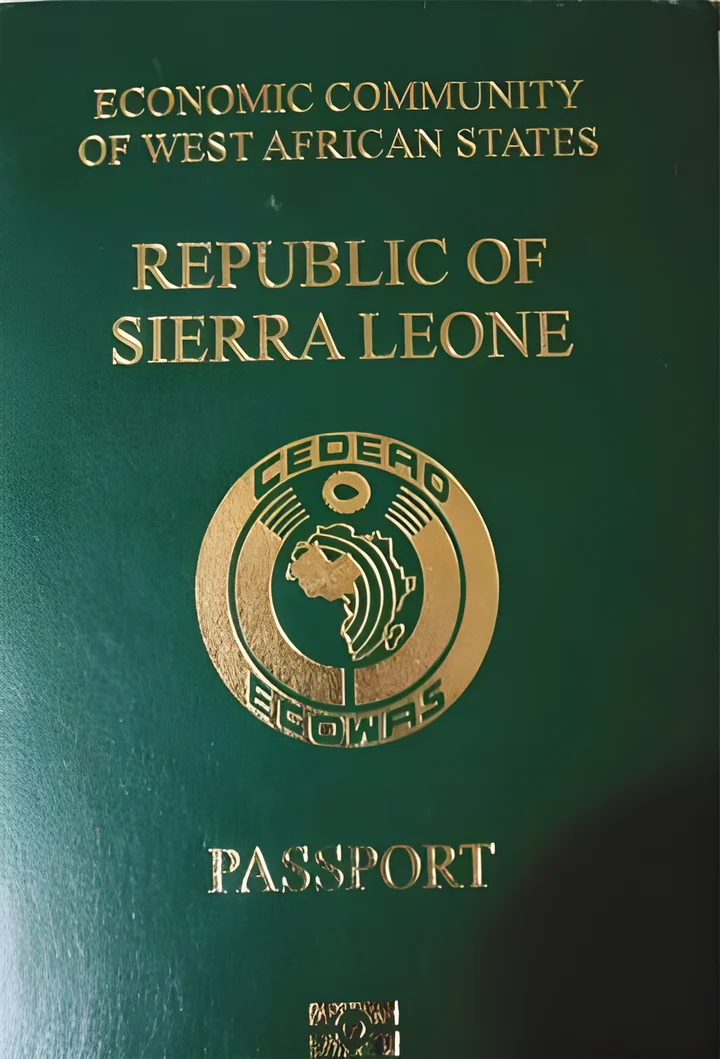
| Sierra Leone | USD 80,000 per person (exactly two applicants), USD 95,000 as a Solo Entrepreneur | entirely remote, usually 90-120 days to the passport |
| São Tomé and Príncipe | USD 90,000 donation, single applicant | no stay required, around two months to approval, then three to four months to the passport |
| Dominica | USD 200,000 contribution, single applicant | no residence before or after naturalisation |
| St Kitts and Nevis | USD 250,000, family of up to four | decision 120-180 days after acknowledgement of receipt |
| Turkey | USD 400,000 real estate | three-year holding period |
Government fees come on top of these amounts. In São Tomé and Príncipe, there is a filing fee of USD 5,000 per application; in Dominica, every applicant aged 16 or over must attend an interview, usually held online, at USD 1,000 per interview. In Sierra Leone, a filing fee and a processing fee including a background check are added, and for the whole family the Fast Track is open from USD 140,000, with spouse, children, parents, grandparents and siblings.
Sierra Leone is the route without a single day of travel: the oath of allegiance and declarations are notarised over Zoom, and the biometric passport arrives by courier. Every open programme is set side by side on the comparison page, and the total costs including fees are on the costs page. How donations, real estate and government bonds work, and what to look for when you choose, is explained in buying citizenship.
Which route suits you?
The right answer rarely comes from the price. It comes from your life. Three questions get you to a decision quickly.
Do you have foreign ancestors? Then check descent first. An Irish grandparent or Polish parents can get you an EU passport that costs you little more than fees and certificates, though the paperwork takes time.
Are you planning to emigrate anyway? Then every year of residence in your new country counts. Choose a country with a short waiting period that allows multiple citizenship, and plan naturalisation from day one.
Do you need the safeguard now? Then there is no way around investment. It is the only route that reliably leads to a passport in months rather than years, and you can combine it with the other routes at any time.
If you are planning children, birth abroad joins as the fourth building block. Step by step, that is how you protect the whole family.
Applying for a second citizenship: how to go about it as a German
Whichever route you take, the process follows one pattern. The authority in charge is always one of the other state, in the country itself or through its consulate, never a German one.
1. Set your goal and timeframe
Write down what you need the second passport for: freedom to travel, residence in the EU, protection in case your German passport fails you, a legacy for your children. And by when. That tells you which routes are even an option.
2. Check multiple citizenship in the destination country
Germany allows the second passport; the destination country has to allow it too. Before every step, check whether that country requires you to give up your German citizenship.
3. Gather your documents
Birth certificate, marriage certificate, passport and, depending on the route, your parents' and grandparents' certificates or proof of where your funds come from. Documents in other languages need certified translations, and many countries require an apostille.
4. Application, review, oath
You file the application with the competent authority, the state checks your identity and background, and at the end comes the oath or the confirmation. With the certificate, you apply for the passport. What this looks like step by step for the investment programmes is shown on the process page.
What changes for you in Germany, and what does not
With the second passport you remain German, with the same rights and duties as before, and you keep your German passport. There are still two points you should know.
Tax does not follow your passport. Under section 1(1) of the Income Tax Act (Einkommensteuergesetz, EStG), every individual with a residence or habitual abode in Germany has unlimited tax liability there. A second passport alone changes nothing about this, neither for better nor for worse. What changes for tax purposes only once you move is explained on the tax page.
For men liable for military service, the permit requirement can return at any time. Section 3(2) of the Compulsory Military Service Act (Wehrpflichtgesetz) requires men from the age of 17 to obtain a permit from the responsible Bundeswehr careers centre (Karrierecenter der Bundeswehr) if they want to leave Germany for more than three months. Since 17 April 2026, this requirement has been suspended for everyone by a general order of the Federal Ministry of Defence, but the ministry can reinstate it at any time with a single order. That applies with or without a second passport. What it means for your plans is set out under conscription.
So a second passport is not a farewell to Germany. It is a second door that you open at your own pace, and that stays open should the first one ever close.
Frequently asked questions
Can I apply for a second citizenship as a German?
Yes. Since 27 June 2024, acquiring a foreign citizenship on application no longer costs you your German one, and the old retention permit has been abolished. Whether you are granted the second citizenship is decided solely by the other state under its own law. The legal details are under dual citizenship for Germans.
Do I have to apply for anything in Germany before I take a second citizenship?
No. There is no longer any application or permit for keeping German citizenship. The whole application runs through the authority or consulate of the other country. Separately, section 3(2) of the Compulsory Military Service Act (Wehrpflichtgesetz) requires men liable for military service to obtain a permit for stays abroad of more than three months. Since 17 April 2026 that requirement has been suspended by a general order of the Federal Ministry of Defence, but it can come back at any time.
Which second citizenship can a German get fastest?
The fastest route is a statutory investment programme. In Sierra Leone, it usually takes 90-120 days from a complete application to the passport, without travelling to the country. São Tomé and Príncipe quotes around two months to approval and then around three to four months to the passport. Without an investment, Argentina, with two years of uninterrupted residence, is one of the shortest routes.
What does a second citizenship cost for Germans?
Through descent and naturalisation, you mainly pay official fees, certificates and translations, for example EUR 100 for confirmation of Polish citizenship through the consulate. For citizenship by investment, programme amounts start at USD 80,000 per person in Sierra Leone and USD 90,000 in São Tomé and Príncipe, and in the Caribbean at USD 200,000 in Dominica. The full comparison is on the costs page.
Do my children get the second citizenship too?
With investment programmes, you include your spouse and children in the same application depending on the programme, and in Sierra Leone the Fast Track even covers parents, grandparents and siblings. With naturalisation, each country decides whether your children can join your application. Children you have after your naturalisation usually inherit the new citizenship by descent and, as the child of a German parent, also become German under section 4(1) of the Nationality Act (Staatsangehörigkeitsgesetz, StAG). If you yourself were born abroad after 1999 and live there, apply to register the birth within one year, otherwise section 4(4) StAG applies.
Do I have to give up German citizenship to naturalise?
Germany no longer requires it. Some countries do, though: Japan, as a rule, requires you to lose your previous citizenship before it naturalises you. So before you start, check the law of the destination country, not only German law.
Which of the four routes gets you to a second passport fastest?
We go through your background, family, residence plans and budget with you and show you which route comes first for you and which comes next. That way you hold the second passport in your hand before you need it.
Book a consultationSources
- Federal Foreign Office (Auswärtiges Amt): nationality law, key changes since 27 June 2024
- Nationality Act (Staatsangehörigkeitsgesetz): section 4 acquisition by birth, section 25 repealed
- Compulsory Military Service Act (Wehrpflichtgesetz): section 3(2), permit for stays abroad of more than three months
- Income Tax Act (Einkommensteuergesetz): section 1, tax liability
- Department of Foreign Affairs Ireland: Citizenship for people born abroad
- Consulate of the Republic of Poland in Germany: confirmation of Polish citizenship
- Argentina: Ciudadanía argentina por naturalización
- Citizenship Act of Canada: section 3 (birth in Canada) and section 5 (1,095 days of physical presence)
- Constitution of Brazil: Art. 12, brasileiros natos
- State Secretariat for Migration SEM: becoming a Swiss citizen
- Ministry of Justice Japan: Naturalization requirements
- Sierra Leone: sierraleonepassport.com, programmes and FAQ
- Federal Ministry of Defence: general exemption from the permit requirement under section 3(2) WPflG (BAnz AT 16.04.2026 B3)