
The short answer
With two citizenships, both of your states may help you in a third country: consulates look after their own nationals, and international law allows each of your two states to protect you there diplomatically as well. If Germany has no representation in a third country, any embassy of another EU state helps you as an EU citizen just as it helps its own nationals. The limit is the country of your other citizenship: as a rule, your other state may not protect you diplomatically against that state.
When people think about a second passport, they usually think about freedom to travel, about tax or about a plan B for the family. What gets overlooked is this: a second citizenship also gives you a second state that is responsible for you abroad. That is not a side effect. It is one of the most tangible benefits of dual citizenship, and it matters precisely when nothing else works any more. For the full picture of the routes to a second passport, see the second passport guide.
What consular protection really means
Consular protection is the help a state gives its own people abroad. The Vienna Convention on Consular Relations of 1963 describes the first function of every consulate as protecting the interests of the sending state and of its nationals in the receiving state, within the limits permitted by international law. A consulate is responsible for you because you are a national. Not because you hold a visa, not because you are a customer, but because you belong.
For Germans, the Consular Act (Konsulargesetz, KonsG) gives this task its substance. Section 1 KonsG already calls on consular officers to give Germans advice and assistance at their duly exercised discretion. Three provisions make it specific:
- Section 5 KonsG, help in emergencies: consular officers are to give Germans in need the help required when the emergency cannot be resolved in any other way. This can include legal protection or the journey back to where you live.
- Section 6 KonsG, help in disasters: in natural disasters, armed conflict or revolutionary upheaval, consular officers are to take the measures needed to give Germans help and protection.
- Section 7 KonsG, help for prisoners: Germans held on remand or serving a sentence are looked after at their request, and in particular are helped to obtain legal representation.
Two things are worth knowing. First, consular help is not free in principle: under section 5(5) KonsG the person who receives it must reimburse the costs, and so must relatives and the spouse within the scope of their duty of maintenance. In disasters, section 6(2) KonsG allows this to be waived. Second, consular protection is not the same as diplomatic protection. With consular protection, a consulate helps you in very practical ways: visits in detention, contact with your family, an emergency travel document. With diplomatic protection, your state takes up your case against another state that has wronged you. Both rest on the same foundation: you must be a national.
That is exactly why a second citizenship doubles your protection. A residence permit, a golden visa or a residency does not add a single consular officer to your side. A second passport adds a whole second state.
Dual citizenship in a third country: which embassy helps you?
Most emergencies do not happen at home or in the country of your second citizenship, but somewhere in between: on a business trip, on holiday, while changing planes. For this case the legal position is clear and works in your favour.
In 2006 the United Nations International Law Commission set out the rules on diplomatic protection in its Draft Articles. Article 6 says that any state of which a dual or multiple national is a national may exercise diplomatic protection on that person's behalf against a state of which the person is not a national. It goes on: two or more states of nationality may also exercise this protection jointly.
For you, this means two doors are open in a third country. If you are German and also a citizen of Dominica, then in Dubai, Bangkok or Nairobi both states are in principle responsible for you. If the German embassy is overwhelmed, closed or simply far away, the mission of your second state can step in. And where both are present, both can act for you at the same time.
What you need to know if you are arrested
The most important rule for an emergency is in Article 36 of the Vienna Convention. If you are arrested, the authorities must inform your state's consulate without delay if you request it, and they must tell you about this right. Consular officers may visit you, talk to you and arrange legal representation for you.
The key words are "if you request it". With two citizenships, say explicitly which ones you hold and which consulate should be notified. If both are present locally, name both, so the authorities know whom to contact.
Which passport you travel on makes a difference
Which passport to show at which border is a question of its own, covered in detail in travelling with two passports. For consular protection, one simple rule applies: before every trip, note down the emergency contacts of both states in your destination country, meaning the embassy, consulate or honorary consul. Not every state is represented in every capital. With both numbers saved on your phone, you will not lose an hour searching when it counts.
The limit: the country of your other citizenship
The second part of the rule is just as clear. Article 7 of the International Law Commission's articles says that a state of nationality may not exercise diplomatic protection on behalf of a person against a state of which that person is also a national, unless the nationality of the protecting state is predominant, both at the time of the injury and when the claim is presented.
How harsh this can be in practice is shown by the Federal Foreign Office's (Auswärtiges Amt) travel and safety advice for Iran. The Iranian authorities do not recognise dual citizenship and treat German-Iranian dual nationals exclusively as Iranian nationals. The Federal Foreign Office states that consular support from the German Embassy in Tehran is therefore not possible in emergencies.
The German Consular Act reflects this limit in its own way. Section 5(1) KonsG excludes a particular group from the duty to help: Germans whose habitual residence is in a foreign state whose citizenship they also hold, and whose father or mother holds or held that citizenship, together with their descendants. Consular officers can still help them where fairness requires it in the individual case.
Read this exception carefully, because it is narrow. It covers people who live in the country of their other citizenship and hold it through their parents. If you live in Germany and acquire a second citizenship through investment or naturalisation, it does not apply to you. For you, the German embassy remains fully responsible in every third country.
Why this limit hardly matters with a second passport
The limit concerns the one country whose citizen you also are. And that is exactly where you need no embassy, because there you are at home. As a citizen of Dominica you are not a guest in need of protection in Roseau, but a citizen with the right to enter and to stay. The question of who protects you there against that state becomes serious mainly for people who were born with their second citizenship from a difficult country of origin, as the example of Iran shows. If you choose your second citizenship deliberately, you choose a state you trust.
This is also where the answer lies to the question so many people ask about the advantages and disadvantages of dual citizenship: the disadvantage is confined to a single country, and you pick that country yourself. The advantage applies in every other country in the world.
The EU as a third layer of protection for Germans abroad
As a German you already have more than one embassy today, even if you rarely think about it. Under Article 20(2)(c) of the Treaty on the Functioning of the European Union, every EU citizen in a third country where their own member state is not represented enjoys the protection of the diplomatic and consular authorities of any other member state on the same conditions as that state's nationals. Directive (EU) 2015/637 puts this into practice.
Three points of the Directive matter for you in practice:
- Equal conditions: the embassies and consulates of the member states give unrepresented EU citizens consular protection on the same conditions as their own nationals (Art. 2).
- When you count as unrepresented: when your state has no permanent embassy or consulate there, or when no embassy, consulate or honorary consul is actually in a position to help in the specific case (Art. 6).
- What kind of help: among other things, after an arrest or in detention, as a victim of crime, after serious accidents or illness, in cases of death, relief and repatriation in an emergency, and emergency travel documents (Art. 9).
A second citizenship adds your own independent network on top of this European one. If your second passport is itself an EU passport, for example through descent, you even have two member states that are directly responsible for you. If it is a passport from the Caribbean or from Africa, you gain a state with its own relationships, its own connections and its own missions outside the EU.
| Where you are | German mission | Mission of your second state | Other EU embassy |
|---|---|---|---|
| Third country, both represented | responsible under KonsG | responsible for its citizens | only if Germany cannot help |
| Third country with no German mission | not present | responsible for its citizens | helps you like its own citizens |
| Country of your second citizenship | very limited | not needed, you are a citizen | not provided for |
| Germany | not needed, you are a citizen | limited | not provided for |
War, unrest, disaster: who gets you out?
The real strength of two embassies shows when many people need help at the same time. In an evacuation, phone lines are overloaded, seats on special flights are scarce, and every mission looks after the people it is responsible for first.
Section 6 KonsG obliges German consular officers in such situations to take the measures needed to give Germans help and protection. So that this works immediately, section 6(3) KonsG asks them to keep a list of the Germans in their district. The Federal Foreign Office runs the ELEFAND crisis preparedness list for this purpose. You can register there whether you live abroad or are only away briefly on holiday or business, ideally before you leave.
With a second citizenship you have a second route in a crisis. If the German convoy only leaves the day after tomorrow, a seat on your second state's plane may be free tomorrow. If the German embassy itself is stuck, the other mission may still be working. And the other way round: where your second state is not represented, you still have the German embassy and, behind it, the whole EU network.
Your family in an emergency
Here is a point many people miss. The Consular Act covers family members who are not German only at the margins. Under section 5(2) KonsG they can be helped where fairness requires it in the individual case and they live with you in the same household or have done so for a longer period. In disasters, section 6(1) KonsG includes them if they live with you in the same household or have done so for a longer period.
So if your wife is Brazilian or your husband is Thai, their protection by the German embassy comes with conditions: in everyday life, fairness in the individual case; in a crisis, a shared household. If, on the other hand, your family takes on a shared second citizenship with you, each of you becomes a national of that state in your own right, and its consulates are responsible for every one of you. Programmes such as Dominica, St Kitts and Nevis or Sierra Leone include spouses and children in the same application, and under certain conditions parents too. Which relatives can come along where is shown in the overview on family.
How a second passport holds up in such situations overall is explored in plan B in an emergency. To prepare on the ground, the country guides on safety abroad (in German) and the emergency plan for you and your family (in German) are worth reading.
When your German passport is missing
Consular protection and travel documents are closely linked. If your passport is stolen, lost or held by authorities abroad, you depend on a consulate to get a valid document again. Anyone who has tried to get a short-notice appointment for a new German passport abroad knows how long the process can take. How to get a new document even without a free embassy appointment is shown in the article German passport expired abroad (in German).
With a second passport in your pocket, you are not stranded in that situation. It is the lawful way to travel on when the first one is lost, stolen or held abroad. What to do step by step is set out in passport gone abroad.
One thing should also be clear: a second passport is not a way around a travel ban, a court order or a passport withdrawn by the authorities. It protects you against losing a document, not against your obligations to the state whose citizen you remain. When and why Germany can refuse or withdraw a passport is governed by sections 7 and 8 of the Passport Act (Passgesetz, PassG); more under passport withdrawal.
Which second passport brings you the second embassy
You only get the second embassy with a genuine second citizenship. And it only helps you if you keep the first one. Both are secure for Germans today: since 27 June 2024 Germans can acquire a foreign citizenship on application without losing German citizenship. You no longer need a retention permit for this. How that works in detail is shown in citizenship by investment and your German passport.
On the other side, the second state must also allow multiple citizenship. For the programmes Germans choose most often, this is expressly the case:
| Programme | Multiple citizenship | Residence required | Entry level according to the programme |
|---|---|---|---|
| Sierra Leone | allowed without restriction | no, no travel required | USD 95,000 Solo Entrepreneur, USD 140,000 Fast Track, dependants extra |
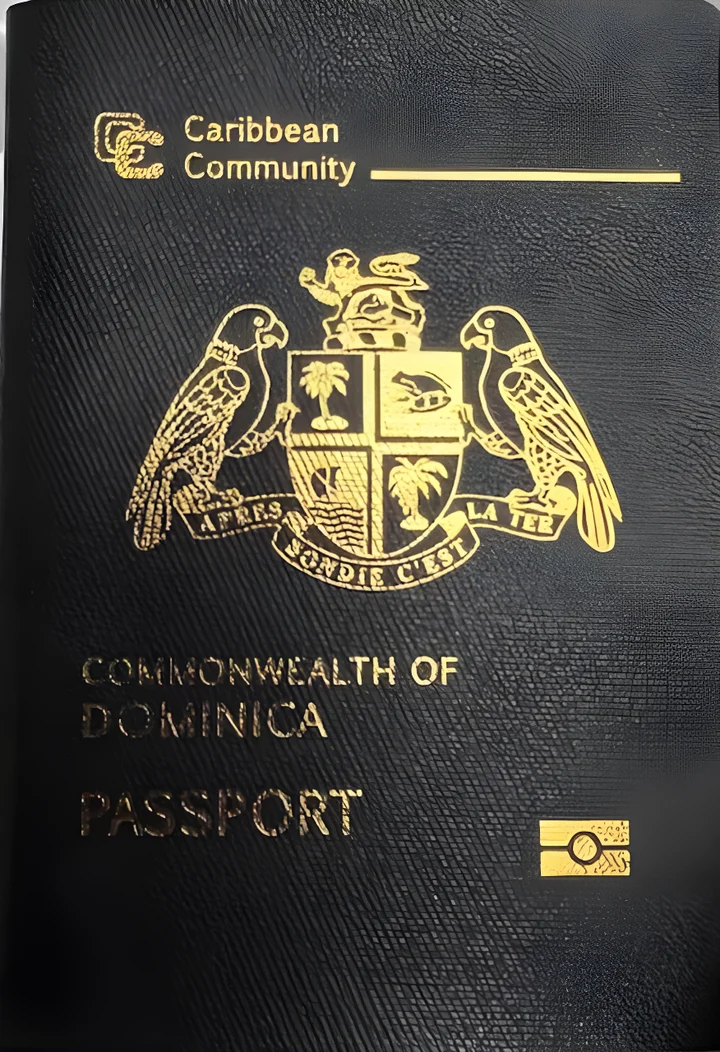
| Dominica | allowed, no renunciation required | neither before nor after naturalisation | USD 200,000 single applicant |
Dominica says it plainly in the FAQs of its Citizenship by Investment Unit: Dominica's laws recognise dual citizenship, you do not have to give up your other citizenships, and you do not have to live there either before or after naturalisation. Sierra Leone accepts multiple citizenships without restriction and usually takes 90-120 days from the complete application to the passport.
If you factor consular protection into your choice, ask yourself three questions. Where do you travel most, for work and privately? Where does your family live, and which of them should be in the application? And which state do you want to belong to when it really matters? All programmes with costs, timelines and family rules are in the comparison and the overview of costs.
Advantages and limits of dual citizenship abroad
In short, the balance is clear:
- In every third country, two states are responsible for you, and both may also protect you jointly.
- If you are arrested, you can ask for both consulates to be notified.
- With no German mission on the spot, any other EU embassy also helps you as it helps its own citizens.
- In a crisis, you have two evacuation routes instead of one, and your family, with a shared second citizenship, is looked after by that consulate as its own nationals.
- If your German passport is missing, you have a second valid travel document.
- The limit lies in a single country, the country of your second citizenship, and there you are a citizen.
A visa gives you a permission. A citizenship gives you a right, and with that right comes a state that treats you abroad as one of its own. Two citizenships give you two of them.
Frequently asked questions
Which embassy helps me if I have dual citizenship?
In a third country, the missions of both states whose national you are may help you. The United Nations International Law Commission states expressly that each state of your nationality may protect you diplomatically against a state whose national you are not, and that both may also do so jointly. Turn to whichever mission you can reach fastest on the ground.
Does the German embassy help dual nationals?
Yes. In third countries it helps you like any other German under the Consular Act (Konsulargesetz, KonsG). The only people excluded from emergency assistance under section 5 KonsG are Germans who live in the country of their other citizenship and whose father or mother also holds or held that citizenship; even they can be helped where fairness requires it in the individual case. If you acquire a second citizenship by investment and live in Germany, this exception does not apply to you.
What is consular protection?
Consular protection is the help a state gives its nationals abroad through embassies, consulates and honorary consuls: assistance in emergencies, support after an arrest, help after accidents, in cases of death, in crises and with emergency travel documents. For Germans, the Consular Act sets out what consular officers are to do. Diplomatic protection is something different: there, one state takes up your case against another state.
Do I have to pay for consular help from the German embassy?
In principle, yes. Under section 5(5) KonsG the person who receives the help must reimburse the costs, and so must relatives with a duty of maintenance and the spouse. In disasters, wars and unrest, section 6(2) KonsG allows this to be waived where the situation or your personal circumstances require it.
Will another EU embassy help me if there is no German one on the spot?
Yes. As an EU citizen, in a third country where Germany is not represented, you are entitled to the protection of the embassies and consulates of any other EU member state on the same conditions as its own nationals. Under Directive (EU) 2015/637 this covers, for example, help after an arrest, as a victim of crime, after serious accidents and illness, in cases of death, evacuation and emergency travel documents.
Which consulate is informed if I am arrested abroad?
Under Article 36 of the Vienna Convention on Consular Relations, the authorities inform your state's consulate without delay if you request it, and they must tell you about this right. With two citizenships, state clearly which ones you hold and which consulate should be notified. Consular officers may visit you and arrange legal representation for you.
Do I lose my German passport if I take a second citizenship?
No. Since 27 June 2024 Germans can acquire a foreign citizenship on application without losing German citizenship. You keep your German passport, and with it German consular protection, and gain the second one on top. More under citizenship by investment and your German passport.
Two states on your side
Together we work out which second citizenship fits your travel, where you live and your family, so that in an emergency you never depend on a single phone line.
Book a consultationSources
- Consular Act (Konsulargesetz, KonsG), sections 1, 5, 6 and 7, gesetze-im-internet.de
- Consular Act, section 5: assistance to individuals
- Consular Act, section 6: assistance in disasters
- United Nations: Vienna Convention on Consular Relations 1963, Articles 5 and 36
- United Nations International Law Commission: Draft Articles on Diplomatic Protection 2006, Articles 6 and 7
- Directive (EU) 2015/637 on consular protection for unrepresented EU citizens, Articles 1, 2, 4, 6 and 9
- Federal Foreign Office (Auswärtiges Amt): Iran, travel and safety advice (dual nationals)
- Federal Foreign Office (Auswärtiges Amt): the new nationality law since 27 June 2024
- Federal Foreign Office (Auswärtiges Amt): ELEFAND crisis preparedness list
- Passport Act (Passgesetz, PassG), section 8: withdrawal of a passport
- Citizenship by Investment Unit Dominica: FAQs
- sierraleonepassport.com: FAQ