
The short answer
A visa, an ESTA approval or a residence permit is a permission: the state grants it, and it can refuse it, revoke it or let it lapse. Citizenship is a right: under Article 12(4) of the UN International Covenant on Civil and Political Rights, no one may be arbitrarily deprived of the right to enter their own country, and Article 16 of Germany's Basic Law (Grundgesetz) forbids stripping anyone of German citizenship. A second citizenship gives you that right in a second state, and since 27 June 2024 you keep your German passport when you acquire it.
Why get a second citizenship? The usual answers list the benefits: more visa-free countries, a Plan B for the family, more room to manoeuvre on residence and wealth. All true. The deeper answer, though, is a legal one, and it's surprisingly simple. Almost everything a foreign state gives you is a permission. Only one thing is a right: its citizenship. For the full picture of the routes to a second passport, see the second passport guide; the eight reasons at a glance are under Why a second passport.
Denied entry despite ESTA: what a permission is worth
The scene at Atlanta airport is no exception; it is the law. US Customs and Border Protection (CBP) says so itself on its ESTA page: an approval through ESTA does not determine whether a traveller is admissible to the United States. CBP officers decide that on arrival. So ESTA lets you board the plane. Whether you actually get in is decided by a person at the desk.
A proper visa is no different. US immigration law states expressly in 8 U.S.C. § 1201 (h) that no foreigner who has been issued a visa is thereby entitled to be admitted if found inadmissible on arrival. A notice to that effect even has to appear on every visa application. And subsection (i) goes further: once a visa has been issued, the consular officer or the Secretary of State may revoke it at any time, at their discretion.
That is no criticism of the United States. Every state treats foreigners this way, Germany included. It is simply the nature of a permission: whoever grants it keeps a hand on the bolt. Which mistakes most often lead to being turned away with an ESTA is explained in the guide Denied entry to the USA despite ESTA. For planning your life, another question matters more: how many doors in your life open only because someone else happens to allow it?
Visa, residence permit, visa-free travel: permissions that can be withdrawn
Anyone who lives internationally collects permissions. A visa here, a residence there, plus the visa-free access of the German passport. It feels like freedom. Legally, these are three different forms of the same thing.
The visa: no automatic right of entry
For the Schengen area, the EU Visa Code governs short-stay visas. Article 30 says in a single sentence what counts: mere possession of a visa does not confer an automatic right of entry. And Article 34 provides that a visa is annulled if it turns out that the conditions for issuing it are no longer met. A visa, in other words, is tied to conditions, and it's the state that checks them, not you.
The residence permit: a permission with an expiry date
A residence permit, a residency or a Golden Visa is also a permission. Germany's Residence Act (Aufenthaltsgesetz, AufenthG), the rules Germany itself has laid down for foreigners, shows how this works. Under § 51(1) AufenthG, a residence title lapses, among other things, when its period of validity ends, when it is revoked, on expulsion, and when the foreigner leaves and does not return within six months or a longer period set by the authority.
Six months. If you live on a residence permit, you live with a calendar in your head. Other states have similar rules. Many Golden Visa programmes demand minimum stays or an investment you have to hold on to. A good example of the conditions attached to such a permit is the Greece Golden Visa. The direct comparison between citizenship by investment and a Golden Visa is in Second passport or Golden Visa.
Visa-free travel: other states' permission
Even a passport's visa-free access is, in the end, a permission, just one that other states grant jointly to all citizens of a country. The EU has created a dedicated mechanism for this in Article 8 of Regulation (EU) 2018/1806: it can temporarily suspend the visa exemption for the nationals of a third country, initially for up to twelve months according to the European Commission, for example after a sharp rise in irregular migration, refused entries or unfounded asylum applications, or when the EU's relations with that country deteriorate. What this means for Caribbean passports is explained in EU visa suspension.
One important conclusion follows: the number of visa-free countries is a nice bonus of a passport, but it isn't its core. The core is what no other state can take from you.
What citizenship gives you as a right
With citizenship, you're on the other side of the counter. You're no longer an applicant; you're a citizen. International law puts this in two short sentences. Article 12 of the International Covenant on Civil and Political Rights (the UN's civil rights covenant) says in paragraph 2: everyone shall be free to leave any country, including his own. And in paragraph 4: no one shall be arbitrarily deprived of the right to enter his own country.
In Europe it is put even more plainly. Article 3 of Protocol No. 4 to the European Convention on Human Rights forbids expelling anyone from the state of which they are a national, and no one may be deprived of the right to enter that state. No discretion, no review of conditions, no revocation. The state has to let you in.
British law names the difference outright
The clearest statement comes from a law that makes exactly this distinction the foundation of its entire immigration system. Section 1 of the UK's Immigration Act 1971 divides people into two groups. Those with the right of abode are free to live in the United Kingdom and to come and go without hindrance. Everyone else may live, work and settle there only with leave, or, in the statute's own words, "by permission". A right on one side, a permission on the other: that's not a metaphor, it's the wording of the law.
Germany's Basic Law protects citizenship itself
Germans have an additional guarantee that is stronger than any visa in the world. Article 16(1) of the Basic Law states: no German may be deprived of their citizenship. Loss of citizenship can only occur on the basis of a statute, and against your will only if it does not leave you stateless.
Add to that what fundamentally sets citizenship apart from any permission: it has no expiry date. It never needs renewing. It doesn't depend on an employment contract or on a six-month rule. Your passport will expire one day; your citizenship won't. The passport is just the document that proves your right.
Permission or right: the difference at a glance
| Question | Visa, ESTA, residence permit | Citizenship |
|---|---|---|
| Who decides on entry? | The officer on arrival | You have the right to enter |
| Can it be revoked? | Yes: in the US at any time at the authorities' discretion, in the Schengen area once the conditions no longer apply | German citizenship may not be taken away under Article 16 of the Basic Law |
| Does it expire? | Yes, when its validity ends or after a longer absence | No |
| Do you have to live there? | Often minimum stays or conditions | No; with programmes such as Dominica's, neither before nor after |
| Can you be expelled? | Yes | No, expelling one's own nationals is prohibited |
This table explains why people with a great deal of money and a great many residence permits still want a second passport. Ten residence permits are ten permissions. A second citizenship is a second home that belongs to you.
Why a second citizenship when you already have one?
As a German, you already hold a strong right: Germany has to let you in, always. But that right applies in one state only. Everywhere else in the world you are a guest, an applicant, the holder of a permission. Your whole life, your freedom, your fallback all hang, legally, on a single door.
A second citizenship doesn't simply double the number of your travel documents. It gives you a second door that nobody has to open for you. In practical terms:
- A second right to enter and reside. You can live and work there and return at any time, with no application, no renewal and no six-month rule.
- A second state that is responsible for you. As a citizen, you can also turn to that state's embassies and consulates.
- A second travel document. If your first passport is lost, stolen or held abroad, you have a lawful second one.
- A right for your family. With many programmes, you can include your spouse and children in the application. The rules for families are on the Family page.
The document and the citizenship are two different things
One point is often overlooked. Even the German passport, as a document, is an administrative act. Under § 8 of the Passport Act (Passgesetz), a passport can be withdrawn from its holder if facts come to light that would justify refusing to issue it. Your citizenship is unaffected by this; the document is not. Which grounds the law lists and how quickly it can happen is covered in the article on passport withdrawal.
A second passport is no remedy against an official order, and a travel ban remains a travel ban. What it does ensure is that your legal existence does not hang on a single document issued by a single state.
How a permission becomes a right: naturalisation or CBI
There are essentially two ways to acquire a second citizenship if you cannot draw on descent or birth abroad.
Naturalisation through residence. You move to a country, live there on a residence permit, meet the time limits and requirements, and are naturalised. This route costs little more than the fees and is often the better one in the end. But it takes years, and for all of those years you live on a permission. Stay away too long in between, miss a condition or get caught by a change in the law, and in the worst case you start again from scratch.
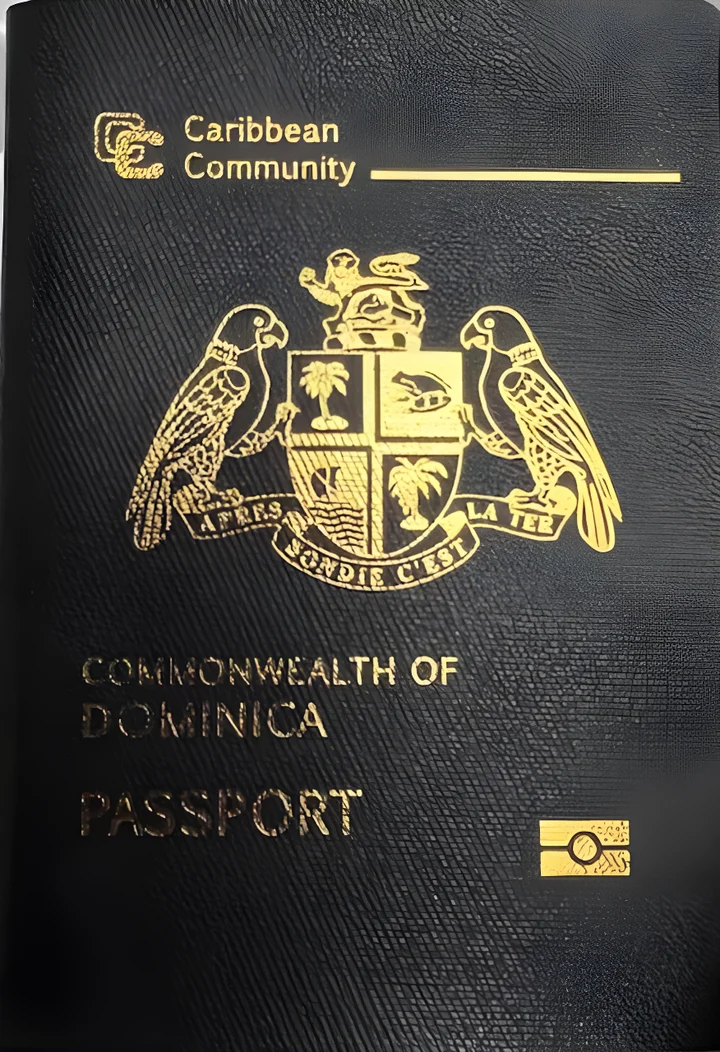
Citizenship by investment (CBI). Several states grant their citizenship on a statutory basis in return for a contribution or an investment. Here you skip the permission phase and acquire the right directly. Dominica, for example, according to its Citizenship by Investment Unit, expressly recognises dual citizenship and requires no residence in the country either before or after naturalisation. The details are on the Dominica page, all open programmes under Programmes, the side-by-side comparison under Comparison and the total costs under Costs.
The two routes don't rule each other out. The smartest strategy is often to pursue both: CBI buys you time and gives you a right straight away, while naturalisation in your chosen country carries on in the background. Why this works and how to combine the two is shown in CBI and naturalisation.
| Route | What you hold until the passport | Residence required | Duration |
|---|---|---|---|
| Naturalisation | Years on a residence permit | Yes, genuine residence | Several years |
| CBI | Citizenship straight away | No, with many programmes | Months, depending on the programme |
| Both in parallel | A right at once, a second one later | Only for naturalisation | CBI first, naturalisation later |
Dual citizenship: you keep your German passport
For a long time, choosing a second passport meant, for many Germans, giving up the first. Those days are over. According to the German Federal Foreign Office (Auswärtiges Amt), acquiring a foreign nationality has no longer led to the loss of German citizenship since 27 June 2024. The retention permit (Beibehaltungsgenehmigung) once required has been abolished.
That makes a second citizenship no longer a trade but an addition. You don't give up one right to get another. You keep your German right and gain a second one on top. All you need to check is whether the other state also allows multiple citizenship. For the programmes open to Germans, that is almost always the case. Dominica says so explicitly.
One last thought. Visas, residencies and visa-free access are valuable, and anyone who lives internationally needs them. But they are on loan. A state can extend them, change them or take them back, and you have little say in the matter. Citizenship belongs to you. So the question isn't whether a second passport fits into your life. The question is how much longer you want to build your freedom on permissions.
Frequently asked questions
What is the difference between a visa and citizenship?
A visa is a permission that a state grants to a foreigner and can cancel again, for instance when the conditions under which it was issued no longer apply. Citizenship is a status: you belong to that state and have the right to enter, live there and return. A visa is something you apply for and renew; citizenship is something you have.
Why can I be refused entry to the US despite holding an ESTA?
Because an ESTA approval only authorises the journey, not the entry. According to US Customs and Border Protection (CBP), ESTA does not determine whether a traveller is admissible; the officers decide that on arrival. The same goes for visas: US immigration law makes clear that an issued visa gives no entitlement to be admitted.
Can citizenship be taken away from me?
For German citizenship, the Basic Law gives a clear answer: it may not be taken away, and losing it against your will is only permitted if it does not leave you stateless. A second citizenship is governed by the law of the state concerned. Unlike a visa, though, it has no expiry date and never needs renewing. Dominica, for example, states through its Citizenship by Investment Unit that you do not have to live in the country to keep its citizenship.
What are the advantages of dual citizenship?
In two states you hold a right instead of a permission: to enter, live, work and return, with no application and no renewal. On top of that come a second travel document, a second consular service and, with many programmes, the option of including your spouse and children. The eight most important reasons are set out under Why a second passport.
Do I lose my German passport if I take a second citizenship?
No. According to the German Federal Foreign Office (Auswärtiges Amt), acquiring a foreign nationality no longer costs you your German one since 27 June 2024, and the retention permit (Beibehaltungsgenehmigung) once required has been abolished. What matters is that the new state also allows multiple citizenship, as Dominica, for example, expressly does.
Isn't a Golden Visa just as good as a passport?
A Golden Visa is a residence permit and therefore a permission: it has to be renewed and comes with conditions. It can be a useful building block, above all as a route to naturalisation later on. The difference in detail is covered in Second passport or Golden Visa.
Do I have to live in the country of my second citizenship?
With many programmes, no. Dominica, for example, requires no residence before or after naturalisation, according to its Citizenship by Investment Unit. You still hold the right to live there, and you can use it whenever you like.
Turn your permission into a right
Together we work out which second citizenship fits your life, your family and your timeline, and whether you should pursue naturalisation in parallel.
Book a consultationSources
- United Nations: International Covenant on Civil and Political Rights, Article 12
- Council of Europe: European Convention on Human Rights with Protocol No. 4, Articles 2 and 3
- Basic Law (Grundgesetz), Article 16: citizenship, extradition
- Residence Act (Aufenthaltsgesetz), § 51: end of lawful residence
- Passport Act (Passgesetz), § 8: withdrawal of a passport
- Immigration Act 1971 (UK), section 1
- Regulation (EC) No 810/2009 (Visa Code), Articles 30 and 34
- European Commission, Migration and Home Affairs: Visa policy (suspension mechanism under Article 8 of Regulation (EU) 2018/1806)
- U.S. Code Title 8 § 1201 (h) and (i): Nonadmission upon arrival, revocation of visas
- U.S. Customs and Border Protection: Electronic System for Travel Authorization (ESTA)
- German Federal Foreign Office: new nationality law since 27 June 2024
- Citizenship by Investment Unit Dominica: FAQs