
The short answer
The easiest way to get citizenship is by investment: Sierra Leone and São Tomé and Príncipe require no residence in the country, and the passport usually arrives after three to four months in Sierra Leone and after around five to six months in São Tomé and Príncipe. The lowest donation is in São Tomé and Príncipe at 90,000 USD for one person and 95,000 USD for a family of up to four, and in Sierra Leone at 95,000 USD for a single applicant, with no travel at all. Without an investment, the only routes are descent, for example through a grandparent born in Ireland, marriage or genuine residence abroad.
A passport is a right, not a permission. A visa can be refused and a residence permit revoked, but citizenship cannot. That is exactly why the question of the easiest route matters: the fewer hurdles between you and a second passport, the sooner that right is in your hands. For the big picture of every route, country and strategy, read the second passport guide.
What does "easy" mean for a second passport?
"Easy" means something different to everyone. For one person it is the passport that costs no money. For another it is the passport that requires no move, no new language and no queue at a government counter. Before you compare countries, decide which hurdle bothers you most. Five hurdles decide every route:
- Residence: Do you have to live in the country for years before you may apply?
- Language and tests: Does the country require language skills, a citizenship test or an oath taken in person?
- Travel: Do you have to show up in person for an interview, fingerprints or the oath?
- Time: How many months or years pass between the first step and the passport?
- Money: What does the route cost in total, with every fee included?
A route that scores well on all five is rare. Descent costs almost nothing but requires the right ancestors. Naturalisation costs little in fees but years of your life. Investment costs money and in return spares you residence, language and usually any travel at all. So the easy route is always the one whose price you can pay most easily: with your origins, with time or with capital.
The four routes to a second citizenship compared
Four routes lead to a second citizenship. Each one is easy in one respect and hard in another:
| Route | What you need | Typical timeline | Easy for |
|---|---|---|---|
| Descent | Parents or grandparents from the country, a complete chain of records | Months to years, depending on the authority | Descendants of emigrants |
| Naturalisation | Years of legal residence, often language skills and a test | From 6 months (Dominican Republic) to many years | People who are moving abroad anyway |
| Marriage | Marriage to a citizen, usually residence in the country | From 1 year of residence (Brazil) | Couples with a partner from the country |
| Investment | Contribution or investment, clean due diligence | Around 3-4 months in the fastest programmes | Anyone who does not want to wait for years |
If you have no suitable ancestors and do not want to move abroad for years, you inevitably end up with investment. If you are moving abroad anyway, plan your residence from day one so that a passport is waiting at the end.
Easiest without money: citizenship by descent
The cheapest passport is the one you are already entitled to. Many countries pass their citizenship on to children and grandchildren, even if they have never lived there. You buy nothing; you simply prove who your ancestors were.
The best-known example for Germans with Irish roots is the Foreign Births Register. Under the Irish Nationality and Citizenship Act 1956, a child born abroad to an Irish parent who was also born abroad acquires citizenship by being entered in this register, which is kept at the Department of Foreign Affairs in Dublin. In practice, this means that if one of your grandparents was born in Ireland, you can register. You are a citizen from the day of registration. How the process works step by step is explained in Irish citizenship by descent.
The catch with descent never lies in the law but in the paperwork. You need birth, marriage and often death certificates going back two or three generations, with names and dates that match. If you have every record to hand, this is the easiest route of all. If you first have to search archives, you need patience. Which countries naturalise descendants and what counts is covered in the overview citizenship by descent.
Which citizenship is easy to get if you live in the country?
If you are emigrating anyway, naturalisation is the natural route. It usually costs only administrative fees and in the end gives you a passport you have earned by genuinely living in the country. It becomes easy where the waiting period is short and the authority asks for little on top. You will find particularly short waiting periods in Latin America.
Dominican Republic: six months with property
Law 1683 on naturalisation (Ley 1683), as amended by Law 4063 (Ley 4063), sets two years of uninterrupted residence as the basic rule. You need only six months if you own property there or have founded and run a business in the country. Trips abroad of no more than a year, with the intention of returning, count towards residence. You get the residence for it as an investor from 200,000 USD, property included, permanent from the start. At the end come a test in Spanish on general knowledge, geography and history, and the government's discretionary decision. That puts the Dominican Republic among the shortest residence routes anywhere; every figure is on Dominican Republic.
Argentina: two years, but without leaving
Under Law 346 (Ley 346), Argentina requires two years of uninterrupted, legal residence from foreigners aged 18 and over. Under the current text of the law, residence only counts as uninterrupted if you have not left the country even once during that time. The period is short, but it demands discipline: one family visit to Germany can reset the clock to zero. The rule comes from Decree 366/2025, which the Cámara Nacional Electoral declared null on 30 June 2026; the Corte Suprema is deciding the government's appeal, and until then the migration authority applies the decree.
Marriage: Brazil after one year
If you are married to a Brazilian, you have one of the easiest routes of all. Brazil's migration law, Law 13.445/2017 (Lei 13.445/2017), generally requires four years of residence for ordinary naturalisation (Naturalização Ordinária), the ability to communicate in Portuguese and a clean criminal record. With a Brazilian spouse you are not separated from, or with a Brazilian child, the period drops to one year.
Which countries naturalise fastest and how to calculate the total timeline realistically is shown in fastest naturalisations in the world. A comparison of every country on the continent, covering residence, marriage and birth, is available in naturalisation in Latin America compared. How naturalisation abroad works in principle is explained in naturalisation abroad.
Which citizenship can you buy?
Citizenship by investment is the easiest route for anyone who has neither suitable ancestors nor years to spare. Instead of years of residence, you make a contribution to the state or invest in an approved project. Instead of a language test and proof of integration, a due diligence check examines you and the source of your funds. If your record is clean and you can document where your money comes from, you will hold your second passport within a few months.
The programmes with the lowest hurdles:
| Programme | Contribution from | Travel required? | Timeline according to the programme |
|---|---|---|---|
| Sierra Leone | 95,000 USD (Solo Entrepreneur) | No, 100 % remote | Usually 90-120 days |
| São Tomé and Príncipe | 90,000 USD | No stay, no move | Around 2 months to approval, then 3-4 months to the passport |
| Vanuatu | 130,000 USD | Oath before a court in Vanuatu | Certificate within 90 days of approval |
| Dominica | 200,000 USD | No residence, interview usually online | First response within 3 months |
| Grenada | 235,000 USD (up to 4 people) | No visit, interview online | Approval within 60 working days |
Sierra Leone: the easiest application
Measured against the five hurdles, Sierra Leone is the easiest route to a second passport. The whole application runs remotely: no trip to Sierra Leone, no embassy appointment, and the oath of allegiance is notarised over Zoom. You need no police certificate, no medical examination and no reference letters; the independent due diligence takes care of the background check. On top of that come a passport, a passport photo, a birth certificate, proof of address and, depending on the case, proof of the source of funds.
The programme fee sits in an escrow account until naturalisation. If naturalisation cannot be completed, it is refunded in full, except for the filing and processing costs. It usually takes 90-120 days from complete application to passport, and Sierra Leone accepts multiple citizenships without restriction. All the details are on the Sierra Leone page.
São Tomé and Príncipe: the lowest donation
São Tomé and Príncipe requires a donation to the National Transformation Fund of 90,000 USD for one person and 95,000 USD for a family of two to four, plus a 5,000 USD filing fee per application. You only pay the donation after approval in principle. The authority requires no stay or move, either during or after the application. As the usual timeline, it quotes around two months to approval and then around three to four months to the passport. More on the São Tomé and Príncipe page.
How long each programme takes step by step, and where the clock really starts, is shown in How soon will your second passport be in your hand?. For the big overview of every investment programme, read buying citizenship.
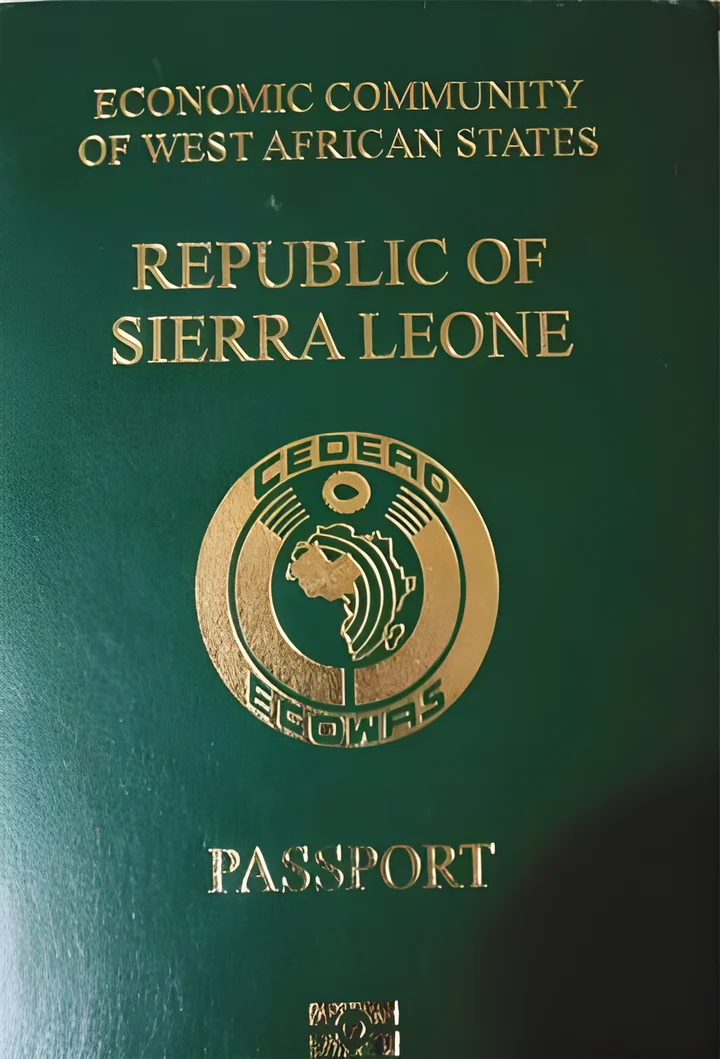
The cheapest citizenship: alone, as a couple, with family
Which passport is cheapest depends on who is coming with you. The programmes calculate very differently: some per person, some per application, some with fixed family packages.
Alone: São Tomé and Príncipe or Sierra Leone
For a single person, São Tomé and Príncipe asks for the lowest donation: 90,000 USD plus a 5,000 USD filing fee. Nauru is level until 31 December 2026 with a 90,000 USD contribution, but comes to 102,700 USD with all fees. Sierra Leone's Solo Entrepreneur programme carries a 95,000 USD programme fee; together with the reduced filing fee of 3,750 USD and the processing fee of 5,000 USD including the background check, that comes to 103,750 USD in total. In return, the entire application runs without travel. Solo Entrepreneur does not include dependants.
As a pair: as a couple or as business partners
As a couple, you are in for a 95,000 USD donation in São Tomé and Príncipe, because the family package already applies from two people. For exactly two applicants with no family tie, such as two business partners, Sierra Leone offers Enterprise Citizenship at 80,000 USD per person, plus one joint due diligence. Only Pakistan asks less of a single applicant in the comparison, a foreign currency transfer of PKR 5 million, and it opens that route to Commonwealth citizens alone.
With family: the package is what counts
For a family of up to four, São Tomé and Príncipe remains the cheapest route in total at a 95,000 USD donation; each additional family member costs 5,000 USD. Nauru asks only 92,000 USD in contributions until 31 December 2026 for a couple with two children under 16, but with its fees that family pays 115,700 USD. In Sierra Leone, the Fast Track (140,000 USD for the main applicant) takes in spouses, children, parents, grandparents and siblings: 10,000 USD each for spouses, children under 18, parents and grandparents, and 20,000 USD each for children aged 18 and over. In Vanuatu, the Development Support Program costs 150,000 USD for a married couple, 165,000 USD with one child and 180,000 USD with two children, as the statutory minimum price.
Always calculate with every fee, not just the contribution. Due diligence, processing, certificates and translations make the difference between the cheapest price tag and the cheapest result. A calculation across every item is in the cheapest citizenship by investment, the total costs per programme are on the costs page, and the rules for family members on the family page.
Easy is not the same as right for you: what matters
The easiest passport is only the right one if it fits your goal. Three questions help you choose between the simple routes.
What do you need the passport for? If you want the right to a second country and a second embassy, every one of these passports does the job. If freedom to travel in particular regions matters to you, compare the destinations each passport opens up. With a Sierra Leone passport, for instance, you travel to 65 or more countries visa-free or with a visa on arrival, plus the rights within the West African community ECOWAS; for the Schengen area you will usually need a visa.
Who is coming with you? If you want to bring parents, adult children or siblings, you need a programme that includes them. The Fast Track in Sierra Leone takes in grandparents and siblings, while Dominica includes adult children up to 30 in higher education, and parents only once they are older than 65.
How much travel are you willing to do? Vanuatu requires the oath before a court in the country; if you live abroad, you travel there for it. Dominica and Grenada hold an interview, usually online. Sierra Leone requires no travel at all.
You will find every programme side by side, with contributions, family rules and timelines, in the comparison, and the path from the first conversation to the passport under how it works.
Naturalisation and investment: the easiest plan combines both
Naturalisation is the route without an investment, and in the end it is often the better one. You really get to know a country, build a genuine connection, and the passport becomes part of your life. But it costs years, and it requires you to actually live there.
Investment buys you exactly those years. With an investment passport in your pocket, you have a second passport within a few months, while your naturalisation in Argentina, Brazil or the Dominican Republic runs its course at its own pace. The two routes do not exclude each other; they complement each other. How to plan both together is explained in CBI and naturalisation.
Do you keep your German passport?
Yes. Since 27 June 2024, acquiring another nationality by application no longer leads to the loss of German citizenship, regardless of which country naturalises you. The procedure for a retention permit (Beibehaltungsgenehmigung) has been abolished.
That makes every one of these routes a pure addition. Whether you reach your second passport through your Irish grandmother, two years in Argentina or a donation in São Tomé and Príncipe: you put it next to your German one and give up nothing.
Frequently asked questions
Which citizenship is the easiest to get?
If you have no ancestors from a suitable country, citizenship by investment is the easiest route. Sierra Leone runs entirely without travel, without an embassy appointment and without a police certificate, usually 90-120 days from complete application to passport. São Tomé and Príncipe requires no stay in the country and quotes around two months to approval, then three to four months to the passport.
Which citizenship can you buy?
Citizenship by investment is offered by Sierra Leone, São Tomé and Príncipe, Vanuatu, Dominica, Grenada, Antigua and Barbuda, Saint Lucia, St Kitts and Nevis, Türkiye, Jordan, Cambodia, Nauru, Egypt and El Salvador, among others. Contributions range from 80,000 USD per person to real estate and business investments running into the millions. The comparison puts every programme side by side, with amounts and fees.
What is the cheapest citizenship?
São Tomé and Príncipe asks for the lowest donation, 90,000 USD for one person, plus a 5,000 USD filing fee per application; Nauru's contribution is level with it until 31 December 2026, at 102,700 USD there with all fees. For a couple or a family of up to four, São Tomé and Príncipe is the cheapest route in total at a 95,000 USD donation; Nauru asks a lower contribution until 31 December 2026, but its fees take the total higher. Two applicants with no family tie, such as business partners, pay 80,000 USD each with Enterprise Citizenship in Sierra Leone.
Can you get citizenship without living in the country?
Yes, that is the very core of citizenship by investment. Dominica states explicitly that you do not have to live there either before or after naturalisation, Grenada requires not a single visit, and Sierra Leone runs entirely remotely. Any naturalisation through residence, by contrast, requires years of genuine presence in the country.
Which citizenship can you get for free?
Free in the sense of no investment means only descent or naturalisation after years in the country. If you have a grandparent born in Ireland, you can become an Irish citizen through the Foreign Births Register. Which countries still naturalise descendants is covered in citizenship by descent.
Which country makes naturalisation easiest?
You will find particularly short waiting periods in Latin America. The Dominican Republic sets six months if you own property there or have founded and run a business, two years otherwise; the residence for it comes as an investor from 200,000 USD. Argentina requires two years, which under the current text of the law means not leaving the country even once; the Corte Suprema has yet to rule on the decree behind that rule. The details are in fastest naturalisations in the world.
Do I lose my German passport if I take a second citizenship?
No. Since 27 June 2024, acquiring another nationality by application no longer leads to the loss of German citizenship. You no longer need a retention permit (Beibehaltungsgenehmigung) for it.
Which passport is easiest for you?
We look at your family, your budget and your timeline with you and tell you which route gets you to your second passport fastest and most reliably.
Book a consultationSources
- Federal Office of Administration (Bundesverwaltungsamt): 2024 modernisation of nationality law
- Law Reform Commission Ireland: Irish Nationality and Citizenship Act 1956, revised, s. 7 and s. 27
- Argentina.gob.ar Normativa: Ley de Ciudadanía N° 346, texto actualizado, Art. 2
- Dirección General de Impuestos Internos (Dominican Republic): Ley 1683 sobre Naturalización, Art. 1 as amended by Ley 4063
- Câmara dos Deputados: Lei 13.445/2017 (Lei de Migração), Art. 65 and 66
- Sierra Leone: sierraleonepassport.com, programmes, costs, timelines and process
- Citizenship by Investment Unit São Tomé and Príncipe: Investment Structure
- Citizenship by Investment Unit São Tomé and Príncipe: FAQ
- Citizenship by Investment Unit Dominica: FAQs
- Investment Migration Agency Grenada: FAQs
- Vanuatu Citizenship Office and Commission: Application Process
- Vanuatu Citizenship Office and Commission: Order No. 33 of 2019, DSP Regulations