
The short answer
In an emergency, what counts is not which country is safest but which country you are allowed to enter and stay in. A second passport gives you that right as a citizen, whereas a visa or a residence permit remains a permission that a state can revoke. On top of that you gain a second travel document, a second embassy and an application that can include your family. It does not release you from German military service obligations, and because the programmes take several months while the permit requirement for long stays abroad, suspended since 17 April 2026, can return overnight, it belongs before the crisis.
A Plan B is quickly described: an account abroad, a flat somewhere in the south, a list of safe countries in your head. In an emergency, it shrinks to a single question: which document are you holding at which border, and what right do you have there? How a second passport fits into the overall strategy is shown in the second passport guide. In the end, what matters is what holds up at the border.
Where to go if war breaks out? The question behind the question
Search for "where to go if World War 3 starts" and you find rankings. They score distance from the flashpoints, neutrality, home-grown food supply, sparse population and the absence of strategic targets. Those criteria are sound, and the list of countries where you would really be safe in an emergency (in German) sets them out clearly. If you are planning for retirement, there is a separate selection among the safest countries to retire to (in German).
Behind the question of where, though, lies a second one that decides everything: who will let you in? A country can be as peaceful, remote and well supplied as you like. If you are only a tourist there, your arrival depends on that country's entry policy in precisely the week when hundreds of thousands of people have the same idea. States respond to crises with rules for foreigners. Their own citizens, they let in.
That moves your Plan B from the map to your status. The right question is not just "Where?", but "Where am I a citizen?". And if today the answer is only "Germany", then in an emergency you have exactly one door you have a right to.
A right, not a permission: why only citizenship counts in an emergency
International law draws the line clearly. Under Article 12(4) of the International Covenant on Civil and Political Rights, no one may be arbitrarily deprived of the right to enter their own country. For foreigners, something else applies: Article 13 of the same Covenant sets out the conditions under which a foreigner lawfully present in a state may be expelled, namely in pursuance of a decision reached in accordance with law. The citizen has a right of entry. The foreigner has a claim to a procedure that may end in their expulsion.
For your Plan B, that means:
- A visa is a permission to visit. It can be refused, revoked or suspended.
- A residence permit or a Golden Visa is a permission to stay. It depends on conditions, on renewals and on the host country's politics.
- Citizenship is belonging. You do not enter as a guest, you come home, even if you have never lived there.
That is exactly why, in a crisis, a second passport is worth more than even the most generous residence permit. The idea is explored further in a right, not a permission.
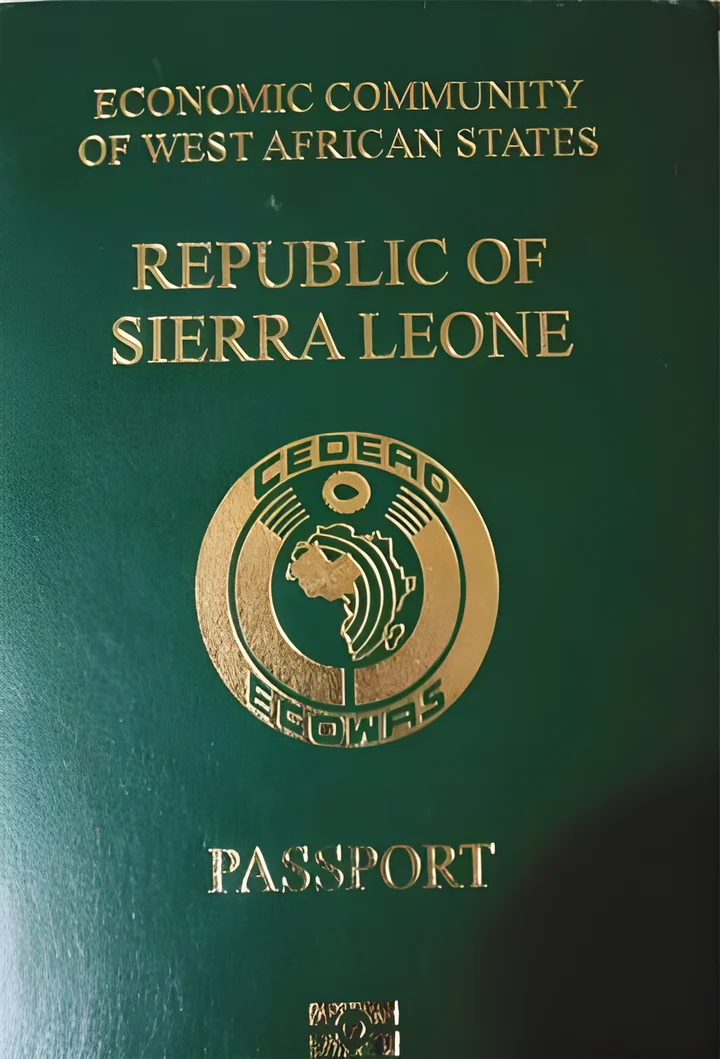
There is also a point that hardly stands out in calm times. A residence permit often ties you to minimum stays so that it does not lapse. Several citizenship programmes, by contrast, require no residence at all. Dominica states expressly in the FAQs of its Citizenship by Investment Unit that you do not have to live there either before or after naturalisation. São Tomé and Príncipe, according to its authority, requires neither residence nor relocation during or after the application. St Kitts and Nevis, according to its Citizenship by Investment Unit, has neither a travel nor a residence requirement. Sierra Leone runs entirely remotely. Your right of entry waits for you, then, without your having to pay for it with physical presence in peacetime.
What a second passport does in an emergency
A second passport is not a symbol. It is a bundle of very concrete rights, each of which takes on its own task in a crisis.
A country that has to take you in
The first benefit is the most important: a destination you enter as a citizen. Whether in the Caribbean or in Africa, the state of your second citizenship is a place where you do not ask to be let in. You can stay there as long as you like and do not have to explain to anyone when you will leave again.
A second travel document
The second benefit is entirely practical. In chaotic situations, passports get lost, are stolen or are held up at an authority abroad, for instance because of a visa application. With a second valid passport, you are not stranded. It is the lawful way to travel on when the first one is missing. What to do step by step in that situation is described in lost passport abroad.
A second embassy
The third benefit shows itself in an evacuation. Section 6 of the German Consular Act (Konsulargesetz) instructs consular officers, in the event of natural disasters or warlike or revolutionary upheaval, to take the measures needed to give Germans help and protection, and for that purpose to keep a list of the Germans resident in their district. A second citizenship adds a second state that is responsible for you as its citizen. If one convoy only leaves the day after tomorrow, the seat on the other state's plane might be free tomorrow. How far this double protection reaches and where it ends is shown in two embassies instead of one.
One application for the whole family
The fourth benefit concerns the people you are really making the Plan B for. Under the Consular Act, non-German family members are only covered under certain conditions, for example if they live in the same household as you. With a shared second citizenship, each person becomes a citizen in their own right, with their own passport and their own right of entry. Who the programmes accept is shown in the overview on family.
Time that nobody can take from you
The fifth benefit is invisible, but perhaps the most valuable. If you already hold the second passport, you no longer need to file applications, get appointments or convince an authority in an emergency. The decision has already been made, at a time when the authorities could work in peace.
World War 3: where do you take your family?
A Plan B that only works for you alone is no Plan B in an emergency. Nobody boards the plane if their parents have to stay behind or their adult daughter has no right of entry. That is why it pays to look closely at whom a programme accepts in the same application.
| Programme | Who can be included | Timeline | Residence |
|---|---|---|---|
| Sierra Leone, Fast Track | Spouse, children, parents, grandparents, siblings | typically 90-120 days to the passport | none, fully remote |
| São Tomé and Príncipe | Spouse or partner, children up to 30, parents, grandparents | around 2 months to approval, then 3-4 months to the passport | none |
| Dominica | Spouse, children, parents and grandparents over 65 if supported | first response within three months | neither before nor after naturalisation |
| St Kitts and Nevis | Spouse, children under 18, unmarried children under 30 if maintained by you or your spouse, parents from 55 | decision 120-180 days after acknowledgement of receipt | none, and no travel requirement |
For an emergency, Sierra Leone's definition of family is especially broad. Besides spouse and children, the Fast Track also takes parents, grandparents and siblings; the main applicant pays 140,000 USD, spouses, children under 18, parents and grandparents 10,000 USD each, children aged 18 and over and siblings 20,000 USD each. Sierra Leone accepts multiple citizenships without restriction, and the application runs without travel and without an embassy appointment.
Dominica starts at 200,000 USD for a single applicant and 250,000 USD for the main applicant with up to three dependants. São Tomé and Príncipe stands at 90,000 USD for a single applicant and 95,000 USD for a family of two to four. St Kitts and Nevis asks 250,000 USD for the Sustainable Island State Contribution for the main applicant or a family of up to four. Every programme, with fees and family rules, is in the comparison and in the overview of costs.
There is one question you should answer honestly here: who belongs in your emergency? For some it is the immediate family, for others the parents who are reaching the age of needing care, or a brother and his children. The programme follows that answer, not the other way round.
What a second passport does not do: military service and a state of tension
Being clear also means drawing the line. A second passport makes you a citizen of another state. It does not make you any less German. Anyone who remains German stays bound by German obligations, including military service law.
The Compulsory Military Service Act (Wehrpflichtgesetz, WPflG) is more specific than many people think:
- Section 3(2) WPflG: the Act requires men from the age of 17 to obtain a permit from the Bundeswehr careers centre (Karrierecenter) if they want to leave Germany for more than three months. Since 17 April 2026, the Federal Ministry of Defence has exempted everyone concerned by general administrative order. It can lift this exemption at any time with a single order, without the Bundestag.
- Section 2 WPflG: the provision on the permit applies outside a state of tension or a state of defence too. In a state of tension or a state of defence, the Act applies in full.
- Section 3(5) WPflG: in a state of tension or a state of defence, the obligation only ends at the close of the year in which the person liable turns 60. Otherwise it ends with the year in which he turns 45.
A second passport cancels none of these obligations, and it is no way around an exit ban, a court order or the withdrawal of a passport. How the Passport Act (Passgesetz) is tied to military service and leaving the country is covered in conscription and freedom to travel, the grounds for refusing and withdrawing a passport in passport withdrawal. Which state may conscript dual nationals in wartime is answered in dual citizenship in wartime.
What the second passport does, it does lawfully: it gives you and your family a country you enter as citizens, a second document, a second embassy. And it gives you the chance to build your life on two states early and calmly, instead of looking for a way out at the last moment.
Why you need your Plan B before the emergency
Every reputable programme vets you before it naturalises you. Due diligence, documents, certifications, an interview with some. That takes time, and that time cannot be bought once the situation turns. The timelines speak for themselves: Sierra Leone typically quotes 90-120 days from the complete application to the passport, São Tomé and Príncipe around two months to approval and then three to four months to the passport, St Kitts and Nevis 120-180 days to a decision.
On top of that, crises put pressure on authorities everywhere at once. Embassies, translators, notaries, couriers: everything your application needs becomes scarce when many people want the same thing at the same time. A Plan B that only starts in the crisis competes with everyone else who is also too late.
And there is one more argument for calm times. Applying calmly means time for the right choice: which programme suits your family, which relatives come along, which combination of passport, residence and accounts best protects your life. How an application runs step by step is shown under how it works. What each programme costs is set out in the overview of costs.
Three questions for your Plan B
- For whom? Write down the names of the people who should go with you in an emergency. That tells you which programmes are an option.
- How fast? Count from the complete application, not from the first conversation. Gathering and certifying documents takes extra weeks.
- For what? A passport to get in, a place to live, money outside the eurozone: a complete Plan B has several building blocks. What belongs alongside the passport is laid out in the emergency plan for you and your family (in German).
Keep your German passport and gain a second one
For a long time, a second passport came at a price for Germans that put many off: losing German citizenship, or going down the route of a retention permit (Beibehaltungsgenehmigung). That is over. Since 27 June 2024, Germans can acquire a foreign citizenship by application without losing their German one. According to the Federal Foreign Office, a retention permit is no longer required.
That turns the second passport into a genuine addition. You give nothing up; you put your life on a second foundation. The German passport remains your strong document for travel in peacetime and for returning to Germany. The second one is your door for the day you need a different one.
Multiple citizenship has to be allowed on the other side as well. Dominica recognises dual citizenship and does not require you to give up other citizenships. Sierra Leone accepts multiple citizenships without restriction. With these programmes, then, both sides expressly allow dual citizenship.
Plan B for an emergency: the key points at a glance
- The decisive question is not only which country is safe, but which country you may enter as a citizen.
- A visa and a Golden Visa are permissions. Citizenship gives you a right of entry to your own country that cannot be taken from you arbitrarily.
- A second passport gives you a destination, a second travel document, a second embassy and, depending on the programme, rights of entry for your whole family, up to parents and siblings.
- German obligations under the Compulsory Military Service Act remain in place, and the permit under Section 3(2), suspended since 17 April 2026, can return at any time. The second passport is a lawful safeguard, not a way out of them.
- Time is the bottleneck. The programmes take several months, and in a crisis everything gets scarcer.
- Your German passport is yours to keep, since 27 June 2024.
If your first question in an emergency is where to go, you have already lost what the Plan B was meant to secure: time. If you decided beforehand where you are a citizen, that week all you have to do is pack.
Frequently asked questions
Where should you go if war breaks out?
To wherever you have the right to enter and stay. How safe a country is depends on its location, its alliances and its supplies; the list of countries where you would be safe in an emergency (in German) gives an overview. Whether you actually get there, though, depends on your status: as a citizen you have a right of entry, as a foreigner a permission that can be revoked.
Does a second passport protect me from military service?
No. Anyone who remains German stays bound by German military service law, even with a second citizenship. Section 3(2) of the Compulsory Military Service Act (Wehrpflichtgesetz) requires men from the age of 17 to obtain a permit if they want to leave Germany for more than three months. This requirement has been suspended by general administrative order since 17 April 2026, but the Ministry of Defence can reinstate it at any time. In a state of tension or a state of defence, the obligation lasts until the end of the year in which they turn 60. What applies to dual nationals in wartime is set out in dual citizenship in wartime.
Do I lose my German passport if I take a second citizenship?
No. Since 27 June 2024, Germans can acquire a foreign citizenship by application without losing their German one, and a retention permit (Beibehaltungsgenehmigung) is no longer needed for this. You keep your German passport and gain the second on top.
How quickly can I get a second passport in an emergency?
Not overnight. Sierra Leone typically quotes 90-120 days from the complete application to the passport, São Tomé and Príncipe around two months to approval and then three to four months to the passport, St Kitts and Nevis 120-180 days to a decision. That is why the application belongs in calm times, not in the week the news turns.
Can my family be included in the application?
Yes, with most programmes. Sierra Leone's Fast Track takes spouses, children, parents, grandparents and siblings; Dominica takes spouses, children and, under certain conditions, parents and grandparents over 65; São Tomé and Príncipe takes spouses or partners, children up to 30, parents and grandparents. Each family member becomes a citizen in their own right, with their own passport and their own right of entry.
Is a Golden Visa enough as a Plan B for a crisis?
A Golden Visa is a residence permit, and so a permission that depends on conditions and can be revoked. Citizenship gives you a right to enter your own country that cannot be taken from you arbitrarily. In an emergency, it is exactly this difference that decides whether you are asking at the border or walking through it.
Your Plan B, before things get serious
Together we work out which second citizenship fits your family, your goals and your timeline, so that in an emergency you are no longer asking where to go, only when.
Book a consultationSources
- United Nations, OHCHR: International Covenant on Civil and Political Rights, Articles 12 and 13
- Compulsory Military Service Act (Wehrpflichtgesetz, WPflG), Sections 2 and 3: scope of the Act, content and duration of the obligation
- Consular Act (Konsulargesetz, KonsG), Section 6: assistance in disasters
- German Federal Foreign Office: the new citizenship law since 27 June 2024
- Citizenship by Investment Unit Dominica: FAQs
- Citizenship by Investment Unit Dominica: S.R.O. No. 8 of 2024
- Citizenship by Investment Unit São Tomé and Príncipe: FAQ
- Citizenship by Investment Unit São Tomé and Príncipe: Investment Structure
- Citizenship by Investment Unit St Kitts and Nevis: S.R.O. No. 20 of 2024
- Saint Christopher and Nevis: Citizenship by Substantial Investment (Amendment) Regulations, S.R.O. No. 1 of 2026
- Citizenship by Investment Unit St Kitts and Nevis: Sustainable Island State Contribution
- sierraleonepassport.com: programmes and calculator
- sierraleonepassport.com: FAQ
- German Federal Ministry of Defence: general exemption from the permit requirement under Section 3(2) WPflG (BAnz AT 16.04.2026 B3)