
The short answer
If your passport is lost or stolen abroad, report it at the nearest police station straight away and take the police report to the German embassy or consulate. They issue you an emergency travel document (Reiseausweis als Passersatz), valid for at most one month and only for the journey back to Germany, and in some cases a temporary passport valid for at most one year. A new regular passport issued abroad costs €106 from the age of 24 and takes several weeks. With a valid second passport, you carry on travelling lawfully in the meantime.
A passport can vanish abroad in many ways. It is stolen from a hire car, left behind in a taxi, lost in a flood. It sits at a foreign embassy for a visa. A landlord, an employer or a hotel holds on to it as security. Or an authority keeps it. Each of these cases has clear rules, and for most of them there is one simple safeguard: a second passport from a second citizenship. For the full picture of the routes to one, see the second passport guide.
Lost or stolen passport abroad: the first steps
The most important point first: stay calm and do things in the right order. The Federal Foreign Office (Auswärtiges Amt) lays out the route clearly, and it does not start at the embassy. It starts at the police.
1. Report it to the police
Go to the nearest police station as soon as you can and report the loss, whether the passport was stolen or has simply disappeared. Make sure you get a copy of the police report. It is your proof for every step that follows.
2. Contact the German embassy or consulate
Take the report to the responsible German embassy or consulate general. The Federal Foreign Office's consulate finder shows which mission covers the place you are staying. If the police report alone is not enough for you to leave the country, the mission can issue you a replacement document. One thing to bear in mind for your planning: at weekends and on public holidays, issuing it can take longer.
3. Report the loss to the passport authority
Under section 15 of the Passport Act (Passgesetz) you are obliged to notify the passport authority of the loss of your passport without delay. If the old passport turns up again later, you report that too.
4. Sort out the entry stamp and exit visa
Many people overlook this one. Some countries want proof on departure that you entered legally, and that proof was the entry stamp in the passport you lost. The Federal Foreign Office points out that you may then need an exit visa from the foreign country, which can delay your onward journey even further. So ask the local immigration authority before you book a new flight.
What saves you half the work beforehand
A copy of your ID makes it far easier to confirm who you are after a passport loss. The Federal Foreign Office advises making scans of your passport and ID card and carrying them with you or emailing them to yourself. Also keep your German ID card (Personalausweis) separate from your passport: under section 19 of the Passport Regulation (Passverordnung) it is a recognised passport substitute, and for getting back to Germany it is worth its weight in gold. If you travel with children under 18, note that both parents with custody must in principle consent to their replacement documents. A parent who is not there gives consent at a German passport authority or mission, which forwards it in writing.
Emergency travel document or temporary passport?
For emergencies, the German embassy or consulate has two documents. Which one you get depends on where you need to go next.
The emergency travel document (Reiseausweis als Passersatz) gets you home. According to the Federal Foreign Office it is valid for the duration of your journey back to Germany, and for one month at most. The Passport Regulation describes it as a document that entitles you solely to enter the Federal Republic of Germany, and section 22 likewise caps its validity at one month. It is not made for travelling on to Mexico, Panama or Singapore.
The temporary passport (vorläufiger Reisepass) is a genuine German passport within the meaning of section 1(2) of the Passport Act, but with a time limit. Under section 5(3) of the Passport Act it is valid for one year at most. In some cases the mission can issue it on the spot, but to do so it has to involve the passport authority where you are registered in Germany and, where necessary, the authority that issued your last passport. That takes time, especially when it is the middle of the night in Germany.
What the replacement documents cost
The fees are set out in section 27 of the Passport Regulation. If the document is issued at a German embassy or consulate, a fixed surcharge is added.
| Document | Base fee | Embassy or consulate surcharge | Validity |
|---|---|---|---|
| Document valid only for entry into Germany | €8 | €49 | 1 month at most |
| Temporary passport | €26 | €49 | 1 year at most |
| Passport, age 24 and over | €70 | €36 | regular passport |
| Passport, under 24 | €37.50 | €36 | regular passport |
Express processing of a regular passport adds €32, and the 48-page version adds €22. If you have a temporary document issued outside office hours, its fee doubles. What you will not find in any table are the costs that really hurt: rebooked flights, extra hotel nights, a missed meeting.
No German embassy nearby: the EU emergency travel document
Not every country has a German mission. As an EU citizen you then have a second safety net: the embassy or consulate of another EU member state. Directive (EU) 2019/997 governs the EU emergency travel document, which those missions issue to unrepresented EU citizens whose travel document has been lost, stolen or destroyed, or cannot be obtained within a reasonable time.
Three key points are worth knowing:
- One journey: the document is valid for a single journey, usually to the member state of your nationality or residence.
- Short validity: it covers the duration of the journey, including any necessary stopovers and connections, plus two days of buffer, and 15 calendar days at most except in exceptional cases.
- Same fees: the assisting state charges the same fees it charges its own nationals for national emergency travel documents, and it may waive them.
Under section 19 of the German Passport Regulation, return documents issued by another EU member state's mission after a passport loss are recognised as a passport substitute where there is no German mission in the country. How far consular protection reaches overall, and what a second citizenship changes about it, is covered in two embassies instead of one. Country guides on the local situation are at Safety abroad (in German).
The EU emergency travel document has the same limit as the German emergency travel document: it takes you back, not onward.
Passport renewal abroad: embassy, honorary consul, waiting times
If you live abroad, theft is not the only way to lose your passport. It also simply expires, and then the same hunt for an appointment begins. You apply for the new regular passport at the mission responsible for where you live abroad. According to the Federal Foreign Office, several weeks pass between application and collection, and appointment systems can lead to further waiting. The Office therefore expressly advises applying early.
Sometimes there is a shortcut: some honorary consuls accept passport applications and forward them to the responsible mission for an additional fee. That spares you the trip to the capital, but not the processing time. How to make the application step by step, and which documents you need, is set out in renewing your passport and ID card abroad (in German). The routes people living abroad use when the embassy is overloaded are shown in German passport expired abroad (in German).
Don't fool yourself: weeks without a valid travel document mean weeks in which you cannot leave the country, except on the emergency travel document to Germany. For someone who travels for work, has family on two continents or manages a property abroad, that is no formality. It is a standstill.
Passport withheld or confiscated: what applies
Not every missing passport is lost. Sometimes you know exactly where it is and still cannot get at it. Here it pays to keep three cases clearly apart.
The passport is with an authority for an application
A visa procedure at a foreign embassy, a residence permit, a registration: some procedures keep your passport at an office for a while. That is lawful and you can plan for it, but it ties you down. A second German passport for this purpose is only available by way of exception: under section 1(3) of the Passport Act, nobody may hold more than one German passport unless they prove a legitimate interest, and the passport authority examines this case by case. A passport from a second citizenship needs no such justification. It is your own, full travel document.
The passport is held by private parties
Landlords, employers or hotels that want to keep a passport as security exist on many continents. Keep in mind what section 1(4) of the Passport Act states: the German passport is the property of the Federal Republic of Germany. It is an official document, not a deposit. If you do not get it back, treat the situation like a loss: report it to the police, notify the embassy or consulate, get a replacement document.
The passport is withheld by an authority
The case is quite different when a state withholds your passport in proceedings or bars you from leaving. Then the right route is consular assistance from your own country and a local lawyer, not a second document. The same applies in Germany: under sections 7 and 8 of the Passport Act the passport authority can refuse or withdraw a passport, and under section 10 it can bar you from leaving the country. What that means in practice is described in passport withdrawal in Germany.
The line is clear: a second passport is no way around an exit ban, a court order or the withdrawal of your passport. It is the lawful way to keep travelling when your first passport has been lost, stolen or held abroad, without any state having barred you from leaving.
Travelling on with your second passport: how it works
Back to the beach in Cartagena. This time there is a second passport in your other bag, in the hotel safe or in your partner's hand luggage. What changes?
Almost everything that would have held you back. The police get their report, the German embassy its notification, the passport authority its loss report. You apply for the new German passport at your own pace, at your next stop with a German mission or once you are home. In the meantime you fly on to Mexico City on your second passport and meet your client in Panama.
Three rules keep it smooth:
- Germany only with a German document: under international practice, dual citizens enter and leave Germany on a German passport or passport substitute, such as the German ID card. So for the trip home you still need a German document. Often the ID card in your luggage already solves that.
- Booking and passport match: airlines check whether you are allowed to enter at your destination. If you book the onward journey in the details of your second passport and show that passport at check-in too, you avoid awkward questions. Which passport makes sense at which border is covered in depth in travelling with two passports.
- Don't forget the entry stamp: if you entered on the German passport you lost, check with the local authority before you leave whether it wants proof of your legal entry. Keep the police report ready for that.
And one more thing belongs here: never carry both passports in the same place. A second passport stolen together with the first does not protect you.
Dual citizenship as a German: a second passport is allowed
The good news for this kind of safeguard: since 27 June 2024, Germans can acquire a foreign citizenship on application without losing their German one. A retention permit (Beibehaltungsgenehmigung) is no longer required. You keep your German passport with all its rights and add a second one alongside it. How the two passports work together legally is shown in a CBI passport and your German passport.
The difference from a second German passport is fundamental. A second German booklet depends on a legitimate interest that you have to prove, and on the same passport authority as the first. If the German passport is refused or withdrawn, that hits both. A passport from a second citizenship rests on a right of its own towards a state of its own. A visa is a permission that can be taken from you. Citizenship is a right.
Which second passport keeps you moving in an emergency
When you are insuring against the loss of your passport, what counts is not a passport's prestige but three sober questions: can you get it without moving? Does the country allow dual citizenship? And how quickly and easily can it be renewed if it goes missing itself one day?
| Programme | Dual citizenship | Residence or travel required | Timeline per source |
|---|---|---|---|
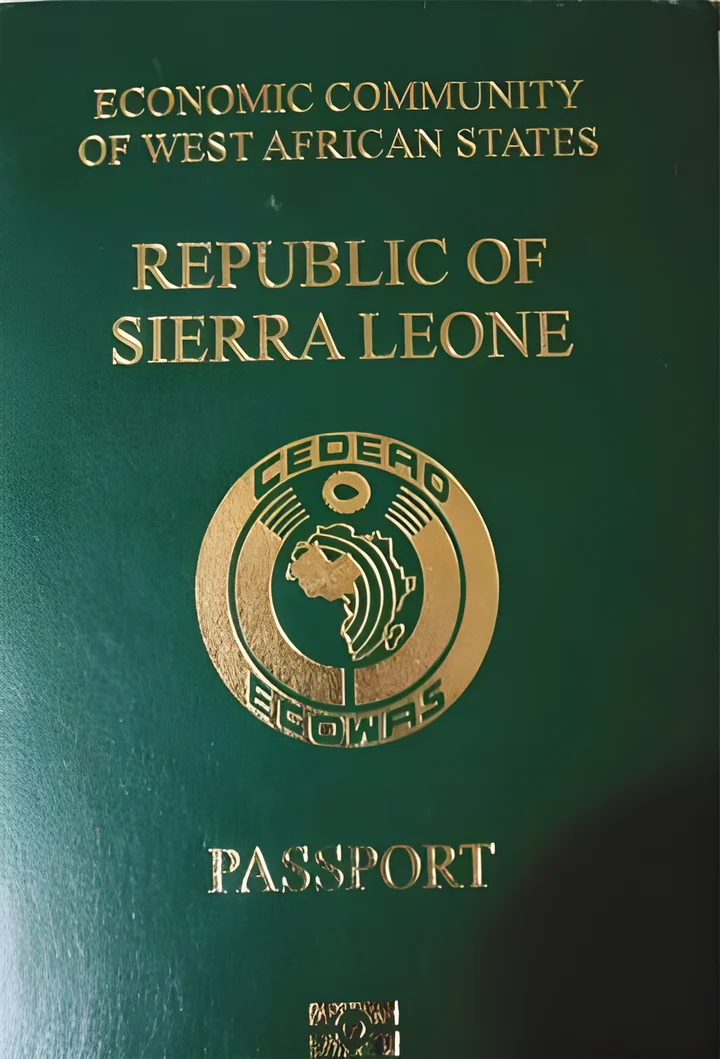
| Sierra Leone | accepted without restriction | 100% remote, no travel | usually 90-120 days to the passport |
| Dominica | allowed, no renunciation required | no residence, mandatory interview mostly virtual | first response within three months |
Sierra Leone suits this purpose particularly well. The biometric passport is currently valid for five years and delivered by DHL, and renewal runs digitally, without travel. If you keep your second passport as a reserve for the day the first one is missing, that is exactly what you need: a passport you do not first have to collect in a distant capital. The entry point is the Solo Entrepreneur route at USD 95,000 for single applicants without dependants; with family, it is the Fast Track route from USD 140,000 for the main applicant, in each case plus due diligence.
Every programme with its amounts, fees and family rules is in the comparison, and the path from the first conversation to the passport is under process. Why a second passport carries you far beyond a lost passport is covered in depth in plan B in an emergency.
Checklist for your next trip
A lost passport is annoying. A lost passport without preparation costs you days. With this list you travel more calmly:
- Scans of your passport, ID card and visas in a secure cloud folder and in an email to yourself.
- ID card carried separately from your passport, as a passport substitute for getting back to Germany.
- Second passport kept apart from your German passport, never in the same bag.
- Contact details of the German mission and, if there is one, your second country's mission at your destination, noted down.
- Expiry dates of both passports checked before you set off on a long trip, with renewal started in good time.
- ELEFAND, the Federal Foreign Office's crisis registration list, used for every stay abroad.
- Passport photos in your luggage, so the replacement application is not held up by a photo.
With these seven points, a disaster becomes a trip to the authorities. With a second passport in your pocket, it becomes a footnote to your journey.
Frequently asked questions
What should I do if I lose my passport abroad?
Go to the nearest police station at once, report the loss and ask for a copy of the police report. Take that report to the German embassy or consulate general. Under section 15 of the Passport Act (Passgesetz) you are also obliged to notify the passport authority of the loss without delay.
How long is an emergency travel document valid?
The emergency travel document (Reiseausweis als Passersatz) is issued for the duration of your journey back to Germany, and for one month at most. It is not a passport for travelling on to other countries; it gets you home. If you need to travel on, ask for a temporary passport.
How much does a temporary passport cost abroad?
Under section 27 of the Passport Regulation (Passverordnung), a temporary passport costs €26. If a German embassy or consulate issues it, €49 is added, so €75 in total. Under section 5 of the Passport Act, the temporary passport is valid for one year at most.
Can I renew my passport abroad?
Yes, at the German embassy or consulate responsible for where you live abroad. According to the Federal Foreign Office (Auswärtiges Amt), several weeks pass between application and collection, and appointment systems can add further waiting time. Some honorary consuls accept passport applications for an additional fee and forward them to the responsible mission.
Can I hold two German passports?
Only by way of exception. Section 1(3) of the Passport Act allows more than one German passport only if you prove a legitimate interest, and the passport authority decides. A second passport from another country is something else entirely: it rests on a citizenship of its own, which since 27 June 2024 you may acquire alongside your German one.
May I travel on with my second passport if my German passport is gone?
Yes. If your German passport has been lost, stolen or held abroad, your second valid passport is the lawful way to keep travelling. Under international practice, however, you enter Germany with a German document, meaning a passport or a recognised substitute such as the German ID card. A second passport does not get you around an exit ban, a court order or the withdrawal of your passport.
Who helps me if there is no German embassy in the country?
As an EU citizen, you can turn to the embassy or consulate of another EU member state. It can issue you an EU emergency travel document for a single journey. Directive (EU) 2019/997 limits its validity to the duration of the journey plus two days, and to 15 calendar days at most except in exceptional cases. More on this in two embassies instead of one.
One passport gone, and you stay on the move
We work out with you which second citizenship fits your travels and your family, so that a lost or withheld document never brings your whole journey to a halt again.
Book a consultationSources
- Federal Foreign Office (Auswärtiges Amt): help for Germans in emergencies, lost passports
- Federal Foreign Office (Auswärtiges Amt): passports and ID cards
- Passport Act (Passgesetz, PassG), sections 1, 5, 7, 8, 10 and 15, gesetze-im-internet.de
- Passport Regulation (Passverordnung, PassV), section 19: passport substitutes
- Passport Regulation (Passverordnung, PassV), section 22: validity of passport substitutes
- Passport Regulation (Passverordnung, PassV), section 27: fees
- Directive (EU) 2019/997 on the EU emergency travel document, Articles 3, 5 and 6
- Federal Foreign Office (Auswärtiges Amt): the new nationality law since 27 June 2024
- sierraleonepassport.com: FAQ
- Citizenship by Investment Unit Dominica: FAQs