
The short answer
Dual citizenship by birth arises when two countries regard your child as a citizen at the same time: because the parents pass on different nationalities, or because the child is born in a country that grants citizenship by place of birth, such as the USA or Canada. If one parent is German, the child becomes German at birth under § 4(1) of the German Nationality Act (StAG) and may keep the second nationality: the option requirement was abolished on 27 June 2024. There are still deadlines: one year to register the birth if the German parent was born abroad after 1999 and lives there, eight weeks for an unmarried Austrian father to acknowledge paternity, and the 25th birthday for Swiss children born abroad.
A passport is a right, not a permission. A visa can be refused or revoked; a nationality your child acquired at birth belongs to your child. And no route to a second passport is as quiet as this one: there is no application for an authority to rule on, no appointment and no waiting time. Dual citizenship by birth is simply there the moment two legal systems say "our child" at the same time. Everything about planning a birth abroad is gathered in birth tourism, and the rules for adults in the overview of dual citizenship for Germans.
How a child acquires two nationalities at birth
Every country decides for itself who belongs to it from birth. In doing so it follows one of two basic principles, or a mix of both.
Citizenship by descent (jus sanguinis) is tied to the parents. Your child is a citizen because the mother or father is one, wherever the child is born. Germany, Austria and Switzerland essentially follow this principle.
Citizenship by place of birth (jus soli) is tied to the soil. Your child is a citizen because it was born on the country's territory, whatever passport the parents hold. The USA and Canada are the best-known examples.
Because no country has to take the other into account, the two principles can overlap. That produces three typical routes to dual citizenship by birth:
| Situation | Example | Result at birth |
|---|---|---|
| Parents with two different nationalities | German mother, Austrian father | German and Austrian by descent |
| Birth in a jus soli country | German parents, birth in Toronto | German through the parents, Canadian through the place of birth |
| Birth in Germany to foreign parents | Parents in Germany for five years, permanent right of residence | German through the place of birth, plus the parents' nationality |
Some children even end up with three passports. A married couple made up of a German mother and an Austrian father whose child is born in Canada gives that child three nationalities. Each one flows from a different law, and each comes with its own conditions.
One German parent: the German passport comes with the birth
The most important rule for families from Germany fits into a single sentence: under § 4(1) of the Nationality Act (Staatsangehörigkeitsgesetz, StAG), a child acquires German nationality by birth if one parent is German. Whether the child is born in Munich, Mexico City or Melbourne makes no difference in principle. Nor does it matter whether the other parent is German.
In practice, two details decide whether "automatic" really is automatic.
When only the father is German
If only the father is German and the parents are not married, paternity must be acknowledged or established by a court under German law. The acknowledgement must be made, or the court proceedings started, before your child turns 23. For unmarried couples this means the acknowledgement of paternity is not a form for later: it is the key to your child's German passport.
When the German parent was born abroad
The second detail concerns families already living abroad in the second generation. Under § 4(4) StAG, a child born abroad does not acquire German nationality if the German parent was born abroad after 31 December 1999 and is habitually resident there. The fix is simple: if registration of the birth in the German register of births (Geburtenregister) is applied for within one year of the birth, the child becomes German after all. Filing the application with the responsible German embassy or consulate within the deadline is enough. If both parents are German, the exception only applies if both meet its conditions, and it never applies if the child would otherwise be stateless.
Which documents you need and how the application works is explained in German citizenship for your child born abroad and paperwork after a birth abroad.
Dual Austrian and German citizenship by birth
Few constellations are as common in the German-speaking world as the child of a German-Austrian family. The good news first: the child gets both passports and may keep both.
Like Germany, Austria follows citizenship by descent. Whether the child is born in Austria is expressly irrelevant for Austrian citizenship. What counts are the parents:
| Parents' situation | When the child becomes Austrian |
|---|---|
| Married, birth on or after 1 September 1983 | At least one parent is Austrian at the time of birth |
| Not married, mother Austrian | At birth |
| Not married, only the father Austrian, birth on or after 1 August 2013 | Paternity acknowledged or established by a court before the birth or within eight weeks of it |
The eight-week rule is the real trap. If an unmarried Austrian father acknowledges paternity later, the child no longer acquires citizenship automatically, only by grant, albeit on easier terms. German law gives a German father until the child's 23rd birthday; Austrian law gives just eight weeks. If you are expecting a child with an Austrian partner and are not married, the best moment for the acknowledgement is before the birth.
If the child automatically acquires another nationality at birth, for example German nationality through the other parent, it does not lose Austrian citizenship. The child then holds two citizenships and does not have to choose one of them later under Austrian law either. The picture is completely different when an Austrian later acquires a foreign nationality on application: as a rule, they then lose Austrian citizenship unless they obtained permission to retain it (Beibehaltung) beforehand. What that means for second passport plans is explained in second citizenship for Austrians.
Swiss dual nationals from birth
Switzerland also has dual nationals from birth. For children born abroad, however, a separate deadline applies: a child of a Swiss parent who was born abroad and also holds another nationality forfeits Swiss citizenship on reaching the age of 25. That does not happen if, by then, the child has been reported to a Swiss authority abroad or in Switzerland, has come forward personally, or has declared in writing the wish to keep Swiss citizenship. So report your child as soon as you have the birth certificate. Everything else about dual nationals is in Swiss citizens with a second passport.
Birth in a jus soli country: the second passport from the place of birth
The most elegant route to dual citizenship by birth does not need a second parent with a foreign passport. It only needs the right delivery room. Being born on foreign soil is the passport you give your child at birth, and German citizenship by descent adds the German passport as a matter of course.
USA
Under the 14th Amendment to the US Constitution, every person born in the United States and subject to its jurisdiction is a citizen. The USCIS Policy Manual states that this applies to everyone born in the USA, except the children of certain diplomats. In Trump v. Barbara on 30 June 2026, the Supreme Court ruled that children of parents who are in the country unlawfully or only temporarily are also subject to US jurisdiction and are therefore citizens at birth.
One more thing belongs in your planning: Executive Order 14419 of 6 August 2026 classifies entering the country on a nonimmigrant visa for the purpose of giving birth in the USA as birth tourism, and instructs the State Department and the Department of Homeland Security to refuse visas and deny entry in such cases. The safe route is therefore a genuine stay in the USA, for example on a work or investor visa, with truthful answers at every entry. What the ruling means for families on an E-2 or L-1 visa is set out in the analysis of birthright citizenship after the Supreme Court ruling, and the parents' side, from the timeline to the first US passport, in child born in the USA.
The USA also passes on its citizenship by descent, but with a condition. If a married couple with one American and one non-American parent has a child abroad, the American parent must have been physically present in the USA for at least five years before the birth, at least two of them after turning 14.
Canada
Under Section 3(1)(a) of the Citizenship Act, every person born in Canada after 14 February 1977 is a Canadian citizen. The only exception covers children where neither parent is a Canadian citizen or permanent resident and one parent works in Canada as a diplomat, consular officer or employee of a foreign government or of certain international organisations. For a family from Germany, Austria or Switzerland, the full place-of-birth principle therefore applies. What this means for residence, paperwork and your child's Canadian passport is explained in birth in Canada.
Latin America
On the American continent, citizenship by place of birth is particularly widespread. Which countries in the region give a child born there a passport, where the exceptions lie and what that means for the parents' residence is shown in birth in Latin America (in German), while further jus soli countries such as Uruguay, Paraguay, Panama and Peru are presented in jus soli in Latin America. Every country in the world, with its conditions and exceptions, is in the list of jus soli countries.
British citizenship by birth: only with a condition
Many parents assume that a child born in London automatically becomes British. It does not. Under Section 1(1) of the British Nationality Act 1981, a child born in the United Kingdom is a British citizen only if, at the time of birth, the father or mother is a British citizen or settled in the United Kingdom. Section 1(1A) puts children of members of the UK armed forces on the same footing. If a parent becomes British or settled later, while the child is still a minor, the child can be registered as a British citizen under Section 1(3). How German-British families plan with both passports is covered on the page on dual citizenship with the UK (in German).
Birth in Germany: when children of foreign parents become German
Germany is no longer a pure descent country. For years now the Nationality Act has also contained a place-of-birth principle with conditions, and that is exactly how many families end up with dual citizenship by birth the other way round.
Under § 4(3) StAG, a child of foreign parents becomes German by being born in Germany if one parent
- has been lawfully and habitually resident in Germany for five years and
- holds a permanent right of residence or, as a Swiss citizen or family member of one, a residence permit under the Agreement on the Free Movement of Persons between the EU and Switzerland.
The acquisition is entered in the register of births. If the parents' country passes on its nationality by descent, the child holds two passports from the very start. For many families who have lived in Germany for years with a settlement permit, that is the normal case.
These children used to carry a burden that has now disappeared: the option requirement. Under certain conditions they had to choose, as young adults, between the German passport and the other one. That obligation ended on 27 June 2024, the day the Nationality Modernisation Act (Staatsangehörigkeitsmodernisierungsgesetz) came into force.
When "automatic" is not automatic: the deadlines at a glance
Dual citizenship by birth requires no application, but it does not forgive every oversight. The most important deadlines for families from the German-speaking world at a glance:
| Country | Case | Deadline or condition |
|---|---|---|
| Germany | German parent born abroad after 31 December 1999 and living there | Application to register the birth within one year |
| Germany | Only the father German, acknowledgement needed | Acknowledgement or court proceedings before the child's 23rd birthday |
| Austria | Parents not married, only the father Austrian | Paternity acknowledged before the birth or within eight weeks |
| Switzerland | Child born abroad, with a second nationality | Report or declaration by the 25th birthday |
| USA | Child born abroad, married parents, one parent American | Five years of physical presence of the US parent in the USA, two of them after the 14th birthday |
The pattern is clear: the dangerous deadlines do not run out at 18 but much earlier, often in the first weeks and months after the birth, when parents have everything else on their minds. A short plan before the due date is usually enough:
- Before the birth: if the parents are not married, acknowledge paternity when the father is to pass on his passport.
- In the first weeks: obtain the birth certificate, with an apostille or legalisation where needed, and register the birth with every embassy or consulate of a country your child belongs to.
- In the first year: wherever a registration deadline applies, file the application well before the first birthday.
- After that: apply for both passports and keep them valid, even if your child does not need one of them for years.
Can your child keep both passports?
Under German law the answer is clearer today than ever: yes. Holding another nationality is not one of the grounds for loss in § 17(1) StAG. German nationality can now only be lost through renunciation, by joining foreign armed forces or taking part in combat operations of a terrorist organisation abroad, and through the withdrawal of an unlawful administrative act. Since 27 June 2024, acquiring another nationality later on application no longer costs you the German passport either.
Whether the other country demands a choice is governed solely by its own law. Austria does not demand one for dual citizenship acquired at birth, but itself points out that another country may. Which countries do so, and which obligations come with two passports, from military service to the US tax return, is covered in depth in children with two passports.
For your child this means two countries in which to live, study and work, two states whose consulates offer protection, and two passports, so that at every border your child holds the stronger one. How this works on the road is shown in travelling with several passports.
No second passport in the cradle: the investment route
Not every child is born with a second nationality. Two German parents, a birth in Frankfurt: your child is German, and that is where it ends. If you still want to give your child a second passport, there are two routes. One is a planned birth in a jus soli country. The other is citizenship by investment for the whole family, which covers parents and children in a single application.
Which route suits your family is shown in birth tourism or CBI. One advantage of investment stands out at once: a birth gives only the child a passport, while a programme also includes you and your partner.
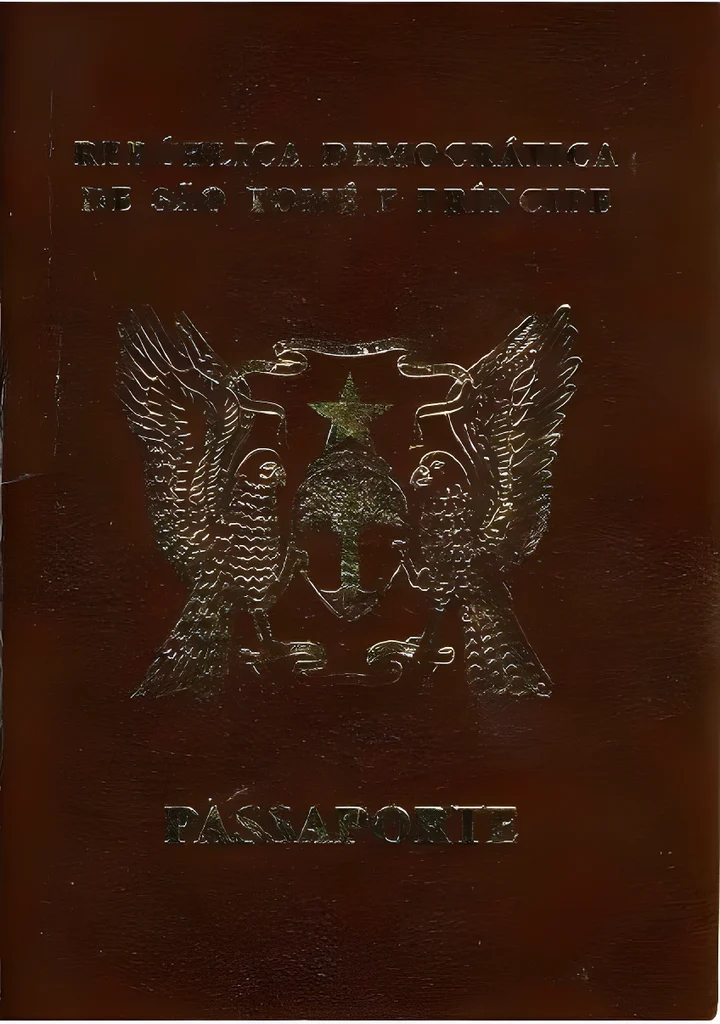
São Tomé and Príncipe is particularly family-friendly. The contribution to the National Transformation Fund is 95,000 USD for a family of two to four people, and children up to the age of 30 can be included in the application. If a child is born after naturalisation, the newborn can be added later, up to the age of one, for 500 USD. That way the parents' investment carries dual citizenship to every child who follows.
Which children can come along in which programme and up to what age is set out on the family page and in the article second passport for children, with every open programme side by side in the comparison. How the investment and a later naturalisation work together is explained in CBI and naturalisation.
Frequently asked questions
Does my child automatically get dual citizenship if one parent is a foreign national?
Yes, if both countries pass on their nationality by descent. The child of a German parent becomes German at birth under § 4(1) StAG, and if the other parent's country also passes on its nationality, the child holds both. Whether that happens, and on what conditions, is decided solely by the law of the other country.
Does a child with a German father and an Austrian mother hold both citizenships?
Yes. For children born on or after 1 September 1983, Austria passes on its citizenship at birth through any Austrian parent, and Germany does the same through any German parent. The child does not lose Austrian citizenship as a result and does not have to choose one of them later under Austrian law. If the parents are not married and the father is the Austrian parent, the first eight weeks after the birth are decisive.
Does my child automatically become American if born in the USA?
Yes. Under the 14th Amendment to the US Constitution, anyone born in the United States and subject to its jurisdiction is a citizen; the main exception is the children of foreign diplomats. In Trump v. Barbara, decided on 30 June 2026, the Supreme Court confirmed that this also applies to children whose parents are in the country only temporarily. What it means for you as parents, from the visa to the first passport, is set out in child born in the USA.
Does my child have to choose one citizenship at 18?
Not under German law. The option requirement was abolished on 27 June 2024 by the Nationality Modernisation Act, and holding a second nationality is not one of the grounds for loss in § 17 StAG. Whether the other country demands a choice is a matter for its own law; Austria does not demand one for dual citizenship acquired at birth.
Does a child born in Germany to foreign parents become German?
Yes, if one parent has been lawfully and habitually resident in Germany for five years and holds a permanent right of residence (§ 4(3) StAG). The child then acquires German nationality at birth, and the acquisition is entered in the register of births. In most cases the child also inherits the parents' nationality and is therefore a dual national.
Is there a deadline for German citizenship when a child is born abroad?
Only in one case: if the German parent was born abroad after 31 December 1999 and lives there, the birth must be registered in the German register of births, with the application made within one year of the birth. Filing it with the responsible German embassy or consulate is enough. Every step is explained in German citizenship for your child born abroad.
Is my child automatically British if born in London?
Only if, at the time of birth, the father or mother is a British citizen or settled in the United Kingdom (Section 1(1) British Nationality Act 1981) or is a member of the UK armed forces (Section 1(1A)). If a parent becomes British or settled later, the child can be registered under Section 1(3) while still a minor. Being born in a London hospital is not enough on its own.
Two passports for your child, with no deadline missed
We go through with you which nationalities your child receives at birth, which deadlines apply to your family, and whether a second passport through investment closes the gap for the whole family.
Book a consultationSources
- Gesetze im Internet: § 4 Nationality Act (StAG)
- Gesetze im Internet: § 17 Nationality Act (StAG), grounds for loss
- Federal Foreign Office: nationality law, key changes under the StARModG
- oesterreich.gv.at: acquiring citizenship by descent
- oesterreich.gv.at: dual citizenship
- State Secretariat for Migration SEM: FAQ on Swiss citizenship
- USCIS Policy Manual: Volume 12, Part H, Chapter 3
- Supreme Court of the United States: Trump v. Barbara, No. 25-365, opinion of 30 June 2026
- The White House: Executive Order 14419, Ending Birth Tourism (6 August 2026)
- Justice Laws Website (Canada): Citizenship Act, Section 3
- legislation.gov.uk: British Nationality Act 1981, Section 1
- Citizenship by Investment Unit São Tomé and Príncipe: Investment Structure