
The short answer
After a birth abroad you need four documents, in this order: the long-form birth certificate of the country of birth showing the parents' names, the apostille on that certificate, the passport of the country of birth and the German passport from the consulate. A US citizen may not leave the United States without a US passport, and Canadians, as a rule, fly to Canada only on a Canadian passport. The German birth certificate is optional, unless the German parent was born abroad after 1999 and lives there: in that case the birth must be registered in Germany within one year.
A birth abroad is the moment you hand your child a second passport. Which countries grant citizenship by place of birth, and how to plan the birth, is covered under Birth tourism. Once the baby is here, the certificates are what count: only with them does the right your child gained with its first breath turn into a passport it can travel on.
The right order: which documents your child needs after a birth abroad
Each document builds on the one before. Keep to the order and you never apply for anything twice or wait for papers you could have ordered long ago.
| Step | Document | Where | What for |
|---|---|---|---|
| 1 | Birth certificate, long form | Civil registry of the country of birth (in the US: the state's Vital Records office) | The basis for everything else |
| 2 | Apostille on the birth certificate | Competent authority of the country of birth | Recognition in Germany |
| 3 | Passport of the country of birth | Local passport authority | Leaving the country and coming back later |
| 4 | German passport | German embassy or consulate general | Travel to Germany and within Europe |
| 5 | German birth certificate (optional, mandatory in one case) | Application through the consulate or directly to the registry office | Dealing with authorities in Germany |
You handle the first three steps in the country of birth, before you fly home. Step 4 can also be done locally if you get an appointment at the German mission; otherwise later, through the German mission or the passport office in Germany. Step 5 can wait, with one important exception that hinges on nationality.
Order several certified copies of the birth certificate right from the start. One goes off with the passport application of the country of birth, one gets the apostille for Germany, one stays in your folder. With only one copy, you will later wait weeks for a second, usually from the other side of the world.
The birth certificate in the country of birth: why the long form matters
The birth certificate is the foundation. It proves both the birth in that country, and with it citizenship there, and your child's descent from you, and with it German nationality. That is why the version matters.
Many countries issue two versions: a short certificate with name, date and place, and a long form that includes the parents' names. For the German authorities and for your child's passport from the country of birth, you will almost always need the long form.
USA: the birth certificate comes from the state
A US birth certificate is a document of the state your child was born in. The German missions in the US point out one particular issue: if the US birth certificate gives only a county as the place of birth, the German registry office also asks for a "proof of birth letter" from the hospital or a "long-form" birth certificate. Plan for that from the outset and ask the hospital for the letter before you are discharged.
When you fill in the hospital forms, check the spelling of every name with care, your own included. Every letter on the birth certificate will later appear in the US passport, the apostille and the German passport. A correction after issue costs time you won't have before the flight home.
Canada: registration with the province
In Canada, parents register the birth with the province. In Ontario, for example, the birth must be registered within 30 days. Online registration is free, a birth certificate costs CAD 25 and a certified copy of the birth registration CAD 35; both take about 6-8 weeks plus postage. Ontario's online newborn bundle lets you apply for registration and certificate in one go.
Ontario explicitly issues the certificate with the parents' details too, as a "birth certificate with parental information", at the same price. Order exactly this version: it carries the parents' names into every later application.
Apostille on the birth certificate: when you need it and who issues it
To a German registry office, a foreign birth certificate is at first an unfamiliar document. The apostille confirms that the signature and seal are genuine and that the issuing office had the authority to issue it. Between the contracting states, it replaces legalisation by the consulate.
The apostille is always issued by a designated authority of the country that issued the certificate. The German embassy plays no part in it. So the best time to have it added is while you are still in the country of birth: from Germany, every round of postage becomes a test of patience.
Which countries of birth issue the apostille
Almost all the popular countries of birth are party to the 1961 Hague Apostille Convention.
| Country | Apostille Convention in force since | Responsible for birth certificates |
|---|---|---|
| USA | 15 October 1981 | State body, usually the Secretary of State |
| Canada | 11 January 2024 | Authority of the issuing state |
| Mexico | 14 August 1995 | Authority of the issuing state |
| Brazil | 14 August 2016 | Authority of the issuing state |
| Argentina | 18 February 1988 | Authority of the issuing state |
| Uruguay, Paraguay, Panama, Chile | 2012, 2014, 1991, 2016 | Authority of the issuing state |
In the US, a state's certificate receives its apostille from the body that state has designated, in most states the Secretary of State. Georgia, for example, has designated a body of its own. If you give birth in Texas, you get the apostille in Texas, not in Washington.
Canada only joined on 11 January 2024. Older advice that still describes legalisation at the consulate for Canada is out of date.
For Latin America, take a look at the apostille roadmap for Latin America, which shows the order in which you obtain, apostille and translate documents there.
If the country of birth does not issue apostilles
If a country is not party to the Convention, the certificate is legalised for use in Germany. This is done by the consular officers of the German embassy or consulate general in the country of birth.
Translation and the registry office's decision
Whether the registry office asks for the apostille and a translation is its own decision. The German missions in the US state this explicitly and cannot give a binding answer on it. So ask the responsible registry office directly before you apply.
Important: a translation cannot itself receive an apostille. For German authorities, the Federal Foreign Office recommends translators who are sworn or authorised in Germany. The apostille goes on the original; the translation comes afterwards.
The first passport of the country of birth: without it, you don't fly home
Many parents think of the German passport first. For the trip home, though, the passport of the country of birth is what decides it: your child is a citizen there, and citizens travel on their own passport.
USA: no US passport, no departure
US law is unambiguous here. Under 8 U.S.C. § 1185(b), a US citizen may, as a rule, leave or enter the United States only on a valid US passport. A German passport or an ESTA will not help your child. Read why a child born in the US is a US citizen, and everything about the birth itself under Birth in the USA.
For children under 16, the US passport comes with fixed rules (22 CFR § 51.28):
- The child appears in person when the application is made.
- Both parents sign the application, or one parent presents the other's notarised consent.
- You prove the parent-child relationship with a document showing the child's name, date and place of birth and the parents' names.
This is where everything comes back to the long-form birth certificate. Build the processing time of the US passport into your stay from day one, and only book the flight home once the application is under way. What US citizenship means for your child, and for you, in tax terms is covered under US passport for your child and taxes.
Canada: flights to Canada only on a Canadian passport
In Canada, the rule bites on the way back. Canadian citizens, dual citizens included, fly to Canada only on a valid Canadian passport. The German passport is not enough for the flight to Canada. The only exceptions are dual citizens holding a US passport and special authorisation granted case by case. By the first family visit to Toronto at the latest, your child will need its Canadian passport. More on giving birth there under Birth in Canada.
Your child's German passport: at the consulate, not only once you are back in Germany
Your child is German from birth if one parent is German (section 4(1) of the Nationality Act, Staatsangehörigkeitsgesetz or StAG). You apply for the German passport at the German embassy or consulate general responsible for where you are staying. If you live in Germany and are flying back anyway, you can also apply at your passport office at home.
What you need to know:
- In person: passports must, as a rule, be applied for in person at the mission. So plan an appointment with your baby.
- Several weeks: passports are produced centrally in Berlin, and several weeks pass between application and handover.
- No more children's passport: the children's passport (Kinderreisepass) was abolished on 1 January 2024. Your child gets a regular passport, valid for six years, as everyone under 24 does.
- Faces change: with babies, the passport photo can stop matching after a short time. Apply for a new passport in good time before any major trip.
How your child acquires German nationality, and where the pitfalls lie, for example with unmarried parents when only the father is German, is set out in detail under German citizenship for a child born abroad.
The name: which law applies
With the first German passport, the mission checks the name. A person's name is governed by the law of the country where they are habitually resident (Article 10(1) of the Introductory Act to the Civil Code, Einführungsgesetz zum Bürgerlichen Gesetzbuche or EGBGB). For families who travel for the birth and live in Germany, that means your child's name will almost always follow German law, even if it was born in Austin or Toronto. So enter a name at the hospital that also works under German law, and all the papers will match later.
By a declaration to the registry office, parents can also choose the law of a country of which one parent or the child is a citizen (Article 10(3) EGBGB). If you live permanently in the country of birth, since 1 May 2025 the name on the foreign birth certificate will as a rule apply, and the mission can enter it in the German passport without any further declaration.
The German birth certificate: registering the birth in Germany
On application, a birth abroad can be recorded in the German birth register. You then receive a German birth certificate. German nationality does not, as a rule, depend on this entry. But the German certificate saves you the discussion about apostilles and translations at every German authority later on.
When registration is mandatory
There is one exception you need to know. If the German parent was themselves born abroad after 31 December 1999 and is habitually resident there, the child only acquires German nationality if the birth is reported for registration within one year (section 4(4) StAG). Applying at the responsible German mission within the deadline is enough. If both parents are German, the exception only applies if both meet these conditions. For these families, step 5 is not an extra but an obligation.
Who is responsible and what you submit
Responsibility lies with the registry office at the child's last place of residence in Germany, otherwise at the last German place of residence of one parent. If none of you has ever lived in Germany, the Standesamt I in Berlin, the central registry office for these cases, records the birth. You submit the application through the embassy or consulate general; in the US, both parents with custody must then attend the appointment in person. Or you send it directly to the registry office, with notarised signatures.
As a rule, the application includes:
- the child's foreign birth certificate
- the parents' marriage certificate
- both parents' passports, and for non-US citizens in the US also their residence permit
- both parents' birth certificates
- for unmarried parents, proof of the acknowledgement of paternity
| Fee (indicative, registry office fees vary by German state) | Amount |
|---|---|
| Certification of signatures at the mission in the US | EUR 85 |
| Entry in the birth register | EUR 80, a further EUR 80 where foreign law applies |
| Birth certificate | EUR 12, each additional copy ordered at the same time EUR 6 |
The wait in Berlin, and why the passport does not wait for it
Processing times vary widely between registry offices. At the Standesamt I in Berlin, according to the German missions in the US, it currently takes at least three years until the birth certificate is issued. You don't have to wait for that to get the passport. If a declaration of name is needed, the Standesamt I confirms the name after about two to three months, independently of the registration, and the German passport can then be issued.
Families with a second passport: adding the newborn
Some families already hold a second passport before the baby arrives, through a programme of citizenship by investment. In that case there is one more document to obtain after the birth: the newborn's inclusion in the new citizenship.
The programmes handle this differently:
| Programme | Adding a newborn later |
|---|---|
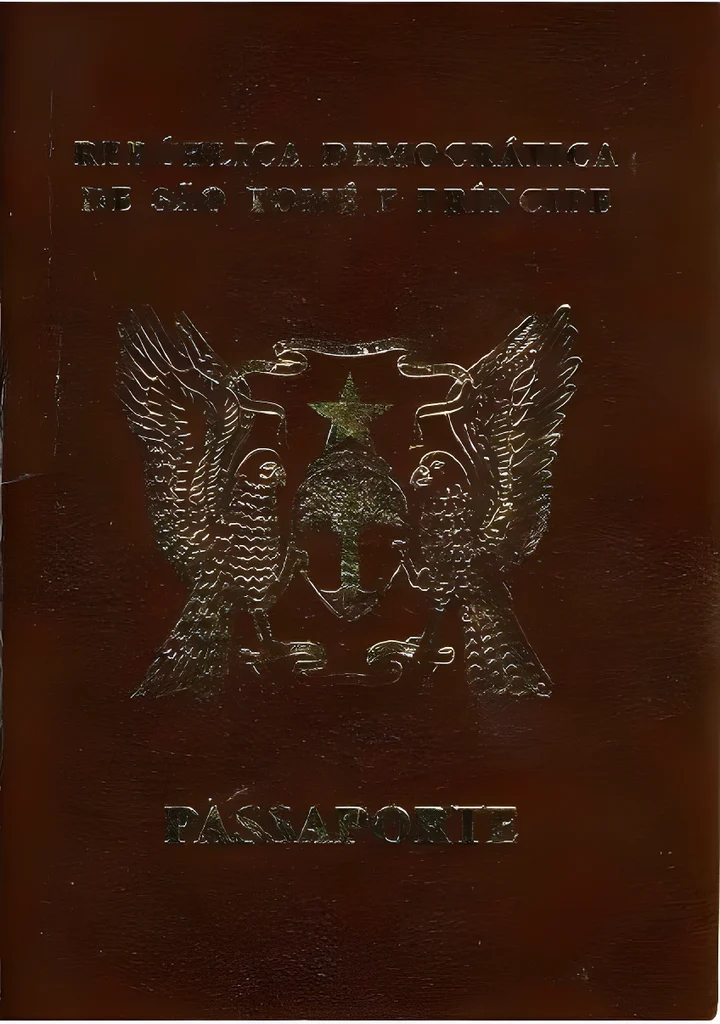
| São Tomé and Príncipe | up to the first birthday, for USD 500 |
| Sierra Leone | include children in the application from the start; adding them later to a submitted or completed application is, as a rule, not provided for |
To add your newborn, you need the same basic papers: the long-form birth certificate with apostille. If you are getting them for Germany anyway, order one extra copy at the same time. With Sierra Leone, planning before you submit pays off if more children are on the way. All the rules on children, parents and grandparents in the application are under Family.
This is how a child comes to hold three nationalities: German by descent, that of the country of birth by place of birth, and that of the parents' programme. Each of them is a right, not a permission, and none depends on another.
Checklist before the flight home
Before you board the plane, this folder should be complete:
- Several certified copies of the long-form birth certificate, with both parents' names.
- In the US, if needed, the hospital's "proof of birth letter".
- At least one copy with an apostille from the country of birth.
- Your child's passport from the country of birth, or at least the pending application with a realistic date.
- The German passport, or the appointment at the German mission.
- If section 4(4) StAG applies: the application for registration, filed before the year is up.
- Copies of everything, digital and on paper, kept apart from the originals.
Tick off this list and the hardest part is behind you. From here on it is administration: renewing passports, ordering more certificates and, at some point, deciding which passport your child travels on, and where. The full picture, from choosing the country of birth to the passport, is under Birth tourism.
Frequently asked questions
Do I need an apostille on my child's birth certificate?
Usually yes, if the country of birth is party to the Hague Apostille Convention, as the USA, Canada, Mexico, Brazil and Argentina are. Whether the German registry office asks for the apostille and a translation is its own decision. So check with the responsible registry office before you apply, and have the apostille added in the country of birth while you are still there.
Who issues the apostille in the US?
For state documents, birth certificates included, a body of the state concerned is responsible, usually the Secretary of State's office. There are exceptions: in Georgia, for instance, a separate body within the courts handles it. The apostille always comes from the state that issued the certificate.
Can my child leave the US on a German passport?
No. Under 8 U.S.C. § 1185(b), a US citizen may, as a rule, leave or enter the United States only on a valid US passport, and your child is a US citizen. It needs the German passport for Germany and Europe, and the US passport for every entry into and exit from the US.
Do I have to register the birth with the German registry office?
In most cases you don't: your child is German even without an entry in the German birth register. Applying for registration within one year is mandatory if the German parent was born abroad after 31 December 1999 and lives there (section 4(4) StAG). Registering is still worth it, because a German birth certificate makes every later dealing with German authorities easier.
Does the German children's passport still exist?
No, the children's passport (Kinderreisepass) was abolished on 1 January 2024. Your child gets a regular passport, which is valid for six years for anyone under 24.
Does the foreign birth certificate have to be translated?
The registry office decides case by case. A translation cannot itself receive an apostille. For German authorities, the Federal Foreign Office recommends translators who are sworn or authorised in Germany.
How long does registration at the Standesamt I in Berlin take?
According to the German missions in the US, it currently takes at least three years until the birth certificate is issued. You don't have to wait for it to get the German passport: if a declaration of name is needed, the Standesamt I confirms the name after about two to three months, and the passport can then be issued.
Paperwork in order, flight home secured
We go through the sequence for your country of birth with you, so the birth certificate, apostille and both passports are in hand before your flight home. In the consultation we also look at whether a second passport for the whole family fits your plans.
Book a consultationSources
- Gesetze im Internet: section 4 of the Nationality Act (Staatsangehörigkeitsgesetz)
- Gesetze im Internet: Introductory Act to the Civil Code (EGBGB), Article 10 (Name)
- German Embassy and Consulates General in the USA: registering a birth abroad in the German birth register
- Federal Foreign Office: passports and ID cards (children's passport, applying abroad)
- Federal Foreign Office: Foreign public documents for use in Germany (apostille, legalisation, translations)
- HCCH: Status Table, Apostille Convention of 5 October 1961
- HCCH: Competent Authorities, United States of America
- GovInfo: 8 U.S.C. § 1185, Travel control of citizens and aliens
- GovInfo: 22 CFR § 51.28, Minors
- Immigration, Refugees and Citizenship Canada: Flying to Canada as a dual citizen
- Government of Ontario: Register the birth of a new baby
- Citizenship by Investment Unit São Tomé and Príncipe: Investment Structure