
The short answer
Yes, a child born in the USA is a US citizen at birth, with no application and regardless of the parents' passports. On 30 June 2026, in Trump v. Barbara, the Supreme Court ruled that this also applies to children of parents who are in the country only temporarily or unlawfully, and so stopped Executive Order 14160. The main exception is the children of foreign diplomats. If one parent is German, the child also acquires German citizenship at the same time under Section 4(1) of the Nationality Act (StAG).
A passport is a right, not a permission. A visa can be refused, shortened or revoked; a citizenship your child acquires at birth belongs to it for life. That makes the American passport one of the strongest you can give your child as a birth gift. How the USA fits into the wider map of birthright countries is set out in the guide to birth tourism. For you as parents, three questions count: what the ruling means for your child, which kind of stay supports the plan, and how your child ends up with both passports.
Born in America: does your child automatically get citizenship?
Yes, and with no application, no review and no waiting time. The 14th Amendment to the US Constitution provides that all persons born in the United States and subject to its jurisdiction are citizens of the United States and of the state in which they reside. Federal law repeats the rule almost word for word: under 8 U.S.C. § 1401(a), every person born in the United States and subject to its jurisdiction is a national and citizen of the United States at birth.
For you as a parent, this means citizenship is created in the delivery room, not at a government office. No authority decides on it, no fee is due, and your German, Austrian or Swiss passport plays no part in it. The state birth certificate later serves as the proof your child uses to get its first US passport.
The exceptions are narrow. The Supreme Court essentially names the children of foreign diplomats, who under long-standing law are treated as if they were not present in the host country's territory at all. For a family that lives and works in Texas, Florida or California, this exception is irrelevant.
Many parents confuse birthright citizenship with naturalisation. Naturalising in the USA takes years on a green card; being born in the country gives your child the passport straight away. What the long road looks like for adults is covered in USA: from green card holder to US citizen.
The Supreme Court ruling of 30 June 2026: what was decided
On 20 January 2025, President Trump signed Executive Order 14160, titled “Protecting the Meaning and Value of American Citizenship”. It sought to stop recognising citizenship by birth in two groups of cases: where the mother was in the country unlawfully and the father was neither a US citizen nor a lawful permanent resident, and where the mother was in the country lawfully but only temporarily and the father was likewise neither a US citizen nor a green card holder. The second group hits exactly the families who live in the USA on a work or investor visa.
Parents sued, a federal court in New Hampshire blocked the order for a nationwide class of affected children, and the Supreme Court took up the case directly. On 30 June 2026 it handed down its decision in Trump v. Barbara. The holding is unambiguous: children born in the USA to parents who are there unlawfully or only temporarily are subject to US jurisdiction and are citizens at birth under the Citizenship Clause of the 14th Amendment. Chief Justice Roberts wrote the opinion of the Court.
Why the Court decided this way
The reasoning reaches far back into history. Under English common law, every child born within the Crown's dominions was a subject, however briefly its parents had been there. The Court describes a foreign mother who comes to the British Isles, gives birth there and leaves with her child the next day: under the old law, the child still remained a British subject. This rule of the right of the soil, ius soli, crossed the Atlantic with the settlers.
The core is the 1898 decision in United States v. Wong Kim Ark. Even then, the Supreme Court held that the 14th Amendment confirms the old rule of citizenship by birth. Under that case law, foreigners who travel to the USA for business or pleasure are subject to its jurisdiction for as long as they are there, and their children born there are American. The 2026 ruling expressly rejects the idea of tying birthright citizenship to the parents' permanent residence: words such as mother, father, lawful or temporary, which appear throughout the executive order, are nowhere in the Constitution.
For parents, this is the most important sentence of the whole debate: the status of your visa does not decide your child's citizenship. You'll find an analysis of the ruling and everything it means for business-owning families in US birthright citizenship: the Supreme Court confirms it.
Entering the USA to give birth: visas, ESTA and the August orders
Birthright citizenship is settled; entry is a separate question. This is where plans that are set up the wrong way fall apart.
Visitor visa. Since 24 January 2020, a State Department rule has applied to the B visa: travel for pleasure does not include the purpose of obtaining US citizenship for a child by giving birth in the USA. If the consular officer has reason to believe an applicant will give birth during her stay, she is presumed to be travelling for exactly that purpose. The presumption can only be rebutted by a different, legitimate primary purpose.
Executive Order 14419. The order “Ending Birth Tourism” of 6 August 2026 defines birth tourism as entering on a nonimmigrant visa for the purpose of giving birth on American soil. It directs the State Department and the Department of Homeland Security to put this policy into practice. At their discretion, both may refuse or revoke visas and other travel authorisations in such cases and bar entry permanently. Those who organise such trips are in the line of fire too.
Executive Order 14418. A second order of the same day, 6 August 2026, seeks to stop recognising citizenship in certain groups of cases where neither parent is American. These include children whose parents entered into a commercial arrangement so that the mother would be in the USA for the birth, as well as children of foreign government employees. On 2 September 2026, a federal court in Maryland issued a preliminary injunction barring enforcement for a certified class: children born in the USA after 19 February 2025, or yet to be born, whose mother was in the country unlawfully or only temporarily at the time of birth and whose father was neither a US citizen nor a green card holder. The court considers the order almost certainly unconstitutional for these children, because the Supreme Court has already confirmed their citizenship. The details of this second round are in the analysis US birthright citizenship: the executive order of 6 August 2026.
The conclusion is clear: a trip whose purpose is the birth does not belong on a tourist visa or an ESTA authorisation. Answer every question on the visa application, on the ESTA form and at the border truthfully, including the one about all your nationalities. If you are planning for your child to be born in the USA, plan it around a stay that genuinely supports it.
Planning a birth in the USA: which kind of stay supports your plan
The safest route to an American passport for your child is a genuine chapter of your life in the USA. Families living in the country on an investor or work visa are precisely the case the Supreme Court decided. They don't travel in to give birth; they live there, and their child is born there.
| Parents' status at the birth | Child's citizenship | What to watch |
|---|---|---|
| One parent a US citizen | American from birth | Order 14418 only applies if neither parent is American |
| Living in the USA on an E-2, L-1 or other work visa | American from birth, confirmed in Trump v. Barbara | Keep the visa valid, insurance that covers childbirth |
| Visiting on a B visa or ESTA | American from birth under the Constitution | Entering to give birth is not what these are for |
| Parents working for a foreign government | Exception for diplomats; Order 14418 reaches further | Check carefully before you plan |
For German business owners, the E-2 investor visa is the best-known route to this kind of stay. How the E-2 works, what investment carries it, who can come with you and how long it lasts is set out in the guide to the US E-2 visa. If you are thinking about moving with children anyway, you'll find schools, visas and child benefit in one overview in Moving to the USA with kids.
A family living in Texas on an E-2 or L-1 visa and having its child there belongs to exactly the group for which the Maryland court has barred enforcement of Order 14418: the mother is in the country lawfully but temporarily, the father is neither a US citizen nor a green card holder. And the family pays the hospital because it lives there, not to buy a birth on American soil.
Timeline and insurance
Plan a birth in the USA as early as you can, ideally from the first trimester. Check that your visa is valid beyond the due date and that your health insurance covers pregnancy, delivery and the newborn, and keep a few weeks free after the birth for the paperwork. The steps from choosing the hospital to the flight home, for other birth countries too, are in Planning a birth abroad.
After the birth: birth certificate, Social Security number, US passport
The first weeks after the birth are the weeks of paperwork. The order is similar in every state.
- Birth certificate. The birth is registered in the state's official register at the Vital Statistics Office. The birth certificate you receive there is the proof of citizenship.
- Social Security number. In states that have an agreement with the Social Security Administration, you apply for the number at the same time as registering the birth. The Vital Statistics Office passes on the name, date of birth, place of birth and the parents' details; the agency assigns the number and mails the card to the mother's address. You then don't need a separate form.
- US passport. For children under 16, under 22 CFR § 51.28 both parents must, as a rule, sign the application, and the child must appear in person. If one parent cannot be there, their notarised consent is required.
- German documents. Next come the German passport at the consulate and, where needed, registration of the birth in the German birth register.
Without a US passport, your child doesn't fly home: under 8 U.S.C. § 1185(b), US citizens may, as a rule, only leave and enter the USA on a valid US passport. That applies to a child with a German passport too, and it applies for life: your child always enters the USA as an American, never on ESTA. Which certificate needs which stamp and how registering the birth in Germany works is explained step by step in Paperwork after a birth abroad.
German and American: two passports from day one
The best news for German parents: your child doesn't have to choose. Under Section 4(1) StAG, a child acquires German citizenship at birth if one parent is German, no matter where it is born. American citizenship arises at the same moment. Your child therefore holds two citizenships from birth, each in its own right.
The law has one exception, in Section 4(4) StAG. If the German parent was themselves born abroad after 31 December 1999 and lives there, the child acquires German citizenship only if registration in the German birth register is applied for within one year of the birth. It is enough for the application to reach the competent German mission abroad within that deadline. If both parents are German, the rule only applies if both fall into this group. If you fall into it, put the deadline in your calendar before the birth. All the details are in German citizenship for a child born abroad.
The door is open for you as parents too. Section 17(1) StAG lists the grounds on which German citizenship is lost: renunciation, joining foreign armed forces or taking part in combat for a terrorist organisation abroad, and the withdrawal of an unlawful administrative act. Acquiring another nationality is not on that list. So if you become American yourself after years on a green card, you stay German. What this means for the whole family, from rights to obligations, is explained in German and US dual citizenship and in the guide to dual citizenship in Germany.
What a US passport gives your child, and what you should know about US tax
An American passport opens up one of the largest job markets in the world to your child, along with universities that families everywhere compete for, and the right to live there without ever applying for a visa. One day your child can study in New York, start a company in Austin or work in California, with no lottery, no sponsor and no deadline. And it has a second passport that doesn't depend on the decisions of a single state. All eight reasons for a second passport are on the page Why a second passport, and for a child they carry particular weight, because it will hold that passport all its life.
One point belongs in the plan from the start: the USA taxes its citizens on their worldwide income, even when they live abroad. For a baby with no income of its own, this won't matter for a long time. Later, with a first salary, an inheritance or an investment account, US tax becomes part of a dual citizen's life. It is manageable, and if you know about it early, there are no surprises. How parents should think about it is shown in A US passport for your child and taxes.
A second passport for you as parents: without waiting 21 years
Your child is American; that doesn't make you American. A child born in the USA can only sponsor its parents once it is at least 21 years old: only then do parents count as immediate relatives of a US citizen under 8 U.S.C. § 1151(b)(2)(A)(i). For your own Plan B, that is too late.
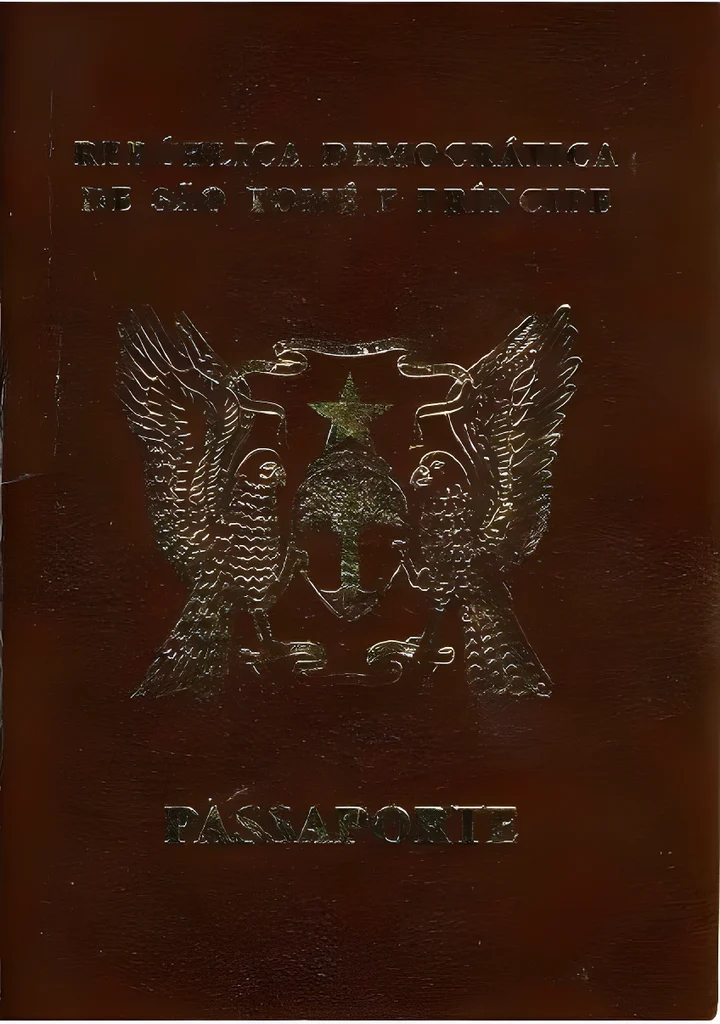
This is where the second pillar comes in. Citizenship by investment and naturalisation don't exclude each other; they complement each other. Naturalisation is the route without an investment and often the better one in the end, but it takes years and requires genuine residence. A citizenship by investment programme buys you the time: in São Tomé and Príncipe, for example, a family of two to four people receives the passport for a donation of USD 95,000 to the National Transformation Fund. How the two routes work together is explained in CBI and naturalisation.
Many families combine both: a passport for the parents through a programme, which takes effect right away, and a birth in the USA for the child. What each route really delivers is worked through in Birth tourism or CBI. Which programmes include family members and up to what age is on the Family page, all programmes side by side are under Comparison, and the programme in detail is under São Tomé and Príncipe.
Frequently asked questions
Does my child automatically get US citizenship if born in the USA?
Yes. Under the 14th Amendment and 8 U.S.C. § 1401(a), every person born in the United States and subject to its jurisdiction is a citizen at birth. On 30 June 2026, in Trump v. Barbara, the Supreme Court confirmed that this also covers children whose parents are in the country only temporarily. No application is needed: the US birth certificate is the proof.
Does this also apply if we only live in the USA on an E-2 or L-1 visa?
Yes, that is exactly the situation the Supreme Court decided. Executive Order 14160 sought to deny citizenship to children whose mother is in the country lawfully but only temporarily and whose father is neither a US citizen nor a green card holder. The Court made clear that these children, too, are American at birth. The second order, 14418 of August 2026, may not be enforced against this group following a preliminary injunction issued by a federal court in Maryland on 2 September 2026.
Can I travel to the USA on ESTA or a tourist visa to give birth?
Don't build a plan on it. Since 24 January 2020, a B visa is not meant for a trip whose main purpose is to obtain US citizenship for a child through birth, and consulates presume that purpose when a birth is expected during the stay. Executive Order 14419 also allows visas and other travel authorisations to be refused or revoked in such cases. Answer every question in the visa and ESTA process truthfully, and plan the birth around a genuine stay.
Will my child lose German citizenship by becoming American?
No. If one parent is German, your child acquires German citizenship at birth under Section 4(1) StAG, wherever it is born, and American citizenship comes on top at the same moment. Only if the German parent was themselves born abroad after 31 December 1999 and lives there must registration of the birth in the German birth register be applied for within one year.
Can parents get a green card through a child born in the USA?
Yes, but only much later. Under 8 U.S.C. § 1151(b)(2)(A)(i), parents count as immediate relatives of a US citizen, but only once the child is at least 21 years old. If you want a second passport for yourself before then, citizenship by investment gets you there far sooner.
Does my child need a US passport to leave the USA?
Yes. Under 8 U.S.C. § 1185(b), US citizens may, as a rule, only leave and enter the USA on a valid US passport, and that includes newborns. For a US passport for a child under 16, both parents usually have to sign the application and the child has to appear in person. So plan the weeks after the birth with some slack.
Will my US-born child have to pay taxes in America?
The USA taxes its citizens on their worldwide income, even when they live abroad. For a child with no income of its own, this rarely matters in the early years; later it becomes part of the plan, and it is very manageable. How that works is explained in A US passport for your child and taxes.
Should your child be born in the USA?
We work through with you which kind of stay fits your plan, how your child gets both passports, and whether a second passport for you as parents belongs in the picture. In the consultation you set the roadmap all the way to your flight home.
Book a consultationSources
- Supreme Court of the United States: Trump v. Barbara, No. 25-365, opinion of 30 June 2026
- govinfo.gov: 8 U.S.C. § 1401, Nationals and citizens of United States at birth
- Federal Register (govinfo.gov): Visas, Temporary Visitors for Business or Pleasure, Final Rule of 24 January 2020 (22 CFR 41.31)
- The White House: Executive Order 14419, Ending Birth Tourism (6 August 2026)
- U.S. District Court for the District of Maryland: CASA v. Trump, Memorandum Opinion of 2 September 2026 (with the text of Executive Order 14418)
- govinfo.gov: 20 CFR § 422.103, Social Security numbers (application at birth registration)
- govinfo.gov: 22 CFR § 51.28, Passports, Minors
- govinfo.gov: 8 U.S.C. § 1185, Travel control of citizens and aliens
- govinfo.gov: 8 U.S.C. § 1151, Worldwide level of immigration (immediate relatives)
- Gesetze im Internet: Section 4 of the German Nationality Act (StAG)
- Gesetze im Internet: Section 17 of the German Nationality Act (StAG), grounds for loss
- Internal Revenue Service: U.S. citizens and resident aliens abroad