
The short answer
No, your child no longer has to choose at 18. The German option requirement was abolished on 27 June 2024 by the Nationality Modernisation Act (Gesetz zur Modernisierung des Staatsangehörigkeitsrechts). Anyone who has held two nationalities since birth keeps both. Whether the other country demands a choice is governed by its own law alone: Austria does not, Japan does, there by the 20th birthday. Obligations such as conscription rules or the US tax return apply in each country separately.
For a child, two nationalities are no longer a special case but a gift that comes with clear rules. Now that German law generally allows dual citizenship, the question is no longer whether your child may hold two passports. It is how your child gets them, how your child keeps them and what each country expects in return. You'll find the bigger picture for adults under dual citizenship for Germans.
How does a child get dual citizenship?
Most children with two passports never signed an application for them. They acquired the second nationality with their first breath, because two legal systems claimed them at the same moment. There are three typical routes.
One German parent is enough
Under § 4(1) of the Nationality Act (Staatsangehörigkeitsgesetz, StAG), a child acquires German nationality at birth if one parent is German. Where the child is born does not, as a rule, matter. If the other parent is, say, Austrian, Italian or American, and that country also passes on its nationality by descent, your child holds two nationalities from day one.
The United States also passes on its citizenship to children born abroad. If only one parent is a US citizen and the couple is married, US law as set out in the USCIS Policy Manual requires that parent to have been physically present in the USA for at least five years before the birth, at least two of them after the parent's 14th birthday. Under section 2 of the British Nationality Act 1981, the United Kingdom makes your child a British citizen if one parent is a British citizen "otherwise than by descent" at the time of birth. How families with a British parent go about it is explained on the page on dual citizenship with the UK (in German).
Birth in a jus soli country
The second route is the place of birth. A child born in a country that grants citizenship by place of birth becomes a citizen there, even if both parents are German. The best-known example is the USA: according to the USCIS Policy Manual, a person born in the United States and subject to its jurisdiction is a US citizen from birth. On 30 June 2026, in Trump v. Barbara, the Supreme Court ruled that this also applies to children whose parents are in the USA only temporarily or without a right of residence. What the ruling means for families is explained in US birthright citizenship: the Supreme Court confirms it.
For parents, this is the most elegant route of all: a birth on foreign soil is the passport you give your child to take into life. Which countries work this way and how to plan a birth abroad is covered in the article on birth tourism, and the mechanics of automatic dual nationality are explained in dual citizenship by birth.
Born in Germany to foreign parents
The third route runs the other way round. A child of foreign parents becomes German by being born in Germany if one parent has been lawfully and habitually resident in Germany for five years and holds a permanent right of residence (§ 4(3) StAG). In most cases the child also inherits the parents' nationality. These are exactly the children the option requirement used to affect.
Born abroad: the deadline that runs out before the first birthday
One rule takes many families abroad by surprise, and it has nothing to do with the 18th birthday but with the first. Under § 4(4) StAG, a child born abroad does not automatically acquire German nationality if the German parent was themselves born abroad after 31 December 1999 and is habitually resident there.
The fix is simple, as long as you know about it in time: if an application to register the birth under § 36 of the Civil Status Act (Personenstandsgesetz) is made within one year of the birth, your child acquires German nationality after all. Filing the application within that period with the responsible German embassy or consulate is enough. If both parents are German, the exception only applies if both meet the conditions. If the child would otherwise be stateless, the rule does not apply anyway.
For families already living abroad in the second generation, this one year is the most important deadline of the child's entire life. Which documents you need and where to file them is covered in German citizenship for a child born abroad and paperwork after a birth abroad.
Does your child have to choose a passport at 18?
No, at least not under German law. Until 26 June 2024 the so-called option requirement applied: children of foreign parents who had acquired more than one nationality by being born in Germany had, under certain conditions, to choose between the German and the other passport as young adults. The Nationality Modernisation Act abolished this requirement on 27 June 2024, and the former § 29 StAG has been repealed. According to the Federal Foreign Office, anyone who had received a letter about the option requirement before the cut-off date and whose deadline had not yet expired no longer needs to do anything.
Children with a German parent and a second nationality from birth were never affected by the option requirement. For them nothing changes legally at 18: they remain dual nationals. Since 27 June 2024 a further rule applies: acquiring a foreign nationality later on application no longer costs German nationality, and a retention permit is no longer needed.
Whether the other country demands a choice is decided by its own law alone. The differences are considerable:
| Country | Choice at adulthood? | What applies |
|---|---|---|
| Germany | no | Option requirement abolished on 27 June 2024 |
| Austria | no | A child who automatically acquires a second nationality at birth does not lose Austrian citizenship and does not have to choose on reaching adulthood |
| Japan | yes | Anyone who became a dual national before their 18th birthday must choose by their 20th birthday, otherwise the Ministry of Justice calls on them to choose |
For German-Austrian families, the difference between birth and a later application is decisive. Dual citizenship acquired at birth is expressly unproblematic in Austria. An Austrian who later acquires a second passport on application, by contrast, needs to know the strict rules explained in the article on a second citizenship for Austrians.
What rights two passports give your child
A nationality is a right, not a permission. A visa can be refused or revoked; a nationality your child has held since birth cannot be taken away at an authority's whim. For your child this means two countries in which to live, study and work without a visa, two states whose passports your child can apply for, and two starting points for a life of their own.
Two passports, two areas of use
Your child may hold and use both passports. For a minor, the German passport is applied for by the parent with custody who determines where the child lives (§ 6 of the Passport Act, Passgesetz). Until the 24th birthday the German passport is valid for six years, after that for ten (§ 5 Passport Act).
At the border, though, you do not always have a free choice. Under 22 CFR 53.1, an American citizen may, with few exceptions, enter and leave the United States only on a valid US passport. So your German-American child travels to the USA on the US passport and around Europe on the German one. Plan it that way and you hold the stronger passport at every border. How life with several passports works day to day is shown in the article on travelling with more than one passport.
A Plan B nobody can take away
Perhaps the greatest value only shows years later. A child who at 25 wants to study abroad, at 30 start a company or at 40 bring the family to safety has two doors instead of one with two nationalities. The reasons for a second passport are set out under why a second passport.
Obligations: military service, taxes and foreign armies
Two nationalities also mean two countries that are entitled to expect something. Know the obligations and neither passport will hold any surprises.
German conscription
The Compulsory Military Service Act (Wehrpflichtgesetz, WPflG) is tied to German nationality, and a second passport changes nothing about that. Under § 3(2) WPflG, males who have completed their 17th year need a permit from the Bundeswehr careers centre (Karrierecenter der Bundeswehr) if they want to stay abroad for longer than three months. Since 17 April 2026 the Federal Ministry of Defence has exempted everyone concerned by a general administrative order, and it can lift this exemption at any time without the Bundestag having to change any law. Young men born after 31 December 2007 also receive a request to submit a declaration of willingness to serve (Bereitschaftserklärung), which also covers any other nationalities (§ 15a WPflG). What this means for families with sons and how it links to the Passport Act is explained in the article on conscription and a second passport.
Serving in a foreign army
Many dual nationals hold the nationality of a country with its own conscription. Then one rule matters: a German who, on the basis of a voluntary commitment and without the consent of the Federal Ministry of Defence, joins the armed forces of a foreign state whose nationality they hold loses German nationality, unless they would otherwise become stateless (§ 28 StAG). The loss does not occur for minors, nor where an intergovernmental treaty permits joining. Anyone conscripted by the other country does not join voluntarily. Anyone who volunteers at 18, on the other hand, obtains consent beforehand.
Taxes follow residence, not the passport, except with a US passport
For most countries, residence decides tax liability, not the passport. The USA is the great exception: US citizens living abroad must also file a US tax return once their income from worldwide sources reaches the threshold for their filing status. For a child, this usually only becomes noticeable with their first income of their own. What parents should know is covered under a US passport for your child and taxes, and the annual forms for dual nationals are explained in US dual citizenship: taxes on both sides.
Can your child give up a passport?
Yes, but not on a whim and not over the child's head. Only someone who holds more than one nationality can renounce German nationality, and the renunciation needs the approval of the nationality authority (§ 26 StAG). For a minor child, only the legal representative can renounce, and only with the approval of the German family court. From 16, your child has legal capacity in nationality matters (§ 34 StAG), and the renunciation then also needs your child's consent.
At 18 your child decides alone. There is one hurdle for those liable for military service: their renunciation needs clearance from the Federal Ministry of Defence or the body it designates, unless they have lived abroad for at least ten years or have done military service in one of their other countries. How renunciation works in practice is described in the article on giving up German citizenship.
Even so, the advice for most families is simple: give up nothing you don't have to. A nationality, once gone, rarely comes back, and at 18 nobody knows where they will want to live at 40.
Citizenship by investment: which children can come along
Not every child is born with a second nationality. For many families, a citizenship by investment programme is the fastest route, and then the children's ages count. Minor children can be included in the application in every programme in the table; for older children, the rules differ considerably:
| Programme | Children in the application | Good to know |
|---|---|---|
| Sierra Leone | under 18 and 18 and over (Fast Track and Heritage Citizenship) | 10,000 USD each under 18, 20,000 USD each from 18 |
| St. Kitts and Nevis | under 18; 18 to under 30 if unmarried and maintained by you or your spouse; from 18 with a disability, no age limit | Post-approval fee of 25,000 USD for a family of up to four, then 25,000 USD per further child under 18 and 50,000 USD from 18 (real estate, Public Benefit Option) |
| Dominica | under 18; 18-30 in higher education and fully supported | |
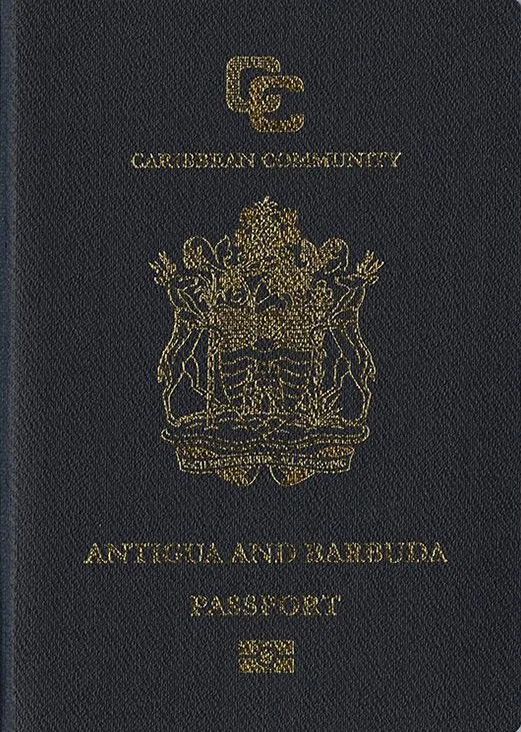
| Antigua and Barbuda | up to 30 | Due diligence fee: free up to age 11, 2,000 USD for ages 12-17, 4,000 USD from 18 |
| Grenada | children; adult children under 30 if supported | |
| St. Lucia | up to 21; up to 30 if fully supported | |
| Vanuatu | under 18; 18-25 in full-time education | |
| São Tomé and Príncipe | up to 30 | Newborn up to one year old: added later for 500 USD |
| Türkiye | minor or dependent children | |
| Jordan | dependent daughters, unmarried sons under 24 | |
| Cambodia | minor children | minor children not included can be added later |
Two observations help with the decision. First: if you include all your children from the start, you pay less. Antigua and Barbuda charges 10,000 USD for a child added later up to age 5, 25,000 USD from 6 to 17 and 50,000 USD from 18. Second: a son of 19 or 22 does not fit into every programme, so for him the age limits deserve a particularly close look. You'll find all family rules side by side on the Family page, and the programmes compared directly under Comparison. The article on a second passport for children goes deeper into the age up to which children can come along in each programme.
Citizenship by investment does not cost your child German nationality, because since 27 June 2024 acquisition on application no longer triggers a loss. Your child then holds two passports, just like a child who received them at birth.
What parents should do now
Most mistakes with children holding two passports happen not at 18 but much earlier, through a missed deadline or a missing document. A short list helps:
- Have a birth abroad registered straight away. If the German parent was born abroad after 31 December 1999 and lives there, the one-year deadline runs from the day of birth.
- Make both nationalities provable. Birth certificate, passport and, where one exists, a certificate of nationality from the other country belong in one folder.
- Keep both passports valid. The German passport is valid for only six years until age 24, so plan the renewal before big trips.
- Check the other country's law. If it demands a choice on reaching adulthood, as Japan does, your child needs to decide in good time.
- Talk to your sons about military service. The declaration of willingness to serve and voluntary service in a foreign army have consequences for the German passport. The permit requirement for long stays abroad from 17 has been suspended since 17 April 2026, but can come back at any time.
- If the second nationality is missing, act early. The younger the children are at the time of an application, the more programmes accept them and, usually, the less it costs.
Follow these steps and you give your child more than two passports: the freedom to have nothing to decide at 18 and everything open at 30.
Frequently asked questions
Can my child hold German and another citizenship at the same time?
Yes. If a child acquires another nationality at birth alongside German nationality, for example through the other parent or by being born in a jus soli country such as the USA, the child keeps both. Since 27 June 2024, acquiring a foreign nationality later on application no longer costs German nationality either.
Does a child with dual citizenship have to choose at 18?
Not under German law any more. The option requirement under § 29 StAG has been abolished, and it only ever affected children of foreign parents who became German by being born in Germany. Whether the other country demands a choice is set out in its own law: Japan requires one by the 20th birthday, Austria does not.
Does my child born abroad automatically get German citizenship?
If one parent is German at the time of birth, as a rule yes. If that parent was themselves born abroad after 31 December 1999 and lives there, however, you must apply within one year of the birth to have it entered in the German register of births, for example through the German embassy or consulate. The details are in German citizenship for children born abroad.
Which passport does a German-American child use to enter the USA?
The US passport. Under 22 CFR 53.1, a US citizen may, with few exceptions, enter and leave the United States only on a valid US passport. For Europe your child uses the German passport, so each passport plays to its strengths.
Can I as a parent renounce German citizenship on behalf of my minor child?
Only if your child holds more than one nationality, and only with the approval of the German family court. From 16, your child must consent personally, and every renunciation also needs the approval of the nationality authority. At 18 your child decides alone, and there is no obligation to give anything up.
Can I include my child in a citizenship by investment application?
Yes, every programme on the Family page includes minor children. Many programmes also accept older children, for example up to under 30 in St. Kitts and Nevis if they are unmarried and you or your spouse maintain them, up to 25 in full-time education in Vanuatu, or up to 30 in Antigua and Barbuda and São Tomé and Príncipe. Including all your children in the application from the start saves money: Antigua and Barbuda charges considerably more for a child added later.
Two passports for your child, planned properly
Whether it is a birth abroad, the deadlines before the 18th birthday or a second passport for the whole family: we go through your children's situation with you and show you the route that fits.
Book a consultationSources
- Federal Ministry of Justice: Nationality Act (§§ 4, 26, 28, 29, 34 StAG)
- Federal Foreign Office: nationality law, key changes
- Federal Ministry of Justice: Passport Act § 5, period of validity
- Federal Ministry of Justice: Passport Act § 6, applications for minors
- Federal Ministry of Justice: Compulsory Military Service Act (§§ 2, 3, 15, 15a WPflG)
- oesterreich.gv.at: dual citizenship
- Ministry of Justice Japan: Nationality Q&A
- Supreme Court of the United States: Trump v. Barbara, No. 25-365 (30 June 2026)
- USCIS Policy Manual: Volume 12, Part H, Chapter 3
- eCFR: 22 CFR 53.1, Passport requirement
- IRS: U.S. citizens and residents abroad, filing requirements
- legislation.gov.uk: British Nationality Act 1981, section 2
- Federal Ministry of Defence: general exemption from the permit requirement under § 3(2) WPflG (BAnz AT 16.04.2026 B3)
- Saint Christopher and Nevis: Citizenship by Substantial Investment (Amendment) Regulations, S.R.O. No. 1 of 2026