
The short answer
A diplomatic passport is an official passport that a state issues to people serving in a diplomatic or consular function. The privileges of the Vienna Convention only begin when the holder takes up the post and is notified to the receiving state, and they depend on that function. A second passport rests on citizenship: a permanent right that can include your family and pass to your children. Since 27 June 2024, as a German you keep your German passport when you acquire one. The strongest position is to hold both: the right as the foundation, the office for standing.
A passport is a right, not a permission. That one sentence carries the whole idea of a second passport. A visa can be refused or revoked; a citizenship belongs to you. A diplomatic passport follows a different logic: it is a mark of trust that a state places in a person for a task. Both have their place in flag theory, and both are at their strongest together.
What is a diplomatic passport?
A diplomatic passport is an official passport. Section 1(2) of the German Passport Act (Passgesetz) lists three kinds of passport: the ordinary passport, the temporary passport and the official passport, which in turn is issued as a service passport, diplomatic passport, temporary service passport or temporary diplomatic passport. The EU Visa Regulation likewise names diplomatic, service and special passports expressly as a group of their own. So a diplomatic passport is not a better ordinary passport but a category in its own right: the travel document for people who travel on behalf of a state.
The Federal Foreign Office (Auswärtiges Amt) describes how special this document is in its circular on the treatment of diplomats. It is international practice to issue diplomatic passports only to a limited number of people and only where certain conditions are met. According to the circular, another state's decision to grant a person a diplomatic passport is to be respected, and as a rule it is to be assumed that the holder occupies a prominent position in the sending state. Diplomatic passport holders of other states passing through are always to be treated with particular courtesy.
What the Vienna Convention governs
A diplomat's rights are not written in the passport but in the Vienna Convention on Diplomatic Relations of 1961. Under the Convention, a diplomatic agent is the head of mission or a member of the diplomatic staff of a mission (Art. 1). For the head of mission, the sending state first obtains the agrément of the receiving state, which may refuse it without giving reasons (Art. 4). The appointment of the members of a mission is notified to the receiving state's foreign ministry (Art. 10).
Once the diplomat has taken up the post and been notified, full protection applies: the diplomat's person is inviolable and may not be arrested or detained (Art. 29), and the diplomat enjoys immunity from the criminal jurisdiction of the receiving state and, with few exceptions, from its civil and administrative jurisdiction (Art. 31). Family members forming part of the diplomat's household enjoy the privileges of Articles 29 to 36 if they are not nationals of the receiving state (Art. 37). When passing through a third state on the way to the post or back, that third state grants inviolability and the immunities needed for transit (Art. 40).
When the privileges begin
Timing is everything. Under Article 39, the privileges begin on entry into the country to take up the post or, if the person is already there, on notification to the foreign ministry. The Federal Foreign Office sums it up clearly: issuing a diplomatic passport does not in itself create diplomatic status in the receiving state. The passport is the identity document; the office is the source of the status.
The honorary consul
Alongside career diplomats, the Vienna Convention on Consular Relations of 1963 provides for the honorary consul. Every state is free to decide whether it appoints or receives honorary consuls (Art. 68 VCCR). The head of a consular post is appointed by the sending state and admitted by the receiving state (Art. 10 VCCR), by means of the exequatur, which may be refused without giving reasons (Art. 12 VCCR). In Germany, the Federal Foreign Office's Protocol department grants the exequatur for career and honorary consuls; it is the first point of contact for 463 honorary consular posts in Germany.
What is a second passport?
A second passport is the perfectly ordinary passport of a second country whose citizen you are. No office, no accreditation, no notification. You are a citizen, and the passport is the proof. Everything that sets it apart follows from that: it is valid for as long as you hold the citizenship, and it is tied to no task and no post. Your children can acquire it with you and, depending on the country's law, pass it on to their own children. More on this under passing on citizenship.
There are three main routes to a second passport: descent, naturalisation through residence, and citizenship by investment. The last is the fastest. States such as Sierra Leone, St Kitts and Nevis or Dominica grant citizenship on a statutory basis in return for a set contribution or investment, after thorough background checks. Why this status is worth more than any visa is explained in a right, not a permission.
For Germans, the way has been open since 27 June 2024. The Federal Office of Administration (Bundesverwaltungsamt) states that Germany now generally accepts multiple citizenship and that acquiring another citizenship no longer leads to the loss of German citizenship. The retention permit (Beibehaltungsgenehmigung) has been abolished.
Diplomatic passport and second passport compared
Side by side, it becomes clear that the two documents operate on different levels.
| Diplomatic passport | Second passport | |
|---|---|---|
| Basis | Appointment to a function | Citizenship |
| Legal framework | Vienna Conventions of 1961 and 1963 | Nationality law of the passport country |
| Status begins | on taking up the post and notification | on naturalisation |
| Duration | tied to the function | permanent |
| Family | members of a diplomat's household | family in the application, can pass to children |
| Strength | standing and protection in office | your own right as a citizen, independent of any task |
One detail makes the difference especially clear. Under section 1(4) of the Passport Act, a German passport may as a rule only be issued to Germans. The official passport, however, may also be issued to diplomats and consular officers within the meaning of the Vienna Conventions, and to their family members, if they are not German. So a diplomatic passport does not necessarily require citizenship, and it does not confer any. It shows the function, not the belonging.
That is exactly why the two routes do not compete. Holding a diplomatic passport means holding an office. Holding a second passport means having a country. The question is not which of the two documents you choose, but in which order you build them into your plan.
Travelling with a diplomatic passport and with a second passport
Most people are interested in a diplomatic passport because of travel. This is exactly where a second look pays off, because each document follows its own rules.
Diplomatic passports follow their own visa rules
In Article 6, the EU Visa Regulation (EU) 2018/1806 allows each member state to set its own exceptions for holders of diplomatic, service and special passports, and in both directions: as an exemption from the visa requirement or as an exception to the visa waiver. Whether a diplomatic passport opens doors at a border is therefore up to each state.
A second passport travels with its own list
With a second passport, things are simpler. It travels with exactly the visa-free access that other states grant to the citizens of its country, the same for every citizen and regardless of whether you currently hold any position. The Sierra Leone passport, for example, opens more than 65 countries visa-free or with a visa on arrival, including the ECOWAS rights in eleven further countries. How the programme passports compare in detail is shown in travel freedom of CBI passports, and how to cross borders properly with several passports is covered under travelling with several passports.
On top of that comes an advantage no office can replace: the passport is your right as a citizen, not a temporary permission, and you have a second country that counts you among its citizens. What that means abroad is set out in two embassies instead of one.
Why a diplomatic passport and a second passport fit together
People who live and work internationally build their freedom in layers. The bottom layer is citizenship, because it stays when everything else changes. Residence, company and accounts build on it, and an office can sit at the very top. A first-hand account of flag theory on Wohnsitz Ausland (in German) shows how passport, residence and company interlock in practice.
The second passport is the foundation
Under Article 39(2) of the Vienna Convention, the privileges end when the function ends, normally on departure from the country or after a reasonable period; immunity continues for official acts. That is the nature of an office: it stays with you for a while. Citizenship, by contrast, is not tied to a task. With a second passport you have, for good, a second state that recognises you as its citizen, and an office comes on top as an additional layer.
The office is the crowning touch
Conversely, a diplomatic passport brings something no second passport can: standing, an official counterpart in ministries and authorities and, in the receiving state, the protection of the Vienna Convention. For entrepreneurs who broker between governments, investors and markets, that is real leverage. Why a second passport matters especially for them is covered under second passport for entrepreneurs.
Citizenship and office belong together
Article 22 of the Vienna Convention on Consular Relations lays down a principle: consular officers should in principle be nationals of the sending state. Nationals of the receiving state may be appointed with its express consent. The idea behind it: whoever represents a state is best a citizen of it. A second passport and an office for the same state are therefore not opposites but two sides of the same bond.
Which second passport fits alongside a diplomatic passport?
Three programmes stand for different priorities. You keep your German passport with each of them, because Germany has generally accepted multiple citizenship since 27 June 2024.
| Programme | Contribution from | Duration | What sets it apart |
|---|---|---|---|
| Sierra Leone | USD 95,000 (Solo Entrepreneur) | usually 90-120 days | 100% remote, no travel |
| St Kitts and Nevis | USD 250,000 (up to four people) | decision in 120-180 days | family of up to four people in the base contribution |
| Dominica | USD 200,000 (single applicant) | approval in principle after around three months | no residence before or after naturalisation |
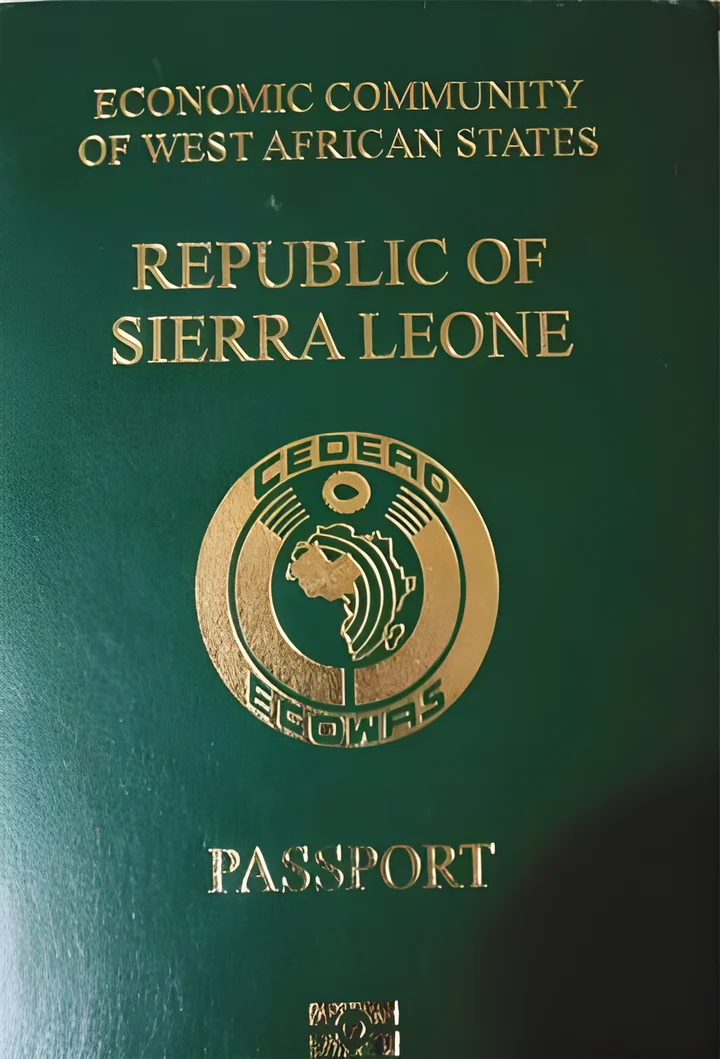
Sierra Leone is the fastest route. The application runs entirely remotely, with no trip to Sierra Leone and no embassy appointment; the oath of allegiance and declarations are notarised over Zoom. From the complete application to the passport usually takes 90-120 days. The Solo Entrepreneur route from USD 95,000 is for single applicants without dependants; with family, meaning spouse, children, parents, grandparents or siblings, the route is Fast Track from USD 140,000. Sierra Leone accepts multiple citizenship without restriction.
St Kitts and Nevis requires a Sustainable Island State Contribution of USD 250,000 for the main applicant or a family of up to four people. The decision is made 120 to 180 days after the acknowledgement of receipt. Spouses, children under 18, unmarried children aged 18 to under 30 whom you or your spouse maintain, and parents aged 55 and over who live with you and are fully supported by you can be included.
Dominica starts at USD 200,000 for a single applicant in the Economic Diversification Fund. The Citizenship by Investment Unit makes clear that you do not have to live in Dominica either before or after naturalisation. You keep your existing citizenships, because Dominica expressly recognises multiple citizenship.
Every open programme with fees, duration and family rules is in the comparison. Who in your family can come along is covered under family.
What applies to Germans?
Your German passport stays
For Germans, the most important news is also the simplest: a second citizenship no longer costs you your German passport. Since 27 June 2024, acquiring another citizenship no longer leads to its loss. You apply for nothing in Germany and afterwards carry two passports in your pocket. The details are under CBI passport and German passport.
Germans as honorary consuls
The way into office is open to Germans too. According to the Federal Foreign Office's circular, honorary consular officers in Germany usually hold German citizenship or are permanently resident here. You are appointed by the sending state and admitted through the exequatur, which in Germany is granted by the Federal Foreign Office's Protocol department.
The right order
If you want both, start with the foundation. A second passport comes with fixed rules, fixed amounts and a foreseeable timeline. It protects you and your family regardless of any task. An office builds on it and gives you a stage and standing. How passport, residence, company and accounts fall into a sequence over time is shown in the Plan B setups with a timeline from Plan B Projekt (in German).
Frequently asked questions
What is the difference between a diplomatic passport and a second passport?
A diplomatic passport is an official passport that a state issues for a function, for example as head of mission, diplomat or consular officer. A second passport is the ordinary passport of a second country whose citizen you are. One is an office with a document, the other a right with a document.
Does a diplomatic passport make me a citizen of the issuing country?
No. A diplomatic passport does not create citizenship, and it does not even necessarily require one. The German Passport Act (Passgesetz) says so in plain terms: an official passport may also be issued to diplomats and consular officers who are not German. You acquire citizenship by another route, for example through citizenship by investment.
When do a diplomat's privileges begin?
Under Article 39 of the Vienna Convention on Diplomatic Relations, from the moment you enter the country to take up your post or, if you are already there, from the moment your appointment is notified to the receiving state's foreign ministry. The German Federal Foreign Office (Auswärtiges Amt) puts it this way: issuing a diplomatic passport does not in itself create diplomatic status in the receiving state; what counts is taking up the post and notification.
Can a German become honorary consul of another country?
Yes. According to the Federal Foreign Office's circular, honorary consular officers in Germany usually hold German citizenship or are permanently resident here. The honorary consul is appointed by the sending state and admitted in Germany through the exequatur, which is granted by the Federal Foreign Office's Protocol department.
Will I lose my German passport if I take a second citizenship?
No, not any more. Since 27 June 2024 Germany generally accepts multiple citizenship, and acquiring another citizenship no longer costs you German citizenship. All that matters is that the new country also allows multiple citizenship. Sierra Leone and Dominica confirm this expressly. More under CBI passport and German passport.
Can I travel everywhere without a visa on a diplomatic passport?
Each state decides that for itself. The EU Visa Regulation allows member states to set their own exemptions from the visa requirement, or from the visa waiver, for diplomatic, service and special passports. Diplomatic passports therefore often follow different rules from the ordinary passports of the same country, sometimes more generous, sometimes stricter. The travel freedom of your second passport, by contrast, follows the fixed list of the passport country; see travel freedom of CBI passports.
Which second passport complements a diplomatic passport best?
One that comes quickly, allows multiple citizenship and includes your family. Sierra Leone is usually done in 90-120 days and entirely remotely. For citizenship in the Caribbean, St Kitts and Nevis and Dominica are the classics. The comparison sets out every programme side by side.
Office and right in one plan
Together with you, we work out which second passport fits your life, which members of your family come along, and how it sits alongside a diplomatic passport in your Plan B.
Book a consultationSources
- United Nations: Vienna Convention on Diplomatic Relations, 1961
- United Nations: Vienna Convention on Consular Relations, 1963
- Federal Foreign Office (Auswärtiges Amt): diplomatic and consular law
- Federal Foreign Office (Auswärtiges Amt): circular on the treatment of diplomats and other privileged persons, 15 September 2015
- Federal Foreign Office (Auswärtiges Amt): Protocol
- Passport Act (Passgesetz): section 1, passport requirement
- Federal Office of Administration (Bundesverwaltungsamt): retaining German citizenship
- Regulation (EU) 2018/1806 (EU Visa Regulation), Article 6, as adopted
- Sierra Leone: sierraleonepassport.com, FAQ
- St Kitts and Nevis: Citizenship by Substantial Investment Regulations, S.R.O. No. 20 of 2024
- Saint Christopher and Nevis: Citizenship by Substantial Investment (Amendment) Regulations, S.R.O. No. 1 of 2026
- Citizenship by Investment Unit Dominica: FAQs