
The short answer
Citizenship is not inherited like a house; it passes to the child at birth through descent. Germany passes it to every child of a German parent under section 4(1) of the Nationality Act (Staatsangehörigkeitsgesetz, StAG), but cuts it off for births abroad in the second generation unless the birth is reported for registration within one year. With citizenship by investment you include children, parents and in some programmes grandparents in the application; children born later can be added in many programmes, and in Antigua and Barbuda even future grandchildren.
When people think about passing on wealth, they think of property, portfolios and company shares. Flag theory goes one step further: the most stable flag is your passport, and it is also the only flag that can pass to the next generation at birth. A company has to be transferred, an account has to be put in someone else's name. Citizenship passes at birth, provided you know the rules.
Can citizenship be inherited?
Legally, no. In practice, yes. Citizenship is not part of an estate, inheritance law does not cover it and no will can assign it. It arises in the child itself, at the moment of birth, because a parent holds it. This principle is called descent, or ius sanguinis, and Germany applies it just as Türkiye and many other countries do.
German law says it in a single sentence: a child acquires German citizenship by birth if one parent holds German citizenship (section 4(1) of the Nationality Act, Staatsangehörigkeitsgesetz, StAG). The Turkish Citizenship Law is just as clear: citizenship by birth arises automatically, by descent or by place of birth, and takes effect from the moment of birth (Art. 6). A child born in wedlock to a Turkish mother or a Turkish father is Turkish, whether it comes into the world in Istanbul or in Hamburg (Art. 7).
For your planning, this means every passport you acquire today can become a legacy that passes on with no certificate of inheritance, no court and no inheritance tax. A residence in Dubai ends when you move. A visa ends on its expiry date. A passport is a right, not a permission, and your child carries that right from the very first minute.
Three questions decide how well the chain holds:
- Does the country pass on its citizenship when a child is born abroad?
- Is there a generation limit, a point at which grandchildren or great-grandchildren no longer belong automatically?
- Can children born after your naturalisation simply be added later?
When your child becomes German and where the generational cut-off applies
The good news first: if you are German, your child is German, wherever it is born. A delivery room in Panama counts just as much as one in Cologne. A second passport then adds a second citizenship, and your child holds both.
The important exception sits in section 4(4) StAG and is often called the generational cut-off. It applies when three things come together:
- your child is born abroad,
- the German parent was themselves born abroad after 31 December 1999,
- and that parent is habitually resident abroad.
In that case the child does not automatically become German. The chain does not break, however, if registration in the German birth register under section 36 of the Civil Status Act (Personenstandsgesetz) is applied for within one year of the birth. It is enough for the application to reach the competent German mission abroad in time. The exception also does not apply if the child would otherwise be stateless. If both parents are German, it only applies if both meet the conditions.
This is exactly where the risk lies for families who have already lived abroad for a generation. Anyone born since 1 January 2000 to German emigrants in Spain or Thailand who lives there now only passes the German passport to their own children born abroad if the one-year deadline is met. How to handle it step by step is explained in Born abroad: how your child gets German citizenship too.
A second passport does not make this deadline redundant, but it takes the fear out of it. If your child already holds a second citizenship through you, it is never without a passport, even if something goes wrong in the German chain.
How a second passport by investment passes to your children
With citizenship by investment, there are two routes for your children: they are named in the application from the start, or you add them later. The first route is the simpler one, and the programmes are more generous than many people think. Several accept adult children up to 30, some even parents and grandparents. With a single application you secure three generations.
| Programme | Children in the application | Parents and grandparents | Children born later |
|---|---|---|---|
| Sierra Leone | under 18 and 18 or over (Fast Track, Heritage) | parents and grandparents | adding later generally not provided for |
| Antigua and Barbuda | up to 30, dependent | parents and grandparents, fully dependent | later, including future grandchildren |
| Dominica | under 18, up to 30 in education | over 65, dependent | minor children, no time limit |
| Saint Lucia | up to 21, up to 30 if fully supported | parents over 55 | children born after the application |
| São Tomé and Príncipe | up to 30 | parents and grandparents | newborns up to one year: 500 USD |
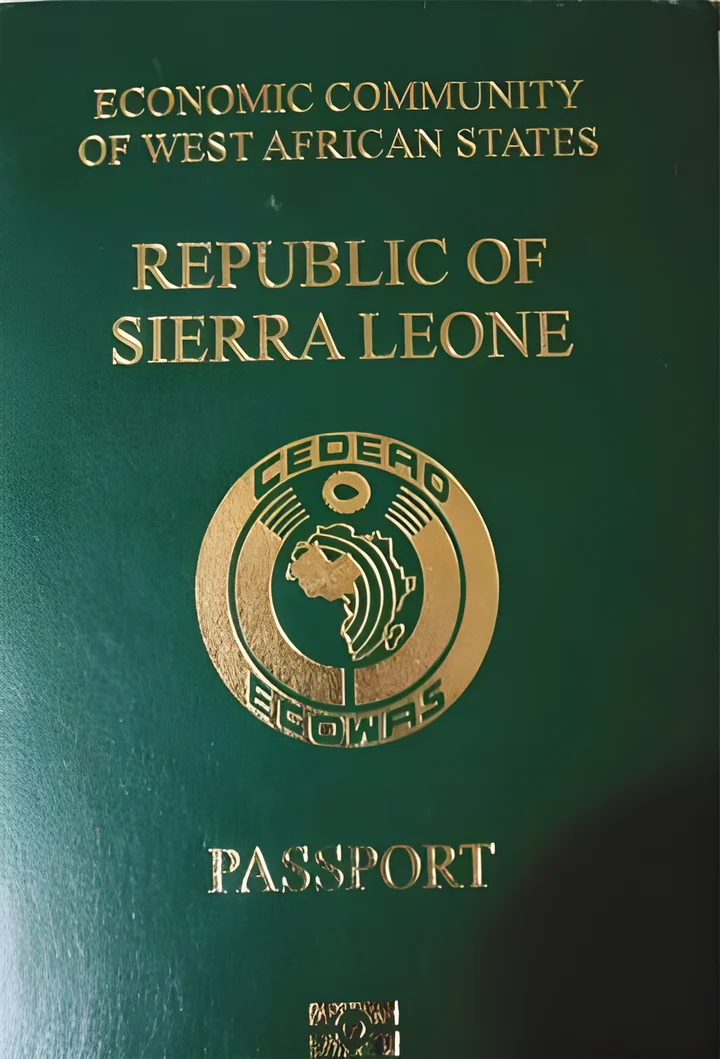
Sierra Leone shows most clearly how far a family application can reach. In the Fast Track you include your spouse, children, parents, grandparents and even siblings; children under 18, parents and grandparents cost 10,000 USD each, children aged 18 or over 20,000 USD each. Adding someone later to a submitted or completed application is generally not provided for. So plan the whole family into the first application, because that is exactly what the programme is built for. The details are on the page on the Sierra Leone programme.
In Türkiye, the foreign spouse and the minor or dependent children of the investor and the spouse belong in the application. The law goes one step further: if a parent acquires Turkish citizenship by decision of the authorities, the children in their custody acquire it too, provided the other parent consents (Art. 20(2)). If both parents acquire it together, their children become Turkish as well. The entry point is real estate from 400,000 USD; more on the page on the Turkish programme.
Which programme does the most for your family depends on how old your children are and whether your parents should come along. The family rules of every programme side by side are under Family, the total costs under Costs.
Children born after naturalisation
Many couples get their second passport before they have finished planning their family. That is no problem, as long as you know how the programme handles new arrivals. The Citizenship by Investment Units have their own rules for this, and they are mostly family-friendly.
Adding a child for a small fee
São Tomé and Príncipe has the clearest rule: for the newborn child of a citizen up to the age of one, the charge is only 500 USD. Other dependants cost 5,000 USD after approval, a spouse 10,000 USD. The Citizenship by Investment Unit states explicitly that under national law citizenship can also be passed on to future generations.
Saint Lucia allows a child born after the citizen's application to be added, and a spouse married after the application. Dependants who already met the requirements at the time of the original application can be added for up to five years afterwards.
Adding a child with no time limit
Dominica allows the main applicant to add a minor child, biological or adopted, after naturalisation, with no time limit from the day they themselves became a citizen. A child born ten years after your naturalisation is therefore covered just as much as one born in the first year.
The special case of grandchildren
Antigua and Barbuda goes furthest. Its Citizenship by Investment Unit expressly lists the future child of a dependent child among the dependants, in other words your grandchild. For children up to 5 the charge is 10,000 USD, for children aged 6 to 17 it is 25,000 USD. You can also add the future spouse of a dependent child, as long as the child is no older than 35 at the time of the application.
Grandchildren and further generations: where the chain holds and where it breaks
Whether your passport reaches beyond your children to grandchildren and great-grandchildren is decided by the nationality law of each country. A look at four legal systems shows how differently this is handled.
| Country | Passed on for births abroad | Limit |
|---|---|---|
| Türkiye | the child of a Turkish mother or a Turkish father is Turkish | no condition on place of birth or generation |
| Germany | the child of a German parent is German | generational cut-off, one-year deadline under section 4(4) StAG |
| United Kingdom | only if the British parent is not themselves British by descent | usually ends after the first generation born abroad |
| USA | if the US parent spent 5 years in the USA, 2 of them after turning 14 | the parent's time in the country before the birth |
United Kingdom: the chain ends after one generation
Under the British Nationality Act 1981, a child born outside the United Kingdom is British if the father or mother holds British citizenship "otherwise than by descent", in other words not themselves British only by descent (Section 2). There are exceptions, for instance for parents in Crown service who were recruited in the United Kingdom. For families with German and British roots, it is therefore worth looking closely at how each parent became British. How to get a British passport yourself is set out in the German-language article on applying for British citizenship.
USA: time in the country before the birth counts
If the parents are married, only one parent is a US citizen and the child is born outside the United States, that parent must, according to USCIS, have been physically present in the United States for at least five years before the birth, at least two of them after their 14th birthday. Someone who grew up abroad as the child of American parents and never lived in the United States for long may therefore not be able to pass on the US passport.
Passports through grandparents: Ireland and other countries
The flip side of generation limits is an opportunity: some countries also pass on their citizenship through grandparents. Whether your ancestors have long since given you a claim to a passport is shown in the article on citizenship by descent. For Ireland, the details of the Foreign Births Register are under Irish citizenship by descent through parents and grandparents.
Dual citizenship for children: what Germany allows today
For a long time, whether a child could keep two passports was a real family issue. A German who acquired a foreign citizenship by application used to lose German citizenship as a rule unless they held a retention permit. Certain dual nationals also had to choose one citizenship after their 21st birthday. This option requirement was laid down in section 29 StAG.
Since 27 June 2024, that is over. With the Act to Modernise Nationality Law (Gesetz zur Modernisierung des Staatsangehörigkeitsrechts), section 29 StAG was repealed and the choice no longer applies. And for you and your children: anyone who acquires another citizenship by application no longer loses German citizenship, whichever country it is. The Federal Office of Administration (Bundesverwaltungsamt) confirms that the retention permit procedure has therefore been dropped.
For the family chain, this is a breakthrough. You can acquire a second passport, pass it on to your children, and those children still keep their German passport. They in turn pass their citizenships on to their own children, each under its own law. What this means for your own situation is covered in Dual citizenship for Germans.
Three ways to give your family a passport
If you want to leave your children a second passport, you have three levers. They are not mutually exclusive; on the contrary, the strongest families combine them.
| Route | When it works | What your child receives |
|---|---|---|
| Descent | you have a claim yourself through parents or grandparents | the citizenship you prove, often including the right to pass it on |
| Place of birth | birth in a ius soli country | the citizenship of the country of birth |
| Investment | your application as main applicant | citizenship as a dependant in the application or by being added later |
The first route costs only time and documents. Check first whether a claim lies dormant in your family tree that you can activate and then pass on.
The second route is the passport you give your child at birth. If it is born in a country that grants citizenship by place of birth, it holds two citizenships from day one: that of the country of birth and, through you, German. How this works and which countries are suitable is explained in the article on birth tourism.
The third route is the fastest, and it takes you, your parents and your adult children along at once. It combines ideally with later naturalisation through residence: citizenship by investment secures you and your family immediately, and naturalisation after years of genuine residence comes on top. How the two fit together is shown in CBI and naturalisation. Up to what age your children can be included in the application is covered in depth in Second passport for children.
How to secure the chain for your descendants
A citizenship nobody can prove is of little use to your grandchildren. The chain is only as strong as the papers that document it. These steps make it hold:
- The whole family in the first application. Include every child the programme allows, adult ones too. With programmes that do not allow adding people later, this is the only way.
- Add newborns straight away. The fee often depends on age: in São Tomé and Príncipe the first year of life is the cheapest time, in Antigua and Barbuda the time up to the sixth birthday.
- The German one-year deadline in your calendar. If your child falls under section 4(4) StAG, you apply for registration in the birth register within one year of the birth.
- Keep documents in two places. Naturalisation certificate, birth certificates, marriage certificate and the passports of every generation belong in a family archive, as originals and as scans.
- Have passports issued for the children. A citizenship without a passport is a right on paper. A valid passport makes it usable when it counts.
Take care of these five points and you leave behind something no stock market crash and no government can simply take away: the freedom to choose the country you want to live in. Which programmes fit is shown in the programme comparison.
Frequently asked questions
Can citizenship be inherited?
Not in the sense of inheritance law, but in effect, yes. Citizenship passes to the child at birth if one parent holds it; this is called the principle of descent. Germany sets this out in section 4(1) StAG, Türkiye in Art. 7 of its Citizenship Law. How far the chain reaches is for each country to decide.
Do my children automatically get my second passport?
Not by themselves: children who are already alive when you apply are included in the application as dependants, usually up to 25 or 30 depending on the programme. Children born later can be added in many programmes: Saint Lucia accepts children born after the application, and São Tomé and Príncipe charges 500 USD for a newborn up to one year old. You can compare the family rules under Family.
Can I pass citizenship on to my grandchildren?
That depends on the country. Antigua and Barbuda expressly lists the future child of a dependent child as a dependant who can be added, in other words your grandchild. Turkish law ties citizenship to the parents alone, wherever the child is born. The United Kingdom and Germany, on the other hand, set limits for births abroad.
Can my child keep German citizenship and a second one?
Yes. Since 27 June 2024, a German no longer loses German citizenship when acquiring another one by application, and a retention permit is no longer needed. This also applies to children who receive a second passport through your application. The former option requirement, which made some dual nationals choose one citizenship after their 21st birthday, has been abolished as well. More under Dual citizenship for Germans.
What is the generational cut-off in German nationality law?
If the German parent was born abroad after 31 December 1999 and lives there, their child born abroad does not automatically become German. The chain still holds if the birth is reported for registration to a German register office or a German mission abroad within one year, or if the child would otherwise be stateless (section 4(4) StAG). All the details are in Born abroad: German citizenship for your child.
Does a US citizen always pass citizenship on to their child?
Not always. If the parents are married, only one parent is a US citizen and the child is born abroad, that parent must have spent at least five years in the United States before the birth, at least two of them after turning 14. That is what the USCIS Policy Manual says for births since 14 November 1986.
A passport that stays in your family
Together we look at which programme best takes your children, parents and future grandchildren along, and how you keep the German chain secure at the same time. In the consultation we plan for the whole family from the start.
Book a consultationSources
- Gesetze im Internet: section 4 Nationality Act (acquisition by birth)
- Gesetze im Internet: section 29 Nationality Act (repealed)
- Federal Office of Administration: modernised nationality law in force
- Mevzuat Bilgi Sistemi: Turkish Citizenship Law No. 5901, Art. 6, 7 and 20
- legislation.gov.uk: British Nationality Act 1981, section 2
- USCIS Policy Manual: Volume 12, Part H, Chapter 3, Children Born Outside the United States
- Citizenship by Investment Unit Antigua and Barbuda: Dependants
- Citizenship by Investment Unit Dominica: FAQs
- Citizenship by Investment Unit Saint Lucia: FAQs
- Citizenship by Investment Unit São Tomé and Príncipe: Investment Structure
- Citizenship by Investment Unit São Tomé and Príncipe: Eligibility Criteria
- sierraleonepassport.com: programmes, family and FAQ