
The short answer
If you were born after the 1992 Constitution came into force, you are Ghanaian from birth if a parent or grandparent is or was Ghanaian, whether you were born in Ghana or abroad. Ghana expressly allows dual citizenship, and since 27 June 2024 you no longer lose your German passport when you acquire another nationality. People of African descent without Ghanaian ancestors can apply for the Right of Abode, a permanent right to live in Ghana with no visa and no work permit, and after at least five years in the country for citizenship as members of the historic diaspora.
Citizenship by descent is not a favour granted to you. It is a right that already lies in your family and simply has to be confirmed. Which countries pass on their citizenship this way, and how far back they go, is set out in the overview of citizenship by descent. Ghana is among the most generous: two generations, birth abroad counts, dual citizenship expressly allowed. And for people of African descent without Ghanaian ancestors, Ghana has opened doors of its own that no European descent country offers.
Ghanaian citizenship: the routes at a glance
Ghana draws a sharp line between what you are from birth and what the state grants you. That line decides everything else.
| Route | For whom | What you get | Legal basis |
|---|---|---|---|
| Birth | Child or grandchild of a Ghanaian, including those born abroad | Citizenship automatically | Constitution, Art. 6 |
| Registration through marriage | Spouse of a Ghanaian | Citizenship on application | Constitution, Art. 7 |
| Historic diaspora | People of African descent after years in Ghana | Citizenship on application | Diaspora Affairs Office and Ministry of the Interior |
| Right of Abode | Former Ghanaians and people of African descent | Permanent right of residence, no passport | Ghana Immigration Service |
If you have Ghanaian parents or grandparents, only the first row matters to you: you do not apply for anything, you only prove it. The other three routes are open to everyone whose link to Ghana does not run through a Ghanaian ancestor.
Who is Ghanaian by birth?
The 1992 Constitution of the Republic of Ghana governs citizenship by birth in Article 6. For everyone born after it came into force, the rule is this: you become a citizen of Ghana on the day you are born, whether in Ghana or outside it, if one of your parents or grandparents is or was a citizen of Ghana.
Three things make this rule so strong:
- Two generations. Not only the children but also the grandchildren of a Ghanaian are Ghanaian. A Ghanaian grandfather is enough, even if your mother never held a Ghanaian passport.
- Birth abroad counts in full. Whether you were born in Accra, Hamburg or Toronto makes no difference.
- Is or was. It is enough that your parent or grandparent was Ghanaian at some point. Someone who later took another nationality still passes on their descent.
Article 6 adds two special cases. A child of no more than seven years found in Ghana whose parents are unknown is deemed a Ghanaian by birth. And a child of no more than sixteen years, neither of whose parents is Ghanaian, becomes a citizen on being adopted by a Ghanaian.
Why birth is worth more than any application
The Constitution allows the High Court, on application by the Attorney-General, to revoke citizenship that was acquired by fraud or false statements, or whose holder acts against the security of the state or the public interest. But this rule applies only to citizenship not acquired by birth. If you are Ghanaian from birth, you hold a right, not a permission. That is the core of a genuine second passport: a visa can be revoked, citizenship by birth cannot.
What you need to prove
You are a citizen automatically, but without papers there is no passport. You document the chain running from you to your Ghanaian ancestor: your birth certificate, your parent's birth certificate, where relevant your grandparent's, and documents showing that ancestor's Ghanaian citizenship, such as an old Ghanaian passport. Where records are missing or names turn up in different spellings, a systematic search helps, as described in genealogy for your passport.
Dual citizenship: Ghana and Germany
For families between Ghana and Germany, dual citizenship is the most important question, and today the answer is the same on both sides: you may hold both passports.
What Ghana says
Article 8(1) of the Constitution leaves no doubt: a citizen of Ghana may hold the citizenship of any other country in addition to their Ghanaian citizenship. Restrictions apply only to a handful of top posts. Anyone with two passports cannot become an ambassador or high commissioner, Secretary to the Cabinet, Chief of Defence Staff or head of a branch of the armed forces, Inspector-General of Police, Commissioner of Customs or Director of Immigration, plus any offices Parliament specifies by law. For everyone else, dual citizenship applies with no ifs or buts.
What Germany says
According to the Federal Foreign Office (Auswärtiges Amt), since 27 June 2024 acquiring a foreign nationality on your own application no longer leads to the loss of German citizenship. Before that, Germans needed a retention permit (Beibehaltungsgenehmigung) if the new passport did not come from the EU or Switzerland. The hurdle has fallen in the other direction too: § 10 of the Nationality Act (Staatsangehörigkeitsgesetz, StAG) requires five years of lawful habitual residence for naturalisation in Germany, but no longer requires you to give up your previous nationality. Ghanaians who naturalise in Germany therefore keep their Ghanaian passport. All the details of German law are in dual citizenship in Germany.
Children of Ghanaian parents born in Germany
Here the two legal systems meet, and your child wins twice. Under Article 6, the child is Ghanaian from birth. The child is German under § 4(1) StAG if one parent is German, and under § 4(3) StAG even if both parents are Ghanaian, provided one parent has had their lawful habitual residence in Germany for five years and holds an unlimited right of residence. Birth on German soil then becomes the second passport you give your child. How this works in other family situations is shown in dual citizenship by birth.
If you renounced in the past
Some Ghanaians renounced their Ghanaian citizenship in the past to obtain another passport. According to the Ghana High Commission in London, renunciation is irrevocable: it takes effect only once Ghana's Minister of the Interior has signed the declaration of renunciation, and the application must include an assurance from the new state or a copy of the new passport, with the High Commission citing the German one as an example. The Right of Abode exists for exactly this group: it is expressly open to Ghanaians by birth who lost their citizenship by acquiring a foreign one.
Right of Abode: living in Ghana for good
With the Right of Abode, Ghana reaches out to its own diaspora and to the African diaspora as a whole. It is not a passport, but it comes very close.
Who can get it
The Ghana Immigration Service names two groups:
- Ghanaians by birth, adoption, registration or naturalisation who lost their Ghanaian citizenship by acquiring a foreign one.
- People of African descent in the diaspora.
The status is granted by the minister responsible, on application and with the approval of the President.
What it gives you
With the Right of Abode you may live in Ghana permanently, enter without a visa and work or take up employment without a work permit. If you are building a house in Ghana, running a company there or planning to spend your retirement there, that is in practice all the freedom of a citizen, just without the passport. What everyday life in Ghana means for retirees, from the taxation of your pension to healthcare, is covered in Retiring in Ghana (in German).
What you submit
The documents differ by group. Former Ghanaians submit, among other things:
- Application form, two passport photos and a cover letter
- Letters of confirmation from two Ghanaians who are notaries, lawyers or senior public officials, with copies of their ID
- Copy of your passport with a current residence permit
- Certificate of renunciation, a CV in your own words and your birth certificate
- A recent police clearance certificate from Ghana and a copy of the Non-Citizen ID Card
People of African descent from the diaspora also submit evidence of their contribution to Ghana's economy: the value of shareholdings, bank statements, audited accounts, jobs created for Ghanaians. If you run a company, you file the company documents, audited accounts for the last three years, the social security returns for your Ghanaian staff and tax clearance certificates for yourself and the company covering six years, plus a medical report from the immigration service's clinic. Why the Ghana Card also decides everything when you open a bank account is explained in Opening a bank account in Ghana (in German).
Right of Abode or Indefinite Residence?
If you have no African descent and were never Ghanaian, you apply for Indefinite Residence Status. Any foreign national who wants to live in Ghana permanently can obtain it, and it likewise gives you the right to stay indefinitely, enter without a visa and work without a work permit, whether self-employed or employed. Spouses of Ghanaians have their own document list for it.
Ghanaian citizenship for the African diaspora
The Right of Abode is a right of residence. For people of African descent who have made Ghana their home, Ghana goes a step further and grants citizenship.
From Right to Return to Year of Return
According to the Diaspora Affairs Office in the Office of the President, the programme began on 28 December 2016: under the Right to Return project, 35 descendants of enslaved Africans from the Americas and the Caribbean received Ghanaian citizenship. In 2019 came the Year of Return, marking 400 years since the first enslaved Africans were taken to the Americas. The name alone shows how Ghana sees these grants: as a homecoming, not as the naturalisation of strangers.
The requirements
The Diaspora Affairs Office names five conditions:
- African descent, Ghanaian ancestry included.
- At least five years' residence in Ghana within the seven years before the application, the last twelve months without a break.
- No criminal record, plus character witnesses.
- Knowledge of an indigenous Ghanaian language and roots in Ghanaian culture.
- A significant contribution to Ghana's development.
The language requirement is no accident: for every registration as a citizen other than through marriage, Article 9 of the Constitution requires the applicant to be able to speak and understand an indigenous language of Ghana.
How the application works
You register your interest with the Diaspora Affairs Office, which collects the names together with the Ministry of the Interior and oversees the process. You then receive the criteria and guidelines, submit your documents, go through the background check and are notified if the decision is positive. Realistically, then, the route runs like this: first the Right of Abode, then the years in the country, then citizenship.
Applying for Ghanaian citizenship: marriage and naturalisation
If you have neither Ghanaian ancestors nor African roots, you have two routes.
Marriage. Under Article 7 of the Constitution, the spouse of a Ghanaian can apply to be registered as a citizen; Parliament sets the procedure. A husband must live in Ghana permanently to do so. The language requirement in Article 9 expressly does not apply to this route. For spouses who for now only want to live in Ghana, there is also Indefinite Residence Status, with its own document list.
Naturalisation. Under Article 9, Parliament decides by law how people with no constitutional entitlement can acquire citizenship. Expect language to count here as well: if you do not speak Twi, Ewe or Ga in everyday life, this route only opens up after many years in Ghana. How naturalisation and faster routes fit together sensibly is described in CBI and naturalisation.
Applying for a Ghanaian passport: what the embassy requires
According to the embassy in Berlin, Ghanaian passports are issued only to citizens, and a passport reflects your identity as established by documents on citizenship and identity. The embassy lists birth, marriage, naturalisation, registration, adoption or any other law as grounds of acquisition, and requires evidence in every case.
To apply in Germany, you need:
- proof of Ghanaian citizenship, in the original
- original identity documents, such as school certificates, a driving licence, or a work or student ID
- a copy of each original
Adults applying for a passport for the first time with only a birth certificate also submit copies of Ghanaian identity documents, such as the Ghana Card or a Ghanaian driving licence. You can apply for renewal six months before expiry, and for a new passport once all the pages are full.
For grandchildren whose parents never held a Ghanaian passport, the first application is the hardest. Allow time to close the chain of records before you go to the embassy.
Moving to Ghana: keep an eye on tax
If you move your residence to Ghana along with the passport, you should know how the country taxes income and companies; the Steueratlas page on Ghana (in German) gives you the overview. How passport, residence and tax work together is explained under Tax.
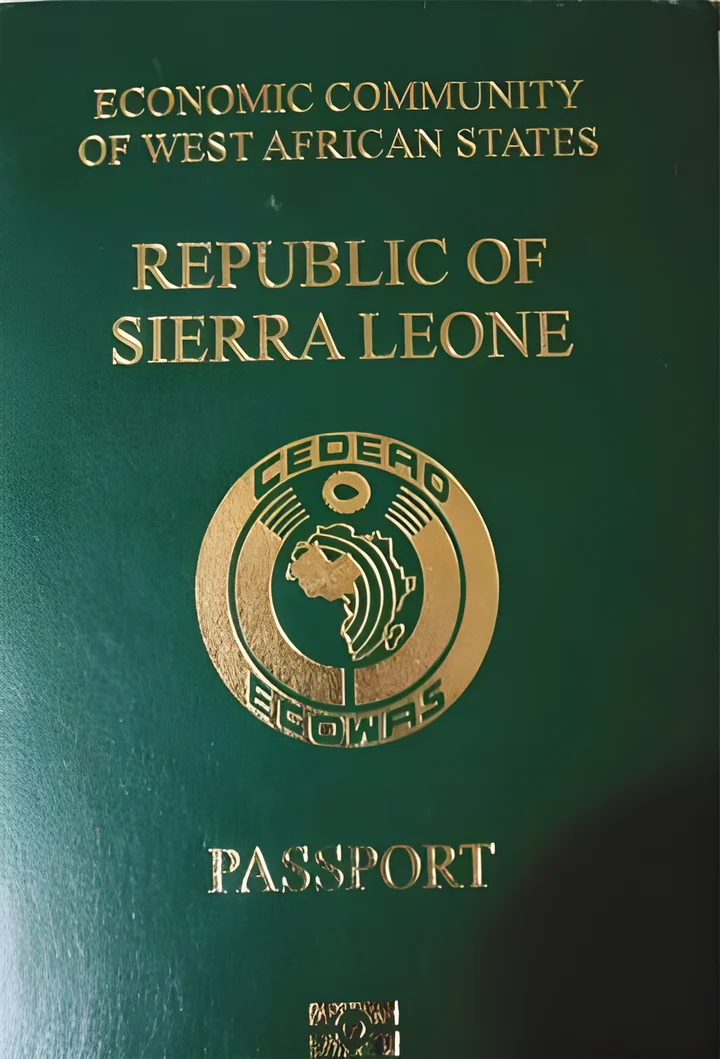
Ghana or Sierra Leone: the faster route to an African passport
Ghana's diaspora route is a route for people who want to live in Ghana: five years in the country, an indigenous language, a contribution to development. If you have African roots but do not want to move to West Africa, Sierra Leone offers an alternative with no relocation at all.
Through Heritage Citizenship, Sierra Leone grants citizenship to main applicants of African descent, with descent proven by a DNA test. The programme amount is 120,000 USD, plus dependants and due diligence. You can include your spouse, children, parents and grandparents. The process runs entirely remotely, with no trip to Sierra Leone, and usually takes 90-120 days from complete application to passport. Sierra Leone accepts multiple citizenships without restriction.
| Ghana: diaspora | Ghana: Right of Abode | Sierra Leone: Heritage | |
|---|---|---|---|
| Outcome | Citizenship | Right of residence | Citizenship |
| Residence | 5 years within 7 years | Living in the country expected | None, 100% remote |
| Proof | African descent, language, contribution | African descent or former Ghanaian | African descent via DNA test |
| Timeline | Years | After review | Usually 90-120 days |
The two routes do not rule each other out. If you acquire Sierra Leone's Heritage Citizenship today and later live in Ghana, you can still take the route there via the Right of Abode and the years in the country. All routes, fees and family rules are on the Sierra Leone page, and the story of the programme is in Sierra Leone: citizenship at a fixed fee. How your family comes along in programmes like this is shown in Family.
Frequently asked questions
How do I get Ghanaian citizenship?
Most people do not need to get it, because they already have it: under Article 6 of the Constitution, anyone whose parent or grandparent is or was Ghanaian is a citizen from birth, even if born abroad. Beyond that, there is registration through marriage to a Ghanaian, naturalisation and citizenship for the historic African diaspora. The overview of every descent country is in citizenship by descent.
Does Ghana allow dual citizenship?
Yes. Article 8 of the Constitution states expressly that a Ghanaian may also hold the citizenship of any other country. Dual citizens are barred only from a few top posts, such as ambassador, Secretary to the Cabinet, Chief of Defence Staff, Inspector-General of Police, Commissioner of Customs or Director of Immigration.
Am I Ghanaian if only my grandfather comes from Ghana?
If your grandfather is or was a Ghanaian citizen and you were born after the 1992 Constitution came into force, yes: Article 6(2) names parents and grandparents expressly. You do not have to apply for anything, you only have to be able to prove it, with the birth certificates of every generation and your grandfather's documents. How to build that chain is shown in genealogy for your passport.
Is the Right of Abode a Ghanaian passport?
No. The Right of Abode is a residence status: you may live in Ghana permanently, enter without a visa and work without a work permit. The embassy issues Ghanaian passports to citizens only. For the diaspora, the Right of Abode is often the first step, with citizenship following after years in the country.
Will I lose my German passport if I become Ghanaian?
No. Since 27 June 2024, acquiring a foreign nationality on your own application no longer costs you your German citizenship. Ghana does not require you to renounce either. So you may hold both passports, and as a Ghanaian from birth you do so in any case.
Can I get Ghanaian citizenship without African descent?
Through marriage to a Ghanaian you can apply for registration, though as a husband only if you live in Ghana permanently. For any other registration, the Constitution requires that you can speak and understand an indigenous language of Ghana, and in practice that takes years in the country. If you are looking for an African passport faster, look at the programmes in the comparison.
What do I need for a Ghanaian passport in Germany?
The Ghanaian embassy in Berlin requires proof of Ghanaian citizenship and identity documents, each as an original and a copy. Adults applying for the first time with only a birth certificate also present Ghanaian identity documents, such as the Ghana Card or a Ghanaian driving licence.
Is your second passport already in the family?
We go through your family history with you and check whether you are already Ghanaian through a parent or grandparent, or which route to diaspora citizenship is open to you. If neither fits, we show you the route that gets you to an African passport faster.
Book a consultationSources
- Constitution of the Republic of Ghana 1992 (rev. 1996), Articles 6-9
- Ghana Immigration Service: Right of Abode
- Ghana Immigration Service: Indefinite Residence Status Generally
- Diaspora Affairs Office, Office of the President: Citizenship Interest for Historic Diasporans
- Embassy of Ghana, Berlin: Passport Application
- Ghana High Commission, London: Renunciation of Citizenship
- German Federal Foreign Office: How do you lose German citizenship?
- Nationality Act (Staatsangehörigkeitsgesetz), section 4: acquisition by birth
- Nationality Act (Staatsangehörigkeitsgesetz), section 10: naturalisation