
The short answer
A second passport doesn't protect your wealth by hiding it. It protects it by making you mobile: you're a citizen of a second state, free to enter, live and hold accounts there, and your family no longer depends on a single country. Since 27 June 2024, Germans keep their German passport when they take another. For tax, what counts is residence, not the passport, and accounts are still reported. That's why the second passport is the first flag in your Plan B, the one your account, residence and structure are built on.
If you want to protect your wealth, the first question is usually: where is it, and who can get at it? Many people ask the second question too late: who am I, and which state gets to make decisions about me? A second passport gives that question a new answer. That's why it isn't an extra alongside your wealth plan, but its first flag in flag theory.
What does an additional citizenship have to do with your wealth?
At first glance, not much. A passport isn't an account, a foundation or a gold bar. At second glance, everything hinges on it.
Every bank in the world wants to know who you are. Under § 12 of the Money Laundering Act (Geldwäschegesetz, GwG), the identity of a natural person must be verified with a valid official photo ID, and recognised foreign passports qualify. So every account, every brokerage account, every company formation and every land registry entry starts with an identity document. If you hold only one, you have only one key to all of it.
Then there's what a passport means beyond the document: a right. A visa or residence permit is a permission that is granted, renewed or refused. Citizenship is a status. As a citizen of a second country you may enter, stay, work, run a company and open an account there, without anyone asking whether you're welcome. For your wealth, that means there's a second country where you aren't a guest, but where you belong.
And there's your family. Wealth meant for your children and grandchildren is best protected when the people who will inherit it also have more than one door. Citizenship can be passed on; a residence permit, as a rule, cannot.
Concentration risk: when passport, account and residence hang on one state
Wealth managers warn against concentration risk in a portfolio: too much in one stock, one sector, one currency. Yet for many Germans the biggest concentration risk lies outside the portfolio.
| Building block | Typical situation | What a second passport changes |
|---|---|---|
| Citizenship | German only | a second country where you're a citizen |
| Travel document | one passport | a second document if your first passport is lost, stolen or held abroad |
| Residence | Germany | the right to live in the passport country without a visa |
| Accounts | German banks, perhaps one abroad | an account as a citizen in the passport country |
| Family | everyone on one passport | spouse and children in the same application |
Asset protection doesn't just spread assets, it spreads dependencies too. If you split your money across three countries but are a citizen of only one, you've merely moved the dependency. Why a second passport works like insurance in an emergency, insurance you hopefully never need, is worked through in the second passport as insurance.
When the state goes after your passport
There's one lever almost nobody thinks of in asset protection: the passport itself.
Under § 7(1) no. 4 of the Passport Act (Passgesetz, PassG), a passport must be refused if certain facts justify the assumption that the applicant intends to evade their tax obligations. Under § 8 PassG, a passport already issued can be withdrawn on the same grounds. The law requires facts that justify such an assumption, not a final judgment. A dispute with the tax office can therefore hit your freedom of movement directly.
Sebastian Sauerborn personally knows at least four people whose German passport was retained or declared invalid over tax matters.
A second lever concerns men. § 3(2) of the Compulsory Military Service Act (Wehrpflichtgesetz, WPflG) requires males from their 17th birthday to obtain a permit from the Bundeswehr careers centre (Karrierecenter der Bundeswehr) if they want to leave Germany for more than three months. Since 17 April 2026, the Federal Ministry of Defence has exempted everyone concerned from this requirement by general order (Allgemeinverfügung). The lever still lies with the state: the ministry can lift the exemption at any time with a single order, without the Bundestag, and from then on a person liable for military service whose birth year is already being registered must be refused a passport under § 7(1) no. 7 PassG if he wants to leave for more than three months without the required permit. What this means for you and your sons is set out under military service.
A second passport doesn't overturn any of these decisions, and it isn't a way around a passport withdrawal or an exit ban. It's something more fundamental: your freedom of movement no longer depends solely on a single state. You have a second country that counts you as a citizen, and a second travel document in case your German passport is lost, stolen or held abroad. How the Passport Act works in detail is described in passport withdrawal.
Expropriation in a sovereign default or banking crisis: what protects your deposits
The fear of someone reaching for your savings has a concrete core: what happens to your balances when a bank runs into trouble.
The statutory deposit guarantee in Germany has a clear limit. Under § 8(1) of the Deposit Guarantee Act (Einlagensicherungsgesetz, EinSiG), the compensation claim is capped at the equivalent of 100,000 euros, the so-called coverage level. If a bank is resolved, the Recovery and Resolution Act (Sanierungs- und Abwicklungsgesetz, SAG) provides for creditor participation, the bail-in: the bank's liabilities can be converted into equity or written down. Under § 91(2) no. 1 SAG, only covered deposits up to the coverage level under § 8 EinSiG are exempt. Anything above that isn't protected.
That leads to a simple rule: larger sums don't belong in one account, at one bank or in one single jurisdiction. How bail-in, deposit guarantees and reporting duties for foreign accounts fit together is explained in the background on CRS and bail-in at FreedomBanking Plus.
Where the second passport comes in
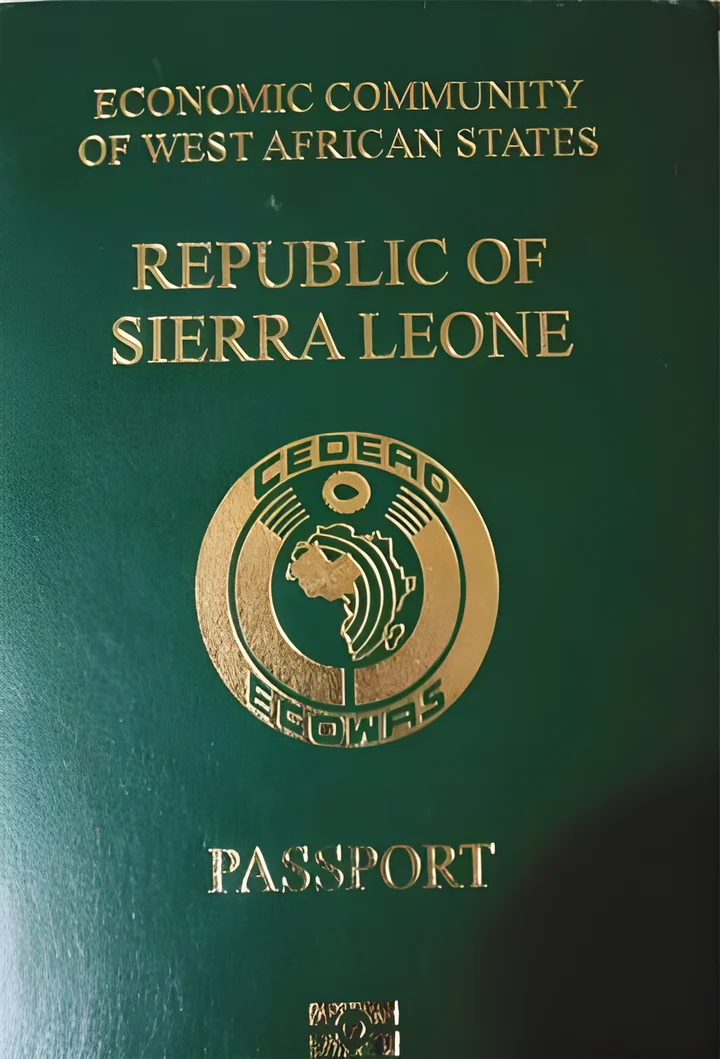
As a citizen you're no stranger in the passport country, not at the bank either. Sierra Leone makes this concrete: after naturalisation, a personal bank account in Sierra Leone can be opened for USD 1,950, for co-applicants too, and the main applicant can optionally receive a company with a business bank account, free of charge in the first year. Passport, account and company then come from one country and fit together.
Second citizenship and wealth: what the passport can and can't do
Few topics breed as many misunderstandings as passports and money. Here, clarity is the best protection.
The passport doesn't hide an account
Under the Common Reporting Standard, banks ask you for a self-certification to determine your tax residence. The Federal Central Tax Office puts it this way: citizenship alone does not at the same time determine tax residence; what matters is your home or habitual abode. More than 90 states exchange the data. If you're resident in Germany, you're reported to Germany, no matter which passport you show the bank.
That isn't a weakness of the second passport, it's its strength. Asset protection with a second passport is legal, transparent and robust. It works because it rests on a right, not on a hiding place.
The passport doesn't decide your tax
For tax purposes in Germany, what counts is residence, not nationality. A second passport alone doesn't change your tax liability. What it does is make a new residence livable, because you can stay in the passport country without a visa and without renewals. The connection is explained in passport and tax, the basics under Taxes.
Your German passport stays
For Germans, the most important foundation has been settled since 27 June 2024. The Federal Office of Administration (Bundesverwaltungsamt) states that multiple citizenship is now generally accepted in Germany; taking another nationality no longer costs you your German one. So you're not giving anything up, you're adding on.
Money that stays wealth: property, contribution, escrow
If you think about asset protection, you'll also look at the money that goes into the second passport itself. Here the programmes differ clearly. Some require a contribution to a state fund, others a property that can be sold again after a holding period.
| Programme | Route | Amount from | What happens to the money |
|---|---|---|---|
| Sierra Leone | Solo Entrepreneur | USD 95,000 | programme fee held in escrow until naturalisation |
| St Kitts and Nevis | Sustainable Island State Contribution | USD 250,000 (up to four people) | contribution to the state |
| Dominica | approved real estate project | USD 200,000 plus USD 75,000 government fee | property, held for three years from naturalisation, five if sold to a citizenship by investment applicant |
Sierra Leone is the fastest and leanest route. The Solo Entrepreneur route from USD 95,000 is meant for single applicants without dependants; with family, the way runs through Fast Track from USD 140,000. The programme fee sits in an escrow account until naturalisation. If naturalisation can't be completed, it's refunded in full (100 %), except for the filing and processing costs such as due diligence, notary and lawyer. The application runs entirely remotely, and from complete application to passport usually takes 90-120 days. Sierra Leone accepts multiple citizenship without restriction.
If you're also looking for a tangible asset, Sierra Leone offers a route without a passport as well: permanent residence is available from USD 60,000, including a 1 kg gold investment stored at the Bank of Sierra Leone, the country's central bank. It can later be upgraded to citizenship.
St Kitts and Nevis requires a Sustainable Island State Contribution of USD 250,000 for the main applicant or a family of up to four, with no travel or residence requirement. Each additional dependant costs USD 25,000 under 18 and USD 50,000 from 18.
Dominica offers the real estate route from USD 200,000 in an approved project. On top comes a government fee of USD 75,000 for the main applicant, or USD 100,000 with up to three dependants. The property is held for three years from naturalisation, after which you can sell it; to a buyer who uses it to apply for citizenship themselves, only after five years. So the purchase price isn't spent, it's invested.
How contribution, property and government bonds work in detail is explained in donation, property, government bond. Every open programme with fees and timelines is in the comparison, the total costs under Costs.
Passing wealth and citizenship on to the next generation
Asset protection thinks in generations. A will settles who gets what. Citizenship settles where your heirs can live, work and manage what they inherit.
Most programmes take the family on board from the start. In Sierra Leone, the Fast Track includes spouses, children, parents, grandparents and siblings in the same application, children under 18 at USD 10,000 each. With St Kitts and Nevis, the base contribution covers up to four people.
That makes the second passport part of the family's wealth. It's an asset that doesn't swing with the stock market and that no bank can close on you. How citizenship passes to children and grandchildren is shown in passing on citizenship; who can join the application is set out under Family.
Your Plan B in the right order
A Plan B for your wealth has three levels, and the order is what counts.
First the passport
The passport is the flag that stays. Accounts can be closed, residence permits left unrenewed, structures reassessed. Citizenship stays. Because every account and every company starts with an identity document, the passport comes first. With Sierra Leone it's usually in your hands after 90-120 days, with the Caribbean programmes after a few months.
Then account and residence
On top of the passport come accounts in several jurisdictions and, if you want one, a residence abroad. This is where care matters: where you're resident decides your tax and what gets reported. The passport gives you the freedom to make that decision yourself.
Then the structure
Last comes the structure that carries your wealth: companies, foundations, property in several countries. Which jurisdictions and protective structures are worth considering is shown in asset protection outside the EU at Asset Protection Plus. Thinking passport, account and wealth through together over two days: that's what the seminar Schweizer Taschenmesser für Deinen Plan B in Zurich is for (held in German).
Wealth held in three countries, and a person who is a citizen of two: that's the Plan B that holds. You take the first step with citizenship.
Frequently asked questions
Does a second passport protect my wealth?
It protects it in its own way: it makes you mobile. With a second nationality you have a second country where you can enter, live and hold accounts, and your family no longer depends on a single state. Accounts, structures and jurisdictions are built on top of that; without the passport they lack a foundation.
Will my foreign account stop being reported once I have a second passport?
No. Under the Common Reporting Standard the bank asks for your tax residence, and Germany's Federal Central Tax Office (Bundeszentralamt für Steuern) makes clear that citizenship alone does not determine tax residence. If you're resident in Germany, you're reported to Germany, whichever passport you show. Asset protection with a second passport is legal and transparent, not covert.
Can an additional citizenship save me tax?
Not through the passport alone. In Germany, tax liability follows your home and habitual abode, not your nationality. But a second passport makes it easier to actually live a new residence, because you can stay in the passport country without a visa. More under passport and tax and Taxes.
Will I lose my German passport if I take a second citizenship?
No. Since 27 June 2024, Germany generally accepts multiple citizenship, and taking another nationality no longer costs you your German one. Sierra Leone accepts multiple citizenship without restriction, so you keep both passports.
What happens to my deposits if a bank gets into trouble?
Under § 8 of the Deposit Guarantee Act (Einlagensicherungsgesetz), the statutory deposit guarantee in Germany covers up to the equivalent of 100,000 euros per depositor. If a bank is resolved, the Recovery and Resolution Act (Sanierungs- und Abwicklungsgesetz) allows its creditors to be called on (bail-in); under § 91, only covered deposits up to that limit are exempt. That's why anyone holding larger sums spreads them across several banks and jurisdictions, see background on CRS and bail-in.
Which second passport works best for asset protection?
One that allows multiple citizenship, comes quickly and doesn't require residence. Sierra Leone is usually done in 90-120 days, fully remote, with the programme fee held in an escrow account. St Kitts and Nevis and Dominica offer property routes, where the money you invest is kept as a tangible asset. All programmes are set side by side in the comparison.
Can my family join the same application?
With most programmes, yes. In Sierra Leone, the Fast Track includes spouses, children, parents, grandparents and siblings, while the Solo Entrepreneur route is meant for single applicants without dependants. With St Kitts and Nevis, the base contribution covers up to four people. You'll find the rules of every programme under Family.
Your wealth is diversified. Is your citizenship?
We'll look with you at which second passport fits your wealth, your family and your residence, and in what order passport, account and structure go into your Plan B.
Book a consultationSources
- Passport Act (Passgesetz): § 7 refusal of a passport (gesetze-im-internet.de)
- Passport Act (Passgesetz): § 8 withdrawal of a passport (gesetze-im-internet.de)
- Compulsory Military Service Act (Wehrpflichtgesetz): § 3, permit for stays abroad (gesetze-im-internet.de)
- Federal Office of Administration (Bundesverwaltungsamt): retaining German citizenship
- Deposit Guarantee Act (Einlagensicherungsgesetz): § 8 scope of the compensation claim (gesetze-im-internet.de)
- Recovery and Resolution Act (Sanierungs- und Abwicklungsgesetz): § 91, liabilities eligible for bail-in (gesetze-im-internet.de)
- Federal Central Tax Office (Bundeszentralamt für Steuern): Common Reporting Standard, self-certification
- Money Laundering Act (Geldwäschegesetz): § 12, identity verification (gesetze-im-internet.de)
- Sierra Leone: sierraleonepassport.com, programmes and calculator
- Sierra Leone: sierraleonepassport.com, FAQ
- Citizenship by Investment Unit St Kitts and Nevis: Sustainable Island State Contribution
- Citizenship by Investment Unit Dominica: Real Estate
- Federal Ministry of Defence: general exemption from the permit requirement under § 3(2) WPflG (BAnz AT 16.04.2026 B3)