
The short answer
A second passport gives you, as someone who has moved abroad, a permanent right alongside a residence permit that is only a temporary permission. Since 27 June 2024 you no longer lose German citizenship when you acquire another one on application, and living abroad is not a ground for loss. For tax, what counts is residence and habitual abode, not the passport. Programmes such as Dominica, Grenada, São Tomé and Príncipe or Sierra Leone do not require you to move to the passport country.
A passport is a right, not a permission. For anyone who has moved abroad, that sentence isn't theory, it's daily life. Everything that carries your new life abroad rests on permissions: the visa, the residence card, the work permit, next year's renewal. The only thing that truly belongs to you is your citizenship. That is why, in flag theory, residence and passport are two separate flags, and anyone moving abroad should plant both deliberately instead of changing one and forgetting the other.
Why a second passport is worth so much when you move abroad
When you emigrate, your life shifts to a country whose citizen you are not. You live there as a guest, on the basis of a permit that an authority granted you and can, under certain conditions, refuse again. At the same time, your identity as a citizen still hangs on a single state, which is now far away. Four reasons make a second passport especially valuable in this situation.
A right alongside the permission. Residence permits are issued for a limited time and tied to income, insurance or an investment. If your host country changes its rules, your status changes with them. Citizenship isn't renewed. It is yours.
A second state that counts you as its citizen. With two passports you have two countries you can always enter and two states whose embassies and consulates you can turn to.
Travel without a gap. Abroad, your passport is your most important document. If it is at the embassy for renewal, or lost or stolen, with only one passport you are left with no travel document at all. With a second one, you stay mobile.
A plan that fits your family. Many programmes include spouses, children and parents in the same application. The whole family gets a shared second foundation, no matter where you happen to live.
The idea behind it is simple: your residence can change as often as your life demands. The passport is the foundation that comes with you on every move. A second passport shows its full strength in combination with the right residence and the right bank account. What that combination looks like in practice is told in the first-hand account Plan B with a second passport, account and residence (in German).
Residence and passport: two flags, two jobs
Many people moving abroad lump residence and passport together. Yet they do completely different jobs, and that is exactly why it pays to plan them separately.
| Question | Residence abroad | Second citizenship |
|---|---|---|
| What is it? | a permission to live in the country | a right to be a citizen |
| Who decides? | the immigration authority of the host country | the state, once, then it's yours |
| How long does it last? | for a limited time, with renewals | permanently |
| What does it govern? | your stay, often tax liability as well | entry, protection, travel document |
| Does it pass to your children? | only through their own applications | depending on the country, by descent |
Tax follows your residence, not your passport
The most important difference concerns tax. Under section 1(1) of the Income Tax Act (EStG), individuals have unlimited tax liability in Germany if they have a residence or their habitual abode there. Nationality plays no part. Germans who emigrate and genuinely give up their German residence leave unlimited tax liability behind, even though they remain German. Conversely, a Caribbean or African passport does not make you liable to tax in the passport country simply because you hold it. The big exception is the United States, which taxes its citizens worldwide. The principle is explained in detail in passport and tax, and you will find the overview under tax.
As for residence itself: anyone who moves out of their home and does not take up a new one in Germany must deregister within two weeks of moving out, under section 17(2) of the Federal Registration Act (Bundesmeldegesetz). Deregistration is only one piece, though. Which deadlines apply, what you need the deregistration certificate for, and why it does not end your tax liability on its own are explained in the guide deregistering your German residence when you move abroad (in German).
None of this touches the passport. It is the flag you plant before you move the others.
Do you lose German citizenship if you live abroad?
Many people moving abroad ask themselves this, and the answer is clear: no. Section 17(1) of the Nationality Act lists the grounds on which German citizenship is lost: renunciation, joining the armed forces or a comparable armed group of a foreign state, actively taking part in combat for a terrorist organisation abroad, and the withdrawal of an unlawful administrative act. Living abroad is not on that list. You can spend decades abroad and remain German.
Since 2024: your second passport no longer costs you the first
Acquiring another nationality is no longer a risk either. The Federal Office of Administration states that the modernised nationality law largely came into force on 27 June 2024. Since then, acquiring another nationality on application no longer leads to the loss of German citizenship, and that holds for every nationality in the world. The procedure for a retention permit (Beibehaltungsgenehmigung) has been abolished.
For you, having moved abroad, this means: you can acquire a second passport, live abroad and later even naturalise in your host country without giving up your German passport. All the details are in the guide to dual citizenship for Germans.
Conscription: a duty that travels with you
German men take one obligation abroad with them: section 3(2) of the Compulsory Military Service Act (Wehrpflichtgesetz, WPflG) requires men aged 17 and over to obtain approval from the responsible Bundeswehr careers centre (Karrierecenter) if they want to leave Germany for more than three months. Since 17 April 2026 the Ministry of Defence has suspended this requirement for everyone by general order, but it can bring it back at any time with a single order, without a new law. What this means in concrete terms for people moving abroad is explained in the article on conscription. A second passport does not change this obligation, but it belongs to a plan in which you don't depend on a single state.
Your German passport abroad: renewal, loss, waiting times
As long as you live in Germany, renewing your passport means an appointment at the local citizens' office (Bürgeramt). Abroad, things look different. Passport matters abroad are the responsibility of the Federal Foreign Office and the missions abroad it designates. The Federal Foreign Office describes the process like this: as a rule, the responsible mission is the one in whose consular district you live. Not every mission issues passports, and some honorary consuls accept applications for an additional fee and forward them.
Two points are decisive when you live abroad. First, as a rule you must apply for the passport in person, because fingerprints are taken; being represented by someone with power of attorney is generally not possible. If you live in a large country far from the nearest embassy, plan a trip for it. Second, biometric passports are produced centrally in Germany, and according to the Federal Foreign Office several weeks pass between application and handover. Some missions work with appointment systems, which can make the wait longer.
What your second passport does in the meantime
During those weeks, with only one passport you may well be unable to travel. With a second passport, you can. The same applies if your German passport is lost or stolen: the second passport is then the lawful way to keep travelling while the replacement is under way. What exactly to do in case of loss is described in lost passport abroad. How to handle the renewal at the mission itself, with documents, fees and processing times, is explained in the guide renewing your passport abroad (in German).
Only one thing matters: at every border you show the appropriate passport and answer every question about your nationalities truthfully, including on the US ESTA form. How to travel cleanly with two passports is covered in travelling with several passports.
Which second passport suits people moving abroad
When you move abroad, you already have a destination country for your residence. A second passport that forces you to move to a third country as well is therefore rarely a good fit. What you want are programmes without a residence requirement, with few or no trips, and with multiple citizenship allowed, so that your German passport stays.
| Programme | Residence or visit | Interview | Timeline according to the source |
|---|---|---|---|
| Sierra Leone | no travel, 100% remote | oath of allegiance via Zoom | usually 90-120 days to the passport |
| Dominica | no residence before or after naturalisation | from age 16, mostly virtual | first response within three months |
| Grenada | no visit before, during or after the application | online | approval within 60 working days |
According to its Citizenship by Investment Unit, Dominica allows dual citizenship and does not require you to live there to keep it. According to its Investment Migration Agency, Grenada also allows dual citizenship. São Tomé and Príncipe, too, requires no stay or relocation either during or after the application, according to its Citizenship by Investment Unit, and approval there usually comes after around two months. You will find the government contributions and fees of all programmes under costs, and the direct comparison by timeline, family and travel freedom under comparison.
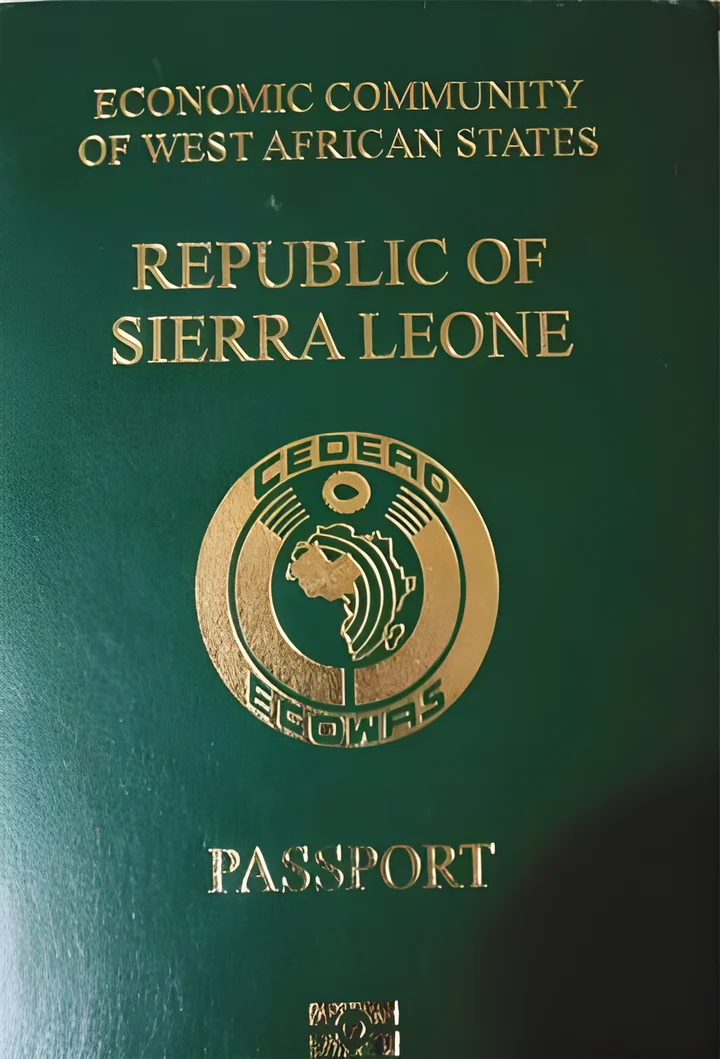
Sierra Leone: the passport you renew from anywhere
For people who have moved abroad, Sierra Leone has an advantage that is easily overlooked. According to the documents of sierraleonepassport.com, the procedure runs entirely remotely: no trip to Sierra Leone, no embassy appointment, and the oath of allegiance is notarised via Zoom. The biometric passport is currently valid for five years and is renewed digitally, without you having to travel. Anyone who lives abroad and knows how much time a passport renewal at a distant mission can cost will understand what that is worth.
Sierra Leone accepts multiple citizenship without restriction. The Fast Track includes spouses, children, parents, grandparents and siblings, so the whole family comes along in one application. From a complete application to the passport, it usually takes 90-120 days. For the Schengen area you will usually need a visa with this passport, but that is what your German one is for.
From residence to naturalisation: both routes in parallel
Your new residence is more than a place to live. Many countries naturalise foreigners after a few years of lawful residence. Naturalisation is the route to a second passport without an investment, and in the long run often the better one, but it takes years and demands real presence, usually language skills and an unbroken residence history. Which countries make this possible, and how quickly, is shown in the guide to naturalisation abroad.
This is precisely where many people moving abroad go wrong: they wait for naturalisation and until then stand there with a residence permit and a single passport. Yet citizenship by investment and naturalisation are not an either-or. A second passport through investment gives you a second citizenship within a few months, and your years in the host country keep counting towards your naturalisation all the same. Why you should pursue both routes in parallel is explained in CBI and naturalisation: the investor passport buys you the time that naturalisation needs.
In the end you hold three citizenships: your German one, the one from the programme and, if your host country allows multiple citizenship, that of your new home. Each of them is a right, not a permission.
Children abroad: the passport you give them
If you move abroad with your family or have children abroad, you should know a rule that surprises many. Under section 4(4) StAG, a child born abroad does not acquire German citizenship by birth if the German parent was themselves born abroad after 31 December 1999 and has their habitual abode there, unless the child would otherwise be stateless. This consequence does not apply if registration of the birth in the German birth register is applied for within one year of the birth; it is enough for the application to reach the responsible German mission abroad in time. If both parents are German, the consequence only applies if both meet the conditions.
If you yourself were born in Germany, this does not affect you yet: your children become German even if they are born abroad. It becomes an issue as soon as your children born abroad become parents there themselves. Then the deadline decides whether your grandchildren get a German passport, and whoever knows it and meets it secures that passport for generations.
A second passport that includes your children from the start gives the family a second foundation that is not tied to deadlines and places of birth. Up to what age children can be included in the programmes is explained in second passport for children, and all family rules at a glance are under family. And anyone who gives birth in a country with birthright citizenship passes that country's citizenship straight on to the child: being born on foreign soil is the passport you give your child from day one. More in the guide to birth tourism.
Moving abroad with a second passport, in the right order
Thinking about residence and passport together means, above all, choosing the right order. This sequence has proven itself.
- Secure the passport first. The second passport is the only flag that is a right and not a permission. It carries all the others, because residence permits are entered in a passport and banks identify you by your passport.
- Choose your destination to fit your life. Climate, costs, schools, healthcare and tax decide where you live. An overview of possible destinations is offered by where to move abroad (in German).
- Apply for the residence permit. It governs where you may live, and it is the starting point for a later naturalisation.
- Take care of your obligations in Germany. Deregistration within two weeks of moving out, clarifying your tax liability and, for men aged 17 and over, a look at the approval requirement under the Compulsory Military Service Act for stays of more than three months, which has been suspended since 17 April 2026 but can come back at any time.
- Use your years in the host country for naturalisation. Document your residence carefully from the very beginning, and that route will also be open to you in the end.
You will find the programme process step by step under process, and the reasons for a second passport at a glance under why a second passport.
Whether the planning pays off often only shows years after the move: an authority in your host country changes the rules, your German passport happens to be at the embassy, or your family suddenly wants to go somewhere else. That is when you see whether you merely changed your residence, or built your life on two foundations.
Frequently asked questions
Do I even need a second passport when I move abroad?
You don't need one to emigrate, but it makes your move far more stable. Your residence permit in the new country is a permission that comes with conditions and has to be renewed. A second passport is a right that stays, and it gives you a second state you can rely on. How residence and passport work together in flag theory is explained in that guide.
Do you lose German citizenship if you live abroad?
No. Section 17 of the Nationality Act (Staatsangehörigkeitsgesetz, StAG) lists the grounds for loss: renunciation, joining foreign armed forces or a comparable armed group, taking part in combat for a terrorist organisation abroad, and the withdrawal of an unlawful administrative act. Living abroad is not one of them. And since 27 June 2024, acquiring another nationality on application no longer leads to loss either.
Do I have to live in the country of my second passport?
With many programmes, no. According to its Citizenship by Investment Unit, Dominica requires no residence either before or after naturalisation, Grenada no visit before, during or after the application, and São Tomé and Príncipe no stay or relocation. Sierra Leone runs entirely remotely. You live where you want, and the passport stays yours.
Does a second passport make me liable to tax in the passport country?
Not because of the passport alone. Under section 1 of the Income Tax Act (Einkommensteuergesetz, EStG), unlimited tax liability in Germany depends on residence or habitual abode, and the same principle applies in most countries. The big exception is the United States. More on this under passport and tax.
Can I renew my German passport abroad?
Yes. Passport matters abroad are handled by the Federal Foreign Office through its missions abroad. As a rule you apply in person, and according to the Federal Foreign Office several weeks pass between application and handover. A second passport keeps you able to travel during that time.
Do my children born abroad automatically get a German passport?
If you yourself were born in Germany, your child becomes German even when born abroad. If, on the other hand, the German parent was born abroad after 31 December 1999 and lives there, the child only acquires German citizenship under section 4(4) StAG if registration of the birth is applied for within one year. A second passport that includes the children gives the family a second foundation. More under second passport for children.
Does a second passport replace the residence permit in my new country?
No. Where you live is governed by the residence law of your destination country, and for that you need the right permit there. The second passport is the foundation underneath: it stays when visa rules change, and it is a passport in which a new residence permit can be entered.
Your new life deserves more than a permission
Together we work out which second passport fits your plan to move abroad, which members of your family come along, and in which order passport and residence give you the most.
Book a consultationSources
- Bundesverwaltungsamt (German Federal Office of Administration): modernised nationality law in force
- Nationality Act (Staatsangehörigkeitsgesetz), section 17, grounds for loss (gesetze-im-internet.de)
- Nationality Act (Staatsangehörigkeitsgesetz), section 4, acquisition by birth (gesetze-im-internet.de)
- Income Tax Act (Einkommensteuergesetz), section 1, tax liability (gesetze-im-internet.de)
- Federal Registration Act (Bundesmeldegesetz), section 17, registration and deregistration (gesetze-im-internet.de)
- German Federal Foreign Office: passports and identity cards abroad
- Compulsory Military Service Act (Wehrpflichtgesetz), section 3, content and duration of military service (gesetze-im-internet.de)
- Citizenship by Investment Unit Dominica: FAQs
- Dominica: S.R.O. 8 of 2024, Citizenship by Investment Regulations (Regulation 8, Notification)
- Investment Migration Agency Grenada: FAQs
- Citizenship by Investment Unit São Tomé and Príncipe: FAQ
- Sierra Leone: sierraleonepassport.com, FAQ
- German Federal Ministry of Defence: general exemption from the approval requirement under section 3(2) WPflG (BAnz AT 16.04.2026 B3)