The short answer
In retirement, a second passport gives you a permanent right instead of a residence permit that depends on income, medical certificates and renewals. Since 27 June 2024, Germans no longer lose their citizenship when they acquire another one by application: your German pension and your German passport stay exactly as they are. Programmes such as Sierra Leone, Dominica and Grenada do not require you to move, and many include parents and grandparents in the application.
A passport is a right, not a permission. For no one does that sentence ring truer than for people in retirement. While you work, visas come through your employer, a company or an investment. Once you retire, you face authorities who mainly want to know one thing: whether your income, your health and your insurance will hold up for another year. A second passport sits outside that test: it is not granted anew every year, it belongs to you. That is why, in flag theory, it is the first flag you plant, and in retirement it is the one that carries you the longest.
Why a second passport matters most in retirement
Retirement changes the question you put to a passport. At forty it was about where you could travel for business. At sixty it is about where you want to live, how you get there and what happens when life does not go to plan. Four things make a second passport so valuable at this stage of life.
A right instead of an annual review. Residence permits for retirees are issued for a limited time and tied to conditions. Citizenship is not renewed: it belongs to you.
A second embassy. With two citizenships, two states count you as their citizen. Abroad, that is more than a detail. What it means in practice is explained in two embassies instead of one.
A legacy. Most retirees plan not only for themselves but for their children and grandchildren. A passport you acquire today can pass down the generations. It is an asset that is not traded on any stock exchange.
A Plan B that asks nothing of you day to day. You do not have to move, change your life or give anything up. The second passport stays in the drawer until you need it, and then it is there.
Add to this a thought many people only voice late: if you have spent your whole working life in one country, your pension, your house, your accounts and your passport all sit in the same state. That concentration risk is exactly what flag theory unwinds, and retirement is when you finally have the time to do it properly.
Retirement visa or citizenship: a permission versus a right
Many countries court retirees, and their retirement visas are often well designed. But they remain what they are: a permission that a state grants and ties to conditions. Thailand, one of the most popular destinations for German retirees, shows what that looks like in practice.
For the long-stay Non-Immigrant O-A visa, the Royal Thai Embassy in Berlin requires, among other things:
| Proof | Requirement according to the embassy |
|---|---|
| Finances | monthly income of at least 65,000 baht or a bank balance of 800,000 baht |
| Health | medical certificate confirming the absence of certain diseases, no more than three months old |
| Insurance | health insurance with cover of at least 100,000 USD or 3,000,000 baht |
| Police certificate | from the country of citizenship or the country of application |
| Validity | one year, multiple entry |
The embassy adds a sentence that captures the nature of every visa: all applications are subject to approval, and submitting a visa application does not necessarily mean a visa will be issued. The visa is valid for one year, and the state sets the conditions, not you.
This is no argument against Thailand or against retirement visas. If you want to live in Thailand, you need a residence permit there, and a second passport does not change that. How to find the right permit for your destination is covered in the overview of retirement visas abroad (in German), and everything about pension, tax and visas in Thailand is in the country profile retiring in Thailand (in German).
The point is a different one: the retirement visa governs where you may live. The second passport governs who you are. One can change every year, the other stays. With both, you plan your retirement on solid ground.
Giving up German citizenship because of your pension?
Many retirees ask this, and the answer is simple: you do not have to give anything up. The modernised nationality law has been in force since 27 June 2024. The Federal Office of Administration (Bundesverwaltungsamt) states that acquiring another citizenship by application no longer leads to the loss of German citizenship, and this applies to every citizenship worldwide. The former retention procedure has been abolished.
For you as a retiree, that means you remain German, with your German passport, your German pension and every right you built up over your working life. The second passport is added; it replaces nothing. According to the Federal Office of Administration, release from German citizenship is no longer possible. Anyone with several citizenships may renounce under section 26 of the Nationality Act (Staatsangehörigkeitsgesetz, StAG), but a second passport gives you no reason to.
Your pension follows you abroad
Your statutory pension does not depend on you living in Germany either. Section 110 of Book VI of the German Social Code (SGB VI) sets out the principle: if you are abroad only temporarily, you receive your benefits for that period as if you lived in Germany. If you live abroad permanently, they are paid as well, unless the special rules for beneficiaries abroad provide otherwise. Supranational and international law, meaning EU law and treaties, can deviate from this. How to claim your pension properly from abroad and which country rules apply is explained in the guide claiming your pension abroad (in German).
So the order is clear: first you secure your second citizenship without touching the first. Then you decide calmly where you want to live.
Which programmes suit retirees
Not every programme fits retirement. Retirees care about different things from entrepreneurs: no relocation, little travel, a lean application without medical hurdles and the option of bringing a spouse and family. Three programmes meet these needs particularly well; a fourth, St Kitts and Nevis, comes into play mainly through the family.
| Programme | Travel to the country | Interview | What sets it apart |
|---|---|---|---|
| Sierra Leone | none, 100% remote | oath of allegiance via Zoom | usually 90-120 days, no medical examination |
| Dominica | no residence before or after naturalisation | required from age 16, mostly virtual | parents and grandparents over 65 |
| Grenada | no visit before, during or after the application | online | approval within 60 working days according to the agency |
All three allow multiple citizenship, so your German passport stays. The government contributions and fees of every programme are listed under Costs, and the side-by-side comparison by duration, family and travel freedom under Comparison.
Sierra Leone: the lean route for retirees
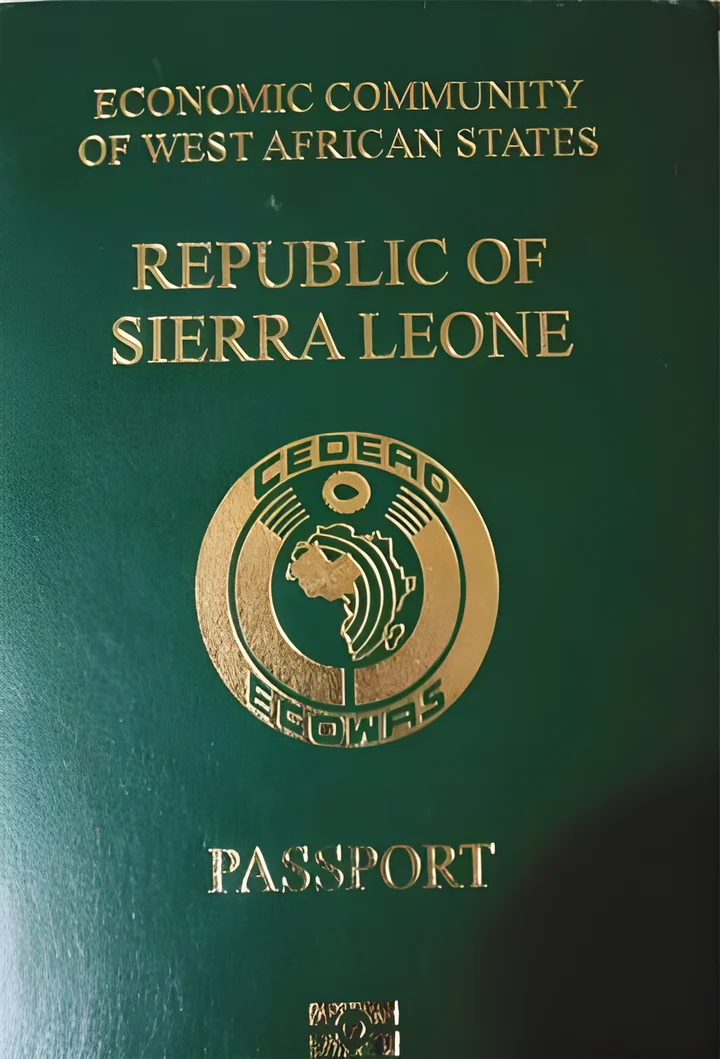
For many retirees, Sierra Leone is the obvious place to start. According to the documents on sierraleonepassport.com, the programme runs entirely remotely: no trip to Sierra Leone, no embassy appointment, and the oath of allegiance is notarised over Zoom. You need no police certificate, no medical examination, no proof of employment and no company documents; an independent due diligence check covers the background screening of every applicant aged 18 and over. Anyone aged 18 or over can apply; only nationals of North Korea are excluded.
For a retired couple with family, the Fast Track is the right route. It takes spouses, children, parents, grandparents and siblings. From the complete application to the passport, it usually takes 90-120 days. The biometric passport is currently valid for five years and is renewed digitally, without you having to travel. That point matters in later life: no flight, no appointment, no queue just to renew a document.
Dominica and Grenada: the Caribbean without moving
Dominica says it plainly on the website of its Citizenship by Investment Unit: you do not have to live in Dominica either before or after naturalisation. The country recognises dual citizenship, so you give nothing up. Grenada is just as clear: no visit is needed before, during or after the application, the interview takes place online, and Grenada also allows dual citizenship. So if you want to spend your retirement in Portugal, Spain or at home, you get a Caribbean passport without rearranging your life.
Parents and grandparents in the application
There is a second route to a second passport in retirement that many people overlook: through your own children. When your son or daughter applies for a second passport, many programmes can include parents and grandparents in the same application. The family then receives its passports together, in a single procedure.
| Programme | Who can come along | Condition according to the authority or programme |
|---|---|---|
| St Kitts and Nevis | parents of the applicant or spouse | aged 55 or over, living in the household and fully supported |
| Dominica | parents and grandparents of the applicant or spouse | over 65, substantially supported |
| Grenada | dependent parents, grandparents too | financially dependent on the main applicant |
| Sierra Leone (Fast Track) | parents and grandparents | 10,000 USD extra each |
It works the other way round too: if you are the main applicant yourself, Sierra Leone's Fast Track lets you include your adult children, for 20,000 USD each. That way the whole family gets in one go what three generations would otherwise have to apply for separately. The rules of every programme are explained in detail in parents and grandparents in a CBI application, and the overview of family applications is under Family.
For many families, this is the most elegant solution. The children are planning for their future anyway, the parents join them, and in the end everyone in the family shares the same second country.
Freedom to travel and security for your later years
In retirement you travel differently: longer, slower, often further afield. Within Europe, your German passport remains the document you travel on. The second passport complements it wherever it opens doors of its own. Sierra Leone's passport, for example, gives access to more than 65 countries visa-free or with visa on arrival, including ECOWAS rights in eleven further West African countries. For the Schengen area it usually needs a visa, but that is what you have your German passport for.
Two passports, two periods of validity
An underrated advantage in later life is simple availability. Under section 5 of the Passport Act (Passgesetz), the German passport is valid for ten years for anyone aged 24 or over. If it expires, gets lost or is sitting at a consulate for a visa, without a second passport you cannot travel for the time being. With a second passport, you still can. The only thing that matters is to show the right passport at every border and to answer every question about your citizenships truthfully.
A second country if things get serious
In retirement, security above all means having options. With only one passport, you have only one state to turn to and only one country you can always return to. With two, you have two. This is not a matter of fear but of foresight, just as you take out health insurance before you fall ill. Which countries are considered especially safe for retirement is compared in the article on the safest countries for retirement (in German).
A second passport as a legacy for your children and grandchildren
Many retirees come to this topic not for themselves but for their family. The Citizenship by Investment Unit of St Kitts and Nevis names it explicitly as a benefit on its home page: citizenship can be passed on to future generations. That makes citizenship something no investment portfolio and no property can offer: a right that stays with your children and grandchildren for their whole lives.
How passing it on works in each country, which rules apply to children born after naturalisation, and what to watch so that nothing is lost is explained in inheriting citizenship. The idea behind it is simple: what you acquire once today you never have to buy again; it stays in the family.
Planning residence, pension and passport together
A second passport is not a decision about where you live. It is the foundation on which you make every decision about where to live more freely. In flag theory, passport, residence, accounts and assets sit in different countries, and in retirement your pension joins them as a flag of its own. One point is important here: citizenship alone does not determine where you are liable to tax; what counts is your residence and habitual abode. So the passport triggers no tax, it gives you room to manoeuvre. More on this under Taxes.
A simple order works well for planning:
- Passport first. It is the only flag that is a right rather than a permission, and it carries all the others.
- Residence next. Where you spend the winters or the whole year is up to you, based on climate, cost, healthcare and family.
- Pension and accounts last. They follow your residence, not the other way round.
If you want to combine both, moving abroad and a second passport, you will find the right plan in moving abroad with a second passport. Your residence may change over the course of retirement; perhaps at eighty you will want to be closer to the grandchildren again. The passport stays the same through every one of these phases.
Four steps to a second passport in retirement
For retirees, the application is usually simpler than expected, because many of the hurdles of working life fall away. There is no company to vet and no employment contracts to present. This is how it works:
Step 1: Choose the programme and who comes along
First you settle who comes along: just you, you and your spouse, or the whole family across three generations. That decides which programme fits best and whether you are the main applicant yourself or apply together with your children.
Step 2: Gather your documents
For Sierra Leone, according to the programme documents, you need the data page of your passport, a biometric passport photo, your birth certificate, your marriage certificate if your spouse comes along, and proof of address such as a recent utility bill. Depending on how you pay, proof of the source of funds and a CV are added. For a retiree, these are papers that are usually already in the folder.
Step 3: Checks and interview
Every reputable programme vets its applicants thoroughly. Dominica requires an interview for everyone aged 16 and over, mostly held virtually, Grenada holds it online as part of its due diligence, and St Kitts and Nevis interviews the main applicant and every dependant aged 16 and over. In Sierra Leone, the final step is the notarised oath of allegiance over Zoom.
Step 4: Certificate and passport
After approval come the certificate of citizenship and the passport. In Sierra Leone, the passport arrives by DHL, and no trip is needed. The exact procedure of every programme, step by step, is set out under Process.
The best moment comes afterwards: you lay the second passport next to your German one, and you know that your retirement no longer depends on whether a single state says yes in a single year.
Frequently asked questions
Is a second passport still worth it once I have retired?
More than ever. In retirement you have time to travel and often the wish to live in a second place, but residence permits for retirees hinge on proof of income, medical certificates and renewals. A passport is a right that stays, and it passes on to your children. More on passing it on in inheriting citizenship.
Do I have to give up German citizenship to get a second passport?
No. Since 27 June 2024, acquiring another citizenship by application no longer leads to the loss of German citizenship, and that applies to every country in the world. The former retention permit (Beibehaltungsgenehmigung) has been abolished. Your German passport and your position as a German pensioner remain untouched.
Is there an age limit for citizenship by investment?
Sierra Leone and St Kitts and Nevis set a minimum age of 18 for the main applicant and name no upper limit. According to its programme documents, Sierra Leone requires neither a medical examination nor a police certificate. For parents as co-applicants, on the other hand, minimum ages apply, such as 55 in St Kitts and Nevis or over 65 in Dominica.
Can my son or daughter include me in their own application?
Yes, many programmes allow it. In St Kitts and Nevis, parents aged 55 and over can join if they live with the applicant and are supported by them; in Dominica, parents and grandparents over 65; in Grenada, dependent parents and grandparents. All the rules at a glance are in parents and grandparents in a CBI application.
Do I have to move to the country of my second passport?
Not with the right programmes. According to its Citizenship by Investment Unit, Dominica requires no residence either before or after naturalisation, Grenada requires no visit before, during or after the application, and Sierra Leone runs entirely remotely. You go on living wherever you like.
Does a second passport replace a retirement visa in Thailand or Spain?
No, a passport does not replace a residence permit in the host country. If you want to spend the winter in Thailand, you still need the right visa there. The second passport is the foundation underneath: it stays when visa rules change, and it gives you a second citizenship with its own travel freedom and a second embassy.
What does a second passport cost for a retired couple?
That depends on the programme and on who comes along. The government contributions, fees and family surcharges of every programme are listed under Costs, and the side-by-side comparison under Comparison.
Your retirement deserves a right, not a permission
Together we work out which second passport suits your retirement, who in your family comes along, and how passport, residence and pension fit into one solid plan.
Book a consultationSources
- Bundesverwaltungsamt (German Federal Office of Administration): modernised nationality law in force
- German Social Code Book VI (SGB VI), § 110 benefits for beneficiaries abroad, general rule (gesetze-im-internet.de)
- German Passport Act (Passgesetz), § 5 period of validity (gesetze-im-internet.de)
- Royal Thai Embassy Berlin: types of visa and required documents, Non-Immigrant O-A (PDF)
- Sierra Leone: sierraleonepassport.com, programmes and calculator
- Sierra Leone: sierraleonepassport.com, FAQ
- Citizenship by Investment Unit St Kitts and Nevis: home page
- Citizenship by Investment Unit St Kitts and Nevis: Eligibility Criteria
- St Kitts and Nevis: Citizenship by Substantial Investment Regulations, S.R.O. No. 20 of 2024 (interview, reg. 16)
- Citizenship by Investment Unit Dominica: FAQs
- Investment Migration Agency Grenada: FAQs