
The short answer
You acquire Colombian citizenship by naturalisation under Ley 2332 de 2023 if you hold a Visa de Residente (Visa R) and have lived in Colombia without interruption for five years since it was issued. If you are married to a Colombian, live in a permanent partnership with one or have Colombian children, two years are enough. Unless you are exempt, you also pass a knowledge test on the Constitution, history, culture and geography, and take an oath before the Alcaldía. You remain German all the same: Colombia does not require you to renounce, and Germany has accepted multiple citizenship since 27 June 2024.
A passport is a right, not a permission. As long as you live in Colombia on a visa, you are there because the Ministry of Foreign Affairs allows it. If the visa expires or is not renewed, you are out on the doorstep. Colombian citizenship turns that permission into a right, and you keep your German passport: the Constitution expressly does not require naturalised citizens to renounce their previous nationality.
How do you get Colombian citizenship?
Since 25 September 2023, Colombian nationality has been governed by Ley 2332 de 2023. It replaced the old Ley 43 de 1993 and implements Article 96 of the Constitution. It sets out two main routes: nationality by birth (nacionalidad por nacimiento) and nationality by adoption (nacionalidad por adopción).
- By birth: anyone born in Colombia with a Colombian parent is Colombian. Children of foreigners only become Colombian if a parent is domiciled in Colombia at the time of birth. Children of a Colombian father or mother born abroad become Colombian if they later live in Colombia or are registered with the consulate.
- By naturalisation: foreigners who apply for and receive a Carta de Naturalización. This is your route as a German.
- By registration: Latin Americans and Caribbean nationals by birth who live in Colombia can register as Colombians with government approval and on the basis of reciprocity.
- Indigenous peoples: members of indigenous peoples whose territories straddle the border, in line with reciprocity and international treaties.
Under Article 6 of Ley 2332, naturalisation is a sovereign discretionary decision of the President, who has delegated it to the Minister of Foreign Affairs. The authority in charge is therefore the Cancillería, not the immigration service. The law offers no route through investment.
How Colombia compares with other countries is shown in naturalisation abroad. The countries with the shortest waiting periods are listed under the fastest naturalisations in the world.
From your first visa to the Visa R: when your clock starts
This is exactly where many people who move abroad get their sums wrong. Ley 2332 requires you to be the holder or a beneficiary of a Visa de Residente when you apply and throughout the entire procedure. And Article 9 states expressly that the years of residence count from the day your Visa de Residente was issued.
What this means for you: the years you spend in Colombia beforehand on another visa, for instance as a digital nomad, retiree, investor or spouse, are valuable because they lead you to the Visa R. They do not count towards the naturalisation period itself, though. The real clock only starts with the resident visa.
So plan in two stages:
- Stage one: the road from your first visa to the Visa de Residente. How long it takes depends on your visa category. Which routes lead to the Visa R and which requirements apply is explained by VidaLibrePlan under resident visa for Colombia.
- Stage two: five years on a Visa R, or two years if you have Colombian family.
A second point concerns your travel. Under Article 9, Parágrafo 2, a stay outside Colombia of one year or longer before the application interrupts the residence period. Shorter trips do not interrupt it under the law, but your life must stay based in Colombia. And your documents must remain valid throughout the procedure: filing the application alone does not make you Colombian.
Which visas get you started, from the retirement visa to the investor visa, is set out in VidaLibrePlan's overview of the Colombia residence permit.
Requirements: five years or two
The basic rule is clear: five years of uninterrupted residence in Colombia immediately before the application, counted from the Visa R. This period applies to foreigners applying for a Carta de Naturalización and equally to Latin Americans who register.
The period shortens to two years in four cases:
| Your situation | Period from Visa R |
|---|---|
| No Colombian family | 5 years |
| Married to a Colombian | 2 years |
| Permanent partnership (compañero permanente) with a Colombian | 2 years |
| Colombian children | 2 years |
| Your country of origin grants Colombians reciprocity | 2 years |
You prove a marriage, partnership or children with the relevant certificate.
Whether reciprocity exists is assessed by the Cancillería. For your planning as a German, count on five years as long as you have no Colombian family. How other countries treat spouses is covered in naturalisation through marriage.
Which documents you submit
Article 9 of Ley 2332 lists the documents you register with your application:
- a reasoned, signed letter to the Minister of Foreign Affairs in which you apply for Colombian nationality
- a copy of your Visa de Residente, as holder or beneficiary
- a copy of your valid Cédula de Extranjería
- a copy of the data page of your valid passport
- your birth certificate, reliably showing the place and date of your birth
- proof of your profession, your occupation or the person on whom you depend financially
- where applicable, proof of your marriage, partnership or Colombian children
- if you completed school or university in Colombia, your diploma
If a document is missing, the law requires a reasoned letter explaining why you cannot provide it. Whether the Ministry accepts a substitute is at its discretion.
Applying for Colombian citizenship: the procedure
The procedure runs through the Ministerio de Relaciones Exteriores, and Ley 2332 gives it a clear framework.
1. Application and review of your documents
You register your application and pay the fee. Within three months of receiving payment, the Ministry reviews your documents. If something is missing, you have six months to submit it, extendable once by up to three months. If you let the deadline pass, your application is deemed withdrawn and the file is archived; you can then only apply again after one year.
2. Reports from the authorities
At the same time, the Ministry obtains confidential reports: from Migración Colombia on your personal, family and immigration situation, from the DIAN (the tax authority) on your tax position with the Colombian state and, if it considers it necessary, from the Dirección Nacional de Inteligencia on your judicial situation. If the report from Migración Colombia or the Dirección Nacional de Inteligencia is not satisfactory, the Ministry can refuse naturalisation.
What follows for you: your Colombian taxes must be in order before you file. An overview of Colombian tax law is given by Steueratlas under taxes in Colombia (in German), and how taxes interact with your second passport is explained under taxes and citizenship.
3. Knowledge test and interview
Unless you are exempt, you sit the knowledge test. At the Ministry's discretion, a personal interview may follow.
4. Carta de Naturalización and oath
At the end, the Ministry issues its opinion and grants you the Carta de Naturalización. With it, you register at the Alcaldía (mayor's office) where you live and swear before the mayor or their representative to faithfully abide by the Constitution and laws of Colombia. Anyone whose religion forbids swearing an oath makes a solemn promise instead.
The deadline matters: if you do not take the oath within six months of the Carta becoming final, the Ministry can revoke it. If you are prevented, apply for an extension in good time. With the oath, your naturalisation is complete. From then on, the Cédula de Ciudadanía issued by the Registraduría Nacional del Estado Civil serves as proof of your nationality, and the Colombian passport is open to you.
The knowledge test: Constitution, history, Spanish
Article 13 of Ley 2332 requires you to show knowledge of Colombia's Constitution, history, culture and geography. If Spanish is not your native language, a Spanish exam is added. The test is held by the Gobernación (departmental government) of the department where you live, under the direction of the Ministry of Foreign Affairs, which also sets its content and marking.
You have two attempts. If you fail, you can resit the test six months after the first date. To do so, though, you must tell the Ministry in writing within three months of being notified that you wish to resit. If you miss this, your file is archived.
Exempt from the knowledge test are:
- applicants over 60
- anyone who has earned a bachiller (school-leaving diploma) or a university degree at a recognised Colombian institution
- applicants with a cognitive disability
- members of indigenous communities in border areas
A German qualification that you have recognised in Colombia does not exempt you. For retirees, on the other hand, the age threshold is a real advantage: if you apply when you are over 60, you skip the knowledge test. How other countries test language, civics and the oath of allegiance is shown in language, test, oath of allegiance.
Dual citizenship: Colombia and Germany
The Colombian Constitution allows dual nationality. Article 96 says two things: no one loses Colombian nationality by acquiring another, and anyone who naturalises does not have to give up their previous nationality. Article 28 of Ley 2332 repeats this for naturalised citizens.
On the German side, the way has been clear since 27 June 2024. Since the Act to Modernise Nationality Law (Gesetz zur Modernisierung des Staatsangehörigkeitsrechts), you no longer lose German citizenship when you acquire a foreign one by application. The retention permit procedure has been abolished. In the end, you hold two passports. Everything on the German side is under dual citizenship in Germany.
As a dual national, you should know three rules:
- In Colombia you are Colombian. Article 34 of Ley 2332 requires you to enter and leave as a Colombian and to identify yourself as a Colombian in all civil and political matters. Entering and leaving Colombia therefore runs on your Colombian documents. How travelling with two passports works day to day is explained in travelling with several passports.
- Some offices stay closed to you. As a naturalised Colombian with a second nationality, under Article 35 you can neither become a minister nor take a seat in Congress.
- Military service. If you need to settle your military service status in Colombia, you do so under Article 9, Parágrafo 4, with the competent authority.
Under Article 33, you lose nationality acquired by naturalisation only through a conviction for crimes against the existence and security of the state and the constitutional order. You can renounce it voluntarily at the Ministry or at a consulate.
Family: children, spouses and birth in Colombia
Ley 2332 has families in mind. For your minor children who live with you in Colombia and are registered as beneficiaries of your Visa R, you apply for the naturalisation to be extended to them. This application must be filed together with your own, and the child must still be a minor when the Carta is granted. On reaching adulthood, the child decides: it applies for the Cédula de Ciudadanía if it wants to remain Colombian, or it renounces.
Adult beneficiaries of your Visa R, such as your spouse, can run their own procedure alongside yours. Be careful: if you, as the principal holder, are naturalised, the beneficiaries' visa ends early under Article 11, without the visa authority having to decide. So plan your applications together.
Birth in Colombia: a passport with a condition
Colombia does not automatically give children of foreigners nationality at birth. The Constitution requires a parent to be domiciled in Colombia at the time of birth. Article 4 of Ley 2332 says how you prove this: you must have held, without interruption for three years, a valid visa entitling you to settle in Colombia. Anyone in the country only as a visitor, seasonally or irregularly is not domiciled there.
For families who live in Colombia anyway, this is a strong rule: a child born after three years on such a visa is Colombian by birth. And because you then have a Colombian child, your own naturalisation period shortens to two years from the Visa R. A birth abroad is the passport you give your child for life. Which countries apply birthright citizenship without such a condition is shown in the list of birthright citizenship countries. How to plan everything around family and a second passport is covered under family.
A faster Colombian passport? What bridges the wait
Be honest with the arithmetic: first the road to the Visa R, then five years of residence, then the procedure with the test, the reports and the oath. Many years lie between your move and the Colombian passport. Naturalisation is the route that in the end costs you almost nothing but time, and it is the better route because the passport rests on your real life in the country. But for all those years, you only hold a permission.
Naturalisation and citizenship by investment are not an either-or. If you want a second passport in your hand during the wait, you buy yourself time with a citizenship by investment programme and keep pursuing naturalisation in Colombia in parallel. How the two routes fit together is explained under CBI and naturalisation.
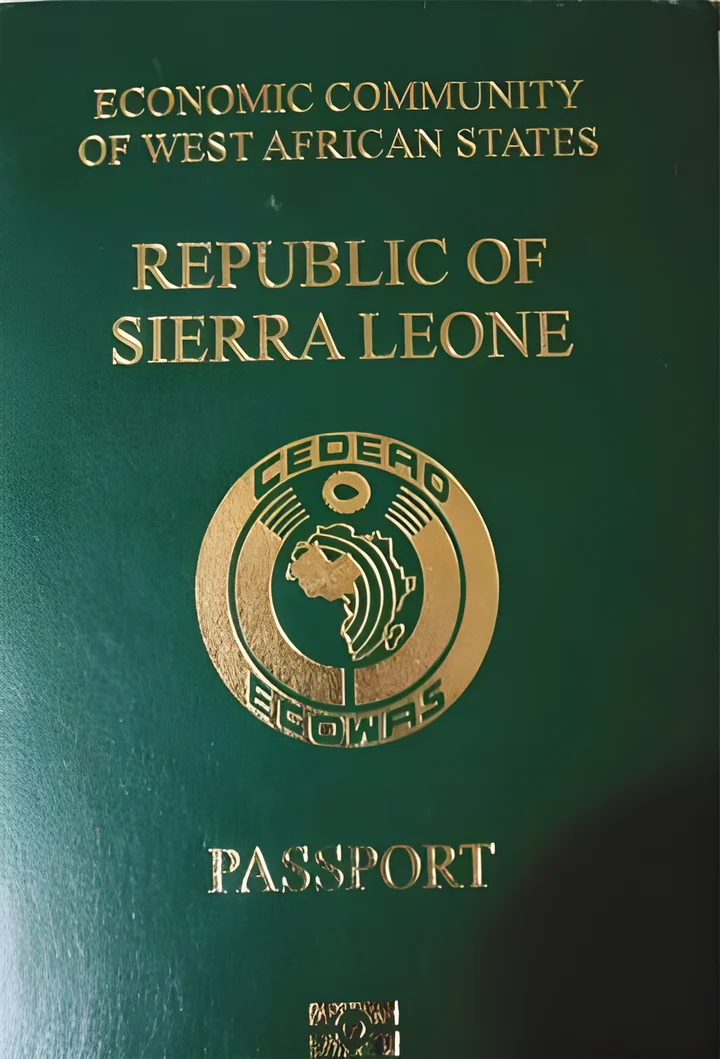
The Fast Track Citizenship of Sierra Leone, for example, costs a programme fee of USD 140,000 for the main applicant, includes spouses, children and parents, runs entirely remotely and usually takes 90-120 days from a complete application to the passport. Sierra Leone accepts multiple citizenships without restriction, and Colombia does not ask you to renounce either. Every open programme with amounts and timelines is in the comparison, and what an application costs in total is shown under costs.
This is how the sum works: with a passport from an investment programme, you immediately gain a second right to enter and live in another state. The Colombian passport later adds a third, earned through your life in Bogotá, Medellín or Cartagena. If you pursue both routes, you never depend on the permission of a single state.
Who the Colombian passport is right for
The Colombian route suits you if you genuinely want to live in Colombia. Ley 2332 is built on real presence: a Visa R, years with your life based in the country, Spanish and civics, and the DIAN tax authority looks at your file. If you bring all that, you get a passport that gives you a right instead of a permission.
Three groups benefit in particular:
- Couples and families with a Colombian partner or child, because two years from the Visa R apply to them instead of five.
- Retirees over 60, who skip the knowledge test and intend to stay long term anyway.
- Entrepreneurs and investors who run a company in Colombia, pay tax on their income there and reach the Visa R through their business.
If, on the other hand, you are only looking for a residence on paper or constantly move between several countries, naturalisation will not get you far. An absence of one year or longer interrupts the period. For you, an investment programme is the more direct route to a second passport, and Colombia remains a country to live in. Check your situation early, because every month you reach the Visa R later also pushes back your passport.
Frequently asked questions
How long do I have to live in Colombia to get citizenship?
Five years of uninterrupted residence immediately before your application, counted from the day your Visa de Residente was issued. Years you spent in the country beforehand on another visa do not count towards this period. With a Colombian spouse, a permanent partnership with a Colombian or Colombian children, the period shortens to two years.
Can I become Colombian as a German and keep my German passport?
Yes. The Colombian Constitution does not require naturalised citizens to give up their previous nationality, and Article 28 of Ley 2332 de 2023 says the same. Germany has generally accepted multiple citizenship since 27 June 2024, so you no longer need a retention permit (Beibehaltungsgenehmigung). More on this under dual citizenship in Germany.
Who decides on naturalisation in Colombia?
Under Article 6 of Ley 2332, naturalisation is a sovereign discretionary decision of the President of the Republic, who has delegated it to the Minister of Foreign Affairs. You therefore file your application with the Ministerio de Relaciones Exteriores, known as the Cancillería. There is no legal entitlement to naturalisation, even if you meet every requirement.
Do I have to take a test for Colombian citizenship?
As a rule, yes. You show knowledge of Colombia's Constitution, history, culture and geography, and if Spanish is not your native language you also sit a Spanish exam. Exempt from the knowledge test are, among others, applicants over 60 and anyone who has earned a school or university qualification at a recognised Colombian institution.
Will my child be Colombian if born in Colombia?
Only on one condition: with foreign parents, at least one parent must be domiciled in Colombia at the time of birth. Under Article 4 of Ley 2332, you prove this intention to stay by having held, without interruption for three years, a valid visa that entitles you to settle. Which countries give children a passport without such a condition is shown in the list of birthright citizenship countries.
Can you buy Colombian citizenship?
No. Ley 2332 de 2023 provides no way to acquire citizenship in return for an investment. An investment can open the door to residence, but the passport only comes after the years of residence. If you need a second passport sooner, combine Colombia with a citizenship by investment programme.
What happens if my application is rejected?
If the Ministry rejects your application, under Article 29 of Ley 2332 you can apply again no earlier than two years after the rejection becomes final. If instead your file is archived because you did not submit missing documents in time, you can start again after one year. Both cost time, which is why a complete application from the outset pays off.
Your route to a Colombian passport, properly worked out
We work out with you when your clock in Colombia starts, whether you need the two years or the five, and which second passport protects you until the Colombian one arrives.
Book a consultationSources
- Congreso de la República, Diario Oficial 52.529 of 25 September 2023: Ley 2332 de 2023, Art. 3-41 (Nacionalidad colombiana)
- Congreso de la República: Ley 2332 de 2023, Art. 42-55 (Recuperación, Derogaciones, Vigencia)
- Congreso de la República: Ley 43 de 1993, repealed by Art. 54 of Ley 2332 de 2023
- República de Colombia: Constitución Política de 1991, Artículo 96
- Federal Office of Administration (Bundesverwaltungsamt): retaining German citizenship, abolition of the retention procedure
- Sierra Leone: sierraleonepassport.com, programmes, timeline and process