
The short answer
Almost every country that naturalises through residence tests your language skills and your knowledge of the country: the US with 20 of 128 questions (12 must be right), Canada with 20 questions (15 right), the UK with the Life in the UK Test (75 percent) and English at B1, Switzerland with B1 spoken and A2 written, Spain with DELE A2 and CCSE. Most end with an oath or a pledge of loyalty. Since 27 June 2024, none of this costs you your German passport.
If you want a second passport through residence, you are on the route that the overview of naturalisation abroad maps out country by country. The years you spend in the country are only half of it. The other half is proof that you have truly arrived: in the language, in what you know about the state and its history, and finally in a commitment to your new country. These three hurdles differ from country to country far more than most people expect.
What language level does naturalisation abroad require?
Most countries measure language skills against the Common European Framework of Reference. B1 means you can talk about experiences and events in simple sentences, briefly explain your opinion and join a conversation on familiar topics without preparation. That is how the Swiss State Secretariat for Migration describes it in its handbook. Nobody expects you to sound like a native speaker.
The key countries at a glance:
| Country | Language requirement | Knowledge test |
|---|---|---|
| USA | English: reading, writing, speaking at the interview | 20 of 128 questions, 12 correct |
| Canada | English or French, CLB 4 in speaking and listening | 20 questions, 15 correct |
| United Kingdom | English, at least B1 | Life in the UK Test, 24 questions, 75 percent |
| Switzerland | A national language, B1 spoken, A2 written | Basic knowledge, test set by the canton |
| Spain | DELE, at least A2 | CCSE on the constitution and society |
| Ireland | no test under current law | no test under current law |
Two things stand out. First, the English-speaking countries test most formally, with fixed question banks and clear pass marks. Second, as a German you have practically met the Swiss language requirement before you even start, because German is one of Switzerland's national languages.
US citizenship test: 128 questions, 20 of them at the interview
The American citizenship test is the best known in the world, and it has changed. Which version applies to you depends on the date you filed Form N-400.
- Application filed on or after 20 October 2025: the 2025 test applies. The question bank has 128 questions, and the officer asks you 20. Get 12 right and you pass; get 9 wrong and you fail.
- Application filed before 20 October 2025: the 2008 test applies. Up to 10 questions are drawn from a bank of 100, and 6 correct answers are enough.
On top of that comes the English test. The officer assesses your speaking during the interview itself, simply through the conversation about your application. For reading, you must read one of three sentences aloud correctly; for writing, you must write one of three sentences down correctly. If you are 65 or older and have held a Green Card for at least 20 years, you get a shorter test with 10 questions from a separate bank of 20, and you may take it in your own language.
For Germans with school English, the language part is rarely the problem. The real work is in the civics part: questions on the constitution, institutions, history and symbols. USCIS publishes the complete question bank with answers, so you can study exactly what you need. What the new version looks like in detail and what the cut-off date means for pending applications is covered in the article US citizenship test: 128 questions instead of 100. The whole road from Green Card to passport is in the article USA: from Green Card holder to US citizen.
Canadian citizenship test: 20 questions, 15 must be right
Canada keeps its test lean and digital. If you are between 18 and 54 years old on the day you sign your application, you take the citizenship test. Anyone younger or older is exempt.
- Length: 20 questions, multiple choice or true and false
- Pass mark: 15 correct answers
- Time: 45 minutes
- Topics: Canada's history, geography, economy, government, law and symbols
- Study material: the official guide Discover Canada: The Rights and Responsibilities of Citizenship
You take the test in English or French, either online, with your webcam confirming your identity, or in person or via Microsoft Teams. You get three attempts. Separately, Canada requires the same age group to show English or French at level 4 of the Canadian Language Benchmarks, in speaking and listening. If needed, an officer can also assess your level in conversation.
For Germans who use English at work, that is a low bar. The real hurdle in Canada is the time you must spend in the country, not the test. Everything Canadian naturalisation asks of you is in the article Canadian citizenship for Germans.
UK citizenship test: the Life in the UK Test
The United Kingdom keeps language and knowledge of the country neatly apart. To naturalise, you need both.
The Life in the UK Test has 24 questions, you have 45 minutes and you must answer at least 75 percent correctly, which means 18 questions. It covers only what is in the official handbook for new residents: British traditions, history, institutions and everyday life. The test costs £50, and you book it online at least three days in advance. If you fail, you book again and pay again. If you are under 18 or 65 and over, you do not have to take it.
For the language requirement, the Home Office asks for English at B1 or above. You prove it with a recognised language test or with a degree that was taught or researched in English. Check in advance that your certificate is on the list of approved tests, and the proof will be accepted the first time round.
The road to British citizenship itself, with deadlines and application steps, is described in the article applying for British citizenship (in German).
Swiss citizenship test: language proof and the cantonal test
Switzerland is the special case, because three levels have a say: the federal government, the canton and the commune. The federal government sets minimum standards, and the cantons may go further.
Language: B1 spoken, A2 written
Federal law requires spoken skills in a national language at B1 or above and written skills at A2 or above. The national languages are German, French, Italian and Romansh. The requirement counts as met if you
- speak and write a national language as your mother tongue,
- attended compulsory schooling in a national language for at least five years (the school does not have to have been in Switzerland),
- completed upper secondary or tertiary education in a national language, or
- present a recognised language certificate.
For you as a German, this means: your mother tongue is a national language, and your schooling in Germany counts. You skip the language test that others dread for months.
Knowledge of Switzerland: the cantonal test
Anyone who wants to naturalise must be familiar with Swiss living conditions. That includes basic knowledge of the country's geography, history, politics and society, taking part in social and cultural life, and contact with Swiss people. Whether this basic knowledge is checked with a test is up to the canton. If the canton sets a test, it must make sure you can prepare with suitable materials or courses.
Formally, the federal government requires a C settlement permit and ten years of residence, three of them within the five years before you apply. How it all builds up, from moving in to citizenship, is shown in the overview of Swiss citizenship. The route for Germans, including dual citizenship, is described in the article Switzerland: naturalisation for Germans.
Spain: DELE A2 and CCSE
Spain tests on two tracks, and the Instituto Cervantes designs and runs both exams. The legal basis is the regulation on naturalisation through residence, Real Decreto 1004/2015.
- DELE A2: the diploma in Spanish as a foreign language, at level A2 or above.
- CCSE: the exam on the constitution and society. 60 percent of the questions deal with the constitution and Spain's territorial and administrative structure, 40 percent with Spanish culture, history and society. All questions are closed, and each carries the same weight.
You usually sit both exams at a recognised exam centre. The Instituto Cervantes can also allow them to be taken remotely, with electronic verification of your identity. If you move to Spain with a Spanish course already under way, A2 comes almost on the side. The real test of patience in Spain is the long residence period, not the exam. All the periods and shortcuts for Germans are in the article Spain: naturalisation for Germans.
Latin America works in much the same way. In Mexico, an Austrian held a Mexican passport after seven years, having passed the language test. The road there is described in the article Mexico: from Residente Permanente to a Mexican passport.
Ireland: naturalisation without a language test
Under current law, Ireland is the exception in this comparison. The conditions for naturalisation in the Irish Nationality and Citizenship Act 1956 are:
- You are of full age.
- You are of good character.
- You have lived in Ireland continuously for one year immediately before your application, and for a total of four years in the eight years before that.
- You intend to keep living in Ireland after naturalisation.
- At a citizenship ceremony presided over by a judge, a retired judge or a person designated by the Minister, you make a declaration of fidelity to the nation and loyalty to the State, and undertake to observe the laws and respect democratic values.
There is no language test and no knowledge test on that list. That may not last: the Irish government is working on a reform that provides for longer residence periods and new tests. Where the planned reform stands, and what applies today, is tracked on the page on Irish naturalisation. If Ireland appeals to you, it pays to plan without delay.
The oath of allegiance: what you swear and what happens to your German passport
Almost every naturalisation ends with a formal ceremony. It is more than a formality, because in many countries this is the very moment you become a citizen.
| Country | Commitment | Who makes it |
|---|---|---|
| USA | Oath of Allegiance at the ceremony | every applicant, modification possible |
| Canada | Oath of Citizenship at the ceremony | from age 14 |
| Ireland | Declaration of fidelity and loyalty at the ceremony | adults |
In the USA, you only become a US citizen once you have taken the Oath of Allegiance at a naturalisation ceremony. Sometimes that happens on the day of your interview; otherwise the invitation comes by post. In the oath, you renounce all allegiance to any foreign state, pledge yourself to the Constitution and declare that you are willing, when the law requires it, to bear arms, to perform noncombatant service or to do civilian work of national importance. In certain circumstances the oath can be modified or waived. After the oath you receive your Certificate of Naturalization.
In Canada, adults and young people aged 14 and over take the Oath of Citizenship at a ceremony once their application has been approved. Children under 14 are exempt.
And your German passport?
This is the most important news for you. Until 27 June 2024, a German usually lost German citizenship on acquiring a foreign one by application. The reform of German nationality law abolished that rule. Today you can naturalise in the USA, in Canada or in Switzerland and remain German.
An oath abroad that speaks of renouncing allegiance changes nothing about that. Under German law, a German with more than one citizenship can give up German citizenship, but only in writing and only with the approval of the competent German nationality authority.
Without a language test: Citizenship by Investment
If you want to plan for neither five to ten years of residence nor a language test, there is a second route. Citizenship by Investment programmes check where your money comes from and your good character, not grammar and civics. Instead of a test there is an interview, and in some countries an oath as well:
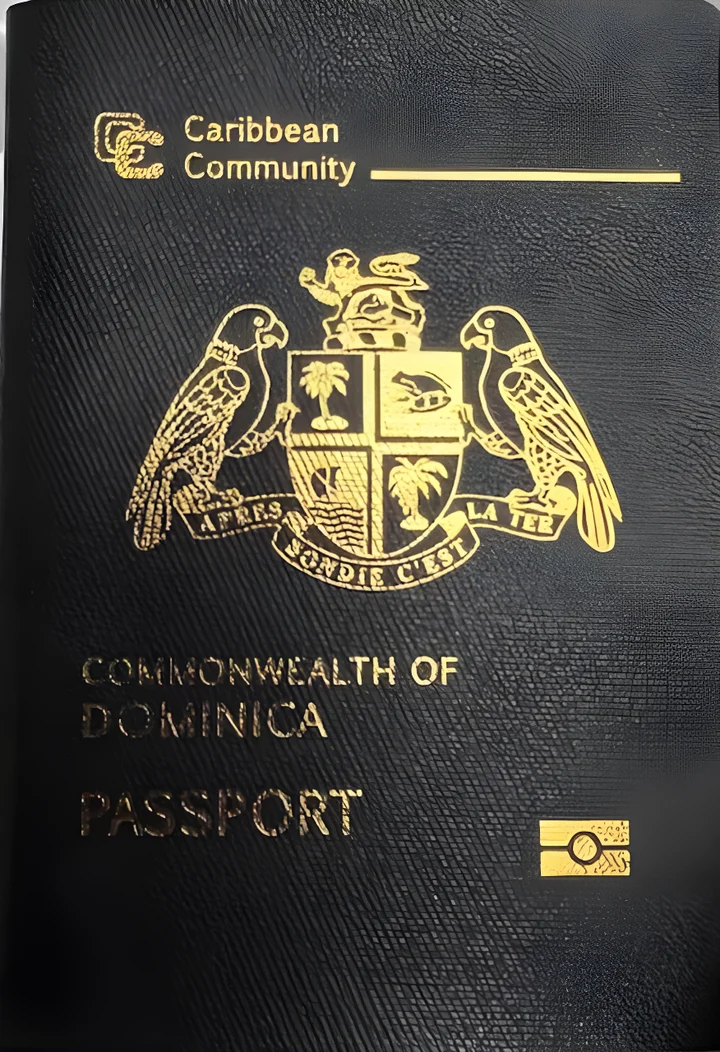
- Dominica: interview for every applicant aged 16 and over, usually held virtually; no residence required before or after naturalisation. To the programme: Dominica.
- Grenada: online interview as part of the review; no visit to Grenada is needed before, during or after the application. To the programme: Grenada.
- St Kitts and Nevis: interview for the main applicant and every dependant aged 16 and over, virtual or in person. To the programme: St Kitts and Nevis.
- Sierra Leone: entirely remote, with no travel and no embassy appointment; the oath of allegiance is notarised by video, typically 90-120 days from complete application to passport. To the programme: Sierra Leone.
- Vanuatu: oath before a court in Vanuatu, and applicants living abroad travel there for it. To the programme: Vanuatu.
The case for pursuing both routes at once is simple. Naturalisation needs no investment and is, in the end, the stronger route, but it costs years of genuine residence. Citizenship by investment buys you that time. Why you should pursue both in parallel is explained in the article CBI and naturalisation. How the programmes differ is shown in the comparison, and how an application runs step by step in the process.
How to pass the language test and the citizenship test
These tests can be learned, because almost every country publishes its material. These steps get you into the exam with confidence:
- Identify the right test. In the USA, your filing date decides the version; in Canada, your age on the day you sign; in Switzerland, the canton.
- Study the official material, not third-party guides. USCIS publishes the question bank, Canada the Discover Canada guide, the UK the handbook for new residents. Questions only come from these.
- Secure your language proof early. Check that your certificate is on the list of recognised proofs, and sit the exam before your residence period ends. Then the proof is already in your file when you apply.
- Make your time in the country provable. No test rescues an application that is short of days in the country. Collect entry and exit stamps, leases and registration records from day one.
- Plan for the ceremony. The oath is a separate appointment, sometimes on the day of the interview in the USA, otherwise by invitation. Leave a buffer when you plan travel in this phase.
Follow these steps and the moment in front of the official will feel less like an exam and more like a formality. And if you would rather not spend the wait until then without a second passport, the answer lies in the investment route.
Frequently asked questions
How many questions are on the US citizenship test?
If you filed Form N-400 on or after 20 October 2025, you take the 2025 test: the question bank has 128 questions, the officer asks 20, and 12 correct answers are enough. Older applications fall under the 2008 test with 100 questions, of which up to 10 are asked and 6 must be answered correctly. The full process is set out in the article USA: from Green Card holder to US citizen.
What language level do I need to naturalise in Switzerland?
The federal government requires B1 spoken and A2 written in one of the national languages, and the cantons may ask for more. If you speak and write a national language as your mother tongue, you have already met the requirement. As a German, the language requirement is therefore usually a non-issue for you.
Do I have to take a test for a Canadian passport?
Yes, if you are between 18 and 54 years old on the day you sign your application. The test has 20 questions on Canada's history, geography, economy, government, law and symbols, and you need 15 right. You take it in English or French, online, in person or by video conference, and you get three attempts.
How hard is the Life in the UK Test?
The test has 24 questions, you have 45 minutes and you need at least 75 percent correct answers. It only covers what is in the official handbook for new residents. Booking costs £50, and you can retake it as often as you like.
Do I lose my German passport if I swear an oath of allegiance abroad?
No. Since 27 June 2024, you no longer lose German citizenship when you acquire a foreign one. Under German law, a renunciation only takes effect if you declare it in writing and the competent German nationality authority approves it.
Are there countries with no language test for citizenship?
Under current law, Ireland requires neither a language test nor a knowledge test, only a declaration of fidelity that you make at the citizenship ceremony. The Citizenship by Investment programmes also check where your money comes from and your good character, not grammar and civics.
Which route to a second passport fits the languages you speak?
We show you which country is within reach given your language skills and your timeline, and whether an investment citizenship can bridge the wait.
Book a consultationSources
- USCIS: Study for the Test (Civics and English Test)
- USCIS: Naturalization Ceremonies
- USCIS: Naturalization Oath of Allegiance to the United States of America
- IRCC: Apply for citizenship, who can apply
- IRCC: Citizenship test, study for the test
- GOV.UK: Life in the UK Test
- GOV.UK: Prove your knowledge of English for citizenship and settling
- State Secretariat for Migration SEM: Citizenship handbook, chapter 3, ordinary naturalisation
- BOE: Real Decreto 1004/2015, regulation on nationality by residence
- Irish Immigration Service: Irish Nationality and Citizenship Act 1956, Reference Version
- German Federal Ministry of Justice: Nationality Act (Staatsangehörigkeitsgesetz, §§ 25, 26)
- German Federal Ministry of the Interior: questions and answers on the nationality law reform