
The short answer
As a foreign national, you acquire Paraguayan citizenship by naturalisation under Article 148 of the Constitution: you must be of age, have at least three years of Radicación in the country, pursue an occupation in Paraguay and show good conduct. The three years run from the decision granting your Residencia Permanente; before that, there is normally a Residencia Temporal of up to two years. You file for the Carta de Naturalización with the Corte Suprema de Justicia, and since 27 June 2024 you no longer lose your German passport in the process.
Paraguay has a special reputation among Germans. Low taxes, an uncomplicated residence permit, German-speaking colonies in the Chaco and in the south of the country, and on top of that the line almost everyone has heard: after three years you get the passport. The line is true, but only if you know when the three years start and who decides at the end. It is not the immigration authority but the country's highest court, the Corte Suprema de Justicia, that issues your Carta de Naturalización. How Paraguay compares with other countries of naturalisation is shown in the overview Naturalisation abroad.
How do you get Paraguayan citizenship?
The 1992 Constitution governs nationality in Articles 146 to 152. It distinguishes nationality by birth (nacionalidad natural) from nationality by naturalisation. For you as a German without Paraguayan parents, the route runs through Article 148.
| Route | Who | Legal basis |
|---|---|---|
| Birth in the country | anyone born on the territory of the Republic | Constitution Art. 146 No. 1 |
| Descent | children of a Paraguayan mother or father, born abroad, who settle permanently in Paraguay; from 18 by simple declaration | Constitution Art. 146 No. 3 |
| Naturalisation | adults with at least three years of Radicación, an occupation in the country and good conduct | Constitution Art. 148 |
| Nacionalidad honoraria | foreign nationals with outstanding services to the Republic, by act of Congress | Constitution Art. 151 |
Honorary citizenship is an honour bestowed by parliament, not a procedure you can plan for. If you move to Paraguay today, you plan with Article 148.
The four requirements of Article 148
The wording is short and clear. Foreign nationals can obtain Paraguayan nationality by naturalisation if they
- are of age,
- have been resident on the national territory for at least three years (radicación mínima de tres años),
- pursue a profession, trade, science, art or business in the country, and
- show good conduct as defined by law.
Many people underestimate the third requirement. Paraguay wants to see that you actually do something in the country: as an employee, an entrepreneur, a freelancer, even as a student. A carnet alone is not enough: the Corte wants to see your occupation in black and white.
Can you buy Paraguayan citizenship? Is there a passport for investment?
No. Paraguay has no citizenship by investment programme, and the Constitution provides for no such route. What it does have is a fast way into residence. For foreign investors who join SUACE, the one-stop shop for setting up a business, the Dirección Nacional de Migraciones provides a dedicated route straight into the Residencia Permanente. It is based on an investor certificate (Inversionista) issued by the Viceministerio de Industria y Comercio.
That saves you the years of Residencia Temporal, but not the three years under Article 148. In Paraguay, money buys you an earlier starting point; the passport itself always comes from time in the country.
If you want a second passport in your hand sooner, combine the two. An investment programme gets you a passport in months, naturalisation in Paraguay follows after years. Why the two together make the strongest strategy is explained in CBI and naturalisation. Three programmes side by side:
| Programme | Minimum amount | Residence required | Timeline |
|---|---|---|---|
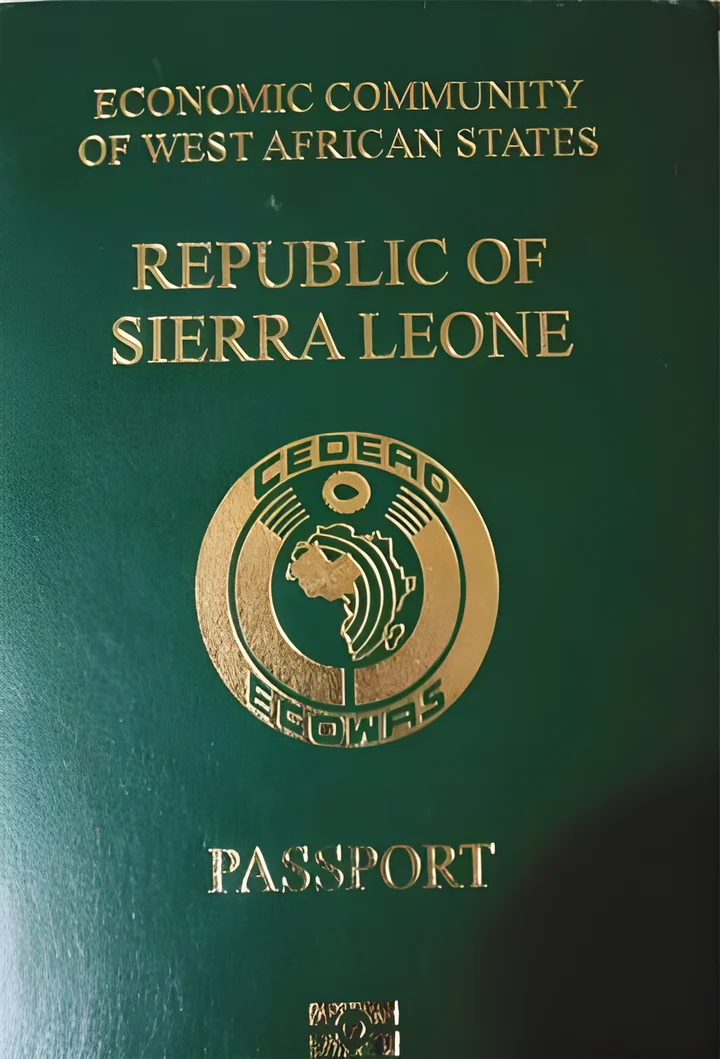
| Sierra Leone | USD 140,000 Fast Track Citizenship, plus dependants and due diligence | no, fully remote | usually 90-120 days to the passport |
| Dominica | USD 200,000 contribution to the Economic Diversification Fund, single applicant | no | after review by the authority |
| São Tomé and Príncipe | USD 90,000 donation to the National Transformation Fund, single applicant | no, neither during nor after the application | around two months to approval, then three to four months to the passport |
You will find every open programme side by side in the comparison and the total costs under Costs. Mind the order when you combine them, because Paraguay strips naturalised citizens of their nationality if they voluntarily acquire another one afterwards.
The first step: Residencia Temporal and Residencia Permanente
No legal residence, no application. The competent authority is the Dirección Nacional de Migraciones in Asunción, and the legal basis is the Migration Act, Ley N° 6984/2022. For Germans without Paraguayan family, the standard route has two stages.
Stage 1: the Residencia Temporal
The authority grants the Residencia Temporal to foreign nationals who want to settle in Paraguay and pursue a permitted activity there. The carnet is valid for up to two years and can be extended for the same period. While the procedure is still running, you already have the status of residente precario: you may leave and re-enter the country, work and study. With the carnet you receive a Paraguayan Cédula de Identidad from the Policía Nacional.
Among other things, the authority requires:
- a valid passport and proof of entry, meaning the entry stamp
- an apostilled birth certificate and, if you are married, your marriage certificate
- an apostilled police clearance certificate from age 14, depending on where you lived during the last three years, from Germany or from the country where you last lived
- an INTERPOL certificate and a certificate from the Paraguayan police
- declarations on your activity, your address and respect for the Constitution, generated by the authority's system when you apply
Foreign documents need an apostille and a translation into Spanish. The fee for the Residencia Temporal is 2,926,925 guaraníes if paid in cash. The procedure has to be done in person; a representative can handle the follow-up. How the application works step by step is explained in the article on temporary residence in Paraguay.
Stage 2: switching to the Residencia Permanente
According to the authority, the Residencia Temporal is a prerequisite for the Residencia Permanente. You apply for the switch in the three months before your temporary carnet expires. If it has already expired, you can still do so up to one month afterwards, against a late fee. The fee for the Residencia Permanente is also 2,926,925 guaraníes.
What matters is proof of your solvency. The authority assesses it in fixed categories, including:
| Category | Proof |
|---|---|
| Employees | proof of insurance with IPS or a registered employment contract |
| Self-employed in trade and services | tax registration and VAT or income tax returns together with a tax certificate |
| Remote workers and digital nomads | employment certificate stating the amount of income and how it is paid |
| Property owners | title deed entered in the register, registered for at least two years |
| Shareholders | registered deed of incorporation or list of shareholders, for an EAS a certificate from the register |
| Retirees and pensioners | apostilled pension certificate stating the amount and how it is paid |
The carnet of the Residencia Permanente is permanent and must be renewed every ten years. Besides the switch of category, the authority runs its own categories of Residencia Permanente, for instance for children and spouses of Paraguayans and for investors through SUACE. How to apply for permanent residence in Paraguay is described there in detail. What the move means for your taxes is covered in the country guide Emigrating to Paraguay (in German).
How long does the road to a Paraguayan passport really take?
This is where the myth of the fast passport is born. On its page about the Carta de Naturalización, the Corte Suprema leaves no room for doubt: to apply, you need three years of Radicación permanente, counted from the date of the decision admitting you to the Residencia Permanente. The years with a Residencia Temporal do not count.
| Stage | Standard route | Direct Residencia Permanente |
|---|---|---|
| Residencia Temporal | up to two years | not needed |
| Residencia Permanente until the application | at least three years from the decision | at least three years from the decision |
| Procedure at the Corte Suprema | no fixed duration | no fixed duration |
| Realistic time frame from first residence | around five years plus the procedure | around three years plus the procedure |
So if you come to Paraguay on the standard route, plan on around five years until you can apply. If you get the Residencia Permanente directly, you skip the first stage. How other countries count residence periods and how to document them properly is explained in Proving your years of residence. Which countries are faster is set out in The world's fastest naturalisations.
What puts the three years at risk
The clock only runs if you can prove it. In each of the three years before the application you may spend no more than three months abroad, and you keep a fixed home in Paraguay (Article 42 of Acordada 464/2007). The Corte requires the Certificado de Radicación from the Dirección Nacional de Migraciones confirming your residence, along with proof of your occupation in the country. A carnet on its own, without a job, a company or studies in Paraguay, will not carry an application. So plan the years in a way that leaves a dense trail in the country: tax number, social insurance, contract, bank account.
Applying for Paraguayan citizenship: the Carta de Naturalización
Once the three years are complete, you file the application with the Corte Suprema de Justicia in Asunción. The Carta de Naturalización is the document that certifies the grant of Paraguayan nationality. The procedure is governed by the Corte's Acordada 464/2007.
The documents
The Corte lists fourteen items. Grouped by what you prove:
| What you prove | With what |
|---|---|
| Identity | certified copies of your Cédula, your complete passport with every page and your apostilled birth certificate, plus photos and a CV |
| Residence | certified copy of the Carnet de Admisión Permanente and the Certificado de Radicación from the immigration authority |
| Good conduct | certificates from the Policía Nacional and the Poder Judicial, plus the apostilled police clearance certificate from your country of origin |
| Occupation in the country | employees: employer's certificate with the IPS number and the company's RUC; entrepreneurs: business licence, RUC and at least two reference companies; students: certificate of enrolment; graduates: the recognised professional degree (título habilitante) |
| Application | the Declaración Jurada signed at the Corte, the paid Tasa Judicial and the written application |
The written application is filed through an abogado or an agent holding a special power of attorney, and it states an address for service in Asunción as well as your actual place of residence. You must file the application in person, because you sign the Declaración Jurada yourself. Documents not in Spanish are translated by a translator registered with the Corte.
Fee and oath
The Tasa Judicial is 43,051 guaraníes. You have it calculated at the Ingresos Judiciales department or online and pay it at the participating banks. During the procedure the Corte tests your basic Spanish or Guaraní and your knowledge of Paraguay's history, geography and the constitutional rules on losing nationality. At the end you take the oath. The Corte reports on ceremonies in which its President swears in the new citizens; the act is recorded at the Sala Civil y Comercial, after which the Carta de Naturalización is handed over. What other countries require in terms of language, test and oath is shown in Language, test, oath of allegiance.
Paraguay and dual citizenship: what happens to your German passport
For Germans, this is the most important question, and on the German side the answer is clear. Since 27 June 2024, acquiring another nationality on application no longer leads to the loss of German nationality. You no longer need a retention permit (Beibehaltungsgenehmigung). How the new law works in detail is explained in Dual citizenship in Germany.
On the Paraguayan side, the Corte Suprema's list of requirements does not ask you to renounce your existing nationality. The Constitution deals with the issue in two places:
- Article 149: Multiple nationality may be allowed through international treaties of reciprocity between the state of origin and the state of naturalisation.
- Article 150: Naturalised Paraguayans lose their nationality through an unjustified absence of more than three years, established by a court, or through the voluntary acquisition of another nationality.
The right order
Article 150 has a practical consequence. If, after naturalising in Paraguay, you acquire yet another passport through a programme or another naturalisation, you put your Paraguayan one at risk. The smart order is therefore: secure your second passport through a programme first, then build up the years in Paraguay, and apply for the Carta de Naturalización last. That way your first second passport protects you during the waiting period, and Paraguay comes on top as the final step.
Even after naturalisation, Paraguay remains a country where you should keep a presence. An unjustified absence of more than three years can be established by a court and costs you your nationality. Paraguayans by birth, by contrast, cannot lose their nationality under Article 147; they can only give it up voluntarily.
After the Carta: Cédula, passport and the right to vote
With the Carta de Naturalización you are a Paraguayan national. Full civic rights, meaning the right to vote, follow two years after naturalisation under Article 152 of the Constitution.
The Paraguayan passport
The passport is issued by the Departamento de Identificaciones of the Policía Nacional as soon as you hold the Carta de Naturalización. For adults, the authority requires:
- a copy of your valid Cédula de Identidad
- the Certificado de Cumplimiento Tributario or confirmation that you are not a taxpayer, both from the tax administration's system
The passport costs 199,000 guaraníes, is valid for five years and is ready for you after 20 working days. If you already hold a valid Paraguayan passport, you hand it in so that its blank pages can be cancelled.
Children: the passport from birth
For families, Paraguay has an extra advantage. Under Article 146 No. 1 of the Constitution, every person born on the territory of the Republic is Paraguayan by birth. A child born in Asunción during your years of residence is therefore Paraguayan from day one, with no waiting period and no procedure before the Corte. Which countries in the region do the same is shown in Birthright countries in Latin America, and what to consider for your family when comparing programmes is covered under Family.
Paraguay, Uruguay or Argentina: which route suits you
Paraguay is not the only country in the region with a short residence period. A look across the border to Uruguay shows where the differences lie:
| Country | Period under the law | Special feature | More |
|---|---|---|---|
| Paraguay | three years from the Residencia Permanente | application to the Corte Suprema, occupation in the country required | Fastest naturalisations |
| Uruguay | three years with family, five without | ciudadanía legal under Article 75 of the Constitution, plus capital, property or a profession in the country | Uruguay |
How Argentina handles naturalisation and how long you have to live there is covered in Naturalisation in Argentina.
Paraguay suits you if you genuinely build something in the country: a company, a job, a family that lives here. Then the years until the Carta are not a waiting period but your life. And if you want to cover the time until then, put a second passport from a programme in place as your safety net before you apply in Paraguay.
Frequently asked questions
Can you buy Paraguayan citizenship?
No. Apart from birth, the Constitution knows only naturalisation under Article 148 and honorary citizenship granted by law for outstanding services. In Paraguay, capital opens the door to the Residencia Permanente, but only time in the country gets you the passport. Programmes such as Sierra Leone or São Tomé and Príncipe offer a passport without residence.
How long do you have to live in Paraguay to get citizenship?
At least three years of Radicación permanente, counted from the date of the decision admitting you to the Residencia Permanente. As a rule, a Residencia Temporal of up to two years comes first. On the standard route, then, expect around five years from your first residence permit, plus the time the court procedure takes.
How much does naturalisation in Paraguay cost?
The Tasa Judicial for the Carta de Naturalización is 43,051 guaraníes. Before that, you pay the Dirección Nacional de Migraciones 2,926,925 guaraníes each for the Residencia Temporal and for the switch to the Residencia Permanente, plus 234,154 guaraníes for the Certificado de Radicación. On top of that come apostilles, translations by a translator registered with the Corte and the abogado through whom the application has to be filed.
Does Paraguay allow dual citizenship?
The Corte Suprema's list of requirements for the Carta de Naturalización does not ask you to renounce your existing nationality. Article 149 of the Constitution expressly allows multiple nationality through reciprocal treaties, and Article 150 takes it away from naturalised citizens who later acquire another nationality voluntarily. In Germany, acquiring a foreign nationality on application no longer costs you your German nationality since 27 June 2024.
Do I need to speak Spanish or Guaraní to be naturalised in Paraguay?
Basic knowledge of one of them, yes. Under Article 46 of the Corte's Acordada 464/2007 you are examined, orally or in writing, on basic Spanish or Guaraní, and on the history and geography of Paraguay and the constitutional rules on losing nationality. Documents not in Spanish must be translated by a translator registered with the Corte, and you file the application in person to sign the Declaración Jurada. If you speak Spanish day to day, residence, work and court will all go much more smoothly.
Will my child be Paraguayan if born in Paraguay?
Yes. Article 146 of the Constitution counts everyone born on the territory of the Republic as Paraguayan by birth, with no condition attached to the parents' status. How other Latin American countries handle this is covered in Birthright countries in Latin America.
When do I get the Paraguayan passport after naturalisation?
As soon as you hold the Carta de Naturalización, you apply for the passport at the Departamento de Identificaciones of the Policía Nacional. It costs 199,000 guaraníes, is valid for five years and is ready for you after 20 working days. You need to bring your valid Cédula de Identidad and a tax certificate from the tax administration or confirmation that you are not a taxpayer.
Paraguay as the goal, a second passport already on the way
We look at your route to Paraguay with you, from the Residencia Temporal to the Carta de Naturalización, and show you which second passport covers the years until then. That way you plan residence and citizenship in the right order.
Book a consultationSources
- Corte Suprema de Justicia Paraguay: Acordada 464/2007 (Art. 42, 46)
- Biblioteca y Archivo Central del Congreso (Paraguay): Constitución Nacional 1992, Art. 146-152
- Poder Judicial Paraguay, Corte Suprema de Justicia: Carta de Naturalización
- Poder Judicial Paraguay: the President of the Corte Suprema swears in newly naturalised citizens
- Dirección Nacional de Migraciones: Residencia Temporal (Ley N° 6984/2022)
- Dirección Nacional de Migraciones: Residencia Permanente on switching from the Residencia Temporal
- Dirección Nacional de Migraciones: Residencia Permanente, categories
- Dirección Nacional de Migraciones: Residencia Permanente para Inversionistas Extranjeros (SUACE)
- Policía Nacional, Departamento de Identificaciones: Pasaporte
- IMPO Uruguay: Constitución de la República, Artículo 75
- Bundesverwaltungsamt (Federal Office of Administration): reform of German nationality law 2024
- sierraleonepassport.com: Sierra Leone citizenship, programmes and fees
- Citizenship by Investment Unit Dominica: SRO No. 8 of 2024
- Citizenship by Investment Unit São Tomé and Príncipe: Investment Structure