
The short answer
As a German, you obtain Brazilian citizenship through Naturalização Ordinária under Migration Law No. 13.445/2017: after four years of Residência por prazo indeterminado, meaning permanent residence, with Portuguese and no criminal conviction. If you are married to a Brazilian or have a Brazilian child, one year is enough. You apply online through the Ministério da Justiça, there is no fee, and the authority states a processing time of up to 180 days; Brazil does not ask you to renounce your German citizenship.
For many Germans, Brazil is the country where a long holiday turns into a life: Florianópolis, Rio, São Paulo, the Northeast. Less well known is how generous the country is with citizenship once you are there. Since the Migration Law of 2017, naturalisation follows clear rules, the waiting times are short, and most of the procedure runs online. How Brazil compares with the other residence-based routes to a second passport is shown in the overview Naturalisation abroad.
How do you get Brazilian citizenship?
Article 12 of the Brazilian Constitution knows two groups: Brazilians by birth, the "natos", and naturalised citizens, the "naturalizados". There is no investment programme that leads straight to the passport. For you as a German, that leaves naturalisation, which Article 64 of Migration Law No. 13.445 of 2017 sets out in four forms: ordinary, extraordinary, special and provisional.
For adults living in Brazil, two of them matter most:
| Route | Permanent residence in Brazil | What else you need |
|---|---|---|
| Naturalização Ordinária, standard case | four years | legal age, Portuguese, no criminal conviction |
| Ordinária with a Brazilian spouse or child | one year | the same requirements |
| Ordinária for outstanding professional, scientific or artistic ability or important services to Brazil | two years | the same requirements |
| Naturalização Extraordinária | more than 15 years without interruption | no criminal conviction, an application is enough |
There is also special naturalisation for spouses of members of the Brazilian foreign service and for long-serving staff of Brazilian missions abroad, as well as provisional naturalisation for children who took up residence in Brazil before their tenth birthday. Nationals of Portuguese-speaking countries, such as Portugal, need only one year of uninterrupted residence and good character under the Constitution. For Germans, the standard case applies: four years, or one year with a Brazilian family.
The requirements of Naturalização Ordinária are set out in Article 65 of the Migration Law. You must have full legal capacity under Brazilian law, which as a rule means being 18, have lived in Brazil for the required time, be able to communicate in Portuguese, and have no conviction for which you have not been rehabilitated. This covers convictions in Brazil and abroad. A court grants rehabilitation no earlier than two years after the sentence has been served or has lapsed.
Brazilian citizenship through marriage: one year instead of four
This is the shortest route for many Germans. Under Article 66 of the Migration Law, the waiting time drops to at least one year if you
- have a Brazilian child, whether Brazilian by birth or naturalised, as long as the child was not only provisionally naturalised,
- are married to a Brazilian or live in a União Estável, the Brazilian registered partnership.
Marriage alone does not make you Brazilian, then, but it shortens the wait considerably. The law takes one condition seriously: at the moment of naturalisation, the two of you may not be separated, either legally or in fact. You therefore present a recent marriage certificate or the notarial deed of the União Estável and declare, together with your partner, that your relationship continues.
The basic rule holds on the one-year route too: what counts is permanent residence, not a tourist stay. If you move with your Brazilian family, you first apply for residence through family reunification. How that application works is explained under Family reunification in Brazil (in German). How other countries handle the spouse route is compared in Naturalisation through marriage.
The first step: Residência por prazo indeterminado
You can only apply for naturalisation with permanent residence. The Ministério da Justiça counts the four years, or the one year, from the day you received your Residência por prazo indeterminado up to the day you apply. It is registered with the Polícia Federal, and your key proof is the Carteira de Registro Nacional Migratório (CRNM), which you present in the original even if it has expired.
The full period must already be completed when you apply. Filing too early costs you time instead of saving it.
How much time you may spend abroad
Brazil does not require you to be present every single day, but it sets a clear ceiling. Occasional trips abroad do not stand in the way of naturalisation, as long as together they add up to no more than three months per year of the required residence period:
| Required residence period | Total absence at most |
|---|---|
| one year (spouse, child) | three months |
| two years (outstanding ability) | six months |
| four years (standard case) | twelve months |
The count runs backwards from the day you apply. If Brazil is only an address for you and you spend most of the year in Europe, you are not building up these years. How authorities generally count and verify periods of residence is explained in Counting your years of residence.
How you prove the years
Besides the CRNM, you submit at least one piece of proof for each year of the required period. The ministry lists, among others, water, electricity or landline bills, the lease or purchase deed of your home, a bank statement, an employer's letter or evidence of your self-employment, school reports and diplomas, medical records, and statements from social security and health insurance. Mobile phone bills do not count as proof of residence.
Which residence permits lead you to permanent residence, whether through family, investment or retirement, is shown in the overview Brazil residence permit.
Proving your Portuguese: Celpe-Bras and the alternatives
The law requires that you can communicate in Portuguese, "consideradas as condições do naturalizando", that is, taking your personal circumstances into account. The ministry does not mention a separate citizenship test on history or civics. You prove your language skills with one of the certificates listed in Article 5 of Portaria No. 623 of 13 November 2020, and your appointment at the Polícia Federal also shows, in conversation, whether you can make yourself understood.
Recognised proofs include:
- the Celpe-Bras, the official language exam of INEP
- a passed Portuguese course for immigrants at a university accredited by the Ministry of Education (MEC), also as a distance course, provided you sit at least one exam in person
- a degree or postgraduate degree at a Brazilian university accredited by the MEC
- the OAB bar exam, a Brazilian school-leaving certificate or the ENCCEJA
- appointment as a lecturer, technician or researcher at a public university, or a medical degree recognised through Revalida
One detail decides the matter: a certificate of registration, attendance or enrolment is not enough. The institution must confirm that you passed. What other countries ask for in language, tests and oaths is compared in Language, test, oath of allegiance.
Applying for Brazilian citizenship: documents and procedure
You file the application in the Ministério da Justiça's online system Naturalizar-se. According to the government, the service is free of charge, and the estimated processing time is up to 180 days.
The documents
Every applicant needs:
- the CRNM, even if expired, in the original for inspection
- proof of the status of your CPF tax number with the Receita Federal
- your passport, even if expired
- the proofs of residence, one for each year of the required period
- criminal record certificates from the federal and state courts of every Brazilian state you have lived in over the past four years; certificates issued by the police are not accepted
- the criminal record certificate from your country of origin, in your case the German one, with an apostille and translated by a sworn translator in Brazil, a Tradutor Público Juramentado
- the proof of Portuguese
- on the one-year route, your child's birth certificate, or the marriage certificate or deed of the União Estável, together with the joint declaration
If you wish, you can apply in the same procedure to have your name translated or adapted to Portuguese; Article 71 of the Migration Law provides for this expressly, and Brazil keeps the old and the new name linked in its register.
From the form to the Diário Oficial
- You fill in the form in Naturalizar-se and upload your documents.
- Once the documents have been checked, you book an appointment at the Polícia Federal for your area.
- At the appointment in person, you present the originals and your biometric data is taken.
- The Departamento de Migrações of the Ministério da Justiça reviews the file, asks for further documents if needed, and decides.
- The decision is published in the Diário Oficial da União.
Brazil has not issued a certificate of naturalisation since November 2017. Under Article 73, naturalisation takes effect on publication in the Diário Oficial. You then hand in your CRNM at the Polícia Federal and, under Article 72, register with the Justiça Eleitoral within one year. If your application is refused, you can appeal within ten days of notification.
Dual citizenship, Brazil and Germany: your German passport stays
This is where many Germans hesitate, and this is where Brazil has good news. The Ministério da Justiça's list of requirements contains no renunciation of your current citizenship. Brazil takes you in without asking you to give up where you come from.
German law no longer stands in the way either. Since 27 June 2024, the Act to Modernise Nationality Law (Gesetz zur Modernisierung des Staatsangehörigkeitsrechts) has been in force. The old § 25 of the Nationality Act (Staatsangehörigkeitsgesetz, StAG), under which a German lost their citizenship by acquiring another one on application, has been repealed. You can only give up German citizenship of your own free will, by renouncing it under § 26 StAG: you declare it in writing, the competent nationality authority must approve it, and it only takes effect when the certificate of renunciation is handed to you. How to hold both citizenships cleanly is shown in Dual citizenship for Germans.
A third point makes Brazil stand out: since Constitutional Amendment No. 131 of 2023, a Brazilian loses citizenship in only two cases. Either a court cancels the naturalisation because of fraud in the naturalisation procedure or because of an attack on the constitutional order, or the person expressly asks a Brazilian authority for the loss themselves. Acquiring another citizenship is not one of them. So after the Brazilian passport, you can still acquire a third without putting the second at risk.
What the Brazilian passport gives you
With naturalisation you become a citizen with full rights. Article 12 of the Constitution expressly forbids lawmakers from distinguishing between Brazilians by birth and naturalised Brazilians, except where the Constitution itself makes an exception. You no longer depend on a residence card, on renewals or on the next change to a regulation. A residence permit is a permission that an authority grants and can take away again. Citizenship is a right.
The Constitution's exceptions are few:
| Area | Rule for naturalised citizens |
|---|---|
| President and Vice President, Presidents of the Chamber of Deputies and the Senate, judges of the Supremo Tribunal Federal, Minister of Defence | Brazilians by birth only |
| Diplomatic service and officer careers in the armed forces | Brazilians by birth only |
| Ownership of newspaper, radio and television companies | Brazilians by birth or naturalised for more than ten years |
For your life, your company and your family, these limits hardly matter. One duty comes with it, though: in Brazil, registering on the electoral roll and voting are compulsory for citizens aged 18 to 70, and as a Brazilian you are one of them. What Brazil asks of newcomers in tax terms is shown in Taxes in Brazil (in German), and how to place several citizenships in tax terms is covered under Taxes.
Born in Brazil: the passport for your child
Article 12 of the Constitution is generous: anyone born in Brazil is Brazilian by birth, "ainda que de pais estrangeiros", even if both parents are foreigners. The only exception is children of parents in the service of their own country, such as diplomats. The Ministério da Justiça stresses that the parents' residence status plays no role. A child born in Brazil receives, with their first breath, the passport you yourself work towards for years.
For you, this has a second effect: a Brazilian child cuts your own waiting time to one year of permanent residence, even if both parents are foreigners. The birth of your child thus becomes the whole family's fastest route to a Brazilian passport. What parents need to know about birth, papers and residence is covered in Giving birth in Brazil, and how the papers of a child with several citizenships fit together is explained under Family.
A Brazilian passport, and a second passport until then
Do the honest maths: before the application comes permanent residence, then four years of living in the country, or one with family, then proof of Portuguese, the file, the appointment at the Polícia Federal and the ministry's decision. Brazil is a destination for people who truly want to live there. Which countries naturalise you as quickly or faster is compared in The fastest naturalisations in the world.
That is exactly why you should pursue both routes. Naturalisation is the low-cost route and, in the end, the stronger one, because it rests on real life in the country. A citizenship by investment programme buys you the time until then: within months it gives you a second right that needs no residence card and no authority to renew it. Why this combination is the smartest choice for most people is explained in CBI and naturalisation.
| Route | What you put in | How long until the passport |
|---|---|---|
| Brazil, naturalisation | permanent residence, four years of living in the country, Portuguese | years, considerably less with a spouse or child |
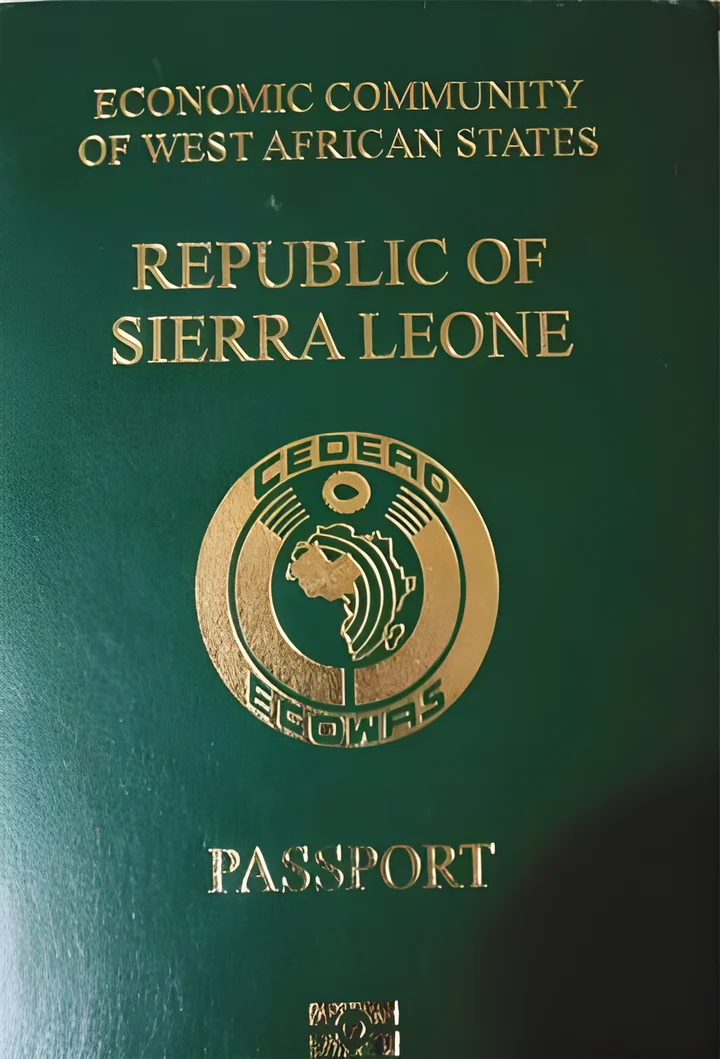
| Sierra Leone, Fast Track | USD 140,000 programme fee plus filing and processing fees | usually 90-120 days |
| Dominica, fund | USD 200,000 for a single applicant plus government fees | first response from the authority within three months |
With Brazil you have an advantage that not every country offers: the order is up to you. Because acquiring another citizenship does not affect the Brazilian passport, you can obtain the investment passport before, during or after naturalisation. Get it early, and you already have your second right in your pocket during the years of waiting. All open programmes with amounts, timelines and family rules are in the comparison, and the total costs under Costs.
Frequently asked questions
How long does it take to get Brazilian citizenship?
The rule is four years of permanent residence in Brazil before you apply, or one year with a Brazilian spouse or a Brazilian child. The count runs from the day your Residência por prazo indeterminado began, measured back from the day you apply. For the procedure itself, the government gives an estimated processing time of up to 180 days.
Can I get Brazilian citizenship through marriage?
Not automatically, but much faster. If you are married to a Brazilian or live in a União Estável, Article 66 of the Migration Law cuts the waiting time to one year of permanent residence. At the moment of naturalisation you may not be separated, either legally or in fact, and the two of you sign a joint declaration to that effect. How other countries handle the spouse route is compared in Naturalisation through marriage.
Do I have to give up my German passport for a Brazilian one?
No. The Ministério da Justiça's list of requirements contains no renunciation of your current citizenship. On the German side, the old § 25 of the Nationality Act (StAG) has been repealed; since 27 June 2024, acquiring another citizenship by application no longer costs you your German one. You are then German and Brazilian at the same time.
Can you buy Brazilian citizenship?
No. The Constitution and the Migration Law recognise only citizenship by birth and naturalisation in four forms; there is no investment programme with a direct path to the passport. An investment can, however, open the way to residence, and residence is the foundation of naturalisation. A passport in months is only available through a programme in another country.
How good does my Portuguese need to be for naturalisation?
The law requires that you can communicate in Portuguese, taking your personal circumstances into account. You prove this with a recognised certificate, such as the Celpe-Bras or a passed Portuguese course for immigrants at a university accredited by the Ministry of Education. Your appointment at the Polícia Federal also shows, in conversation, whether you can make yourself understood.
What does naturalisation in Brazil cost?
According to the government, the application itself is free of charge. Costs arise for the documents: the German criminal record certificate with an apostille, the translation by a sworn translator in Brazil and, where needed, a language exam or course. What a second passport through an investment programme costs in total is shown under Costs.
Will my child be Brazilian if born in Brazil?
Yes. Under Article 12 of the Constitution, anyone born in Brazil is Brazilian by birth, even if the parents are foreigners, as long as they are not in the service of their own country. For you as a parent, a Brazilian child cuts the waiting time to one year of permanent residence. The whole path around the birth is set out in Giving birth in Brazil.
Your path to a Brazilian passport, with a second passport for the years before
We look at your path to Brazil together, from permanent residence to publication in the Diário Oficial, and settle which second passport protects you until then. You leave the consultation with your roadmap.
Book a consultationSources
- Supremo Tribunal Federal: Constituição da República Federativa do Brasil, Art. 12, 14, 222 (atualizada até a EC n. 132/2023)
- Câmara dos Deputados: Lei nº 13.445, de 24 de maio de 2017 (Lei de Migração), Art. 64-76
- Ministério da Justiça e Segurança Pública: O que é Naturalização? Modalidades e jus soli
- Ministério da Justiça e Segurança Pública: Naturalização Ordinária, Requisitos, Português, Documentos
- Ministério da Justiça e Segurança Pública: Residência pelo prazo estabelecido pela lei brasileira, prazos, ausências e comprovantes
- gov.br: Solicitar naturalização (processing time and no fee)
- Ministério da Justiça e Segurança Pública: Perguntas frequentes, Naturalização (no Certificado de Naturalização since 21 Nov 2017, appeal within 10 days)
- Gesetze im Internet: German Nationality Act (StAG) § 25 (repealed)
- Gesetze im Internet: German Nationality Act (StAG) § 26 (renunciation)
- Federal Law Gazette (Bundesgesetzblatt) 2024 I No. 104: Act to Modernise Nationality Law
- sierraleonepassport.com: Sierra Leone citizenship, programmes and timelines
- Citizenship by Investment Unit Dominica: S.R.O. 8 of 2024