
At a glance
- A passport is state property: governments can refuse a new one, revoke a valid one or stop you at the border.
- The United States denies passports for tax debt above 66,000 USD (2026) and for child support arrears above 2,500 USD.
- Above that child support threshold, the State Department may also revoke a passport you already hold.
- Some states go further and withdraw citizenship itself, as Kuwait has done for tens of thousands of people since 2024.
- A second citizenship does not cancel a lawful order, but it means your life as a citizen does not hang on one state alone.
Most people think of their passport as a personal document, like a driving licence or a bank card. Legally it is something else. It remains the property of the state that issued it, and that state decides when you may hold it.
What follows are the routes governments actually use today, with the figures that apply in 2026. None of them needs a war or a coup.
Could your own government refuse or revoke your passport? Let's review your exposure.
Book your consultation nowRefusal, revocation, denaturalisation, exit ban: four different things
The words are often mixed up. They describe four different measures, and each one hits you in a different way.
- Refusal: you apply for a new passport and do not get one. Your old passport may still be valid until it expires.
- Revocation: a passport you already hold is cancelled before its expiry date. It stops working at the border.
- Denaturalisation: the state removes your citizenship itself, not just the document. You become a foreigner in the country that issued your passport.
- Exit ban: your passport stays valid, but you may not leave. The border closes, not the document.
International law sets the framework. Article 12 of the International Covenant on Civil and Political Rights says that everyone shall be free to leave any country, including his own, and that no one may be arbitrarily deprived of the right to enter his own country.
The same article allows restrictions provided by law for national security, public order, public health or morals, or the rights of others. That is the opening every passport rule below relies on.
Unpaid tax: when the US revokes a passport
The United States has the most clearly written rule. Under section 7345 of the Internal Revenue Code, the IRS certifies "seriously delinquent tax debt" to the State Department, which then refuses a new passport and may revoke a valid one.
The threshold in 2026
For 2026 the line is more than 66,000 USD, adjusted for inflation every year (64,000 USD in 2025). The debt counts only if the IRS has filed a notice of federal tax lien or issued a levy. No court is involved.
The 90 days and the exceptions
When you apply for a passport while certified, the State Department holds your application for 90 days. If the debt is not resolved in that time, the application is denied.
Some situations take you out of the rule: an instalment agreement, an offer in compromise, a pending innocent spouse request, bankruptcy, and living in a federally declared disaster area or serving in a combat zone, among others.
Unpaid child support: the US and the UK
Debts to your own family are the second classic route. Here too, the decision is mostly administrative.
United States: 2,500 USD, refusal and revocation
Since 1996, parents with child support arrears cannot get a US passport. The threshold started at 5,000 USD and was lowered to 2,500 USD by the Deficit Reduction Act of 2005. Your name stays on the list until the arrears are paid in full, unless the state releases it.
The programme works: according to the Congressional Research Service it collected about 30 million USD in 2024 alone.
Refusal is not the end of it. The State Department states that once you owe more than 2,500 USD, it may also revoke a valid passport, and it sends the revocation notice directly to you, by email or to the mailing address on your most recent application.
A revoked passport stays unusable for travel even after you pay. Once the state has been paid you can apply for a new one, and removal from the HHS records takes at least two to three weeks.
United Kingdom: a court order
In the UK the route runs through a court. Since late 2018, section 39B of the Child Support Act 1991 lets a magistrates' court, or a sheriff in Scotland, disqualify a parent from holding or obtaining a UK passport for wilful refusal or culpable neglect to pay.
The Secretary of State applies for the order. The court must consider whether the parent needs the passport to earn a living, so it remains a targeted sanction rather than an automatic one.
Could child support arrears block your passport? Let's assess your case.
Book your consultation nowWhen citizenship itself is withdrawn
A revoked passport can be replaced once the debt is paid. A withdrawn citizenship cannot. This is the deepest form of the measure, and it is no longer rare.
Kuwait: tens of thousands since 2024
Since 2024, Kuwait has been reviewing citizenship grants on a scale few expected. Officials put the number for 2025 alone at close to 50,000, and further rounds followed in 2026, among them more than 2,000 people in June and 415 in October.
The stated grounds include fraud or false statements, unauthorised dual nationality and acts against the state's "supreme interests". Dependants who acquired citizenship through the person concerned lose it as well.
United States: denaturalisation as a priority
On 11 June 2025 the US Justice Department instructed its Civil Division to "prioritize and maximally pursue" denaturalisation proceedings in all cases permitted by law and supported by the evidence.
These are civil cases against people whose naturalisation was illegally procured or obtained by concealment or misrepresentation. They concern naturalised citizens only, and the memo lists ten priority categories, starting with national security.
Why the second nationality matters here
Both examples share a pattern. Citizenship acquired later is more exposed than citizenship held from birth, and a nationality held without permission can itself become the ground for withdrawal.
If you hold two citizenships lawfully and openly, losing one still leaves you a citizen of the other state, with a passport and a country you are entitled to enter.
Exit bans: the passport stays, the border closes
Sometimes the state does not touch your passport at all. It simply does not let you leave. In wartime this is the most common measure.
Ukraine and Russia
Since February 2022, Ukraine has barred men aged 18 to 60 from leaving under martial law. Only in late August 2025 did a government resolution allow men aged 18 to 22 to cross the border again.
In Russia, a law signed on 14 April 2023 made electronic draft summonses legally valid and bars the people who receive one from leaving the country until they report. The summons arrives online; the border closes at the same moment.
What the passport cannot do
In both cases a valid passport is no help. The ban is a lawful restriction under the state's own law, of exactly the kind Article 12(3) of the Covenant allows. A second passport does not lift it either.
Might an exit ban keep you in the country? We can review it together.
Book your consultation nowIf it happens while you are abroad
The most uncomfortable moment is a revocation that reaches you far from home. What you get then depends entirely on the state concerned.
- United States: an American abroad whose passport is revoked can receive a passport limited to the journey back to the US. It brings you home, nowhere else.
- Ukraine: from 23 April 2024, consulates suspended services, including passport renewals, for men aged 18 to 60 living abroad. Passports for this group were to be issued only inside Ukraine. From 18 May 2024 services resumed only for men with valid military registration documents.
In both cases the consulate, normally your first port of call abroad, becomes the place where the measure is enforced. Two embassies instead of one explains how consular protection works with two citizenships.
What a second citizenship does, and what it does not
To be clear: a second passport does not cancel any lawful measure. A tax debt, a court order or an exit ban stays in force. Using a second passport to get around one can be an offence of its own, and that is never its purpose.
What it gives you
What a second citizenship does is something else. It gives you a second travel document from a second state, a second consular network, and a second country you are entitled to enter.
If one state cancels your passport by mistake, loses your file or freezes its services for a whole group, your life as a citizen continues under the other one. That is the difference between a right and a permission, which we explain in A right, not a permission.
Why it has to come first
The time to add a second citizenship is while your first passport is valid and nothing is pending. Every programme checks your background; an outstanding debt or pending proceedings can stop the application.
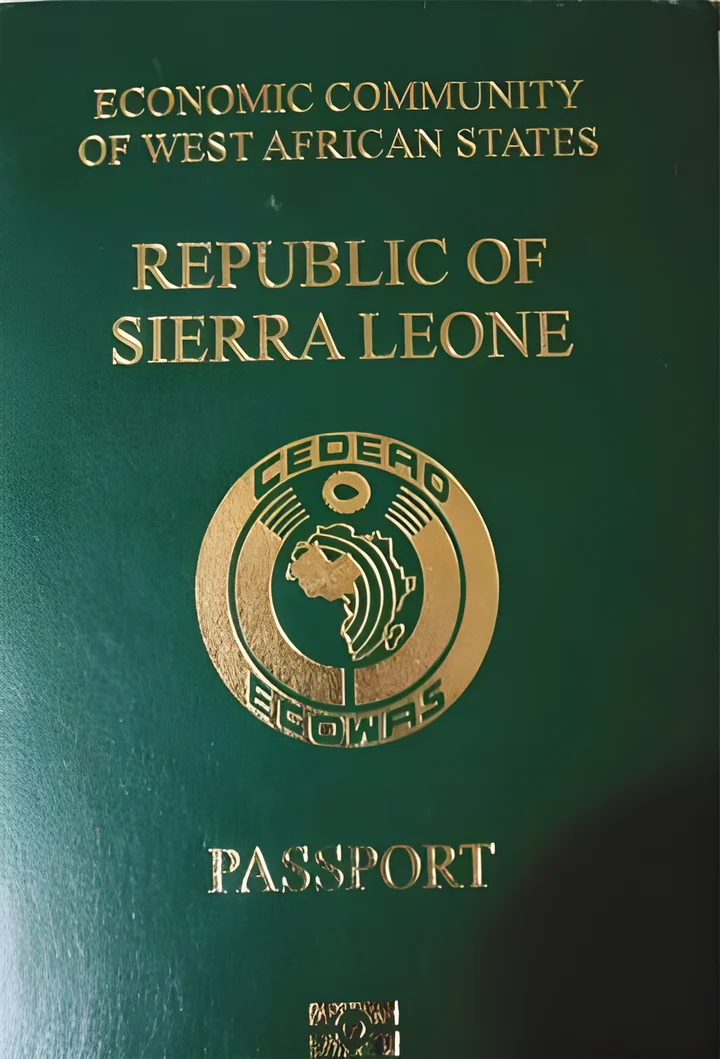
Programmes such as Sierra Leone's accept multiple citizenship and can be completed remotely. They are an addition to a strong first passport, never a replacement for it.
Your passport, your plan
Passport rules are written in calm times and applied in difficult ones. The figures change every year; the principle does not: the state that issues your passport has the final say over it.
- Keep your tax and family obligations in order. They are the most common trigger for refusal and revocation in Western democracies.
- Know the difference between refusal, revocation, denaturalisation and an exit ban. Each one needs a different answer.
- Add a second citizenship early and openly, as an addition, not an escape.
Frequently asked questions
Can a government cancel my passport without a court decision?
Yes, in many systems. In the United States, both the tax route and the child support route are administrative: the IRS certifies the tax debt, the states certify the arrears, and the State Department refuses or revokes the passport.
How much debt leads to a US passport refusal?
For federal tax, seriously delinquent debt of more than 66,000 USD in 2026, adjusted for inflation each year, with a tax lien filed or a levy issued. For child support, arrears above 2,500 USD.
Can I lose a citizenship I was born with?
The rules differ from country to country. Most withdrawals hit naturalised citizens: people who acquired citizenship by fraud, false statements or without a required permission. Kuwait and the US denaturalisation policy of 2025 both target acquired citizenship.
Does a second passport let me leave if my country bans me from leaving?
No lawful right comes with it. International law allows exit restrictions provided by law for national security, public order and similar grounds. A second passport does not cancel such a ban, and using it to get around one can be an offence of its own.
What happens if my passport is revoked while I am abroad?
It depends on the state. The United States issues a passport limited to the journey home. Ukraine suspended consular services for men of military age abroad in 2024 and issued their passports only inside the country for several weeks.
Two passports, two states that stand behind you
Together we look at which second citizenship fits your situation and your family, so that your freedom to travel never depends on a single government.
Book a consultationSources
- IRS: Revocation or denial of passport in cases of certain unpaid taxes (IRC § 7345)
- Congressional Research Service IN12660: Passport denial and revocation for child support arrears (updated 5 May 2026)
- US Office of Child Support Services: How does the passport denial program work?
- U.S. Department of State: Passports and Child Support Debt (26 May 2026)
- UK Child Support Act 1991, section 39B: disqualification from holding or obtaining a travel authorisation
- The National: Kuwait revokes citizenship of 415 people in latest crackdown (5 October 2026)
- The National: Kuwait revokes citizenship of more than 2,000 people (15 June 2026)
- US Department of Justice, Civil Division: memorandum on denaturalisation priorities (11 June 2025)
- International Covenant on Civil and Political Rights, Article 12
- Kyiv Independent: Ukraine allows men aged 18 to 22 to go abroad
- EY tax alert: Ukraine suspends consular services for certain citizens living abroad
- Meduza: Putin signs law on electronic summonses and restrictions on draft dodgers