The short answer
You acquire Monegasque citizenship by descent, above all from a Monegasque father, through marriage after 20 years, or by naturalisation after at least ten years of habitual residence in Monaco counted from your 18th birthday. Naturalisation lies entirely at the Prince's discretion, and you have to lose your existing nationality for it. You cannot buy the passport: Monaco has no citizenship by investment programme. What is open to you as a German is the Carte de séjour, the residence card: the first card costs 80 euros.
Monaco is small, but its nationality law is strict. According to the German Federal Foreign Office, only about a quarter of its just over 38,000 inhabitants hold Monegasque nationality, around 9,300 people. Some 980 Germans also live in the Principality. The government is remarkably open about the principles behind its law: neither birth nor residence in the Principality gives a right to the passport, descent from the father remains the core, and naturalisation serves mainly to reunite families. For the broad picture of the countries where naturalisation through residence works well, read Naturalisation abroad. For Monaco, a close look at the law pays off.
How do you get Monegasque citizenship?
The governing text is Law No. 1.155 of 18 December 1992 on nationality, amended several times since, most recently in 2021. Here are the main routes at a glance, and only one of them is realistically open to you as a German without Monegasque family:
| Route | Requirement | Decision | Existing passport |
|---|---|---|---|
| Descent | Monegasque father, mother under conditions | by operation of law | not affected |
| Marriage | 20 years of marriage, 10 years if married before 1 July 2022 | declaration, the Prince can object | kept |
| Naturalisation | 10 years of habitual residence from age 18 | the Prince at his own discretion | must be lost |
| Naturalisation without residence period | the Prince deems you worthy of the favour | the Prince case by case | must be lost |
| Reinstatement | formerly Monegasque | Ordonnance Souveraine | case by case |
What stands out is what is missing: an entitlement. Even someone who meets every deadline has no right to become Monegasque. As the government itself puts it, naturalisation lies at the Prince's discretion. Knowing that changes how you plan: Monaco is an excellent place to live, but not a reliable route to a passport.
Naturalisation in Monaco: ten years and the Prince's yes
Article 5 of the law is short. Anyone who can prove ten years of habitual residence in the Principality, counted from their 18th birthday, may apply for naturalisation. Years you spent in Monaco as a child or teenager therefore do not count. Naturalisation is granted by Ordonnance Souveraine (sovereign order), after a review of your conduct and personal situation.
Who decides
You address the application to the Prince. The Direction des Services Judiciaires examines it under an organisational ordinance of 1918 and reports to the Prince; other bodies are consulted, above all the Minister of State. Before a naturalisation that the Prince has provisionally approved is published as an Ordonnance Souveraine, the French authorities are also consulted.
The government also says which criteria count. As a rule, these are family ties to the Monegasque community, good integration into economic, social or cultural life, and any other reason the Prince considers worthy. Ten years of residence therefore only open the door to an application. You walk through it with ties that go beyond an apartment.
Military service and family
The law also requires that naturalisation release you for good from any military service obligations abroad. If you have children, they benefit too: according to the government, naturalisation extends to children under 18. How years in a country are counted and proven in practice, across countries, is explained in Proving your years of residence.
Giving up your German passport
This is the real hurdle for Germans. Naturalisation requires you to lose your existing nationality. For applicants whose home country only allows that loss after another nationality has been acquired, the law has a rule of its own: they too can be naturalised, but must prove the loss within six months of the Ordonnance being published. Otherwise they, together with any children who derive their nationality from them, are deemed never to have been Monegasque.
On the German side, that is exactly the situation. Under § 17 of the Nationality Act (Staatsangehörigkeitsgesetz, StAG), German nationality is now lost only through renunciation, by joining foreign armed forces or through the withdrawal of an unlawful administrative act. Since the 2024 reform, you no longer lose it automatically when you voluntarily take on another one. Under § 26 you can only renounce once you hold more than one nationality. The renunciation must be declared in writing, needs the approval of the nationality authority and takes effect when the certificate of renunciation is handed over.
For those liable to military service, § 26 requires that the Federal Ministry of Defence, or a body it designates, raises no objection, unless you have had your habitual residence abroad for at least ten years. After ten years in Monaco, you will usually fall under that exception anyway. What conscription otherwise means for Germans abroad is set out under Conscription.
The bottom line: naturalising in Monaco means swapping your German passport for a Monegasque one, rather than adding a second. What dual citizenship otherwise means for family, taxes and travel is explained in Dual citizenship for Germans.
Monegasque citizenship through marriage: 20 years, but with dual citizenship
The wedding alone does not make you Monegasque. Only after a long waiting period can you, as the husband or wife of a Monegasque citizen, acquire citizenship by declaration. Since 1 July 2022, that period has been 20 years from the wedding. If you married before that date, you still need only ten years.
Article 3 sets four conditions:
- Living together: you are still living together when you apply, unless your spouse has died and you have not remarried.
- Monegasque by origin: your spouse did not acquire citizenship through an earlier marriage of their own.
- No loss of origin: the acquisition must not cause you to lose your original nationality under foreign law or a treaty.
- Continuity: your spouse is still Monegasque when you apply.
On top of that comes a declaration that surprises many: anyone who becomes Monegasque through marriage expressly undertakes not to renounce their existing nationality or nationalities. The marriage route is therefore the only one on which you explicitly keep your German passport. You make the declaration before the registrar, who records it within two months. From registration, the Prince has six months in which to object by Ordonnance Souveraine after consulting the Council of State.
Marriage makes residence easier even before that. You obtain the Carte de séjour in the category for spouses of Monegasque citizens after at least one year of residence in Monaco, and it is valid for five years. Which countries naturalise spouses much faster is compared in Naturalisation through marriage.
Citizenship by birth and descent
You are Monegasque from birth if your father is Monegasque, unless he himself acquired citizenship only by declaration, for instance through marriage. Through the mother, a child becomes Monegasque mainly when she was born Monegasque and still held that nationality at the birth, when she is Monegasque and has an ancestor born Monegasque, or when she acquired citizenship through naturalisation or reinstatement.
Birth in the Principality itself, on the other hand, does not help. Only a child born in Monaco to unknown parents becomes Monegasque through place of birth. If you want to give your child a second passport at birth, you need a country with genuine birthright citizenship: the list of jus soli countries shows where that works.
Anyone who has lost Monegasque citizenship can regain it by Ordonnance Souveraine. Here, too, there is no entitlement.
Can you buy citizenship in Monaco?
No. Monaco has no citizenship by investment programme, and the law does not provide for one. Article 6 sounds like a back door, but it is not one: under it, the Prince can naturalise someone without the ten years of residence if he deems the applicant worthy of this favour. That is a personal decision by the head of state, not a procedure you qualify for with a sum of money.
What Monegasque citizenship costs
The government does not name a fee for naturalisation. The steps around residence and the document at the end do have figures:
| Item | Amount | Source |
|---|---|---|
| First Carte de séjour | 80 euros | Section des Résidents |
| Passport, adults | 90 euros | Service des Passeports |
| Passport, minors | 60 euros | Service des Passeports |
| Passport, under 3 years | 30 euros | Service des Passeports |
The real cost lies in the years before. For the entire period you need a home in Monaco of a suitable size, as owner or tenant, and proof of sufficient means. No authority sets how much is enough: the bank confirmation must come from a bank in Monaco, and the bank decides what sum it considers sufficient. What an account in the Principality requires is described by Freedom Banking under Open a bank account in Monaco. If you actually want to acquire a second passport in return for an investment, you will find the programmes in Buying citizenship.
What Monaco gives you instead: the Carte de séjour
The passport is rare; residence, by contrast, is open. Anyone aged 16 or over who wants to stay in Monaco for more than three months a year, or live there, needs a Carte de séjour. It is issued by the Section des Résidents of the Direction de la Sûreté Publique. As an EU citizen you need no entry visa in advance to settle; your path starts directly with the application.
What you have to prove
- Home: accommodation in Monaco of a suitable size, as owner, as shareholder of a property company, as tenant with a lease registered with the tax administration, or free of charge with close relatives. Always add the electricity contract or the latest electricity bill.
- Means: salary, business income, pension, savings or support from a relative. If you live on your assets, you submit a confirmation from a bank in Monaco that is no more than one month old.
- Good character: a criminal record certificate from every country you have lived in over the last five years, no more than three months old.
- Civil status: passport, birth certificate and, where applicable, marriage certificate. Documents in languages other than French, English or Italian need a certified translation.
After the application come a personal interview and a check, and, if the result is positive, a second appointment to collect the card.
The categories of the Carte de séjour
| Category | Requirement | Validity |
|---|---|---|
| Temporaire | no prior period, first card | 1 year |
| Ordinaire | 3 years of residence | 3 years |
| Privilégiée | 10 years of residence with actual presence | 10 years |
| Spouse of a Monegasque citizen | 1 year of residence | 5 years |
In special cases, the qualifying period for the Privilégiée can be shortened from ten years to one. Everything else about life in the Principality, from the housing market to everyday life, is covered by Wohnsitz Ausland in its country profile Monaco steuerfrei leben (in German).
For your planning, this means the Carte de séjour gives you almost everything a citizen needs in daily life in Monaco. What it does not give you is the security of a passport. A residence card is renewed, or it is not. A nationality is a right, not a permit.
Monaco passport: who gets one and what you need to enter
The Monegasque passport is issued by the Service des Passeports at the Ministry of State, and only to Monegasque nationals. It is a personal travel document; minors need their own passport too. It is valid for ten years for adults, five years for children aged 3 to 18 and three years for children under 3. As a rule, it is ready after five working days.
Do you need a passport for Monaco?
Not necessarily as a German. The German Federal Foreign Office lists the following for entry to Monaco:
| Document | Entry possible |
|---|---|
| Passport | yes |
| Temporary passport | yes |
| Identity card | yes |
| Temporary identity card | yes |
| Children's passport (Kinderreisepass) | yes |
Except for the temporary identity card, the documents may have expired up to one year ago. The basis is a 1963 neighbourhood agreement with France, under which French entry rules also apply to Monaco. Through France, Monaco takes part in the Schengen area; it has belonged to the EU customs union since 1997, and payment is in euros. Spot checks at the border are still possible. Visas, residence rules and border practice in detail are covered by Wohnsitz Ausland under Monaco Einreise (in German). If you travel with more than one passport, the rules for the border and for bookings are in Travelling with several passports.
Monaco citizenship and taxes: residence counts, not the passport
Many people search for Monegasque citizenship when what they really mean is taxes. Here the passport hardly helps, because the rule is tied to residence. According to the government, since an ordinance of 1869 there has been no income tax for individuals who have actually and genuinely settled in Monaco. There is no wealth tax.
One exception concerns French nationals: for them the Franco-Monegasque agreement of 1963 applies. Monaco levies inheritance and gift taxes on assets located in the Principality, regardless of residence and nationality. For you as a German, this means you get the advantage with the Carte de séjour and by genuinely making Monaco your main home, not only once you have the passport. How Monaco taxes income, companies and assets is shown by Steueratlas under Steuern in Monaco (in German). What the German side demands when you move away is set out under Taxes.
A second passport alongside the road to Monaco
Monaco is a wonderful place to live. As a route to a second passport, it hardly works, for three reasons: at least ten years of residence from your 18th birthday, no entitlement, and at the end the loss of your German passport. The only route with dual citizenship, marriage, takes 20 years.
Naturalisation and citizenship by investment do not exclude each other; they complement each other. Naturalisation is the route without an investment and ultimately the better one, while the investment buys you the time until then. Why you should pursue both in parallel is explained in CBI and naturalisation. Which countries naturalise after just a few years is compared in The fastest naturalisations, and what the similarly strict neighbouring model looks like is shown by Liechtenstein citizenship.
The difference in pace is clear:
| Monaco | Dominica | Grenada | |
|---|---|---|---|
| Route | naturalisation through residence | citizenship by investment | citizenship by investment |
| Time | at least 10 years of residence from age 18 | no residence, neither before nor after naturalisation | approval within 60 working days of submission |
| Entry point | Carte de séjour, home, means | fund contribution from 200,000 USD | fund contribution from 235,000 USD |
| German passport | must be given up | kept | kept |
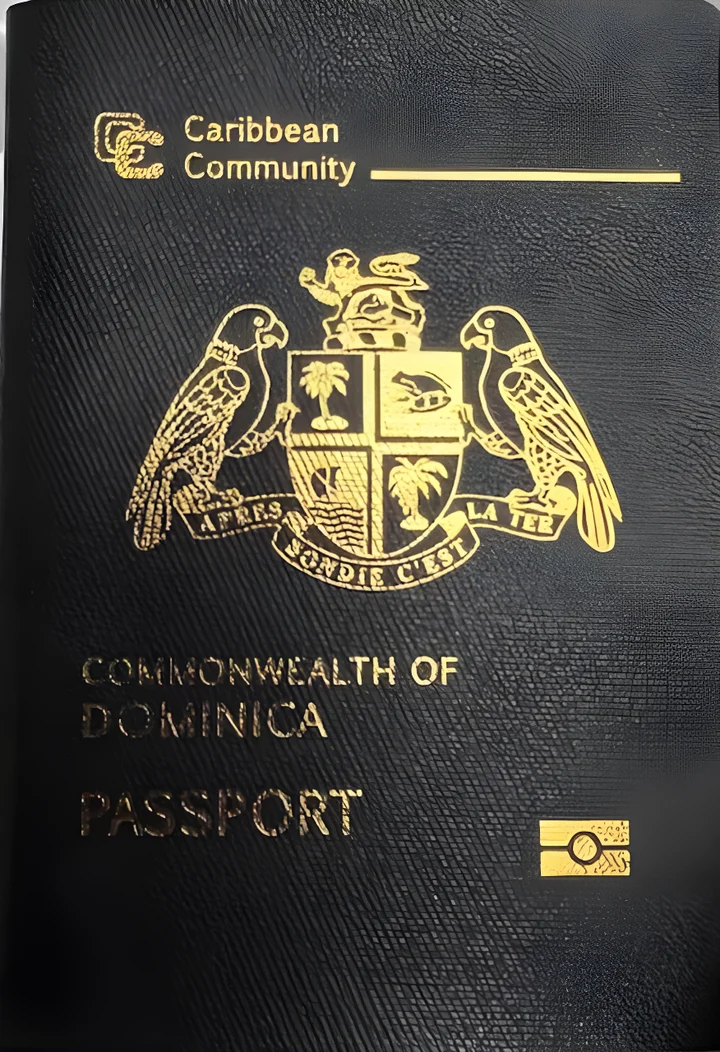
Dominica starts at 200,000 USD for a single applicant through the fund and, according to the authority, requires no residence on the island either before or after naturalisation. For Grenada, the responsible authority states approval within 60 working days of submission. Since 2024, you keep your German passport as a German, because voluntarily taking on another nationality no longer costs you it. Which programmes are open today and how they differ on cost, family and travel freedom is shown in the comparison; what applies to partners, children and parents is set out under Family.
This is how you combine both: Monaco as your home with all the advantages of the Carte de séjour, and a second passport that does not depend on whether a residence card is renewed or whether the Prince one day says yes.
Frequently asked questions
How do you become a citizen of Monaco?
By descent, by marriage or by naturalisation. A child of a Monegasque father is Monegasque from birth; through the mother this applies under certain conditions. Spouses can acquire citizenship after 20 years of marriage. For everyone else, there is naturalisation after at least ten years of habitual residence in Monaco from your 18th birthday, which the Prince decides at his own discretion.
Can you buy Monegasque citizenship?
No. Monaco has no programme that grants the passport in return for an investment or donation. The law does allow the Prince to naturalise applicants without the ten years of residence if he deems them worthy of this favour, but that is a case-by-case decision, not a procedure with a price. A second passport in return for an investment is available through the open programmes.
How much does Monegasque citizenship cost?
The government does not name a fee for naturalisation on its page about acquiring nationality. The figures it does give are 80 euros for the first Carte de séjour and 90 euros for an adult passport. The real cost lies in the life beforehand: you need a suitable home in Monaco for at least ten years and sufficient means. If you live on your savings, a bank in Monaco confirms them.
As a German, can I keep my passport if I naturalise in Monaco?
Not with naturalisation: the law requires you to lose your existing nationality, at the latest six months after the Ordonnance Souveraine is published. Acquisition through marriage works the other way round: there you expressly undertake not to give up your existing nationality.
Will my child become Monegasque if born in Monaco?
No. Being born in Monaco confers citizenship only on children of unknown parents. What counts is descent, above all from the father. Which countries grant the passport to children born on their soil is shown in the list of jus soli countries.
Do you need a passport for Monaco?
Not necessarily as a German. The German Federal Foreign Office lists the passport, the temporary passport, the identity card, the temporary identity card and the children's passport for entry. Except for the temporary identity card, the documents may have expired up to one year ago. French entry rules apply.
How long does naturalisation through marriage take in Monaco?
20 years from the wedding. For marriages concluded before 1 July 2022, the ten-year period still applies. The couple must still be living together when the application is made, unless the marriage ended with the spouse's death and you have not remarried.
Monaco as your home, a second passport right now
Together we work out how to combine residence in Monaco with a second passport that does not depend on ten years and the Prince's discretion. That way your freedom rests on a right, not on a residence card.
Book a consultationSources
- LégiMonaco: Loi n° 1.155 du 18 décembre 1992 relative à la nationalité
- Gouvernement Princier, MonServicePublic: Acquisition de la nationalité monégasque
- Gouvernement Princier, MonServicePublic: Demander une carte de séjour
- Gouvernement Princier, MonServicePublic: La carte de séjour
- Gouvernement Princier, MonServicePublic: Obtenir un passeport
- Gouvernement Princier, MonServicePublic: La fiscalité monégasque
- German Federal Foreign Office (Auswärtiges Amt): Monaco, travel and safety advice
- German Federal Foreign Office (Auswärtiges Amt): Monaco, relations with Germany
- Gesetze im Internet: Nationality Act (StAG) § 17 (grounds for loss)
- Gesetze im Internet: Nationality Act (StAG) § 26 (renunciation)
- Citizenship by Investment Unit Dominica: FAQs
- Investment Migration Agency Grenada: FAQs