The short answer
As a German, you can apply for ordinary naturalisation in Switzerland once you hold a C settlement permit and have lived in Switzerland for ten years in total, three of them within the five years before you apply. Your canton also requires two to five years of residence locally, and you must be successfully integrated; as a native German speaker, you already meet the language requirement. The Confederation charges a CHF 100 fee, and the canton and municipality bill their own. You keep your German citizenship, because Germany has generally accepted multiple citizenship since 27 June 2024.
A passport is a right, not a permission. As long as you live in Switzerland on a B or C permit, you live there because the state allows you to. Swiss citizenship turns that permission into an entitlement: you vote in federal ballots and elect the National Council, you have the right to enter Switzerland at any time, nobody may expel you, and your citizenship passes to your children from birth. Naturalisation costs you little money, but it does take time and patience. That is exactly why it pays to set out on this road early and deliberately.
How do you become Swiss as a German?
The Swiss Citizenship Act (Bürgerrechtsgesetz, BüG) knows three routes to the Swiss passport: ordinary naturalisation, facilitated naturalisation and reinstatement for former Swiss citizens. There is no route through investment. For the vast majority of Germans who have moved to Switzerland, ordinary naturalisation is the standard case. Facilitated naturalisation is open above all to the spouses of Swiss citizens.
One feature sets Switzerland apart from almost every other country: you do not just become a citizen of the Confederation. Naturalisation gives you three citizenships at once: citizenship of your municipality, of your canton and of Switzerland. They come into being together as soon as the cantonal naturalisation decision becomes final. That is also why three levels have a say, each with its own rules.
For a German, the road typically looks like this:
- Moving in with a B permit. Your years on a B residence permit already count in full towards naturalisation.
- C permit after five years. Germans can obtain the settlement permit after just five years of lawful and uninterrupted residence.
- Application after ten years. Only once you have lived in Switzerland for ten years and hold the C permit may you apply.
- Procedure at municipal, cantonal and federal level. All three levels then examine your case until the canton decides.
How strong the red passport turns out to be is shown in The Swiss passport: how strong it really is. How Switzerland compares with other countries where you can naturalise through residence is set out in the overview Naturalisation abroad.
What are the requirements for Swiss naturalisation?
The Confederation sets the minimum requirements, and cantons and municipalities may add their own. The federal rules are the same everywhere:
| Requirement | What applies | Legal basis |
|---|---|---|
| Permit | C settlement permit when you apply | Art. 9 BüG |
| Residence in Switzerland | ten years in total, three of them within the five years before the application | Art. 9 BüG |
| Years as a young person | time between ages 8 and 18 counts double, at least six years actually spent there | Art. 9 BüG |
| Canton and municipality | two to five years minimum residence, depending on the canton | Art. 18 BüG |
| Language | B1 spoken, A2 written in a national language | Art. 6 BüV |
| Social assistance | none in the three years before the application, unless repaid in full | Art. 7 BüV |
You cannot apply before the ten years are up. The SEM says so explicitly: the formal requirements must be met at the moment the application is filed. Submit a few months early and all you lose is time.
Which years count
Not every year in Switzerland counts the same. Years on a B or C permit count, as do years with a legitimation card from the Federal Department of Foreign Affairs (FDFA) or a Ci permit. Years on an F permit count half. Years on an L permit as a short-term resident do not count at all, and neither does time spent in the asylum procedure.
Keep an eye on your time abroad. Short absences with the intention of returning do not interrupt your residence. A stay abroad of up to one year on behalf of your employer or for education or further training also counts as short-term. But if you deregister or actually live abroad for more than six months, you have given up your residence in Switzerland. How to document your years of residence without any gaps is shown in Counting your residence years.
From B permit to C permit
Here Germans have a real advantage. The Agreement on the Free Movement of Persons with the EU does not cover the settlement permit. Germany, however, is one of the states with which Switzerland has made its own arrangements on settlement. That is why Germans receive the C permit after five years of lawful and uninterrupted residence, provided they meet the necessary conditions. With many other EU states there is no such agreement.
For naturalisation, this means the C permit is rarely your bottleneck; the ten years are. What the C permit brings you in everyday life and how to apply for it is explained in Swiss C permit: permanent residence timelines. The move itself, from flat hunting to taxes, is covered by the country guide Moving to Switzerland (in German).
Integration, language, basic knowledge: what is assessed
The years alone are not enough. The Confederation grants the naturalisation permit only if you are successfully integrated, familiar with Swiss living conditions and pose no threat to Switzerland's security. What that means in practice is spelled out in the Act and the Ordinance.
Successful integration
The Citizenship Act names five criteria:
- Public security and order. An entry in the criminal record can block naturalisation, depending on the severity of the sentence. If criminal proceedings are pending against you, the SEM puts your application on hold until they have been concluded with final effect. The SEM explicitly counts these as part of public order too: no debt enforcement proceedings, no certificates of unpaid debts, taxes paid.
- Values of the Federal Constitution. The rule of law, equality between men and women, freedom of religion and freedom of expression.
- Language. At least B1 spoken and at least A2 written in a national language. The cantons may set higher requirements.
- Economic life or education. You cover your living costs from income, assets or claims against third parties, or you are in education.
- Family. You support the integration of your spouse and your minor children.
For Germans, language is the easiest hurdle. Anyone who speaks and writes a national language as their mother tongue has already provided the language evidence under the Swiss Citizenship Ordinance (Bürgerrechtsverordnung, BüV). You do not need a language school; your energy belongs to the other criteria.
Some cantons look even more closely at your finances. Zurich, for example, requires that you have had no unpaid entries in the debt enforcement register in the last five years. A forgotten bill that ends up in debt enforcement can therefore cost you years.
Familiarity with Switzerland
This is where it gets personal. The Ordinance expects you to have basic knowledge of Switzerland's geography, history, politics and society, to take part in social and cultural life and to maintain contact with Swiss people. The canton may test your knowledge. In the canton of Zurich, that is the basic knowledge test, with questions about Switzerland, the canton and how Zurich's municipalities work; among those exempt is anyone who attended compulsory school in Switzerland for five years or completed an upper secondary qualification here. If you know the gymnastics club, the parents' council or the volunteer fire brigade only by hearsay, start joining in while there is still time.
Municipality, canton, Confederation: how the procedure works
Cantonal law governs the procedure in the canton and the municipality. The canton decides where you submit your application: sometimes to your municipality of residence, sometimes to the canton itself. Everywhere, though, the process follows the same pattern:
- Application. You submit the application to the authority your canton designates. That is also where you get the form.
- Cantonal review. The competent authority examines your integration and your familiarity with living conditions and draws up an assessment report.
- Assurance. If the canton and, where provided for, the municipality can assure you of naturalisation, the application goes to the State Secretariat for Migration.
- Federal naturalisation permit. The SEM usually decides within eight months of receiving the complete documents.
- Cantonal decision. The canton decides within one year of the federal permit. Once this decision becomes final, you are Swiss.
The canton of Zurich puts the whole ordinary naturalisation at around two years. There, the cantonal municipal affairs office reviews your application first, then your municipality of residence grants municipal citizenship, then the canton grants cantonal citizenship, and only after the federal permit does Swiss citizenship follow.
When the communal assembly decides
Cantonal law can provide for the voters of your municipality to decide on your application at a communal assembly. Federal law sets limits here, however: the voters may only reject it if a motion to that effect has been tabled with reasons, and every rejection must be justified. Only your nationality, your length of residence and the information needed to assess your integration are disclosed.
Careful when you move
The biggest avoidable mistake is moving at the wrong time. The canton and municipality remain responsible after a move if they have already completed their assessment of your integration. In the canton of Zurich, the procedure is discontinued if you move before your municipality has completed its review. You can then only file a new application in the canton of Zurich once you have lived in your new municipality for two years. So settle where you live before you submit the application, not afterwards.
How much does Swiss naturalisation cost?
Under the Citizenship Act, fees may at most cover costs. The Confederation has fixed rates, and cantons and municipalities set their own. Taking the canton of Zurich as an example, ordinary naturalisation looks like this:
| Level | Adults aged 25 and over | Under 25 | Children included in the application |
|---|---|---|---|
| Confederation (SEM) | CHF 100, married couple CHF 150 | CHF 100, under 18 CHF 50 | free |
| Canton of Zurich | CHF 500 | CHF 250, free under 20 | free |
| Municipality | depends on the municipality | half the municipal fee, free under 20 | free |
If your application is rejected, the Confederation charges CHF 300 and the canton of Zurich CHF 200 plus the municipal fee. In other cantons the amounts differ; the SEM itself gives no figures for cantonal and municipal fees. A comparison of costs across the Confederation, canton and municipality is in Swiss naturalisation costs (in German). Also budget for the fee for the basic knowledge test where your canton requires it.
Measured against the value of the passport, that is little. The real price of Swiss naturalisation is time.
Facilitated naturalisation: faster through marriage
If you are married to a Swiss citizen, the road becomes much shorter. For facilitated naturalisation under Article 21 of the Citizenship Act, you need:
- three years of marital union with your Swiss spouse, and
- five years of residence in Switzerland in total, including the year immediately before the application.
This article does not require a C permit. The integration criteria still apply, though: language, criminal record, financial obligations and the values of the Federal Constitution. You submit the application directly to the SEM, which also decides. Your canton of residence carries out the local enquiries on its behalf and records them in an assessment report.
If you live abroad with your Swiss spouse, it works too: after six years of marital union, provided you have close ties to Switzerland. Under the Ordinance, that means you have stayed in Switzerland at least three times in the last six years for at least five days each time, can get by orally in a national language in everyday life, have basic knowledge of Switzerland and keep in touch with Swiss people. Referees living in Switzerland confirm your stays and contacts. You then submit the application to the Swiss representation in your country of residence, which invites you to a personal interview.
The SEM charges CHF 500 for the decision on facilitated naturalisation, plus a fee of no more than CHF 400 for the canton's assessment report. If you live in a registered partnership with a Swiss citizen, you also benefit from shorter periods, but in the ordinary procedure with a C permit. How Switzerland compares with other countries is shown in Citizenship by marriage.
Dual citizenship: you stay German
The good news for every German: you do not have to choose. The SEM puts it plainly: dual citizenship has been allowed in Switzerland without restriction since 1 January 1992, and anyone who naturalises does not have to give up their previous nationality. Whether you keep it is decided solely by your country of origin.
And Germany plays along. With the Act to Modernise Nationality Law (Gesetz zur Modernisierung des Staatsangehörigkeitsrechts), Germany scrapped the old rule on loss of citizenship. The Federal Office of Administration (Bundesverwaltungsamt) sums it up: multiple citizenship is generally accepted, and the retention permit procedure was abolished as of 27 June 2024. Since then, you no longer lose your German citizenship when you become Swiss by application.
| Question | Switzerland | Germany |
|---|---|---|
| Renouncing your previous citizenship | not required, since 1 January 1992 | multiple citizenship generally accepted, since 27 June 2024 |
| Minor children | usually included in the naturalisation | remain German |
| Who decides on loss | the country of origin | German nationality law |
One point for men: according to the SEM, dual nationals usually do military service in the country where they live at the time of recruitment, and anyone who has done military service abroad is no longer called up in Switzerland. Everything else dual nationals need to know, from military service to consular protection, is in Swiss with a second passport.
Can you buy a Swiss passport? What bridges the ten years
Anyone who searches for "buy a Swiss passport" is hoping for a shortcut. There is none. The Citizenship Act has no route through investment, and the municipality cannot be hurried either. Ten years remain ten years.
That is exactly where the risk lies. Ten years is a long time to live with just one passport. A lot can change in that time: your job, politics in Germany, the world. If your German passport is lost, stolen or held abroad, you have no second one. That is why forward-looking Germans take both routes at once: naturalisation as the inexpensive and ultimately best route, and citizenship by investment as a bridge that gives you a second passport straight away.
The figures make the case for this combination:
| Route | Duration | Residence required | Page |
|---|---|---|---|
| Switzerland, ordinary naturalisation | ten years of residence plus the procedure | yes, in the canton and municipality | no programme |
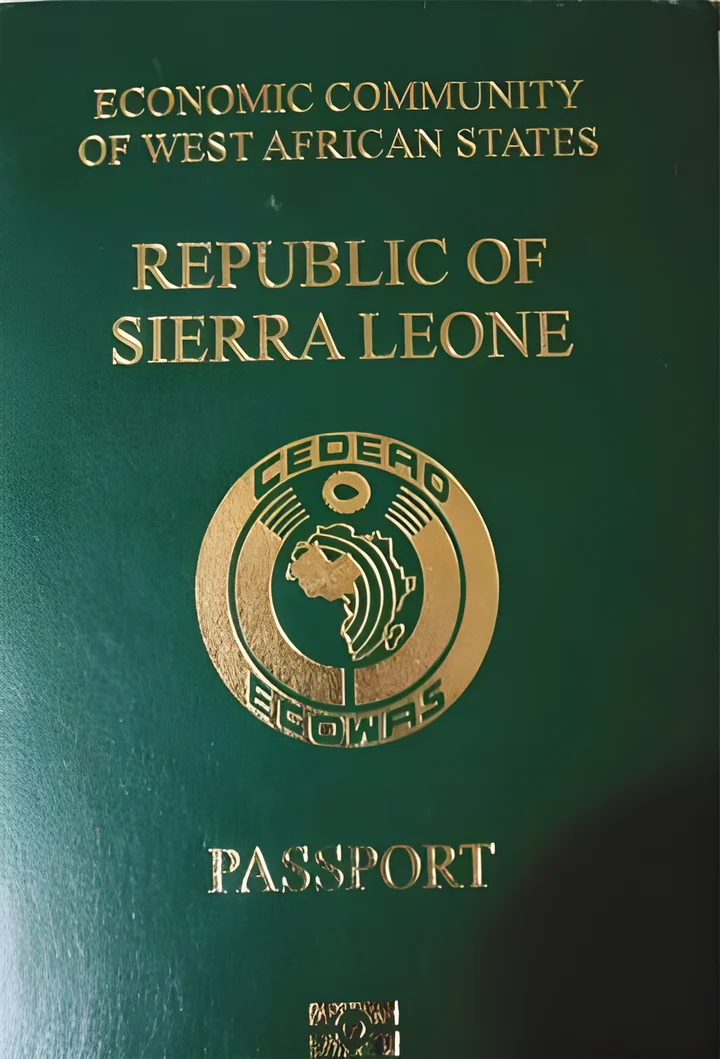
| Sierra Leone | usually 90-120 days from complete application to passport | no, entirely remote | Sierra Leone |
| St Kitts and Nevis | decision 120-180 days after acknowledgement of receipt | no | St Kitts and Nevis |
The two routes go well together. Your German citizenship also remains when you acquire a passport by investment, Sierra Leone accepts multiple citizenship without restriction, and Switzerland does not require you to renounce on naturalisation. Once your Swiss application goes through, you hold three passports. Amounts, fees and family rules of every programme sit side by side in the comparison, and why a second passport is about more than travel freedom is shown in the eight reasons for a second passport.
If you want to stay in the region, you will often take a look at the neighbouring country too. How Liechtenstein grants its citizenship is shown in Liechtenstein citizenship.
Frequently asked questions
How long does Swiss naturalisation take for Germans?
Count on a good decade from the day you move. You can only apply once you have lived in Switzerland for ten years and hold the C permit, which Germans can obtain after five years of lawful and uninterrupted residence. Then the procedure itself runs; the canton of Zurich, for example, puts it at around two years.
Can I become Swiss as a German and stay German?
Yes. Since 1 January 1992, Switzerland has not required you to give up your previous citizenship on naturalisation. Germany has generally accepted multiple citizenship since 27 June 2024, and the old retention permit procedure has been abolished. Everything else you need to know as a dual national is in Swiss with a second passport.
How much does Swiss naturalisation cost?
The Confederation charges CHF 100 for the naturalisation permit for one adult and CHF 150 for a married couple applying together. The canton and municipality levy their own fees under cantonal law. In the canton of Zurich, the cantonal share costs CHF 500 from age 25, and the municipal fee varies from place to place.
Do I have to take a language test as a German?
The requirement is level B1 spoken and level A2 written in a national language. Anyone who speaks and writes a national language as their mother tongue has already provided this evidence under the Citizenship Ordinance. Your canton may still require a test of your basic knowledge of Switzerland. In the canton of Zurich, for example, you have to take it if you neither attended compulsory school in Switzerland for five years nor completed an upper secondary qualification here.
Can you buy Swiss citizenship?
No. The Citizenship Act provides for ordinary naturalisation, facilitated naturalisation and reinstatement, but no route through investment. If you need a second passport sooner, combine Switzerland with a citizenship by investment programme.
Do my years as a short-term resident or cross-border commuter count?
Years on a B or C permit count, as do years with an FDFA legitimation card or a Ci permit, and years on an F permit count half. Years on an L permit do not count, and the G cross-border commuter permit is not on the list. How to document your years properly is shown in Counting your residence years.
What happens if I move during the procedure?
The canton and municipality remain responsible after a move if they have already completed their assessment of your integration. In the canton of Zurich, the procedure is discontinued if you move before your municipality has completed its review; a new Zurich application is then only possible after two years in the new municipality. So plan any move before you apply.
Ten years to the red passport, protected from today
We go through your years in Switzerland with you, work out when you can file your application and show you which second passport protects you until then.
Book a consultationSources
- Federal Act on Swiss Citizenship (Bürgerrechtsgesetz, BüG), SR 141.0: Art. 1, 9-18, 21, 30, 33, 35
- Swiss Citizenship Ordinance (Bürgerrechtsverordnung, BüV), SR 141.01: Art. 2, 4, 6, 7, 11, 12, 14-16, 23, 25
- State Secretariat for Migration SEM: ordinary naturalisation
- State Secretariat for Migration SEM: FAQ on Swiss citizenship
- State Secretariat for Migration SEM: C permit EU/EFTA (settlement permit)
- State Secretariat for Migration SEM: dual nationals
- Canton of Zurich: ordinary naturalisation, requirements, procedure, fees
- Canton of Zurich: basic knowledge test, obligation and exemption
- Federal Constitution of the Swiss Confederation, SR 101: Art. 24, 25, 136
- Federal Office of Administration (Bundesverwaltungsamt): keeping German citizenship, abolition of the retention permit procedure
- Sierra Leone: sierraleonepassport.com, FAQ on the remote process and multiple citizenship
- Citizenship by Investment Unit St Kitts and Nevis: S.R.O. 20 of 2024