
The short answer
Today you can become a Peruvian citizen by naturalisation after at least two years of continuous legal residence in Peru, provided you work in a profession or run a business, show gross annual income of 10 UIT (55,000 soles), have no criminal record and pass the knowledge test. The fee is 301.50 soles. Ley 32421 raises the requirement to five years, but it only takes effect on the day after its implementing regulation (Reglamento) is published; applications filed before then continue under the old law. You keep your German passport: Peru allows multiple nationality, and since 27 June 2024 Germany generally accepts it too.
A passport is a right, not a permission. As long as you live in Peru on a Carné de Extranjería, you are there because Migraciones keeps renewing your residence status. Lose the status and you lose your home. Peruvian citizenship turns that permission into a right. And hardly any country asks for as little time as Peru does: two years, for as long as Ley 26574 remains in force.
How do you get Peruvian citizenship?
The law that applies today is Ley 26574, Peru's Nationality Act of 1996. It knows three routes: birth, naturalisation and option.
- Peruvian by birth: anyone born on the territory of the Republic is Peruvian, whatever passport the parents hold. Descendants of Peruvians by birth who are born abroad and registered with a consulate while still minors are also Peruvian by birth, up to the third generation (Art. 2 No. 3 Ley 26574).
- Naturalisation (naturalización): foreign nationals who have lived legally in Peru for at least two consecutive years, regularly work in a profession, trade or business and have no criminal record can apply for citizenship.
- Option through marriage: if you are married to a Peruvian and have lived in Peru as their spouse for at least two years, you become Peruvian by making a declaration to the authority.
- Honorary: foreign residents of Peru who have rendered outstanding service to the nation can be granted citizenship by Congress on the government's proposal. Law 32421 adds the distinción meritoria and a route for qualified athletes once its regulation is published; both are on the programme page Peru.
If you move to Peru from Germany, naturalisation is the normal route. And the final word does not lie with Migraciones: under Article 6 of Ley 26574, naturalisation is granted by a Resolución Suprema, a decree signed by the head of state and countersigned by the Minister of the Interior. The law has no route through investment.
How Peru compares with other countries is covered in the fastest naturalisations in the world. For an overview of every residence-based route, see Naturalisation abroad.
Requirements for Peruvian citizenship
Your application is assessed by Migraciones, the Superintendencia Nacional de Migraciones. The conditions are clearly set out:
- You are over 18.
- You hold a valid Carné de Extranjería with current residence and present it.
- You have lived in Peru legally and without interruption for at least two years, counted up to the date you file.
- You show minimum economic solvency of 10 UIT, that is 55,000 soles of gross annual income, consistent with your residence status.
- You pass the knowledge test and continue to meet the conditions until the procedure ends.
The application consists of the PA Nacionalidad form, the receipt for the fee, a copy of your passport, a sworn statement on your health, your residence in Peru and the absence of any criminal record in Peru or abroad, the Ficha de Canje Internacional from INTERPOL Lima (no older than six months), and your birth certificate with an apostille or legalisation.
The activity Migraciones wants to see
Depending on your residence status, you provide further evidence. Migraciones names four groups:
| Group | Typical evidence |
|---|---|
| Employees | Employment contract running at least one year from the application, last three payslips, the previous year's certificate of tax withheld on salary |
| Self-employed | Latest annual income tax return with proof of payment, service contract for at least one year, last three fee receipts |
| Investors | Registration of the company's incorporation or capital increase with Sunarp in the amount set by Migraciones, municipal operating licence, the company's tax returns |
| Clergy and members of religious orders | Request from the recognised religious body and a sworn statement on means of support |
Important if you mainly want to live in Peru on a pension or investment income: the law requires you to work regularly in a profession, trade or business. Rentista status, for which Migraciones requires foreign income of at least USD 1,000 net a month, gets you into the country. But a pure retiree does not appear on the evidence list for naturalisation. So plan your residence status from the start to fit one of the four groups. Which residence is the right way in for you is shown in the overview of Rentista and Inversionista in Peru.
Two years of residence: how Peru counts the time
The clock does not start when you arrive as a tourist, but with your legal residence. The law says "por lo menos dos años consecutivos", at least two consecutive years. For this, Migraciones refers expressly to Article 63 of the Reglamento of Decreto Legislativo 1350, Peru's Migration Act.
That article sets out when a resident loses their status: by spending more than 183 consecutive days outside Peru within 365 days without an exit authorisation, counted from the first departure. A second limit is more than 365 consecutive days within two years. If an emergency or force majeure keeps you away longer, you can apply for an Autorización de estadía fuera del país before the deadline passes; this is the very authorisation under Article 67.2 that Migraciones refers to for naturalisation.
What this means for you: travel is allowed, but your life has to happen in Peru. If you have clients in Europe and are often on the road, plan your absences carefully and keep evidence such as your lease, tax returns and entry and exit records. How to obtain your residence status is explained step by step in the guide to temporary residence in Peru.
Ley 32421: five years instead of two
On 15 August 2025 the official gazette El Peruano published Ley 32421, the Nueva Ley de Nacionalidad. It replaces Ley 26574 entirely and makes naturalisation considerably harder:
| Point | Ley 26574 (in force today) | Ley 32421 (coming) |
|---|---|---|
| Residence for naturalisation | 2 consecutive years | 5 years, continuous and immediately before the application |
| Marriage | 2 years of residence as a spouse | 4 years of marriage, plus residence status |
| Income | 10 UIT gross a year | 10 UIT from your own activity, taxed in Peru |
| Test | Knowledge test | Spanish and knowledge of Peru as set by the Reglamento |
| Processing time | 30 working days according to Migraciones | at most 18 months, extendable by 6 |
On top of this, Ley 32421 requires every applicant whose mother tongue is not Spanish or another official language of Peru to know one of them, as well as Peru's history, geography, constitution, culture and current situation, and to produce the INTERPOL Ficha and a valid passport from their country of origin. It states expressly that granting citizenship is a sovereign act and can be refused on grounds of public interest.
When does the new law apply?
The decisive provision is the third final provision: Ley 32421 takes effect on the day after its Reglamento is published in El Peruano. Migraciones held a public consultation on the draft Reglamento until December 2025. To this day Migraciones still assesses naturalisations under Ley 26574: the protocol in force for the knowledge test is based on Article 3 of Ley 26574 and its Reglamento, and the latest naturalisation decrees of the Ministry of the Interior cite the same law.
The transitional provision is your protection: applications filed before the new law takes effect continue under the rules that applied on the day of filing. So if you already have two full years of residence, you are better off filing now than later. If you have lived in Peru for less time, expect the five years to apply to you.
The process: from application to Peruvian passport
You apply online through the Agencia Digital of Migraciones. The steps at a glance:
1. Pay the fee
You pay 301.50 soles with code 07564 at a branch of Banco de la Nación or online through pagalo.pe. This fee has applied since the Migraciones TUPA (its official schedule of procedures and fees) took effect on 23 October 2023.
2. File the application
You log in to the Agencia Digital with your details, choose the Mesa de Partes and upload all the documents for your residence status as PDFs.
3. Review and knowledge test
Migraciones reviews your file. Once it is "expedito", that is formally complete, the authority invites you to the knowledge test by email and sends you the Balotario with the study topics. The test takes place on the last working day of the month and lasts no more than one hour. It has 20 written questions on Peru's constitution, history, geography, art and culture, food, civics and current affairs, as well as on reading comprehension and language use. You pass with 11 out of 20 points, and wrong answers cost nothing. If you fail or do not turn up, you get a second and final attempt the following month. How other countries test language and knowledge of the country is covered in Language, test, oath of allegiance.
4. Resolución Suprema, oath and DNI
Migraciones states 30 working days for a decision, but this period is suspended during the individual review stages. Expect longer: one recent naturalisation decree was based on an application received a good 14 months earlier. Once you are approved, Migraciones invites you to the naturalisation ceremony. There you take the oath and receive your Título de Nacionalidad. With it you go to RENIEC and apply for your DNI, the Peruvian national identity card. After that, the Peruvian passport is open to you.
Peruvian citizenship through marriage
If you are married to a Peruvian, today you take the route of option through marriage. Migraciones requires at least two years of continuous residence in Peru as a married person, an express declaration that you wish to become Peruvian, no criminal record, full legal capacity and a valid Carné de Extranjería. The fee is 204.40 soles. Instead of the fixed threshold of 10 UIT, you show the family income of both spouses, for example with payslips, contracts or returns filed with SUNAT, the tax authority.
The marriage certificate must be entered in the Peruvian civil register and show at least two years of marriage. If you married abroad, you need the marriage registered with the Peruvian consulate and legalised by the Ministry of Foreign Affairs.
Here too Ley 32421 changes the maths: in future you will need four years of unbroken marriage before applying, plus a residence status in Peru. Under both laws, citizenship acquired through marriage is not lost if the marriage later ends in divorce or the spouse dies. Which countries offer spouses the shortest route is shown in Citizenship through marriage.
Dual citizenship: become Peruvian, stay German
Peru allows dual and multiple nationality. Peruvian nationality is only lost through an express renunciation before the competent authority; Ley 26574 says so, and so does Ley 32421. So you do not have to give up your German passport to be naturalised.
On the German side, the way has been clear since 27 June 2024. Since then Germany has generally accepted multiple citizenship: if you acquire a foreign nationality on application, you remain German, and a retention permit (Beibehaltungsgenehmigung) is no longer needed. In the end you hold two passports.
How the two nationalities interact is governed by Article 10 of Ley 26574: a person with two nationalities exercises the rights and duties of the country where they live. Ley 32421 will be clearer: on Peruvian soil you count as Peruvian, enter and leave as a Peruvian and identify yourself as a Peruvian.
One point many families miss: a child born in Peru is Peruvian by birth, regardless of the parents' status. If you spend your years in Peru and have children there, your child has a second passport from day one. Which neighbouring countries also apply birthright citizenship is shown in Birthright citizenship in Latin America.
Tax matters from the day you move. Peru taxes by its own rules, and the years until your passport arrives are years of Peruvian residence. For an overview of Peruvian tax law, see Taxes in Peru (in German); how this interacts with your second passport is explained on the Tax page.
Peru citizenship by investment: does it exist?
No. If you search for "Peru citizenship by investment", you will not find a government programme. Neither Ley 26574 nor Ley 32421 provides for acquiring nationality in exchange for an investment. You can still invest: residence as an Inversionista requires an investment in a Peruvian company, with the minimum amount set by the migration rules. The years in that status count towards naturalisation, but the passport itself only comes through residence.
Naturalisation and citizenship by investment are not an either-or. Naturalisation in Peru is the route that in the end costs you almost nothing but time. But it takes a while: two years of residence, then the procedure, and five years in future. If you want a second passport in your hand before then, you buy yourself that time with a citizenship by investment programme. How the two routes fit together is explained in CBI and naturalisation.
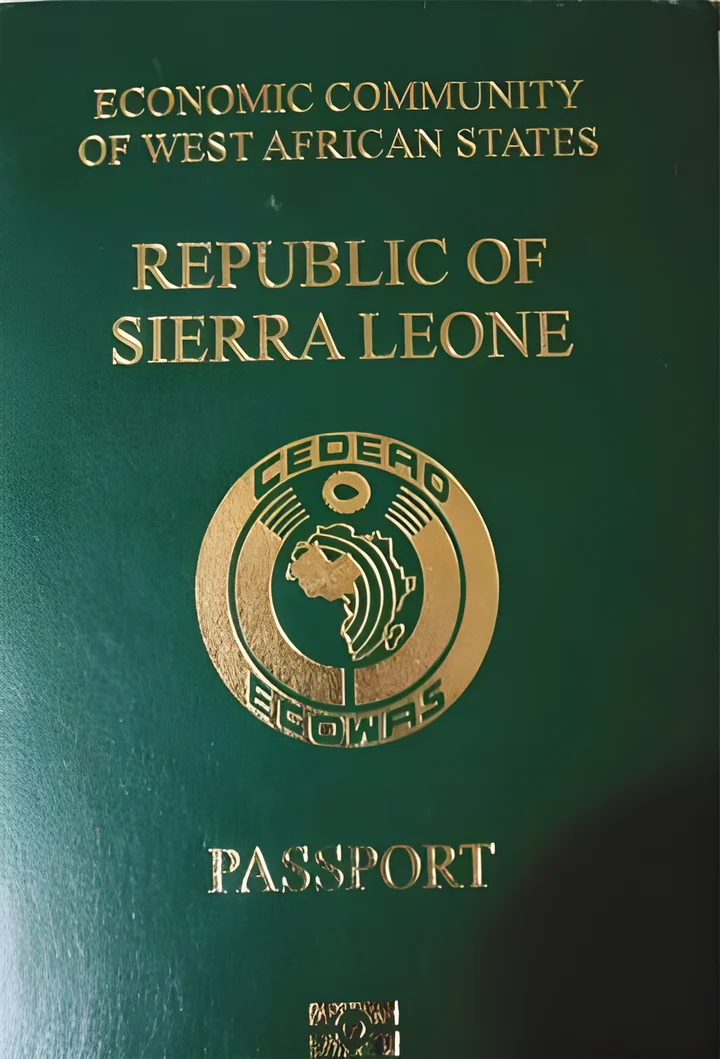
The Fast Track Citizenship of Sierra Leone, for example, starts at a programme fee of USD 140,000 for the main applicant, includes the family, runs entirely remotely and usually takes 90-120 days from complete application to passport. Sierra Leone accepts multiple citizenship without restriction. Every open programme with amounts and timelines is in the comparison.
Here is how the numbers work out: with a passport from an investment programme, you immediately gain a second right to enter and live in another country. The Peruvian passport adds a third later on, earned through your life in Lima, Cusco or Arequipa. Pursue both routes and you never depend on the permission of a single state.
Who the Peruvian passport is worth it for
The Peruvian route suits you if you genuinely want to live and work in Peru. Two years is short, but it demands real presence, an income of 10 UIT, a recognised activity and enough Spanish to pass a test on the constitution and history. If you bring all that, you get one of the fastest naturalisations in the world.
Three groups benefit most:
- Entrepreneurs and the self-employed who run a company or have clients in Peru and pay tax on their income there.
- Employees with a Peruvian employment contract who live there anyway.
- Families who live in Peru and have children there, because the child is Peruvian from birth.
If, on the other hand, you are only after a residence on paper, or you move to Peru as a retiree with no activity, naturalisation will not get you far. For you, an investment programme is the more direct route to a second passport, and Peru remains a country to live in. So look at your situation early: once the Reglamento of Ley 32421 is out, the road gets longer for everyone who has not filed by then.
Frequently asked questions
How long do I have to live in Peru to become Peruvian?
Under Ley 26574, the law in force today, two years of continuous legal residence before you apply are enough. Ley 32421 raises this to five years, but only from the day after its Reglamento is published. Until then Migraciones assesses every application under the two-year rule, and applications filed before that date continue under the old law even afterwards.
Can you buy Peruvian citizenship?
No. Neither Ley 26574 nor Ley 32421 provides for citizenship in exchange for an investment. An investment in a Peruvian company can, however, get you residence status as an Inversionista, and the years in that status count towards naturalisation. If you need a second passport sooner, combine Peru with a citizenship by investment programme.
Can I take Peruvian citizenship as a German and stay German?
Yes. Peru allows dual and multiple nationality, and Peruvian nationality is only lost through an express renunciation. Since 27 June 2024 Germany generally accepts multiple citizenship, so you no longer need a retention permit (Beibehaltungsgenehmigung). In Peru you are then treated as Peruvian, in Germany as German.
How much does naturalisation in Peru cost?
Migraciones charges a processing fee of 301.50 soles for naturalisation, payable at Banco de la Nación or through pagalo.pe. Naturalisation through marriage costs 204.40 soles. On top of that come the costs of your documents, such as the apostilled birth certificate and the Ficha de Canje Internacional from INTERPOL Lima.
Do I get Peruvian citizenship faster through marriage?
Not faster today, but more easily. As the spouse of a Peruvian you apply after two years of residence in Peru as a married person, and instead of the fixed income threshold the combined family income of both spouses counts. Under Ley 32421 you will need four years of marriage plus a residence status. How other countries treat spouses is covered in Citizenship through marriage.
Will my child be Peruvian if born in Peru?
Yes. Anyone born on the territory of the Republic of Peru is Peruvian by birth, whatever passport the parents hold. Ley 26574 says so, and so does Ley 32421. Which other Latin American countries still grant citizenship by place of birth is shown in Birthright citizenship in Latin America.
How hard is the Peruvian citizenship test?
The knowledge test has 20 written questions on Peru's constitution, history, geography, art, culture and food, on civics and current affairs, and on reading comprehension and use of Spanish. You have one hour. It is marked from 0 to 20 points, and you pass with 11. If you fail or do not turn up, you get a second and final attempt the following month.
Use the two-year window while it is still open
We go through your years in Peru with you, work out the date by which your application has to be in, and show you which second passport protects you until the Peruvian one arrives.
Book a consultationSources
- Congreso de la República, El Peruano 11 January 1996: Ley 26574, Ley de Nacionalidad, Art. 2, 3, 4, 6, 7, 9, 10
- El Peruano 15 August 2025: Ley 32421, Nueva Ley de Nacionalidad
- Superintendencia Nacional de Migraciones: Solicitar la nacionalidad peruana por naturalización
- Superintendencia Nacional de Migraciones: Obtener la nacionalidad peruana por matrimonio
- Superintendencia Nacional de Migraciones: Conoce los principales cambios en la nueva Ley de Nacionalidad (16 August 2025)
- Superintendencia Nacional de Migraciones: Resolución de Superintendencia 000314-2026-MIGRACIONES, Protocolo Evaluación de conocimientos, no. 8.1-8.9
- Ministerio del Interior: Resolución Suprema 262-2026-IN, Otorgamiento de la nacionalidad por naturalización
- Superintendencia Nacional de Migraciones: Reglamento del Decreto Legislativo 1350 (D.S. 007-2017-IN), Art. 63 and 67
- Superintendencia Nacional de Migraciones: Solicitar calidad migratoria para rentista residente
- Superintendencia Nacional de Migraciones: Informe final de consulta pública del Proyecto de Reglamento de la Ley 32421 (29 December 2025)
- Federal Office of Administration (Bundesverwaltungsamt): keeping German citizenship, abolition of the retention procedure
- Sierra Leone: sierraleonepassport.com, programmes, timing and process