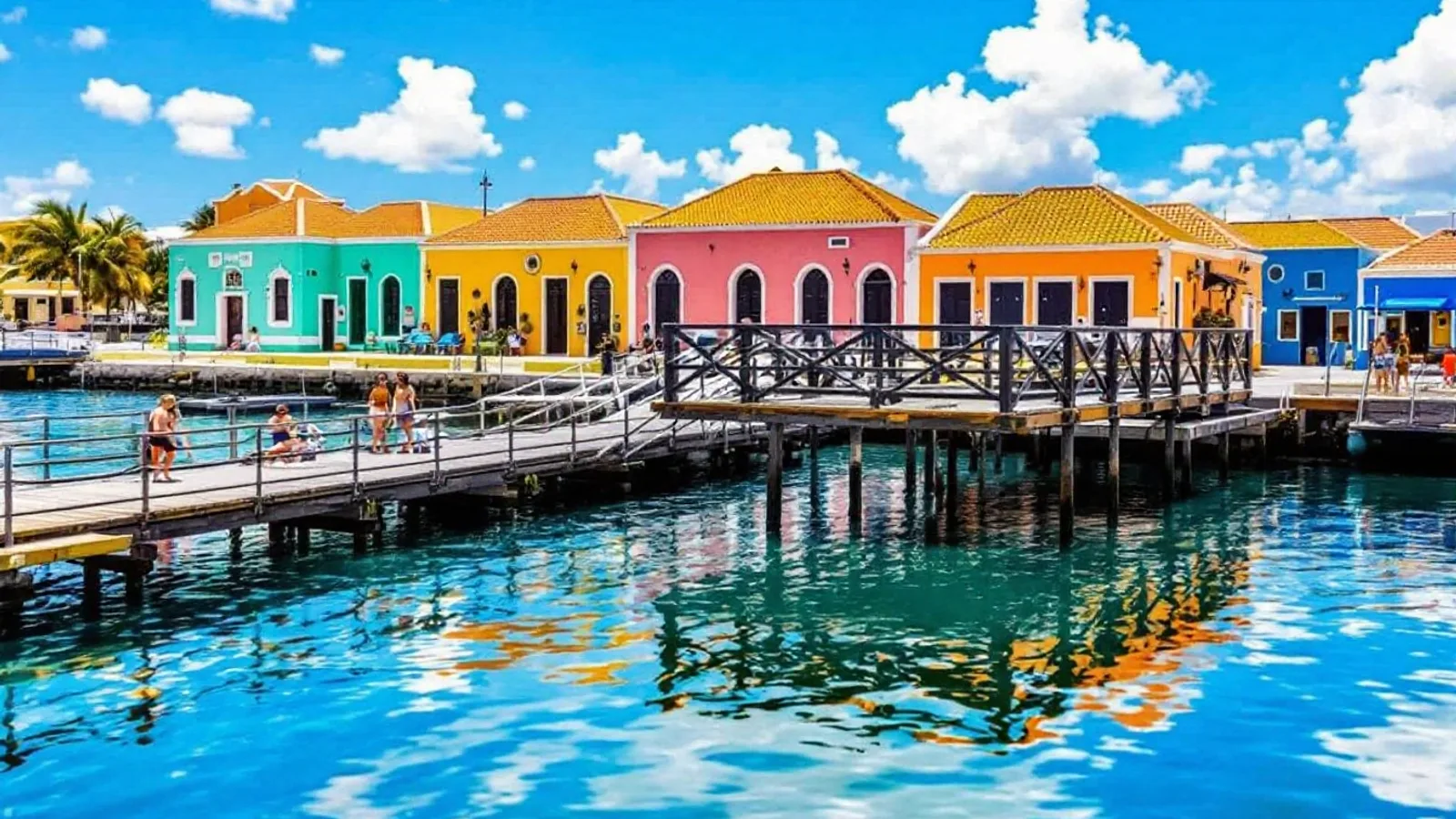
The short answer
There is no separate Curaçao citizenship: Curaçao is a country within the Kingdom of the Netherlands, and anyone naturalised there becomes Dutch. As a rule you need five years of uninterrupted admission and main residence in the Kingdom, a command of Dutch and of the language spoken on the island, and a declaration of solidarity. You cannot buy the passport: investors from 500,000 XCG receive a residence permit only. And Dutch law generally requires you to give up your existing nationality, unless an exception applies, such as marriage to a Dutch citizen.
Ask about Curaçao citizenship and you are really asking about the Dutch passport. The island is a country in its own right within the Kingdom, with its own government, its own parliament and its own immigration authority, the Toelatingsorganisatie. Nationality, however, is governed by the Kingdom as a whole. For the wider picture of the countries where naturalisation through residence works well, see naturalisation abroad. For Curaçao, two laws deserve a close look: the Charter for the Kingdom and the Kingdom Act on Dutch Nationality, the Rijkswet op het Nederlanderschap.
Is there a separate Curaçao citizenship?
No. Article 1 of the Charter for the Kingdom of the Netherlands is short: the Kingdom comprises the countries of the Netherlands, Aruba, Curaçao and Sint Maarten. Article 3 then lists what belongs to the Kingdom rather than to the individual countries, and next to defence and foreign relations it expressly names the Nederlanderschap, Dutch nationality. The Kingdom also sets the general conditions for admitting and expelling foreign nationals.
For you this means: Curaçao issues no passport of its own. If you live on the island and are naturalised, you become Dutch, with the same nationality as someone in Rotterdam or Utrecht. The Kingdom Act treats Curaçao as a full part of the Kingdom. Wherever it speaks of residence and admission, it always names the European part of the Netherlands, Aruba, Curaçao and Sint Maarten together with Bonaire, Sint Eustatius and Saba. Years in Curaçao therefore count exactly like years in The Hague.
| Question | Answer |
|---|---|
| A separate Curaçao nationality? | No, there is only Dutch nationality |
| Who governs it? | The Kingdom, by Kingdom Act |
| Does residence in Curaçao count? | Yes, like residence in the Netherlands |
| Which passport in the end? | The passport of the Kingdom of the Netherlands |
How do you become Dutch in Curaçao?
For adults who are not already Dutch by birth or descent, the Kingdom Act offers two routes: naturalisation, naturalisatie in Dutch, and the option procedure, a declaration confirmed by the authority. For most Germans who move to the island, naturalisation is the way. Article 8 sets out the requirements, and they are clearly worded:
- You are of age.
- There are no objections to your permanent stay in the Kingdom.
- You have held admission and had your main residence in the Kingdom, for example in Curaçao, for at least five years immediately before the application.
- You count as integrated: you speak Dutch and, if you live in Aruba, Curaçao, Sint Maarten or the BES islands, also the language commonly spoken on your island, and you know how the state and society are organised.
- You are prepared to make a declaration of solidarity, the verklaring van verbondenheid, at your naturalisation.
The key word is admission, toelating in Dutch. The law means the authority's consent to your permanent stay. Holidays on the island, even long ones, do not count. The clock only starts with that consent and with a real home in Curaçao. Every month without a permit is a month you will be missing later.
When the period is shorter
The Kingdom Act shortens the five years in several cases:
| Your situation | Residence period before the application |
|---|---|
| Standard case | five years |
| at least ten years lived in the Kingdom in total | two years |
| unmarried and for three years in a stable relationship with an unmarried Dutch citizen | three years |
| stateless | three years |
| married to a Dutch citizen for three years and living together | no residence period |
The last case is the most interesting for many. If you have been married to a Dutch citizen for at least three years and live together, you do not need the five years. One condition remains: your main residence must not be in the country whose nationality you hold. As a German living in Germany it does not work, in Curaçao it certainly does. How other countries handle the route through marriage is compared in naturalisation through marriage.
How the procedure works
Dutch nationality is granted by Royal Decree, the Koninklijk besluit, on the proposal of the responsible minister. If you live in Curaçao, Curaçao's Minister of Justice gives an opinion on your application. The law sets the authority a deadline: the decision is made within one year of the fee being paid or of missing documents being received. The decision may be postponed no more than twice, by six months each time. Your naturalisation is only announced once you have actually made the declaration of solidarity.
Then comes a step many people overlook. As a newly naturalised Dutch citizen in Curaçao, you apply to the Toelatingsorganisatie for a so-called van rechtswege declaration for naturalised persons. You submit a copy of your valid Dutch passport and of the Royal Decree. The fee is 615 XCG, and the authority has four months to decide. From then on you are no longer a foreigner with a permit on the island, but a Dutch citizen with a right of residence by operation of law.
Becoming Dutch by declaration: the option for certain groups
Alongside naturalisation, Article 6 of the Kingdom Act provides for the option procedure. You make a written declaration, the authority confirms it, and you are Dutch. No Royal Decree is needed. The route is only open to certain groups, however, and for adults who have moved to the Kingdom these are the main ones:
| Group | Condition |
|---|---|
| Spouse of a Dutch citizen | at least three years of marriage and 15 years of uninterrupted admission and main residence in the Kingdom |
| aged 65 or over | 15 years of uninterrupted admission and main residence in the Kingdom |
| in the Kingdom since the age of four | admission and main residence without interruption since then |
| former Dutch citizens | at least one year of permanent admission and main residence in the Kingdom |
| born in the Kingdom | main residence and admission there since birth |
For your own family, the declaration route may matter later. If your child grows up in Curaçao from the age of four, they can opt for Dutch nationality themselves as an adult. If they were born on the island and grew up there, the route is open to them too.
Can you keep your German passport?
This is the point that decides your plan. It has a German side and a Dutch side.
The German side is simple. Since 27 June 2024, acquiring a foreign nationality by application no longer means losing German nationality, according to Germany's Federal Foreign Office. Germany therefore lets you become Dutch without taking your German passport away.
The Dutch side is stricter. Article 9 of the Kingdom Act provides that an application for naturalisation is refused if you hold another nationality and have not done everything possible to lose it, or are not prepared to do so after naturalisation. Under the law, the following are exempt:
- Nationals of a state that has ratified the Second Protocol of Strasbourg of 2 February 1993 on multiple nationality. According to the Dutch treaty database, today that is only Italy and the Netherlands themselves; France has denounced the protocol. Germany is not among them.
- People born in the Kingdom who live there at the time of the application.
- People married to a Dutch citizen. The IND, the Dutch Immigration and Naturalisation Service, also names a registered partnership on the day the Royal Decree is signed.
- People recognised as refugees in the Kingdom.
Renunciation is also waived if it cannot reasonably be required. As examples, the IND names high fees for renouncing or the loss of rights, for instance in matters of inheritance. This is an individual case you have to prove with documents, though, not something that happens automatically.
If you are required to renounce and fail to do so after naturalisation, you risk revocation: Article 15 allows the minister to withdraw the naturalisation decision. Note too that the law speaks of every other nationality. If you already hold another passport besides your German one, the obligation applies in principle to both. How renouncing German nationality works and what it sets in motion is explained in giving up your nationality.
The bottom line for you as a German: without marriage to a Dutch citizen, naturalisation in Curaçao is usually a swap, not an addition. You hand in your German passport and receive the Dutch one. Whether that swap still pays off for you depends on your plans for life.
Can you buy Curaçao citizenship?
No. The Kingdom Act has no route through investment, donation or property. Article 10 does allow the King, after hearing the Council of State of the Kingdom, to waive the requirements on age, residence period and proof of integration in special cases. But that is a one-off exception, not a procedure with a price tag.
What Curaçao actually offers investors is a residence title. Since 6 September 2014 there has been the Kapitaalkrachtige Investeerder 2014 permit for investors who want to live on the island for more than six months a year. The investment should create jobs, bring in foreign currency or strengthen the economy, and you must have sufficient means of your own on a lasting basis.
| Business investment | Residence permit | Fee |
|---|---|---|
| from 500,000 XCG | three years | 1,865 XCG |
| from 750,000 XCG | five years | 3,095 XCG |
| from 1,500,000 XCG | permanent | 6,170 XCG |
The Toelatingsorganisatie decides on the application within four months, and you wait for the decision outside the country. The investment therefore buys you time on the island, and with it the years that later count towards naturalisation. It does not buy you the passport itself.
How you can live in Curaçao as a German
Before the five years can start, you need a right to stay. As an EU citizen you may remain in Curaçao as a tourist for 90 days a year. The same 90 days apply to Canadians, Australians, New Zealanders and Japanese nationals; Dutch and American citizens may stay six months a year, nationals of all other countries 30 days. If you want to stay longer, you apply for a permit. Besides the investor title, these routes are the most interesting for Germans:
| Route | Who | Core requirement |
|---|---|---|
| Investeerder | entrepreneurs and investors | business investment from 500,000 XCG |
| Rentenier | people living on their own wealth | bank confirmation of sufficient means, up to three years per application |
| Gepensioneerd | retirees | permit for the purpose of retirement; the Ministry of Finance provides information on the Penshonado scheme |
| Family | spouses, children, parents | sufficient means for each family member |
For the rentenier permit, the authority asks among other things for a birth certificate no older than one year, a police certificate from your last place of residence no older than three months, and an original bank confirmation that you can support yourself and your family. Documents from EU states need neither legalisation nor an apostille. If you as a foreign national bring your spouse, the authority uses a guideline of at least 3,000 XCG gross a month, plus 250 to 500 XCG for each child depending on age.
If you work remotely and want to test the island first, everything about the @HOME programme is in the guide to the Curaçao digital nomad visa (in German). Whether Curaçao or its neighbouring island suits you better is shown in the island comparison Aruba or Curaçao (in German), and what awaits you on the tax side is set out in the tax profile of Curaçao (in German).
What the Dutch passport gives you in Curaçao
In Europe, the Dutch passport adds little for you as a German: with your German passport you can already travel and live there freely. The real gain lies within the Kingdom itself. As a Dutch citizen you are admitted to Curaçao by operation of law. Instead of a permit that depends on an investment, capital or a pension and has to be renewed, you only apply for the declaration confirming that right. Your stay then no longer depends on an authority, but on your right.
On top of that comes a rule that makes the passport stable in Curaçao. Under Article 15, Dutch citizens with a second nationality only lose Dutch nationality through absence if, as adults, they live for 13 uninterrupted years outside the Kingdom and outside the European Union. Curaçao is part of the Kingdom. If you live there, that period never starts to run.
So who is this route really worth it for?
- For you, if you are married to a Dutch citizen. Then you keep your German passport and gain the Dutch one on top.
- For you, if Curaçao is to be your home for many years and a right of residence by law matters more to you than your German passport.
- For your children, who grow up on the island and can later opt for Dutch nationality themselves.
One point argues for starting early. In September 2025 the government in The Hague put a bill out for internet consultation that would extend the minimum period for naturalisation from five to ten years. The law in force is five years. If you start collecting your years in Curaçao today, you lose no time, whatever parliament decides.
A second passport alongside your life in the Caribbean
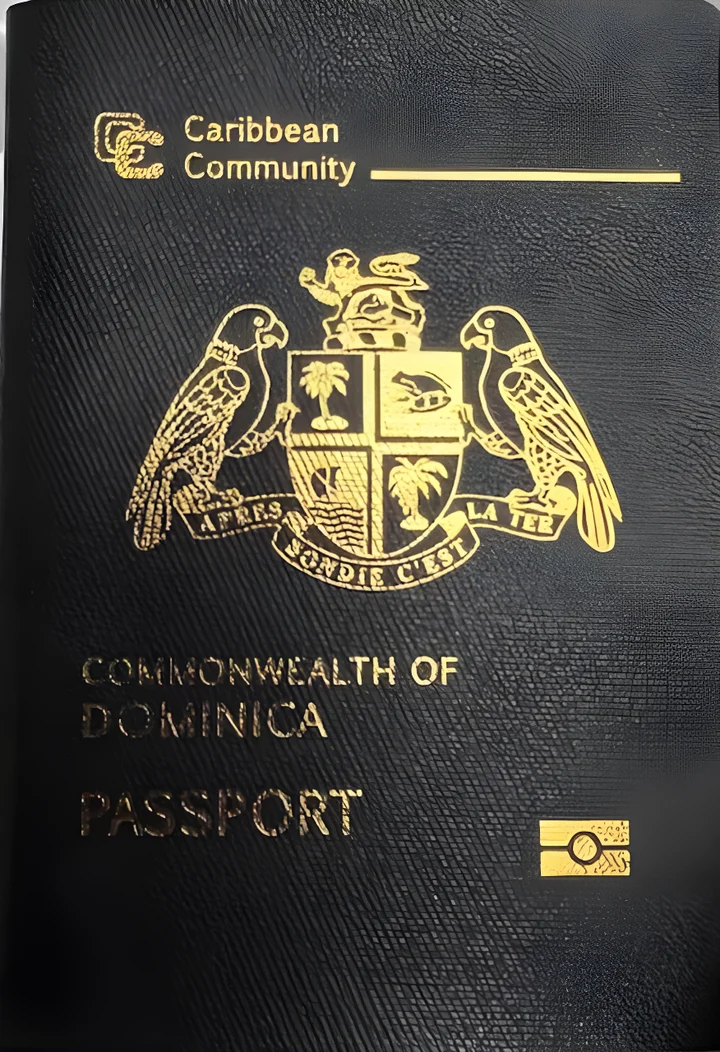
If you want to keep your German passport and still have a second one in the drawer, the route does not run through Willemstad but through the neighbouring islands in the Caribbean. Citizenship by investment programmes require no years of residence. Dominica grants its passport for a contribution from 200,000 USD to the Economic Diversification Fund, with no residence needed either before or after naturalisation. Grenada requires 235,000 USD for the National Transformation Fund, the authority states approval within 60 working days, and no visit to the island is needed before, during or after the application.
| Naturalisation in Curaçao | Dominica | Grenada | |
|---|---|---|---|
| Passport | Netherlands | Dominica | Grenada |
| Residence | five years as a rule | not required | not required |
| Entry | years of residence, no investment | contribution from 200,000 USD | contribution 235,000 USD |
| German passport | renunciation usually required under Dutch law | stays | stays |
This is not an either-or. Curaçao can be your home, with an investor or retiree permit, while a Caribbean passport already gives you the second nationality you need in a crisis. Why naturalisation is the free but slow route and investment buys time is explained in CBI and naturalisation. Keep one thing in mind: if you later decide to become Dutch after all, the obligation to renounce applies in principle to the Caribbean passport as well, unless one of the exceptions covers you. All open programmes are compared in the programme comparison, the costs in detail under costs, and how to include your family under family. The basics of buying a citizenship are covered in buying citizenship. Which countries get you to a passport fastest through residence is shown in the fastest naturalisation.
Frequently asked questions
Can you buy Curaçao citizenship?
No. Curaçao grants no citizenship of its own, and the Kingdom Act on Dutch Nationality has no route through investment. What Curaçao offers investors is a residence permit: from 500,000 XCG for three years, from 750,000 XCG for five years and from 1,500,000 XCG without a time limit. A second passport in return for an investment is available through the open programmes.
What nationality do people in Curaçao have?
Dutch. The Charter for the Kingdom of the Netherlands expressly lists Dutch nationality, the Nederlanderschap, among the affairs of the Kingdom rather than of its individual countries. Anyone naturalised in Curaçao therefore receives exactly the same nationality as someone naturalised in Amsterdam.
How long does naturalisation in Curaçao take?
As a rule you first need five years of uninterrupted admission and main residence in the Kingdom; if you have already lived there for ten years in total, two are enough. The authority must then decide within one year of the fee being paid, and it may postpone the decision no more than twice, by six months each time.
Can I simply live in Curaçao as a German?
As an EU citizen you may stay 90 days a year as a tourist. For a longer stay you need a permit from the Toelatingsorganisatie, for example as an investor, as a person of independent means (rentenier) or as a retiree. A first application is decided within four months, and you wait for the decision outside the country.
Can I keep my German passport if I naturalise in Curaçao?
Since 27 June 2024 you no longer lose German nationality when you acquire another one by application. Dutch law, however, generally requires you to renounce every other nationality. Exceptions apply, among others, if you are married to a Dutch citizen, if you were born in the Kingdom and live there, and to recognised refugees.
Do spouses of Dutch citizens get the passport faster in Curaçao?
Yes. If you have been married to a Dutch citizen for at least three years and live together, you do not need the five years of residence. The only condition is that you must not live in the country whose nationality you hold. And as the spouse of a Dutch citizen you do not have to give up your existing passport.
Are my children naturalised with me in Curaçao?
Minor children can be included in your naturalisation if the decision expressly says so; the application for them is filed together with yours. For a child under 16, it is granted if the child has held permanent admission and has had its main residence in the Kingdom since the application.
Curaçao as your home, your second passport right now
Together we look at whether naturalisation in Curaçao fits your life and which second passport can give you security today, without five years of waiting. That way your freedom rests on a right, not on a residence permit.
Book a consultationSources
- wetten.overheid.nl: Rijkswet op het Nederlanderschap (Art. 6, 6a, 7, 8, 9, 10, 11, 15)
- wetten.overheid.nl: Statuut voor het Koninkrijk der Nederlanden (Art. 1, 3)
- Toelatingsorganisatie Curaçao, Ministerie van Justitie: Naturalisatie
- Toelatingsorganisatie Curaçao, Ministerie van Justitie: Investeerder
- Toelatingsorganisatie Curaçao, Ministerie van Justitie: Rentenier/Gepensioneerd
- Toelatingsorganisatie Curaçao, Ministerie van Justitie: Toerist
- IND: Afstand doen van uw nationaliteit
- Verdragenbank Overheid.nl: Tweede Protocol tot wijziging van het Verdrag betreffende beperking van gevallen van meervoudige nationaliteit, Partijen
- Rijksoverheid: Kabinet wil naturalisatietermijn verlengen van 5 naar 10 jaar (26.09.2025)
- German Federal Foreign Office: nationality law, key changes
- Citizenship by Investment Unit Dominica: FAQs
- Investment Migration Agency Grenada: FAQs