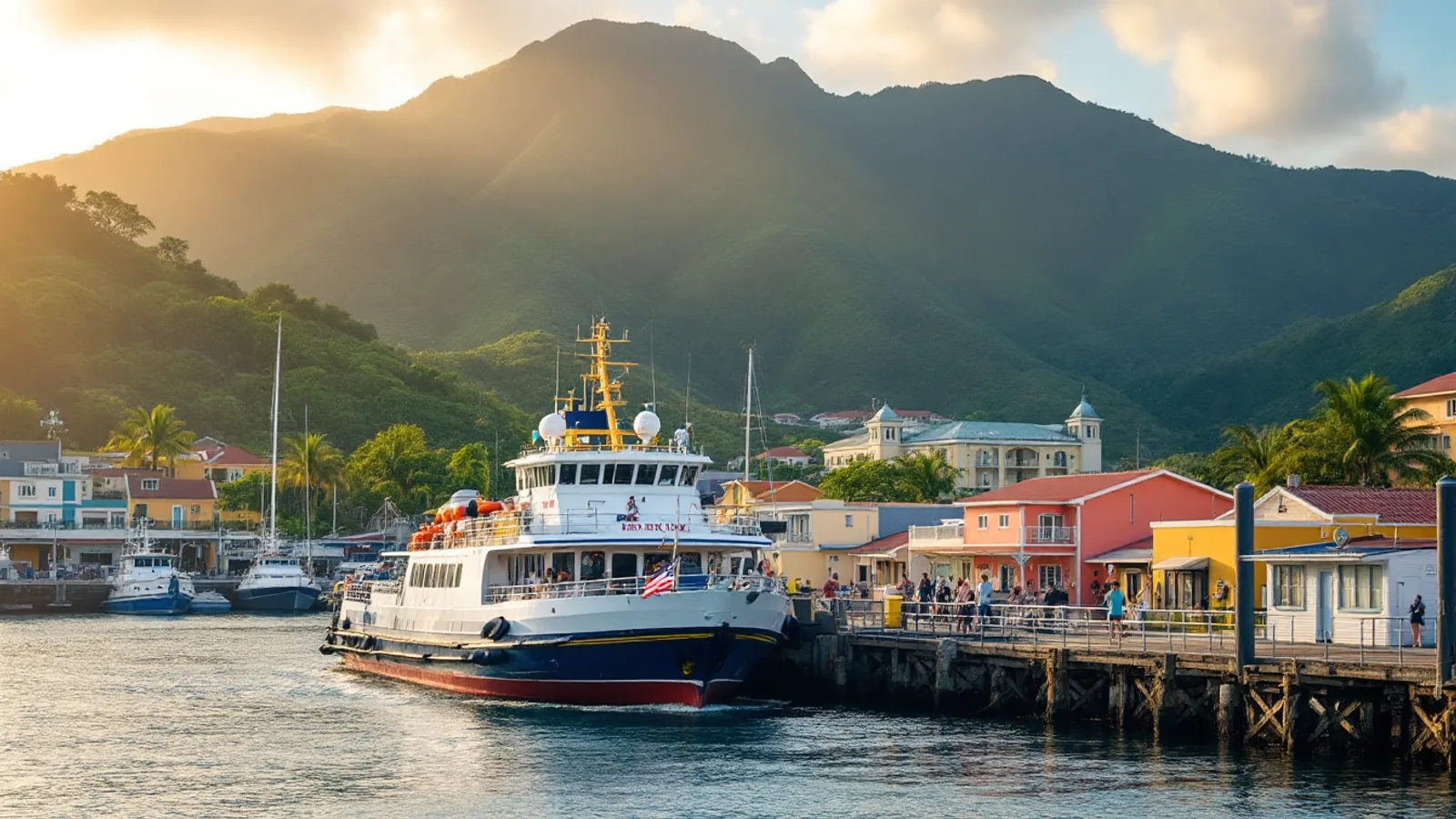
The short answer
A passport's strength shows on three layers: which countries you can visit without a visa, where it lets you live and work, and how much trust it earns you at the border. Rankings measure only the first layer, and only as a total. The German passport opens the US via ESTA and gives you the right to live anywhere in the EU. With a Caribbean passport you travel to Germany visa-free for up to 90 days in any 180-day period and have the right to live and work indefinitely across the Eastern Caribbean.
What makes a passport strong? Three layers and a foundation
Ask ten people what makes a passport strong, and nine will answer with a number: how many countries you can enter without a visa. The number is not wrong. But it describes only one of three layers, and beneath all three lies a foundation that appears in no ranking.
| Layer | The question behind it | Does the ranking show it? |
|---|---|---|
| Visa-free travel | Where can you go without applying for a visa, and for how long? | yes, as a total |
| Residence rights | Where may you live, work and stay? | no |
| Standing at the border | How much trust does your passport carry? | no |
| The state behind it | Who protects you, and who issues you a new passport? | no |
The first layer decides your holidays and business trips. The second decides whether you can start afresh somewhere without asking for permission. The third sets the tone in which you are met at the border. And the foundation decides whether, when it really matters, you have a state that brings you home.
For Germans, Austrians and Swiss there is good news: your passport scores highly on every layer. So the real question is not whether you should replace it. It is what a second passport adds that the first one cannot. Once you see that, you stop choosing a second passport by its place in a table and start choosing it by the gap it closes.
World passport rankings: what the number measures and what it leaves out
Almost every passport ranking follows the same arithmetic. For each destination, it checks whether a country's citizens may enter without applying for a visa in advance. Every destination open to them on those terms earns a point, and the total sets the rank. The current placings in the well-known indices are presented in the passport ranking on wohnsitzausland.com, while the passport ranking looks behind the numbers with the second passport at its centre.
This method has two weaknesses that matter more for your decision than any rank.
Every country counts the same. A small island state earns the same point as the US. Two passports with almost identical scores can therefore feel completely different in real life: one opens North America to you, the other twenty microstates you never wanted to visit.
A ranking measures visits, not a life. Whether a passport lets you stay somewhere, work there or send your children to school there appears in no ranking. Yet that is often exactly why people start thinking about a second passport.
So the number in the ranking is a starting point. If you want to know what a passport really delivers, go through the layers one by one.
Visa-free travel: not how many countries, but which ones
For most travellers from Europe, four doors decide their freedom to travel: the Schengen Area, the United Kingdom, Canada and the US. Anyone who passes through all four without a conventional visa application belongs to the world's top group, whether they sit second or sixth in the ranking.
The narrowest of these doors is the US. According to the US Department of Homeland Security, 42 countries take part in the Visa Waiver Program, among them Germany, Austria and Switzerland. Their citizens enter with an ESTA authorisation for up to 90 days for business or tourism. Anyone outside the programme generally needs a visa, no matter how many points their passport collects elsewhere.
The US grants visa-free travel based on behaviour
It gets interesting when you read how a country gets into this programme at all. The US federal statute 8 U.S.C. § 1187 sets out the conditions, and they read like a report card on an entire country:
- Low refusal rate: the refusal rate for visitor visas for the country's citizens must be below 3 percent in the last full fiscal year, or average below 2 percent over the last two years with less than 2.5 percent in each of those years.
- Secure passports: the country must issue tamper-resistant passports that meet US standards. Since 1 April 2016 the law has required every traveller in the programme to hold an electronic passport with biometric data.
- Reporting lost passports: the country commits to reporting stolen and lost passports no later than 24 hours after it learns of them.
- Readmission: it takes back its own citizens who are deported.
Here, then, visa-free travel is not a gift but trust that a state and its citizens earn over years. The refusal rate is nothing other than the combined behaviour of every compatriot who applied before you.
The EU decides on migration, security and reciprocity
The EU does not hand out visa-free travel on a whim either. The European Commission names migration, security, human rights, reciprocity and economic benefit, above all for tourism and trade, as its criteria. According to the German Federal Foreign Office's list of countries, citizens of Dominica, Antigua and Barbuda, Grenada and St Lucia enter Germany without a visa and may stay up to 90 days in any 180-day period. The United Kingdom goes its own way: under the British visa national list, Antigua and Barbuda and Grenada enter without a visa, while Dominica and St Lucia are on the list of countries whose citizens need one.
And the EU reserves the right to take visa-free travel away again. Article 8 of the Visa Regulation (EU) 2018/1806, as amended by Regulation (EU) 2025/2441, allows the visa exemption of a non-EU country to be suspended. Either a member state or the Commission can set this in motion. The suspension applies for up to twelve months at first and can be extended by a further 24 months. Among the grounds, the Commission expressly names running a citizenship by investment programme. Vanuatu shows this is no theory: according to the Federal Foreign Office, Vanuatu is once again subject to a visa requirement.
The upshot is simple: on the first layer, a passport is as strong as the trust placed in the state that issues it. Programmes with thorough vetting, a clear legal basis and well-run procedures keep their doors open. The comparison of all programme passports, door by door, is in travel freedom of CBI passports compared.
Residence rights: where your passport lets you live
Visa-free travel allows you a visit. A right of residence allows you a life. This is the layer rankings ignore entirely, and for many families it is the most valuable one.
Europe: free movement as a citizen's right
As an EU citizen you may live in any other EU country for up to three months without registering as a resident. If you stay longer, you generally register your address. According to the European Commission, after five years of lawful, continuous residence you automatically acquire the right of permanent residence in that country. Nobody asks you for a visa, an investment or a work permit.
For Germans and Austrians this is the greatest value of their passport, greater than any place in a table. A passport with a few more ranking points but no comparable right of residence is the weaker one in real life.
Eastern Caribbean: stay indefinitely, no work permit needed
Less well known is that the Caribbean has its own free movement regime. The Organisation of Eastern Caribbean States (OECS) has seven Protocol Member States: Antigua and Barbuda, Dominica, Grenada, Montserrat, St Kitts and Nevis, St Lucia, and St Vincent and the Grenadines. According to the OECS Commission, their citizens, together with spouses and dependants, may live indefinitely in any other member state. On entry they receive a stamp for an indefinite stay, they work without a work permit, and within the Economic Union they can travel on an official ID such as a driving licence or national identity card.
Five of these seven states run an open citizenship by investment programme: St Kitts and Nevis, Dominica, Antigua and Barbuda, Grenada and St Lucia. A Caribbean passport is therefore not just a passport for one country but a key to a whole island region. You can read more about Caribbean passports and free movement in the article Caribbean passports and free movement on perspektiveausland.com.
Dominica goes one step further. Since 1 October 2025, full free movement under CARICOM rules has applied between Barbados, Belize, Dominica and St Vincent and the Grenadines: their nationals may settle, work and stay indefinitely in any of the four countries, with access to emergency and primary healthcare and to public schools for their children.
West Africa: the ECOWAS area
The passport of Sierra Leone has a very different profile. According to sierraleonepassport.com, it gives visa-free or visa-on-arrival access to more than 65 countries, plus ECOWAS rights in eleven further West African countries. For the Schengen Area, a citizen of Sierra Leone usually needs a visa. If you see Africa as a market or a place to live, this gives you a layer that no European passport offers.
| Passport | Right of residence beyond its own country |
|---|---|
| Germany, Austria | all other EU member states |
| St Kitts and Nevis, Antigua and Barbuda, Grenada, St Lucia | the other OECS states |
| Dominica | the other OECS states, plus Barbados and Belize through CARICOM |
| Sierra Leone | ECOWAS rights in eleven further countries |
Standing at the border: what your passport says about you
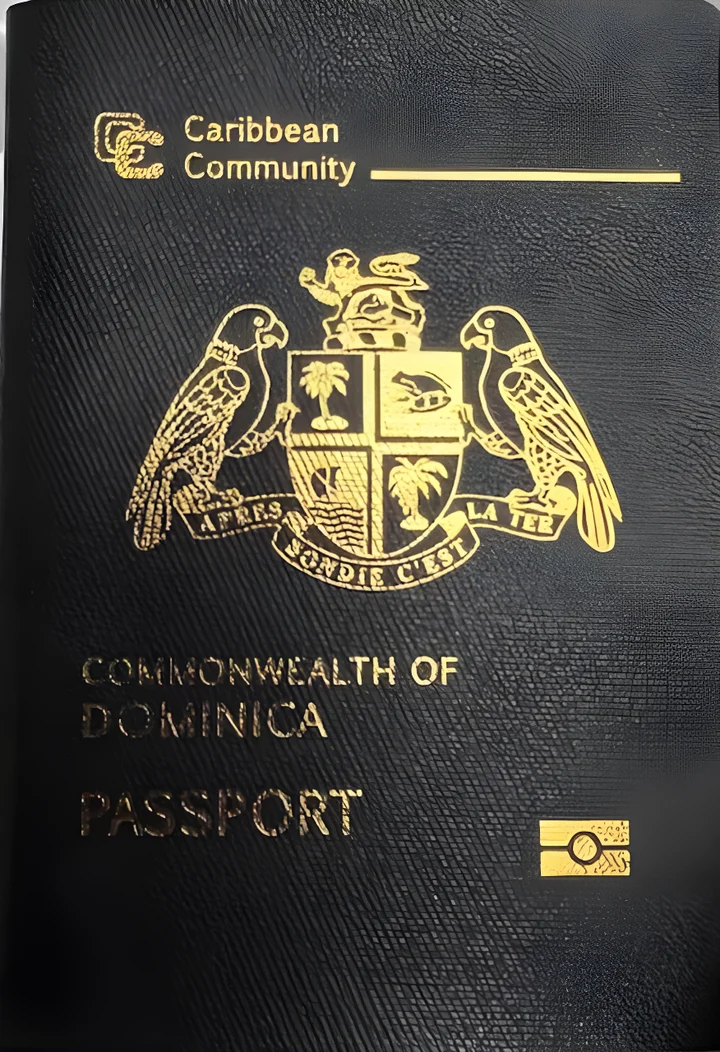
A border officer does not see only you. They see the state that issued your passport, and everything they know about its documents, its vetting and its citizens. This standing is the quietest of the three layers, and yet you feel it at every entry.
The technology of the passport. An electronic passport with a chip and biometric data is the basis of trust today. The US lets nobody in under the Visa Waiver Program without one. So when you choose a passport, you also check which document the state issues.
The vetting behind the passport. Programme countries know that their passport is worth only as much as the trust of the destination countries. Many have therefore tightened their checks. Since 14 April 2026, St Kitts and Nevis has recorded the biometric data of everyone naturalised through the programme. Since 4 September 2023, St Lucia has required an interview and an identity check of the main applicant, collects biometric data and approves at most 1,500 applications a year. Dominica interviews every applicant aged 16 and over. For you as an applicant, that means a little more effort up front and a passport that is taken seriously at the border.
Your own track record. At Europe's external border, the Entry/Exit System has been fully operational since 10 April 2026. For short stays by non-EU citizens it records name, travel document, fingerprints, facial image and the place and date of every entry and exit; it replaces the stamps in your passport and detects overstays automatically. If you travel to Europe on a non-EU passport, a digital travel history builds up as a result. Keep strictly to the rule of 90 days in any 180-day period, and you have a file that speaks for you.
Honesty with two passports. Holding two passports is legal and normal. The US ESTA application expressly asks about other citizenships, and you answer that question truthfully. As a German, Austrian or Swiss citizen you travel to the US on your first passport anyway, with your second openly declared on the application. The details are in ESTA with a second citizenship.
The state behind the passport: protection, replacement, return
Beneath all three layers lies the foundation: a passport is a document, the citizenship behind it is a right. A visa can be refused or withdrawn; it is a foreign state's permission. Citizenship gives you the right to enter your country, to live there and to return at any time. Why this difference outweighs any visa rule is shown in a right, not a permission.
The foundation also covers what a state does for you when you get into trouble abroad. Here the EU passport shows a strength that appears in no ranking. If your country has no embassy or consulate in a country outside the EU, you can turn to the mission of any other EU country and receive the same help as its own citizens. If your passport is lost or stolen, you are given an EU emergency travel document to get home. The mission also stands by you if you are arrested, fall victim to a crime, become seriously ill or face a death in the family.
And yet every passport has the same limit: it is tied to a single state. Only that state can issue you a new passport. If your passport is lost abroad, stolen or withheld, you depend on that one authority alone. With a second citizenship you have a second state that can lawfully issue you a travel document and a second country you may return to at any time. What two citizenships mean for consular protection is explained in two embassies instead of one.
Which passport is the best? The answer lies in the combination
Put the layers side by side, and the question of the best passport changes. No single passport wins everywhere. But two passports together can cover almost everything.
| Layer | German passport | Caribbean passport, e.g. Grenada | Passport of Sierra Leone |
|---|---|---|---|
| Visa-free travel | US via ESTA, Schengen without restriction | Germany and the UK without a visa, US with a visa | 65+ countries visa-free or visa on arrival |
| Right of residence | all EU member states | OECS states | ECOWAS rights in eleven countries |
| The state behind it | EU consular protection | second state, second country | second state, second country |
Your German, Austrian or Swiss passport remains your strongest travel document, above all for the US, because none of the programme countries belongs to the Visa Waiver Program. The second passport does not have to beat it. It complements it: with a second right of residence in another region of the world, with a second state that protects you, and with a second document in case the first one is missing.
As a German, you give up nothing for this. Since 27 June 2024, acquiring a foreign citizenship is no longer among the grounds for loss in section 17 of the Nationality Act (Staatsangehörigkeitsgesetz, StAG). You keep your passport and add a second one beside it.
Which second passport suits you comes down to three questions. Where do you really travel, and where could you imagine living? Who should come with you, and how old are your children? And how quickly do you need the result? The answers lead you to a region: the Caribbean for Europe and the island world, West Africa for the ECOWAS area, other programmes for the Middle East or Asia. If Latin America is on your radar, you will find the strengths of the passports there in passport strength in Latin America on vidalibreplan.com.
Amounts, fees and timelines of every open programme sit side by side in programmes compared, and the rules for spouses, children and parents are on family. And if you want to see passport strength once more in the big picture, with all the rankings and the four doors in detail, read on in the passport ranking.
Frequently asked questions
Which passport is the best?
No passport leads on every layer. For travel, what counts are the four big doors: Schengen, the United Kingdom, Canada and the US. For living, it is the residence rights a passport opens beyond its own country. The German, Austrian and Swiss passports are among the very best on both layers. So the best passport for you is usually the combination of your first passport and a second one that closes exactly your gap, as the passport ranking explains.
How is passport strength measured?
The well-known indices count how many countries you can enter without applying for a visa in advance, and rank countries by that total. Every destination counts the same, so a microstate weighs as much as the US. Residence rights, consular protection and how stable visa-free access is do not come into it. If you want to understand passport strength, look at the doors a passport opens and at the state behind it.
Can a passport lose strength?
Yes. Visa-free access is granted by the destination country, and it can restrict that access again. Under Article 8 of the EU Visa Regulation, the EU can suspend a country's visa exemption for up to twelve months at first and extend the suspension by 24 months, and running a citizenship by investment programme is expressly one of the grounds. Your citizenship itself is not affected. Where the programme passports stand today is set out in travel freedom of CBI passports compared.
Can I live in other Caribbean countries with a Caribbean passport?
According to the OECS Commission, citizens of the seven Protocol Member States of the OECS may live indefinitely in any other member state and work there without a work permit. They include Antigua and Barbuda, Dominica, Grenada, St Kitts and Nevis and St Lucia, in other words every Eastern Caribbean state with an open programme. Dominica is also part of full free movement with Barbados, Belize and St Vincent and the Grenadines. You can compare the programmes on programmes compared.
Do I have to declare my second citizenship on my ESTA?
Yes. The ESTA application expressly asks about other citizenships, and you answer every question truthfully. With your German, Austrian or Swiss passport you keep travelling to the US under the Visa Waiver Program. What exactly is asked is explained in ESTA with a second citizenship.
Do I lose my German passport if I take a second citizenship?
No. The modernised nationality law has applied since 27 June 2024, and acquiring a foreign citizenship is not among the grounds for loss in section 17 of the Nationality Act (Staatsangehörigkeitsgesetz, StAG). Your German passport stays, and the second one comes on top. The details are in dual citizenship for Germans.
Which layer should your second passport strengthen?
In a consultation we set your travel destinations and your plans for residence and family against every open programme. You see clearly which passport adds exactly what your first one lacks.
Book a consultationSources
- German Federal Foreign Office: list of countries and visa requirements (as of 3 June 2026)
- GOV.UK: Immigration Rules, Appendix Visitor: Visa national list
- U.S. Department of Homeland Security: Visa Waiver Program
- U.S. Code, 8 U.S.C. § 1187: Visa waiver program for certain visitors
- U.S. Customs and Border Protection: Enhancements to ESTA, FAQ
- European Commission, Migration and Home Affairs: Visa policy
- European Commission, Migration and Home Affairs: Entry/Exit System
- Your Europe (European Commission): residence rights of EU citizens
- Your Europe (European Commission): consular protection
- OECS Commission: Free Movement of Persons Regime in the Eastern Caribbean
- CARICOM Secretariat: Barbados, Belize, Dominica and St. Vincent and the Grenadines ready for full Free Movement on 1 October 2025
- German Federal Ministry of Justice: section 17 of the Nationality Act (StAG)