The short answer
As a German, you obtain Panamanian citizenship by naturalisation under Article 10 of the constitution: after five consecutive years of residence in Panama, or after three years if you have a Panamanian wife or husband or a child born in Panama to a Panamanian parent. You need permanent residence, Spanish, an exam on geography, history and the structure of the state at the Tribunal Electoral, and an express declaration that you renounce your current nationality. You make that declaration to Panama; renunciation only costs you your German citizenship under Section 26 of the Nationality Act (Staatsangehörigkeitsgesetz, StAG), which the German authority must approve and which takes effect with a certificate.
For many Germans, Panama is where Plan B takes shape: residence through Friendly Nations or as a retiree, a life between the Canal and the Pacific. Far less is said about what comes after residence. Naturalisation is the step that turns a guest with a residence card into a citizen with full rights, and in Panama it follows clear constitutional rules. How it fits among the other residence-based routes to a second passport is shown in the overview Naturalisation abroad.
How do you get Panamanian citizenship?
In Article 8, the Constitution of the Republic of Panama names exactly three routes to nationality: birth, naturalisation and the operation of the constitution itself, for example for a child born abroad who is adopted by Panamanians before their seventh birthday. There is no investment programme that leads straight to a passport. For you as a German, that leaves naturalisation, which ends with the Carta de Naturaleza.
Article 10 sets out who can apply:
| Group | Residence in Panama | What else is required |
|---|---|---|
| Foreigners in general, Germans included | five consecutive years | legal age, declaration of intent to naturalise, renunciation of your current nationality, Spanish and knowledge of the country |
| With a Panamanian spouse or a child born in Panama to a Panamanian parent | three consecutive years | the same declaration and the same proof |
| Citizens of Spain and Latin American states | as long as their own country requires of Panamanians | reciprocity |
The third group does not concern you. The migration authority's list of reciprocity agreements names El Salvador with one year; Argentina, Ecuador, Spain, Honduras, Mexico, Nicaragua, Peru and Colombia with two years; and Uruguay with three years. Germany is not on it. For you, the rule is five years, or three with Panamanian family.
The word "consecutive" matters. The constitution speaks of "cinco años consecutivos de residencia", and the naturalisation questionnaire wants to know exactly where and with whom you live, where your children go to school and how you earn your living. If you have genuinely moved your life to Panama, you document these years without effort. How authorities generally count and verify periods of residence is explained in Counting your years of residence.
The first step: permanent residence
You do not apply for naturalisation on a tourist stamp. The Servicio Nacional de Migración's list of requirements asks for the carné de Residente Permanente at several points: in the power of attorney, on the criminal record extract, on the tax certificate and on the health certificate. No permanent residence, no naturalisation. For Germans, two routes lead there most often.
Friendly Nations: residence for citizens of friendly states
Panama keeps a separate category for nationals of certain countries with which it maintains friendly, professional and economic relations. The current list in Decreto Ejecutivo 416 of 2012 includes Germany, Austria, Switzerland, Liechtenstein and Luxembourg, among others. According to the migration authority's list of requirements under Decreto Ejecutivo 226 of 2021, the route runs like this:
- first a two-year provisional residence, then the application for permanent residence
- as the economic basis, one of three things: employment with a Panamanian company with a work permit from the Ministry of Labour, a property worth at least 200,000 balboas, or a fixed-term deposit of at least 200,000 balboas for three years at a bank holding a general licence in Panama
- the property and the deposit may also be held through a company or a private foundation if you are the beneficial owner
- government fees of 250 balboas to the Tesoro Nacional and 800 balboas to the migration authority
So if you set up your own company in Panama and have it employ you, you obtain residence without buying property. The residence obligation and the costs of this visa are explained in the article on the Friendly Nations visa for Panama.
Pensionado: residence with a lifetime pension
Retirees have their own route. Under Article 200 of Decreto Ejecutivo 320 of 2008, the pension must be paid for life and amount to at least 1,000 balboas a month; if you own property worth more than 100,000 balboas in your own name, 750 balboas are enough. Spouses may combine their pensions. The migration authority grants this permit indefinitely, so it never needs renewing. What the retiree route demands in daily life is covered in the article on the Pensionado in Panama, and you will find every residence permit at a glance under Panama residency.
Qualified Investor: residence through an investment of 300,000 balboas or more
A third route to permanent residence, residence as an Inversionista Calificado, has been governed since September 2026 by the new rules of Executive Decree 17 of 8 September 2026. You invest at least 300,000 balboas of your own funds from abroad, for example in a property bought from first sale; for a resale property the decree requires 500,000 balboas. For naturalisation, Article 14 is what counts: qualified investors and their dependants can apply for Panamanian citizenship once they have completed five consecutive years of residence under the constitution. You file the application at the counter of the Dirección Nacional de Inversión of the Ministry of Commerce, together with its certificate that your investment is still in place; the migration authority approves it if the constitutional and legal requirements are met. Spanish, the examination and the renunciation declaration therefore remain part of this route too.
Applying for the Carta de Naturaleza
In Panama, naturalisation is a formal procedure with a power of attorney, a file and an exam. The Departamento de Naturalización's list of requirements rests on Article 10 of the constitution and Decreto Ley 3 of 22 February 2008.
Power of attorney, application and renunciation
You file the power of attorney and the application through a lawyer, addressed to the President of the Republic; all other documents go to the migration authority. The power of attorney contains your personal details, your permanent residence card, the names and nationality of your parents, the express and irrevocable renunciation of your current nationality and your wish to become Panamanian. You repeat the same points in a sworn declaration before a notary, which must cite Article 385 of the Panamanian Criminal Code.
Criminal record, health and taxes
- Certificate of good conduct: Panama wants to see that you have not committed any offence in the last five years, either in your country of residence or in your country of origin. If you never spent more than three months outside the country during the relevant period, a sworn declaration is enough for this; you need the criminal record extract bearing the number of your carné de Residente Permanente, no more than 30 days old, in every case.
- Health certificate from a doctor, no more than 90 days old.
- Paz y Salvo from the DGI: the Panamanian tax administration's certificate that you owe no taxes.
- Complete copy of your passport with the stamp of your registration as a foreigner, certified by your consulate and confirmed by the Panamanian Ministry of Foreign Affairs.
- Certificate of your residence status, marriage certificate and birth certificates if you take the three-year route, and passport photos, for men expressly in a jacket and tie.
Economic solvency
Panama naturalises no one who could become a burden on the state. You prove your solvency with two of these: tax returns for the two years before the application, a bank letter, an employment letter stating your salary together with your contributions to the Caja de Seguro Social for the last nine months, a pension certificate, real estate in your name or held through a company or foundation of which you are the beneficial owner, or an active stake in a business.
The interview
The file includes a detailed questionnaire that you fill in yourself, by hand. In it, the authority asks who you live with, whether your children go to school in Panama, whether you own or rent, which accounts you hold in Panama, what your profession is and how many employees your company has. Behind every question lies the same test: do you really live here? If you have built your life in Panama, you answer this form without effort.
Exam at the Tribunal Electoral, oath and Gaceta Oficial
According to the migration authority's flowchart, your application passes through ten stages. It is received, assigned to a case officer and reviewed; if something is missing, you are given the chance to correct it. The application is then admitted by edict.
Next comes the exam at the Tribunal Electoral, the authority that in Panama also keeps the civil register and issues identity documents. It tests your Spanish and the basic knowledge of geography, history and political organisation that Article 10 of the constitution requires. Exempt are citizens of Spain and of Latin American states whose countries likewise exempt Panamanians, and anyone who studied these subjects at a school, a colegio or a university in Panama. There is an adapted exam for people with disabilities. What other countries require in terms of language, test and oath is compared in Language, test, oath of allegiance.
If your application succeeds, the migration authority writes its report, and the Ministerio de Seguridad Pública and the Presidency issue the Carta de Naturaleza. You are notified, the authority informs the Tribunal Electoral and the passport authority, your lawyer receives the documents for the swearing-in at the Gobernación, and finally your naturalisation appears in the Gaceta Oficial. The constitution reserves the state's right to refuse an application on grounds of morality, security or health, or because of physical or mental incapacity.
Can you keep your German passport?
This is where many Germans hesitate. Panama demands the renunciation of your current nationality twice: in the power of attorney and in the sworn declaration, each time "expresa e irrevocable". That sounds final. But what happens to your German passport is decided by German law.
Since 27 June 2024, the Act to Modernise Nationality Law (Gesetz zur Modernisierung des Staatsangehörigkeitsrechts) has been in force. The old Section 25 of the Nationality Act (Staatsangehörigkeitsgesetz, StAG), under which a German lost their citizenship on acquiring a foreign one by application, has been repealed. You can lose German citizenship through renunciation only under Section 26 StAG: you declare it in writing, the competent German nationality authority must approve it, and it only takes effect when the certificate of renunciation is handed to you. A declaration made to a Panamanian lawyer, a notary or the President of the Republic is none of these. It is an act under Panamanian law.
The result: Germany continues to regard you as German, and Panama regards you as Panamanian. How to manage both nationalities properly is shown in Dual citizenship for Germans, and what a genuine renunciation under German law means is explained in Giving up German citizenship.
On one point, by contrast, Panama is very strict. Under Article 13 of the constitution, citizenship acquired by naturalisation is lost through express or tacit renunciation, and you renounce tacitly if you acquire another nationality or enter the service of an enemy state. If you want to acquire yet another passport after naturalisation, you put your Panamanian one at risk.
What a Panamanian passport gives you, and what it does not
Naturalisation makes you a citizen with full rights. The constitution makes every Panamanian aged 18 or over a citizen and reserves political rights to them. You no longer depend on a residence card, on renewals or on the next change to a decree. Article 16 of the constitution adds a sentence that says a lot about the country: naturalised Panamanians are not obliged to take up arms against their state of origin.
Some offices remain reserved for Panamanians by birth or require a waiting period:
| Area | Rule for naturalised citizens |
|---|---|
| President, Vice President, Supreme Court justice | Panamanians by birth only |
| Member of the National Assembly | 15 years of residence after naturalisation |
| Representante de Corregimiento | final naturalisation at least ten years before the election |
| Retail trade | three years after the final Carta |
For your life, your company and your family, these limits barely matter. Retail is the only point that can touch entrepreneurs in their day-to-day business.
Born in Panama: a passport for your child
Article 9 of the constitution is short and unconditional: Panamanians by birth are "los nacidos en el territorio nacional", everyone born on national territory. The constitution sets no condition on the parents' nationality or residence status. A child born in Panama receives, with its first breath, the passport you yourself are working five years towards.
It changes little for your own waiting period, though. The shorter three years only apply if the child born in Panama has a Panamanian father or mother. If both parents are foreigners, they stay at five years. Which other countries in the region grant the passport at birth on the same principle is shown in Uruguay, Paraguay, Panama, Peru, and how the papers of a child with several nationalities fit together is covered under Family.
A Panamanian passport later, a second passport in the meantime
Be honest about the arithmetic: on the Friendly Nations route, two years of provisional residence come before permanent residence, the constitution requires five consecutive years of residence, and then come the file, the exam, the Carta, the oath and the Gaceta Oficial. Panama is a destination for people who genuinely want to live there, not for a quick second passport. Which countries naturalise you much faster is compared in The world's fastest naturalisations.
That is exactly why you should pursue both routes. Naturalisation is the low-cost route and, in the end, the stronger one, because it rests on real life in the country. A citizenship by investment programme buys you the time until then: within months it gives you a second right that needs no residence card and that no authority has to renew. Why this combination is the smartest choice for most people is explained in CBI and naturalisation.
| Route | What you put in | Time to passport |
|---|---|---|
| Panama, naturalisation | residence, five years of life in the country, Spanish, exam | years |
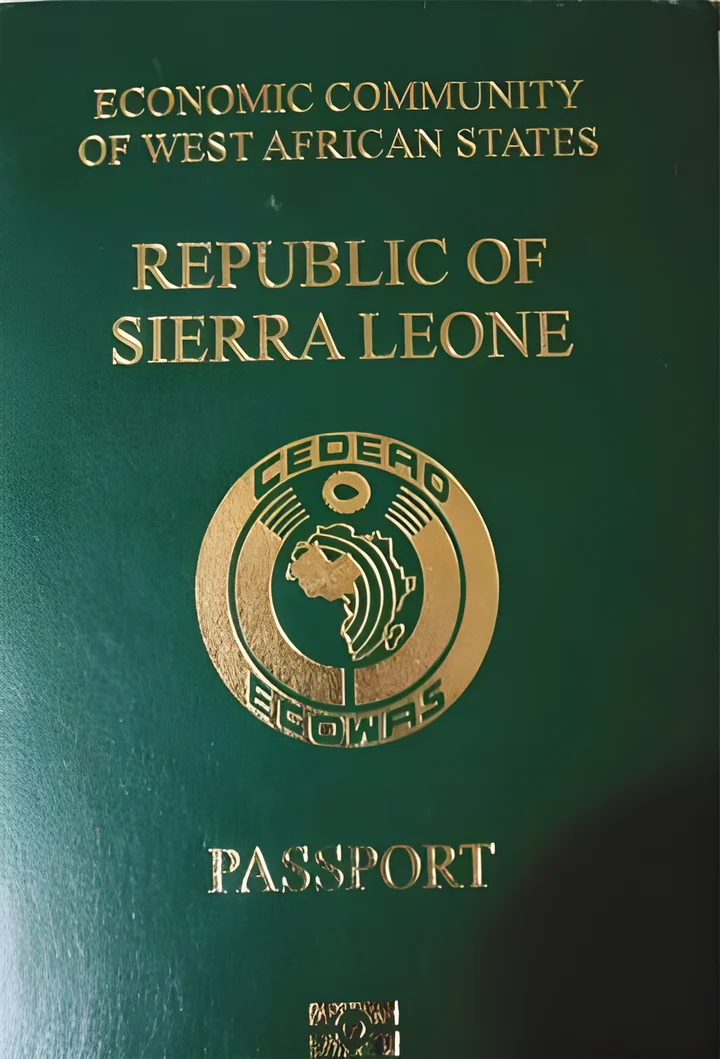
| Sierra Leone, Fast Track | USD 140,000 programme fee plus due diligence | usually 90-120 days |
| Dominica, fund | USD 200,000 for a single applicant | first response within three months |
Panama adds one particular point you need to know: the order. Because Article 13 of the constitution treats acquiring another nationality after naturalisation as tacit renunciation, an investment passport belongs in your plan before you apply for the Carta de Naturaleza. Get it early, and you already have your second right in your pocket during the waiting years and do not endanger the Panamanian passport later. All open programmes with amounts, timelines and family rules are in the comparison, and the total costs under Costs.
Frequently asked questions
Can you buy Panamanian citizenship?
No. Panama has no citizenship by investment programme; the constitution only provides for acquisition by birth, by naturalisation and, in a few special cases, by operation of the constitution itself. An investment does open the door to permanent residence, though, for example through Friendly Nations with a property or a fixed-term deposit of 200,000 balboas or more, and permanent residence is the basis for naturalisation. Under Executive Decree 17 of September 2026, residence as a qualified investor from 300,000 balboas also leads to a naturalisation application after five consecutive years. A passport within months is only available through a programme in another country.
How long does it take to get Panamanian citizenship?
The constitution requires five consecutive years of residence in Panama, or three years with a Panamanian spouse or a child born in Panama to a Panamanian parent. You apply once you hold permanent residence; on the Friendly Nations route, two years of provisional residence come first. After that come the review of your file, the exam at the Tribunal Electoral, the Carta de Naturaleza, the oath and publication in the Gaceta Oficial.
Do I have to give up my German passport to get a Panamanian one?
Panama requires an express and irrevocable renunciation of your current nationality, both in the power of attorney and in a sworn declaration. Under German law, however, renunciation only costs you your German citizenship under Section 26 of the Nationality Act (StAG): the German nationality authority must approve it, and it only takes effect when the certificate of renunciation is handed to you. And since 27 June 2024, acquiring a foreign nationality by application no longer leads to its loss either.
How good does my Spanish need to be for naturalisation in Panama?
Article 10 of the constitution requires you to have command of the Spanish language and to show basic knowledge of Panama's geography, history and political organisation. This is tested in an exam at the Tribunal Electoral. You are exempt if you studied these subjects at a school, a colegio or a university in Panama and submit certified proof.
Will my child be Panamanian if born in Panama?
Yes. Article 9 of the constitution makes everyone born on national territory Panamanian by birth, with no condition on the parents' nationality or residence. Such a child only shortens the parents' waiting period if one parent is Panamanian. Which other Latin American countries grant the passport at birth is covered in Uruguay, Paraguay, Panama, Peru.
Do I need a lawyer to be naturalised in Panama?
Yes. Under the Servicio Nacional de Migración's list of requirements, you file the power of attorney and the application through a lawyer, addressed to the President of the Republic. At the end, the authority hands the lawyer the documents for the swearing-in at the Gobernación.
Can I acquire another passport after naturalising in Panama?
Yes, but do it before, not after. Under Article 13 of the constitution, Panamanian citizenship acquired by naturalisation is lost through tacit renunciation, and anyone who acquires another nationality renounces tacitly. So get your investment passport before you apply for the Carta de Naturaleza; then you already hold it during the years of waiting.
Panama as your goal, a second passport already on the way there
Together we look at your route to Panama, from permanent residence to the oath, and decide which second passport bridges the five years and in which order. After the consultation, you have your roadmap.
Book a consultationSources
- Ministerio Público, Procuraduría General de la Nación: Constitución Política de la República de Panamá, Art. 8-16, 131-132, 143, 153, 179, 204, 226, 293
- Servicio Nacional de Migración: Requisitos de solicitud de Carta de Naturaleza (Art. 10 Constitución, Decreto Ley 3 de 2008)
- Servicio Nacional de Migración: Executive Decree No. 17 of 8 September 2026, qualified investor, Art. 2, 4 and 14 (Gaceta Oficial Digital No. 30613)
- Servicio Nacional de Migración: Entrevista de Naturalización
- Servicio Nacional de Migración: Países con convenios de reciprocidad según años de residencia permanente
- Servicio Nacional de Migración: Proceso Naturalización de Panamá (Flujograma)
- Servicio Nacional de Migración: Residente Provisional and Permanente, Países Específicos (Decreto Ejecutivo 226 de 2021)
- Servicio Nacional de Migración: Requisitos Jubilado Pensionado (Decreto Ejecutivo 320 de 2008, Art. 200)
- Gaceta Oficial Digital No. 30601-B: Decreto Ejecutivo No. 16 de 31 de agosto de 2026 (list of Países Específicos)
- Gesetze im Internet: Nationality Act (StAG), Section 26 (renunciation)
- Federal Law Gazette 2024 I No. 104: Act to Modernise Nationality Law
- sierraleonepassport.com: Sierra Leone citizenship, programmes and timelines
- Citizenship by Investment Unit Dominica: S.R.O. 8 of 2024