The short answer
There is no Mauritian passport for a fixed sum without moving there. Naturalisation normally requires about six years of residence on the island. If you have invested at least 500,000 US dollars in Mauritius, you can be naturalised after just two years of uninterrupted residence. Good character, language skills, the intention to stay and the minister's discretion apply in both cases, and according to the Prime Minister's Office processing takes at least a year.
Mauritius draws Germans with sun, sea and clear rules for investors. The rules for the passport are just as clear, but very few people know them. For the big picture of where naturalisation through residence works best, read Naturalisation abroad. For Mauritius it pays to look closely at the law itself, because it contains an investor rule that many overlook.
How do you get Mauritian citizenship?
The legal basis is the Mauritius Citizenship Act of 1968, last amended in 2022. Applications go through the Prime Minister's Office, Home Affairs Division. The final decision rests with the minister responsible for Home Affairs.
The law and the government website set out these routes:
- Birth in Mauritius: anyone born on the island after 1 October 1995 is Mauritian only if at least one parent is Mauritian.
- Descent: a child born abroad becomes Mauritian if at least one parent is Mauritian by birth.
- Adoption by a Mauritian citizen, if it takes effect in Mauritius.
- Registration of Commonwealth citizens, of children of Mauritian parents and of foreign spouses.
- Naturalisation under Section 9, the route for all other foreigners, Germans included.
- Naturalisation for investors under Section 9(3), with a shorter residence period.
The law has no programme in which you receive the passport without residence in return for a fixed sum. Alongside these routes there is only a discretionary clause: the minister may also grant naturalisation if, in his view, it is in the public interest. The law names no amount and no fixed criteria for this.
So for you as a German, two routes count: naturalisation through residence and the shortcut for investors.
Mauritius citizenship by investment: the shortcut for investors
There is no programme called "Mauritius Citizenship by Investment". The law does, however, contain one single sentence, and it packs a punch. Section 9(3) allows the minister to accept, instead of the usual residence period, an uninterrupted stay of at least two years if the applicant has invested at least 500,000 US dollars in Mauritius. A different amount can be set by regulation. The government website currently states 500,000 US dollars and two years.
What sets this rule apart from a classic citizenship by investment programme:
- You live on the island. Two years of uninterrupted residence before the application are mandatory; a visit is not enough.
- The investment is not a donation. It remains your asset on the island, for example in a company or a project.
- It is still naturalisation. Good character, language skills, the intention to stay in Mauritius and the minister's discretion apply to investors too.
The law does not spell out in detail which kind of investment counts. The fact sheet of the Prime Minister's Office lists as attachments documents on the investment, the business activity, the jobs created and tax returns. So if you build a company and employ people on the island, you lay the best foundation for your application.
How the route works in practice
- You come to Mauritius on a residence permit, typically as an investor with an Occupation Permit or through a property purchase.
- You invest at least 500,000 US dollars and document every step.
- You live on the island for at least two years without interruption.
- You submit the naturalisation application in person in Mauritius.
- Once it is approved, you pay the fee, take the oath of allegiance and receive the certificate.
Two years of residence plus at least a year of processing: realistically, you plan for three years or more from the day you move.
Naturalisation through residence: requirements and deadlines
Without the investor rule, Section 9(1) applies. The minister may issue you a certificate of naturalisation if you are of full age and satisfy him that you
- are of good character,
- speak adequate English or another language in common use in Mauritius and know the duties of a citizen,
- have lived in Mauritius without interruption for the twelve months before the application,
- have lived on the island for at least five years in total during the seven years before that, and
- intend to keep living in Mauritius after naturalisation.
Together that adds up to about six years of residence. Section 9(2) gives the minister some leeway: he can accept a twelve-month block that ends up to six months before the application, and he can also take into account periods of residence that go back more than seven years. How to document such periods properly is explained in Proving your years of residence.
Which residence permit counts
For the application you need a valid Residence Permit with at least three months left to run when you file. The only people excluded are holders of a Temporary Residence Permit under the Immigration Act 2022. That permit goes exclusively to foreign spouses of Mauritians and their children and is valid for two years from issue. For investors, the self-employed, employees and retirees, this limit plays no role.
All routes compared
| Route | Residence before the application | Special requirement |
|---|---|---|
| Naturalisation, Section 9(1) | 12 months without a break plus 5 years in the 7 years before | Language, good character, intention to stay |
| Investors, Section 9(3) | 2 years without interruption | At least 500,000 US dollars invested |
| Spouses, Section 7 | 4 years together under the same roof | Marriage to a Mauritian |
| Commonwealth citizens, Section 5 | 5 years, in individual cases from 12 months | Citizenship of a Commonwealth country |
Two years of residence is very short for naturalisation. Which countries naturalise you similarly fast is shown in The world's fastest naturalisations.
Living in Mauritius: the routes to a residence permit
Before you can be naturalised, you need years on a valid residence permit. Mauritius makes getting started easy, and the programmes are run by the Economic Development Board. The four most important routes for Germans:
| Permit | Entry requirement | Validity |
|---|---|---|
| Occupation Permit as an investor | Investment of 100,000 US dollars | 10 years, renewable |
| Residence Permit through a property purchase | From 375,000 US dollars in an approved scheme | As long as you hold the property |
| Residence Permit as a Retired Non-Citizen | From age 50, income of 2,000 US dollars a month | 10 years, renewable |
| Permanent Residence Permit | After 5 years as an investor, self-employed person, professional or retiree | 20 years, renewable |
Investors bring at least 100,000 US dollars into the country, and the money must be in a Mauritian bank account within 60 days of the permit being granted. Spouses, children and parents receive a residence permit for the same period.
Property buyers receive a Residence Permit if they buy within one of the approved schemes, such as the Property Development Scheme or the Smart City Scheme, or acquire an apartment in a building with at least two floors above the ground floor. The purchase price must be at least 375,000 US dollars. Spouses and children under 24 are included. How the purchase itself works is described, in German, in the guide to buying property in Mauritius.
Retirees from age 50 show a guaranteed income of at least 2,000 US dollars a month, which is 24,000 US dollars a year. They may not work, but they may invest in a company. What retirement on the island costs is set out, in German, in Retiring in Mauritius.
The Permanent Residence Permit is the permit for everyone who stays. Investors receive it after five years with an annual turnover of at least 15 million rupees, or 75 million rupees in total over five consecutive years. Retirees must have transferred at least 200,000 US dollars in total over five years. The permit is valid for 20 years.
A residence permit is still a permission, not a right. It depends on conditions: on the property, on turnover, on income. The difference from a passport is explained in Second passport or golden visa. Everything on tax and residence on the island is covered, in German, in the Mauritius country profile.
Application, costs and duration of naturalisation
The naturalisation application is paperwork, and it runs entirely on the island. The Prime Minister's Office accepts only complete files.
What you submit
- Birth certificate, apostilled if you were born abroad
- Marriage certificate, apostilled if you married abroad
- Copy of the first five pages of your passport, valid for at least another six months
- Your Residence Permit, valid for at least another three months
- Certificate of character from the Director of Public Prosecutions of Mauritius
- Apostilled police clearance certificate from your country of birth or residence
- References from Mauritian citizens who know you personally, with a copy of their identity card; the form provides for four references
- Documents on your profession, investment, jobs and taxes
- Birth certificates and residence permits of your spouse and children
The formalities
You sign the application in Mauritius before a judge of the Supreme Court, the Master and Registrar or a District Magistrate. In the week before you file, you place a notice with prescribed wording in two daily newspapers. It invites anyone to submit objections to your naturalisation in writing. You hand in the application in person. Since 2022 the minister can also order an examination by an officer of the immigration authority.
Fees and processing time
| Item | Amount |
|---|---|
| Application fee, non-refundable | 2,000 rupees |
| Certificate of naturalisation after approval | 50,000 rupees |
| Certification of signature | 1,000 rupees |
| Administering the oath of allegiance | 1,000 rupees |
According to the fact sheet, processing takes at least a year. After approval, the Prime Minister's Office issues the certificate within a month, and from that day you are Mauritian. If the application is refused, you receive a letter. Under Section 17 the minister does not have to give reasons, and no court can review the decision.
Dual citizenship: what Mauritius allows and what Germany says
For most Germans this is the decisive question: can I become Mauritian and stay German?
The German side
Since 27 June 2024 you no longer lose German nationality when you acquire a foreign one by application. The Act to Modernise Nationality Law (Gesetz zur Modernisierung des Staatsangehörigkeitsrechts) abolished the old section 25 of the Nationality Act (Staatsangehörigkeitsgesetz, StAG). You no longer need a retention permit (Beibehaltungsgenehmigung). The details are set out in our article on dual citizenship in Germany.
The Mauritian side
Mauritius expressly recognises citizens with a second nationality. The law keeps a separate register for Mauritians who are also citizens of another country and sets out how they can renounce Mauritian citizenship. Section 9 does not list renouncing your existing passport among the requirements for naturalisation.
Naturalised citizens are, however, subject to special rules you should know:
- Rights abroad: under Section 12 the minister can revoke citizenship if a naturalised Mauritian claims and exercises rights in another country that are reserved for that country's own nationals.
- Later renunciation: if another state allows renunciation of its nationality only at a later point, the minister can require it.
- Long residence abroad: a naturalised citizen who lives in another country for five consecutive years without declaring to the consulate, or in writing to the minister, that he wishes to remain Mauritian can lose citizenship.
- Criminal offences: a prison sentence of at least twelve months within seven years of naturalisation is also a ground for deprivation.
For most of these grounds the law expressly rules out that anyone becomes stateless as a result. And if you go back to living mainly in Europe after naturalisation, a declaration at the consulate or a letter to the minister keeps you on the safe side.
Commonwealth citizens: the route through registration
One feature of Mauritian law is often overlooked. The law distinguishes between "aliens" and "Commonwealth citizens". A citizen of a Commonwealth country is not naturalised but registered under Section 5. The list in the schedule to the Act includes, among others, the United Kingdom, Canada, Australia, Malta and Cyprus, but also Dominica, Grenada, St Kitts and Nevis, Antigua and Barbuda, St Lucia, Vanuatu and Sierra Leone.
A German who also holds one of these passports is, by the Act's definition, a Commonwealth citizen and therefore no longer an alien. The naturalisation fact sheet is expressly addressed to non-Commonwealth citizens. For registration, Section 5 requires:
- good character,
- adequate language skills and knowledge of the duties of a citizen,
- five years of uninterrupted residence before the application or, in special circumstances, a shorter period the minister accepts, but at least twelve months,
- the intention to keep living in Mauritius.
The investor rule under Section 9(3) belongs to naturalisation; registration has its own range of twelve months to five years. Here too the minister decides, and here too there is a public interest clause. The fee for the certificate of registration is 50,000 rupees, exactly as for naturalisation.
Mauritius or a CBI passport: how the two fit together
Mauritian citizenship is a strong goal, but it is a goal for people who truly live on the island. Two years with an investment, otherwise about six years, plus at least a year of processing and a minister who decides freely. That is the price of naturalisation, and it is worth paying for everyone who stays.
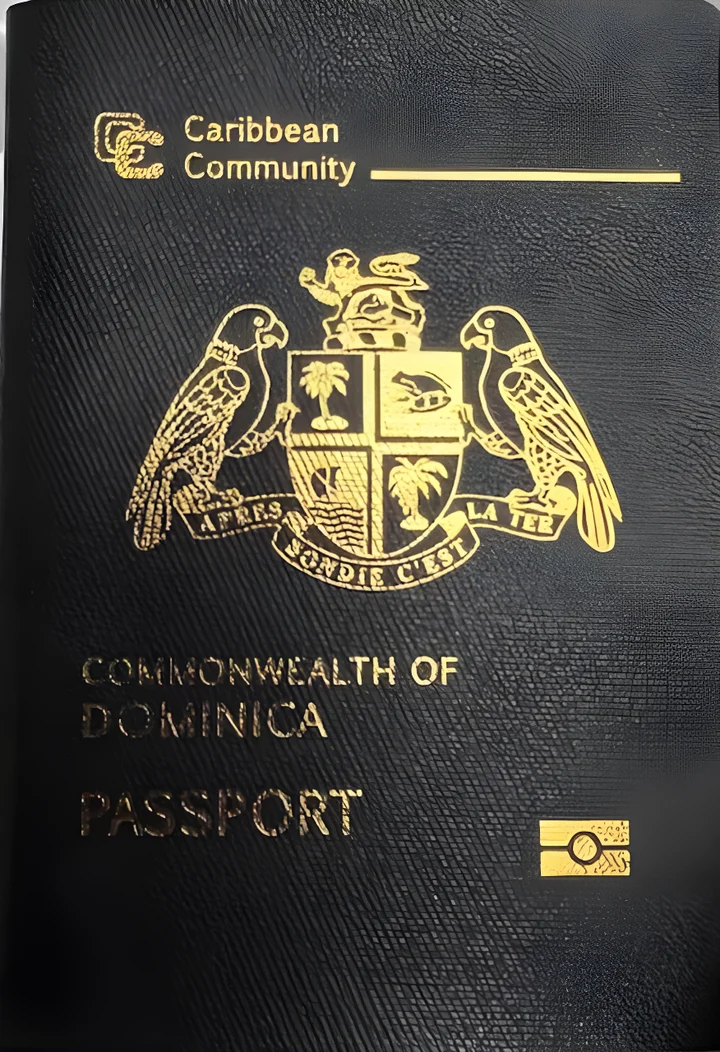
You do not have to spend the waiting time without a second passport, though. Naturalisation and citizenship by investment do not exclude each other; they complement each other. In the end the residence route is the better one, because it rests on real life in the country. A CBI passport buys you the time until then. Why you should pursue both is explained in CBI and naturalisation.
This is how the two routes differ:
| Mauritius, investor route | Dominica, CBI | |
|---|---|---|
| Amount | At least 500,000 US dollars invested | From 200,000 US dollars contribution for a single applicant |
| Residence | 2 years without interruption before the application | Not required before or after naturalisation |
| Decision | Minister's discretion, no reasons given | Review by the Citizenship by Investment Unit |
| Processing | At least a year | First response within three months |
A passport is a right; a residence permit is merely a permission. If you move to Mauritius on an Occupation Permit or a Residence Permit, you spend the first years on a permission tied to conditions. A passport from Dominica or from another country in the programme overview, by contrast, stands by your side as a second right during exactly that time, and your German passport stays yours either way. What the programmes cost is shown in the cost overview, and the programme comparison sets them side by side.
And if you are serious about Mauritius, you make double use of the time: your years of residence on the island keep counting, your investment keeps working, and the second passport protects you until the third one arrives.
Frequently asked questions
Can you buy Mauritius citizenship?
Not in the sense of a programme where you pay and receive the passport without living there. The Mauritius Citizenship Act does, however, shorten the residence period for investors: if you have invested at least 500,000 US dollars in Mauritius, you can be naturalised after two years of uninterrupted residence. A passport with no move at all is offered only by the citizenship by investment programmes.
How long do you have to live in Mauritius to become a citizen?
Germans fall under naturalisation according to Section 9: twelve months of uninterrupted residence immediately before the application, and before that at least five years of residence within seven years. Together that comes to about six years. For investors with at least 500,000 US dollars, two years of uninterrupted residence are enough instead, if the minister allows it.
Does Mauritius allow dual citizenship?
The law recognises Mauritians who also hold another nationality and keeps a separate register for them. Section 9 does not list renouncing your existing passport as a condition of naturalisation. Naturalised citizens are, however, subject to deprivation rules, for example if they exercise rights abroad that are reserved for that country's own nationals. Germany itself has let you keep your passport since 27 June 2024, even when you acquire a foreign nationality.
How much does naturalisation in Mauritius cost?
The Prime Minister's Office charges a non-refundable 2,000 Mauritian rupees when you submit the application. Once it is approved, the certificate of naturalisation costs 50,000 rupees, plus smaller fees for certifying your signature and administering the oath of allegiance. On top of that come apostilles and the two newspaper notices.
Can retirees obtain Mauritian citizenship?
Retirement in itself is no ground for naturalisation, but the years spent on a Residence Permit as a Retired Non-Citizen count as residence. The permit is available from age 50 with an income of at least 2,000 US dollars a month and is valid for ten years. Anyone who then wants to be naturalised needs the roughly six years of residence, language skills and the minister's approval.
Do you become a citizen by marrying a Mauritian?
Not automatically. The foreign spouse can be registered if the couple has lived under the same roof in Mauritius for at least four years immediately before the application. Anyone who first held a Temporary Residence Permit as a spouse also needs good character and language skills. How this route works in other countries is explained in Naturalisation through marriage.
Can you challenge the refusal of a naturalisation application?
No. Under Section 17 the minister does not have to give reasons, and the decision cannot be challenged in any court. That makes a complete, properly documented application with apostilled certificates and proof of the investment all the more important.
Mauritius as your home, a second passport right now
Together we look at your plans for Mauritius and show you which second passport bridges the years until naturalisation. That way you hold a right in your pocket while your years of residence on the island keep counting.
Book a consultationSources
- Prime Minister's Office, Home Affairs Division: Citizenship (routes, investors under section 9(3), forms)
- Prime Minister's Office: Mauritius Citizenship Act 1968, as amended 2022 (sections 2, 5, 7, 9, 10A, 11, 12, 14, 17, 18, First Schedule)
- Prime Minister's Office: Application form and Fact Sheet No. 4, Section 9 Naturalisation (updated 12 July 2024)
- Prime Minister's Office: Notice, fees for certificates of Mauritian citizenship (GN 243 of 2015)
- Prime Minister's Office: Immigration Act 2022, consolidated (sections 7, 8, 10, 11, 12, 34)
- Economic Development Board Mauritius: Permanent Residence Permit (PRP)
- Economic Development Board Mauritius: Retired Non-Citizen, 10-year residence permit
- Economic Development Board Mauritius: Property Development Scheme
- Economic Development Board Mauritius: Occupation Permit, investment of USD 100,000
- Federal Law Gazette 2024 I No. 104: Act to Modernise Nationality Law (Gesetz zur Modernisierung des Staatsangehörigkeitsrechts, StARModG)
- Citizenship by Investment Unit Dominica: FAQs (no residence requirement)
- Commonwealth of Dominica: S.R.O. 8 of 2024, Citizenship by Investment Regulations (regulation 8, Schedule 1)